scotland

THE SECRET ROOM AT LAURISTON CASTLE

☆☆☆

MagicFest’s Secret Room events are fantastic, as the chosen venues lend a theme to the performances, and the addition of the historical lessons of the buildings ensure that the evening is about more than magic.  This second point is especially true for the Secret Room at Lauriston Castle.  The event features three magicians, but the castle itself is the fourth star of the show.

The audience is first led into the study, where Billy Reid begins the evening’s magic.  Reid is perhaps the most true to theme.  Inspired by a historical cabinet maker who lived at Lauriston Castle, he incorporates a wooden puzzle into his act, and he concludes with a coin trick inspired by the lost coin collection of one of the castle’s former residents.  Reid’s gorgeous illustrated card trick sequence set to “Caledonia” is a highlight, working particularly well in this smaller venue.

The drawing room of the castle barely contains the boisterous character of Ian Kendall.  His tricks are classic, featuring cups and balls or ropes and rings, but his jokes keep the audience laughing, and his rapport with the group draws everyone into the performance.  Kendall does integrate a bit of a history lesson in to his act, and expresses suitable admiration for the room that he is performing in, but only very tenuously links his tricks to the history of the venue.  He makes this work as his larger-than-life personality easily distracts the audience from any thematic absence.

Chris Cook concludes the performances of the evening in the castle’s library.  The tidy precision of Cook’s magic style is exceptionally effective with this smaller audience.  In keeping with the theme, Cook uses an audience participant’s phone for his final trick, because, as he explains, these days the internet serves a similar purpose that a library would have back when Lauriston Castle was built.   While this does run in to technical difficulties, Cook maintains the momentum of his performance to deliver his reveal.  It is perhaps all the more impressive for the unplanned extra suspense.

Cook’s performance brings the magic of the evening to a close, but the audience is lucky enough to have the opportunity to stick around for a quick tour of the remaining rooms of the castle.  This includes two real secret rooms hidden in the performance venues.  As the event begins with a brief re-telling of the story of the castle and ends on this tour, the actual magic shows feel surrounded by history.

Lauriston Castle is an incredible venue for this Secret Room event, and the magic matches the excellence of the architecture.  The assortment of magicians is well chosen, as their contrasting styles ensure that each of their performances feels distinct, and the contrast makes the event feel balanced.  The castle and illusions combined ensure a wonderful evening steeped in all the best history and magic Scotland has to offer.

VINCENT GAMBINI – THE CHORE OF ENCHANTMENT

☆☆☆☆☆

Vincent Gambini’s meta-show about magic, The Chore of Enchantment, encapsulates the pessimism of 2016.  It is especially fantastic for those who still haven’t quite gotten over the ridiculous politics of that year.  Most of The Chore of Enchantment is less magic and more Gambini’s stand-up comedy style routine about his disillusionment with both magic and the real world, with bits and pieces of tricks used to enhance his monologue and illustrate his descent into melancholy.

Gambini creates a sense of unease from the start as he steps on to the stage in a sleep mask, and describes the room, the audience, and himself as figments of his dream.  While the big illusions that he describes do not manifest—no floating yoda or hole in the fabric of reality appear on the stage—the card tricks that do are still enjoyable, and create a bridge between Gambini’s mind and reality.

Equally atmospheric are the smaller bits of magic that Gambini performs as he gets into the politics of his show.  Gambini makes coins and balls disappear and reappear as he talks about the repetitiveness of performing magic, and brings magic back to the forefront of the narrative when he makes a staff appear with a loud snap.  He does occasionally run the gag for a little bit too long, but this feels like part of the show, as it periodically transitions the audience from awe to near-apathy with each new effect.

Gambini’s interactions with his audience are charming.  He does not use a lot of participants, due to the relative scarcity of magic in his show, but he reacts remarkably well to their mistakes and interruptions, seamlessly working them in to his performance.

By its nature, The Chore of Enchantment does occasionally feel a little bit pretentious in its exaggerated self-consciousness.  Gambini pokes fun at his past career in conventional magic as inadequate given the current state of the world, while performing what is, at its heart, a magic show in his own attempt to come to terms with those real issues.  In spite of its stated conclusions that magic is simply another distraction, the effectiveness of The Chore of Enchantment is evidence in support of magic’s usefulness as a tool for performers to address real world issues.

In The Chore of Enchantment, Gambini balances entertaining his audience with inspiring them to think, both about the real world and the nature of entertainment.  His comedy still feels timely two years after the events that he discusses, and his minimalist magic augments his words and astonishes his audience.


More information on Vincent Gambini and his performance dates can be found here

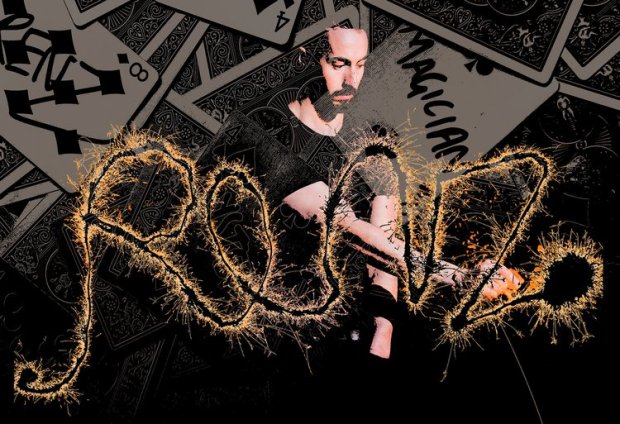
RENZ NOVANI: POET OF THE IMPOSSIBLE

☆☆☆

For a magic show, Poet of the Impossible is curiously light on magic, at least in the illusions sense.  Renz Novani’s poetry and storytelling share the spotlight with his magic tricks.  It is clear from the beginning that this is because Renz is a compelling performer, both with and without his magic. It does mean that his show might feel exceptionally niche—his best audience will be those who enjoy both magic and poetry—but those boundary-defying qualities also lend him a wider appeal, as a performer first and foremost over his role as a poet or magician.

In a fun twist on classic playing card trickery, Renz frames an opening trick by talking about his early days of learning magic out of books, and then having an audience participant read instructions from a magic book to guide him through a trick.  The audience feels as if we are taking part in this childhood anecdote.  But of course the instructions that are read out are incomplete, and the audience is still amazed to see the trick succeed.

Renz ventures into less conventional magical props with his use of tarot cards for a mind reading trick.  He does briefly use them for their intended purpose, while acknowledging that he himself is not a believer in such fortune telling.  When he finishes by using the tarot cards to reveal his mentalist trickery he dazzles the audience on his own terms rather than those set by the cards that he is using.

Poet of the Impossible winds down show by Renz telling stories about magic while performing the magic that he describes.  In one he describes a childhood dream about fairies fixing his broken toy while fixing it on stage in front of the audience.  He uses this to then draw a parallel between dreaming and watching magic, with both allowing for temporary escape from reality.

Renz’s graceful magic combined with his spoken word performance gently reshape his audience’s perception of reality while keeping us grounded in the real world.  While fans of both magic and poetry might get the most out of Poet of the Impossible, the elegance of his performance is enchanting to all.


More information on Renz Novani and his performance dates can be found here

BILLY REID – STORYTELLER

☆☆☆

In Storyteller, Billy Reid structures his performance around stories from his childhood, using magic to illustrate them and bring them to life.  “Illustrate” is perhaps the key word here, as aside from being incredibly well performed, Reid’s magic tricks are more often than not exceptionally aesthetically pleasing.

Reid sets this tone from his first card trick.  He starts it classically enough, with an audience participant picking a card that Reid then shuffles back in to his deck, but when the cards start changing to match the story that Reid tells, the fact that in the end he successfully finds the right card is actually the least exciting part of the act.  The artistic trend continues in Reid’s mentalist tricks, as he reads a volunteer’s mind by painting the scene that she is thinking of on a canvas on stage, his firm and decisive brush strokes keeping the audience engaged in trying to work out the final image.

Like all of this year’s solo shows at MagicFest, Storyteller is performed at the Scottish Storytelling Centre, and one of Reid’s tricks in particular would not look out of place in one of their exhibitions.  Reid uses a blank card deck that he has illustrated himself to tell the story of his love for Scotland in a trick that showcases both his magical and artistic skills.  This is a particularly inventive highlight of Reid’s beautifully creative show.

Reid’s tricks rely on audience participation just as much as any other magician’s, but Reid is notable in that he invites volunteers to step forward before randomly selecting a participant himself.  While both approaches have their merits, Reid’s worked for him in that his volunteers were visibly excited to participate, and the shyer members of his audience were presumably a little bit less stressed.  It is certainly more enjoyable to watch audience participants who participate enthusiastically.

Storyteller is a gorgeous production.  One of the personal details that Reid shares is that as a child he was passionate about his art classes, which is no surprise to his audience after seeing this show.  Reid smoothly combines his illustrative and performance skills into a remarkable experience.


More information on Billy Reid and his performance dates can be found here

WIZARD WORLD GATHERING

☆☆☆

MagicFest’s Wizard World Gathering has incredible potential as an event.  Harry Potter is obviously hugely popular, and magicians are ideally suited to bring the magic of Harry Potter into the muggle world.  There are certainly elements of the Wizard World Gathering that rise to the occasion.  The décor is incredibly detailed, the food and drink vendors have an admirable commitment to the theme, and framing the magic shows as “lessons” is an excellent way to create Hogwarts magic from stage magic.  However, the magicians themselves do not feel consistently committed to the Harry Potter theme, preventing it from being a cohesive event, and a few issues in the arrangement of the night detract slightly from its success.

The magic shows begin with R Paul Wilson’s “Expert Magic”.  From the start this is an outlier to the claimed theme, lacking in relevance to Harry Potter.  But to his credit, Wilson’s act itself is suitably entertaining; displaying his range of coin tricks and pickpocket-based card tricks.  Wilson may have misjudged the venue when planning one of his final tricks, which features him and several volunteers seated around a table.  Due to the layout of the theatre this is difficult to see, even from the middle of the audience.  The final effect is nevertheless impressive.

Kevin Quantum’s “Levitation Demonstrations” has an appreciably more Harry Potter theme.  Quantum takes a science fiction approach to this fantasy world, framing his show as his quest to discover a scientific means to levitate.  One of his tricks involving audience volunteers is really more of a trust exercise than a proper magic trick, which makes it all the more remarkable that Quantum is able to seamlessly include it in his act.  Quantum’s act feels less like a collection of tricks and more like a coherent theatrical production, with an admirable blend of his own magical style with the theme given to him.

“Time Travel 101” with John Henry Blackwood unfortunately often feels more hindered than helped by its theme.  Blackwood spends an inordinate amount of the middle of his act on a trick involving a toy plunger that is charming enough in and of itself but is only very loosely related to his own time travel concept.  However, he begins and ends with tricks that do genuinely use his theme to enhance the overall effect.  The stickers on the trunk that he uses as a table and the deathly hallows charm on his clothing are a lovely nods to the aesthetic of the evening.

Magic aside, there are a few issues that came up with the Wizard World Gathering itself.  As attendants enter the Assembly Roxy they are handed tickets with a couple of timings of the magic shows, but it is not explained that it is necessary to bring the ticket to that show time to be guaranteed a seat.   Many who were new to MagicFest took these timings as suggestions or reminders, and in the absence of an official explanation it fell to those who had attended previous similar MagicFest events to explain the system.  Also, in spite of the online description of the event as a party, the event really still feels like a series of magic shows.  Not necessarily a bad thing, but not what one is led to expect. There are few other activities in the central hall, and some are unexpectedly shut over an hour before the end of the event.  Additionally the Harry Potter quiz, while fun, could have done with a few more challenging questions.

That being said, the attention to detail in the decoration of the venue is absolutely fantastic.  The central hall is decorated as the Great Hall, and includes an intricately set up photo backdrop.  The common room, where the quiz is held, features a wall papered in book-print, and the bathroom even includes a snake sticker by one of the taps.  These details create a delightful atmosphere that is a highlight of the event.  Creating the right atmosphere is so crucial to events like this one, and for its flaws there are moments when attendees at the Wizard World Gathering feel truly transported to Hogwarts.

THE SECRET GIFT – EXTRA (DRUNK) REVIEW

☆☆☆

Disclaimer: The “real” review of MagicFest’s Christmas show can be found here. But, we had an extra reviewer in Edinburgh keen to see the show, and once upon a time a reviewer joked to our Editor-in-Chief, “hey what if we did drunk reviews for shows as second reviews” and, terrifyingly, our Editor-in-Chief took this joke seriously. Enjoy! 

I went to see the secret gift. A MagicFest production for the Christmas season. Kevin Quantum is the compare and has come on in leaps and bounds since I saw him hosting  MagicFest. Edinburgh is the stage back drop and there are lightbulbs hanging from the ceiling and the whole theatre is beautiful to start. Admittedly, as I am drunk reviewing my first thoughts are “Pretty… why am I here? Oh yes, Magic!”.

Kevin made champagne from thin air, then introduced “The Art of Illusion” a Scottish illusion team. Male and female. Steryotypical magic tricks, woman in box disappears; but I have never seen that done before and it is breathtaking. They are an attractive pair, strong and able, and perfectly suited to the stage. The magicians assistant did not shy from the spot light. The one area that could have used a different trick was between sets the male magician pulled a long cord from his mouth, from my perspective all I could think was “TAPEWORM”!” I think there needed to be a break but something different to a tapeworm could be used.The show focused around using sex to distract from what was going on. A clever trick in some respects.

The next act is the hilarious Professor Kelso. He has a Shakespearean excellence about him. His voice, his act, it is all hilarious before the magic starts. He says he is a hypnotist, no! a magician no! a mind reader! No!  Magician! It is a great beginning. He has the costume and the voice and the act. But then he moved to cheap fortune telling. That could have been different. He has so much going for him but I found the reading of the audience dull and unrewarding. Well done, after 20 questions you have the correct answer. He has a lot of talent to be on the stage but needs to move away from fortunes. You are not a grandmother Professor Kelso!

There was an act before the interval from caberet rather than magic but let me tell you! It is magical to me! My mind is blown. The Bubble Poet came on stage with his act, and though I know what is happening, it is amazing! He is a stage artiste! He can make magic happen before your eyes in coloured smoke and dish detergent. Phenomenal.

After the interval Kevin worked his magic with his introduction, then brought on stage a rather interesting Spaniard by name “David Blanco”. By this point I was somewhat intoxicated and found David to play on his race rather more than necessary. He was a slight of hand magician who also performed card tricks. Inticially I thought “typical, playing on suggestion, and playing on accents” but he is very amusing. And very good at what he does. He uses his “foreign-ness” to his advantage.

Professor Kelso is back on stage to perform the “12 days of Magic”. He is so good at the piano it is a shame to see him go to waste filling time like this. It was caberet but not especially special or interesting. The “12 days of Christmas” or whatever is done! Move on. Kelso is an excellent character who deserves lots of time in the sun performing interesting pieces for the mind, not for the child.

Kevin came back and performed a hilarious piece about mind wandering. Where is the ball? Here or here? Used sexual tension as a joke which seemed cheap but followed up with pure quality misdirection. He misdirected you here, so you didn’t notice the misdirection over there. Very well done. Huge amounts of showmanship, and I would like to learn a trick or two from you. Producing lemons! Amazing!

Finally “The Art of Illusion” came back on stage. A winner to begin but now at the end (after a few drinks) it’s clichéd and over done. The beautiful assistant being your distraction, really!? I’d like to see the same show performed with a man. It was well done, steryotypical tricks, which I think modern theatre is lacking. But what modern theatre is also lacking is equality. Wearing leather boots does not equal tiny Santa costume. You are good at being a magician. Don’t diminish it by being a sexist.

Overall a wonderful show. I saw MagicFest and this was a level beyond. Well done, well performed.


THE SECRET GIFT

☆☆☆☆

The stage at the Traverse Theatre sets the tone for the Magicfest Christmas Special “The Secret Gift” with a lovely silhouette of the Edinburgh skyline, featuring hanging lights appropriately reminiscent of the enchanted candles of Hogwarts.

The show is hosted by Kevin Quantum, who weaves Christmas cheer through the evening with his between-act entertainment.  His commitment to the Christmas theme in each of his appearances is admirable.  Quantum is at his charming best when interacting with his audience participants, and holds the attention of parent and child alike with his engaging misdirections.

The first act to take the stage is Chris de Rosa and his glamorous assistant in The Art of Illusion.  This act features many classic magical effects, with the two surviving a variety of seemingly fatal situations. This pair excels at coordinating their turns in the spotlight to support each other’s performances.  De Rosa and his partner return to the stage as the final act of the evening, with a more festively themed take on their signature style.  Their closing trick is a suitably playful end to the program.

Professor Kelso follows with a decidedly more comedic form of magic.  While his sleight of hand and mind reading clearly delight the audience, it is his fantastic character that keeps the audience laughing during his time on stage.  Kelso is the other performer who appears twice in the show.  His second performance is a break from the usual course of the show, featuring Kelso leading the audience in a sing-along of a Christmas carol that he has re-written to a magic theme.  This level of audience participation lends a pantomime atmosphere to this portion of the evening.

Another break in the usual course of magic comes from Señor Pérez, who is not a magician, but a bubble artist.  Neither properly magical nor especially Christmassy, Pérez’s bubble choreography is nevertheless enchanting.  His ephemeral creations prove truly captivating to watch.

The final magician, David Blanco, performs a series of card and coin tricks.  His decision to perform these tricks in a relatively large theatre may initially seem questionable, as both are more commonly performed for smaller audiences, but the dimensions of the theatre, and Blanco’s clever use of the largest coins available, means that his tricks are still relatively visible from the farther side of the audience.  The commendable scaling of close up magic for a larger audience in this act allows this show to demonstrate a wide range of magic styles.

The variety of acts in “The Secret Gift” makes for an exciting evening. The show seems especially popular with families with young children, and the performers successfully cater to the range of age groups in the audience.  The overarching festive cheer of this show successfully extends the magic of Christmas well beyond its usual temporal limits.

INTERVIEW WITH CHRIS COOK

Now that Edinburgh Fringe 2017 is over, our reviewer Hannah got to sit down and chat with Chris Cook, whose shows Control and Concealed we absolutely loved.

Hannah: The first thing I wanted to ask you, what is it you want your audiences to get out of your show?

Chris: The [performance of Control] you came to, I feel like the guy on stage really dug that out of me. And I think that was the moment I really realized it. What I want is for the audience to  leave that room better people than when they came in. And I think one of the ways we do that is by building a little community, by getting to know each other better and feeling like we’ve made something, not like we’ve just watched something, but that we’ve experienced something. What came out of me that day is that it’s really easy to impress people- as a magician I think it’s really easy to make people clap and laugh and to impress them, but it’s hard to make people think and it it’s really hard to make people feel, and that’s all I want to do.

And that’s what the show is about, that’s what the journey is. People come into that room and they’re expecting a magic show, so I have to deliver, I have to impress them in the beginning,  I have to make them clap and laugh and be wowed. And then half way through, I’ve got them on board, now I can do what I really want to do, which is to start to make them think, think about their own lives and why they are not the people they want to be. Then by the end of the show I don’t know if we make it, but my hope is people will feel something. I think the person who helps me with the finale, they will feel something, and I hope the audience sat there really do as well. It’s not for me to say, and it’s also not for me to ram it down people’s throats. If you can make a connection with the show, that’s amazing, if it didn’t quite hit, that’s fine. Maybe it’s my fault, maybe it’s just not the show for them. But I think all I really want to do is make people feel and make people better. I think humans are great, I think we can leave that room and look out for each other and make the world a better place. That’s my hope.

Which of the life goals that you talked about in “Control” are you going to work on first?

One of them was just to paint some more, and I think I’m going to do some painting this evening, now that the Fringe is over and I’ve got some free time. That might be one I start on first. One of them was to spend more time with my brother, which I’ve already started to do.

I think the ones that are more important to me are the ones that are harder to do, but I think that’s okay. I don’t think life should be too easy, like if life was easy it would be boring so- I’ve never visited some family that I have in New Zealand, so I really need to make that happen. There were quite a lot of travelling things. I really want to get my qualification so I can go scuba diving and that’s going to require some work and some time, and I’ll probably book a holiday away somewhere so that I can do it somewhere beautiful. I don’t know which of them means the most to me. One that I was just talking about, the dream was to do a show at the Fringe that isn’t a magic show. I think that will be the hardest. If I can come up with a way of still being entertaining and still connecting with an audience, but without doing magic, I think that might be the most difficult thing I do, but maybe that’s the most important.

So what exactly is the appeal of magic to you?

The appeal? Hmm. I don’t know, I don’t think that there is an appeal. I actually don’t think I like magic. I think magic is often about – a magician’s aim is often to fool an audience, and I think inherently with that comes making a fool of the audience, and I don’t want to make a fool of the audience, I want to connect with them and empower them and make them better. I don’t want to make them look stupid, I want to make them feel smart I guess. So actually, I don’t think there is an inherent appeal with magic, I think magic is often a thing where you see something and think, that’s a really impressive trick, but I could never see myself doing something like that because that’s- it wouldn’t fit with what I’m trying to achieve. So I don’t know- I realize that might be a bit of a weird answer to that question but I do think I want to use magic as a tool, not just do magic. I guess I want that tool to be a tool of encouragement and try to make the audience connect and feel better. I really don’t want to use magic to make people look silly or make a fool out of them.

As a magician, what kind of audiences have you found to be the most difficult and the easiest to entertain?

(laughs) Sometimes Sundays can be really hard? Cause everyone’s had a big night out and my shows are quite early in the morning. Sometimes tired crowds can be hard. I feel like I’m quite good at pitching the audience, figuring out where they’re at and getting myself on the same page. So like, I can do shows that are quite sweary and political, but I’ve also done things for a lot of kids that are more gentle, or whatever. Some of the most difficult audience are people who are drunks, or sometimes people that are just too excited. Like with the Control show, on the show that you came to, it was amazing, the crowd were so on board, like everything that I said was hilarious that the jokes that maybe used to get a little laugh were getting rounds of applause and huge cheers and I just remember thinking, “I’m not going to be able to get to the end of this show. I will not be able to do the gear change that takes this from like funny silly magic show to thoughtful meaningful audience interaction.” And  I think  we really got there by the guy I got on stage and we started asking each other questions. But sometimes that can be hard, audiences that are so excited that they’re not even really paying attention.

And the easiest?

The easiest are people who have seen you before and they know you and they like you. Or they’ve been recommended you, so they show up to that room knowing that they’re going to have a good time so you don’t have to win them over. They’re probably the easiest crowd.

What would you describe as the most rewarding aspect of performing  for audiences?

I really like it when people get in touch and say “you were the best show we’ve seen in years,” like when people do that it’s really amazing, it feels really rewarding. I had someone say that he comes to the Fringe every year for like ten years and that my show was the best thing he’s ever seen. I think like, wow, that’s really- it feels really rewarding. But I think I know when I’ve made a difference. I don’t think I need someone to thank me. I can do a show and I know sometimes I’ve connected with the audience in a way that they’ll go away and think about what we’ve dealt with, and that’s probably the most rewarding experience. Certainly with Control and with the arrows, sometimes I do that and I know they’re going to think really hard about their dreams, and they’re going to go and try to achieve them. I don’t need them to thank me, I don’t need them to email me a photo of them stood on the top of Kilimanjaro or whatever their dream was, I know I’ve made a difference, and that’s probably the most rewarding.

Can you talk about the importance of showmanship as opposed to just having the technical skills?

Yeah it’s the most important thing. Yeah. I think I’ve seen so many magicians who have incredible skills, like magically they’re very good, but their performance is not good and I think showmanship and performance is the most important thing. Not even showmanship, you can be yourself, but confidence is it, enamoring the audience, that’s what is important. Whenever I speak to magicians that are trying to get better, young magicians starting out, everyone gives them the same advice- which is “practice, practice, practice.” My advice is don’t practice. Just don’t do it. Don’t sit at home in your mirror practicing that move again and again, just go out and do it. Just go down to the pub and show that trick to your friends, show it to your  parents, your girlfriend, your boyfriend, something like that. They’ll tell you what’s wrong, they’ll help you get better, people will go “I saw that, it’s hidden in your other hand” or they’ll go “eh that’s okay, but it wasn’t as funny as you thought it might be.” So I don’t think you should practice. Don’t get me wrong, you gotta be good, your magic has got to be good, but like, it’s probably 10-15% of what’s important. I’ve seen magicians absolutely slay audiences with a trick that costs three pounds in a magic shop, that every kid has probably bought at some point, but they’ll do it on stage in front of a thousand people and have everyone in stitches because it’s not about the trick, it’s about the performance. That’s what I think is important.

Okay, this is a question you’ve kind of answered in your show, so just answer for people who haven’t seen it- did you attend university and did you have any other career aspirations early on or was it always magic?

I don’t think my career aspirations have ever been magic. I don’t think I ever really wanted to be a magician, and I still don’t think I want to be one. That doesn’t mean I don’t enjoy my job- I think it’s amazing and I love it. But I certainly never planned on becoming a magician. I’ve always wanted to work with people. I used to work as a youth worker and I really enjoyed that, I used to work as an outdoor instructor at a ropes course center where I taught kids how to climb and I really enjoyed that. Then I went to Leeds University to study journalism- I’m interested in the media- and I thought I wanted to be a reporter or a presenter or even a travel reporter or a war reporter, but I just realized that the media is very broken and I didn’t feel like I was the best person to fix it. So I didn’t feel like I could really go into that job. There’s a lot of nepotism but also there’s a lot of laziness, we call it churnalism, where journalists churn out press releases without really thinking about it. I think the 24 hour news cycle has meant the demand for news- like that we need to know now, straight away- that’s not really good. I don’t want to know when something happens, I want to know why it happens. So, yeah, we shouldn’t really know, this many people died in Iraq today, we should know, why are we at war in Iraq? What’s going on there? I feel like until the world of journalism changes there is not really a place for me in it. That and also I wasn’t even that good at it anyway.

I actually watched your TED Talk and I wanted to know if you ever considered astronomy or seriously thought about being an astronaut?

Yeah, that’s good, yeah! I love astronomy, or not even really astronomy, but I’m fascinated by space. I think space is amazing, and I think that it fits in with this idea that I feel like we’re all a collective, and like if you’re from Edinburgh you don’t like people from Glasgow and if you’re from Glasgow you don’t like people from Edinburgh but then suddenly, if we’re talking about countries, it’s like well I’m from Scotland, and we’re all from Scotland, and now we’re in part of that collective. Or we’re all from Britain, or we’re all from Europe, or we’re all from the West, and I think that’s why space is so exciting- cause we’re all from planet Earth. We’re all in this together, we’re all humans, we’re all life, like life is exciting, so I’m constantly fascinated by space and just the insane distances between things. It’s also quite depressing though, it’s quite sad, that there could be life out there but we’ll probably never find it, it’s too far away. I often wonder why, why are the distances so great and why is the speed of light so slow? It takes so long to get anywhere that by the time you’ve got there you’ve died. And that can be a bit bleak, but yeah I’m fascinated by space. It’s just a little hobby, to read about that. I don’t think I could ever become a physicist.

Do you watch other magician’s shows and what goes through your mind when you’re watching them?

I don’t watch loads of magic shows because I don’t really like them. What I want to see when I see a magic show is a point, a purpose, a message, a story. I don’t want to see like a magazine, like “here’s a trick, and then we’ll turn the page, and here’s another trick, if you didn’t like that one you might like this one.” I want it to feel like it’s really like reading a novel, like it’s going and experiencing a thing, and I don’t see a lot of magic shows that do that so I don’t go and see a lot.

But there are some that do that and that’s really exciting. I think when I’m talking about “let’s create a new genre of magic” I think there are people that could be doing that. So like, I went to see Sam Fitton’s show on the last day, and I loved it, because it was -it was by no means a perfect show, but- he had a concept and an idea, and instead of going “here’s a load of magic tricks”, he’s going “I’m waiting at a train station and I missed my train and then I went into this dream world and in my dreams I’m really magic and that’s why magic is happening.” It was charming and it was lovely and it was a piece of theatre. It might not have had a really solid message but it had a point to it and it wasn’t just a selection of tricks.

And similarly with Ava Beaux, with her show, I thought that was a really bold first show at the Fringe, because like, she’s very young, she’s new, she’s kind of nervous, and instead of going “I’ll just bring some of my favourite tricks, and I’ll just do what I’m good at”, she’s going ‘no, I’ll tell the stories of Edgar Allen Poe through magic tricks” and I’m like yeah, that’s what I’m talking about, let’s do more of that instead of just trying to show off. I don’t like magic that feels like it’s just showing off. Those were a couple of things I saw this Fringe that I really liked.

And there are a couple other people doing things like that, I just wish there were more people doing things like that. Like if I asked Ava Beaux “what is the point of your show” and she’d be like ‘I want audiences to love Edgar Allen Poe as much as I do or to feel like they’ve understood him more.” And you’d ask Sam Fitton “what is the point” and he’d be like “I want to transport them to a dream world where we’re all stuck on a train station platform together.” Whereas you ask other magicians what the point is, they just go “I just wanna make people laugh and clap and be impressed by me” and I just think that seems very needy to me, that’s not what we want. We shouldn’t strive for that. I want my audience to leave that room better people than when they came in. I think that’s important. That is the first aim, impressing them comes second to that. I wish there were more magic shows that were trying to do more than impress people.

So who are your heroes, mentors, and models in the magic world?

I’m not sure. I grew up in the Lake District and I didn’t have any other magicians around me, so I didn’t really have any magic mentors, I felt like I learnt more from folk musicians and storytellers who taught me more about how to perform on a stage. I do really like Penn & Teller. And I really like Derren Brown a lot although I don’t really like mentalism, I really like what he does because I feel like he has a point. Most of his shows whether, it’s his stage shows or his tv shows, he has a purpose or he has a message or he has something he tries to deliver, and again he does it without taking himself too seriously. He’s still very funny and casual and I like that. Last year I saw Charlie Caper and I actually got him to perform in Best of Magic. He won Sweden’s Got Talent with this really charming street performer style act. While I don’t think the magic I do is similar to what he does, I really liked his style and it inspired me to go and do more street performing.

Do you think that every magician lives in the long shadow of big name magicians like, as you mentioned, Derren Brown, or Dynamo or David Blaine?

Yeah, I mean we’ve all got to be grateful for them. I think it’s easy not to like David Blaine, especially as some of his performance style can seem like he’s taking himself too seriously, but I think it’s amazing because we have to respect that he made magic cool again. Before that if you said you were a magician it meant that you were wearing a top hat and you had a cape and you’re producing doves, or you’re doing children’s parties dressed as a clown. Whereas he came along and made magic cool. And I think one of my idols was Paul Venon, who’s like the British David Blaine. He was doing street magic at the same time, I liked him more because he didn’t take himself too seriously, he was very silly, was very funny, he focused more on the reactions, than on the magic tricks and I really liked that. I’m not a huge Dynamo fan, I’ve watched his tv shows, but again I’ve got so much respect for him because I can tell he’s making magic cool and he’s got kids into magic. Then Derren Brown I think is the God of mentalism. I’ve never seen a mentalist live and not though, “eh, you’re just like a poor man’s Derren Brown.” I feel sorry for people who do mind reading and mentalism shows because a lot of them are working really hard to to really incredible stuff but they live in the shadow of Derren Brown. I’ve never seen anyone better than him, they often seem just like a cheap imitation.

What’s the best piece of advice that you’ve received and what was the source of that advice?

One of the best pieces of advice that I’ve received was from a juggler who I used to work with doing circus and juggling shows. We were practicing something, it was one of his shows, and I was doing this joke that was a physical prop gag and I was making it really obvious and really trying to make it so clear, so everyone got the joke. He was like “I think you should make it more subtle” and I was like “I worry if I make it more subtle people won’t get it” and he just said to me “if they don’t get it they don’t deserve it.” It really was just the best piece of advice, and I feel like I’ve lived like that since. But other than that…my advice is don’t listen to other people’s advice, just go out and be yourself.

Just before we go, do you have any exciting future projects that you’re working on?

Lot’s of things! You mentioned my TED talk, I’m doing that for ITV at Emmerdale,  in about 5 days time. I haven’t done that for about two years so I need to relearn my own TED talk so I can do that again, I’m a bit nervous about that. I’ve booked in some tour dates of Control, so I’m doing it in Bristol and in the Lake District, and I’m doing it in Vienna and Bratislava in November, and I’m going to try and take it to Australia. I’d like to do it at the Adelaide Fringe Festival or possibly the Perth Festival next year. The whole time I’ll be thinking about new ideas for my new show at the Edinburgh Fringe next year. And I guess I’ll try and do a bit more street performing. So when I am away travelling I can just busk anywhere and not have to book things so far in advance. So yeah, lots of exciting things in the pipeline!


PBH BEST OF MAGIC SHOW

☆☆☆☆

The PBH’s Best of Magic show, hosted by Chris Cook, featured a different lineup of magicians at each of its three performances.  This review is of the third and final performance, and it was a fitting finale to a Fringe full of incredible magic.

Cook was the perfect choice to host this show.  His love for magic shone through each and every one of the glowing introductions that he gave his fellow magicians.  After watching him juggle getting the crowd excited for each act, helping out in various ways throughout the performances, and performing his own magic tricks when the occasion called for it, it is easy to see why Cook has found success in the hectic realm of performing at private parties.  His unflappable cheeriness at every juncture held the show together.

The show kicked off with Aaron Calvert, a mind reading magician whose main show culminates in hypnosis.  Here, with less time, he focuses on the mind reading, using an audience member to choose numbers on a die for him to figure out.  Calvert’s commanding presence kept the audience mesmerized by his feats.

Next up was the delightfully creepy Ava Beaux.  Her Edgar Allan Poe themed show was reviewed here on one of her first performances, and she has only improved over the course of her time at the Fringe—she certainly had plenty of performances in which to do so, as she proved to be so popular that she had to run her show twice a day to satisfy her fans.  Beaux’s performance persona had consistently been one of her strong points, and even that had developed further; she was fully committed to her darkly comic character.  Beaux is reminiscent (if she would permit a more modern comparison than Poe) of Lemony Snicket, of “A Series of Unfortunate Events” fame.  Her magic tricks were appreciably neat and polished, and she kept up the flow of her act to seamlessly incorporate her illusions.

Following Beaux came a properly comic interval, featuring Tom Crosbie.  Crosbie’s main show included a variety of mathematical and Rubik’s cube based comedy.  Here he focused on the Rubik’s cubes, showing off his quick solves, and tricks like solving the Rubik’s cube while it was in midair.  While Crosbie does not do what one would consider a quintessentially magic centered act, his set was entertaining and provided an interesting change of pace.

David Narayan came next, with his own take on mentalism. He also brought along a taste of the magical history lesson that featured so prominently in his main show, The Psychic Project.  Also similarly to his main show, he kept a twist for the end—which, in this case, featured an unusually exciting wardrobe change.  Narayan’s performances at this Fringe have been heavily informed by history, but it is such characteristic personal flourishes that truly set him apart.

The show wrapped up with a final set by Dave Alnwick, another magician who has proved incredibly popular this year.  His wallet-based trick, featuring multiplying yellow fluffy balls, was a fun and playful way to end the show.  Like in all of Alnwick’s performances, his charismatic personality kept the audience engaged regardless of what he was doing on stage.  As Alnwick is also an amazingly skilled magician, the audience was captivated.

This performance of the Best of Magic show featured a wonderfully skilled lineup and stellar performances from every entertainer.  Each one of these performers are exceptional in their own right, and watching them perform on the same stage was a delight.

ELLIOT BIBBY: MAGIC MOMENTS

☆☆☆

Elliot Bibby performs his limited edition “Magic Moments” show just a few times over the course of the Fringe, making it quite the hot commodity of Fringe magical performances. This fun and fast paced show incorporates a range of both mind reading and sleight of hand illusions, making for an overall enjoyable evening.

“Magic Moments” is a particularly flashily theatrical experience, which sets it apart from many of the more subtle Fringe magic shows. It is easy to see that he took inspiration from Las Vegas, where he confides having spent time performing. Bibby’s opening mind reading trick is an amusing start to the show. He add the nice touch of calling upon several audience volunteers to come to the stage as a group relatively early on in the show, making their role in the performance less intimidating to take part in. The success of trick in particular is dependent on the volunteers’ choices, but Bibby is adept at using what is given to him to keep his audience entertained.

Bibby continues through a varied selection of card tricks. He frequently asks audience members to sign a card of their choosing, as insurance that he is not using any multi-deck trickery to make his magic tricks easier—a fairly common practice that Bibby seems especially fond of. The variety and fast pace of Bibby’s card tricks make this an especially lively segment of the show. One segment that perhaps goes on for slightly too long involves a recorded narration of the trick that Bibby attempts. As the entire joke of this section seems to involve poking fun at Australian accents, it feels increasingly slightly uncomfortable as it continues to linger on. However, gentle cultural mockery aside, Bibby’s humor is lighthearted enough to consistently resonate with the audience, and keeps every moment as magical as promised. Bibby ends the show with a final, excitingly performed card trick to a dramatic sound track, a fittingly flamboyant conclusion to his show. 

“Magic Moments” is a worthwhile show to experience, marked by the pleasantly flashy performance style that Bibby brings to the Fringe. His magic tricks are expertly and entertainingly performed, delighting all his audiences. 


More information on Elliot Bibby and his performance dates can be found here