author: Hannah S

00:30 CABARET O’CLOCK: MAGIC VS BURLESQUE

☆☆☆☆

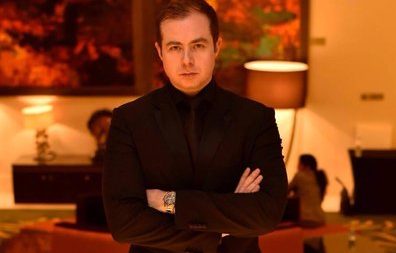
Anyone at the Fringe who is even remotely a fan of magic or burlesque will almost certainly be very familiar with the iconic Voodoo Rooms ballroom. But none will have seen a show as perfectly suited to the space as 00:30 Cabaret O’Clock: Magic vs Burlesque, featuring real-life cabaret power couple, magician Arron Jones and burlesque dancer Fou Fou Kaboom. It may be presented as a showdown between magic and burlesque, or “tits versus tricks”, but there are no real losers in an audience that gets to watch these two fantastic performers work the stage for an entire hour.

Jones is a familiar face for magic fans, known for his wonderfully weird, creative takes on the very concept of how to perform a magic show. At Magic vs Burlesque he only has two chances to make an impression, but with a couple of crowd pleasers he does Team Tricks proud. His first trick is the highlight, a tried and tested favorite card trick that he often performs in variety lineups. He manages to get the whole audience involved and excited in a way that is rarely seen in a card trick. It’s the perfect example of the approach to magic that sets Jones apart, and is why he has found such a successful niche with his performance style.

Kaboom will similarly be a familiar face for many Fringe regulars, primarily due to her popularity on the many late-night cabaret variety shows that regularly run at the Voodoo Rooms. For the fans she has cultivated through this work, the most satisfying part of Magic vs Burlesque is seeing this incredible performer get the focused attention and literal spotlight that she’s always deserved. The second of her two performances in Magic vs Burlesque is a highlight, showcasing the expertise, creativity, and playful humor that Kaboom is known for. This publication might be contractually obligated to consider itself Team Tricks, but it’s worth mentioning that Kaboom’s second choreography isn’t just a highlight of the show, it’s a highlight of this year’s Fringe. For anyone with any level of interest in burlesque and/or dance, it makes the whole show feel instantly worthwhile—even if, somehow, it hadn’t already. 

Magic and burlesque each have their own particular approaches to audience participation, and both are at play in this show. Jones and Kaboom are both respectfully playful with their participants. The entire audience also gets involved in the competition between magic and burlesque. Jones and Kaboom split the audience between themselves at the start, and representatives from each side face off in a series of games, as well as coming together to participate as a whole. Both performers expertly select their champions, with priority given to the numerous excited volunteers.

Magic vs Burlesque is the perfect way to end a day at the Fringe. The real life love story between Jones and Kaboom makes this lightly combative event feel wholesome. It’s notable and adorably impressive that their chemistry is so evident in their limited, fairly structured time together onstage. Their physical and verbal affection has the confident understatement of a couple seemingly very secure in their relationship, which doesn’t just bode extremely well for their upcoming marriage, but also makes their shared stage feel like a safe space for a little loving rivalry. Whether audience members come in biased toward tits or toward tricks, they will leave with a new appreciation for both. 

UNDERGROUND MAGIC

☆☆☆☆

For most of the year it may be Edinburgh’s favorite fortnightly night out, but for the duration of the Fringe, Underground Magic, like many Edinburgh locals, is working extra hard. Every single night the Fringe crowd is welcomed to the Liquid Rooms for a night of magic (underground) featuring a regularly rotating lineup. The reviewed lineup was composed of Cameron Gibson, Max Fulham, Andy Boyd, and Elliot Bibby, hosted by one of the founders of Underground Magic, Luke Osey.

Osey is an able host, getting the audience excited and performing bits of magic in between the featured performers. The reviewed show was a treat for his longtime fans, featuring everything from a certain favorite prop that is reminiscent of his “assistant” in his solo show last year to a newer circus trick that few, if any, will have seen him perform before. It’s this newer trick that proves a highlight of the evening, as Osey got several members of the audience involved in helping him successfully complete it.

Osey’s first guest is his co-founder of Underground Magic, Edinburgh’s own Cameron Gibson. Gibson performed a crowd-pleasing favorite, his take on the cup and ball trick. It may be described as the oldest trick in magic, but in Gibson’s talented hands it still has the power to amaze and entertain modern audiences. Even those who have seen this performed by others would enjoy Gibson’s neo-classically clean interpretation.

The next in the line-up is Fulham, Underground Magic’s diversity hire. Underground Magic regularly includes non-magician variety acts as a little bonus for its audience. Fulham might be a ventriloquist, to this untrained eye probably the best ventriloquist in the world, but he still gets in on the magic fun, performing both a puppet act and a puppet-assisted magic trick.

Third in the lineup is Fringe favorite Boyd, who has the skills of just about an entire circus. Boyd demonstrated a fraction of the range of his skills, which are still plenty to keep the audience going. He had the dubious honor of performing the grossest trick of the evening, which truly has to be seen to be believed.

Underground Magic might be founded and run by Osey and Gibson, but they’re not just a double act, they’re two thirds of Edinburgh’s premier platonic power throuple Insane Magic. The audience at this reviewed show were lucky enough to also get to see the third member, Bibby, headline the evening. Bibby lived up to his reputation with a ridiculously exciting card trick reveal with a real emphasis on the “reveal”. 

The lineup of Underground Magic might change every night, but the reviewed show is evidence of the high caliber of talent that they are able to attract. For Fringe audiences, it’s a taster of the different magic and variety shows on offer. For Edinburgh locals, it’s also a reminder of how lucky we are to live in this city, with these two incredible magicians who take the time to curate a varied, exciting lineup of performers for us twice a month every single month. Either way, it’s the perfect inclusion to a Fringe night out.

COLIN TIE: THE BEST COMEDY & MAGIC SHOW YOU’LL SEE IN THE NEXT 45 MINUTES (PROBABLY)

☆☆

Colin Tie knows how to set realistic, achievable goals. His Fringe show The Best Comedy & Magic Show You’ll See in the Next 45 Minutes (Probably) gives the audience the right idea of what to expect from the start. Tie’s sarcastic humor is a constant throughout the show. He’s certainly popular, especially with young families. The reviewed show was completely full, and even had latecomers standing in the back and at the sides once the seats filled up. While the magic he performed feels fairly basic by Fringe standards, and the show itself feels at times tonally confused, Tie has put together a solidly family friendly set that he performs well.

The Best Comedy & Magic Show is less focused on thematic cohesiveness and instead is composed of a series of magic routines that are perhaps simply Tie’s favorites. While these may be familiar to magic fans, and not always performed quite as neatly as Fringe magic regulars are used to, Tie’s young audience members certainly enjoyed them. An early highlight was Tie’s foam balls routine, which the young participant was visibly thrilled to see happen in his own hands.

Tie makes a real effort to involve as many of the children in the audience in the magic as possible. He is great at stage managing his younger participants, and gracefully allowing them to take the spotlight when they are unexpectedly funnier than him. Where adult participants are required Tie is clear about his needs and makes sure he gets folks onstage who can adequately assist in the task of the moment.

The majority of the show might be in Tie’s sarcastic comedy style, but he makes a few digressions that seem out of place. Some, like a rant against smartphones and tablets that has no apparent connection to the trick that he’s performing, feel like an attempt at comedy that just didn’t land with the majority of the audience at the reviewed show. Others, like his final monologue, feel like the bones of a second show peeking through, slightly more serious and perhaps more structured. It may be a mixed impression, but overall Tie’s approach builds interest for seeing what he might do next.

The Best Comedy & Magic Show You’ll See in the Next 45 Minutes (Probably) may not be the most consistent show, or the neatest magic of the Fringe, but Tie’s personable approach to magic does a lot to make it feel worthwhile. It’s particularly notable as a prospect for families with young children, as an accessible option that only requires a queue rather than a ticket. The children in particular will appreciate Tie’s magical performance.

JAMES MCDIARMID: THE CURIOLOGIST

☆☆☆

James McDiarmid knows how to put the “bizarre” in bizarre magic. In his Fringe show The Curiologist, he introduces his audiences to a series of curiosities that he has collected in his life, telling their stories illustrated with magic. By design it’s more of a storytelling show than a magic show, but while there are few tricks, they are performed perfectly and are precisely in theme.

When there are so few magic tricks, every trick counts, and errors have that much more effect on the overall impact of the show. Luckily, McDiarmid performs his impeccably. An early card trick is a highlight, featuring an unusual and exciting reveal that is interesting both for its originality and how well it’s integrated into the story that McDiarmid illustrates. McDiarmid also creates little magical moments in between the main stories, most notably with the help of the spookiest magician’s assistant in the business, Emily the vintage doll. These keep the audience engaged through the moments of transition, always on the lookout for the next unexpected trick.

McDiarmid naturally invites a few participants to join him onstage, but a show with relatively few tricks means relatively few participants. Introverts might have an easier time hiding in the back to enjoy the magic without getting pulled onstage than at most magic shows. That being said, McDiarmid has a kindly stage presence and makes sure his participants feel welcome.

The stories McDiarmid tells might be spookily themed, but his natural charm and humor cut through to lighten the energy of the show. The Curiologist is more akin to a camp counselor sharing ghost stories around the fire before the children in his care go to sleep than a horror movie. This is to McDiarmid’s benefit; his act has a wide appeal.

The Curiologist is the perfect nightcap of a show for those who appreciate a creepy theme but still want to sleep well after. The care that McDiarmid has put in to every detail is noticeable and worth appreciating. Every last item has its curio label, even McDiarmid himself. Magic fans and spooky story fans alike will find attending The Curiologist worth the risk of being labeled and added to McDiarmid’s collection.

ANDY BOYD: THE PROFESSIONAL SHOWOFF

☆☆☆☆

Audiences might expect a certain amount of cockiness in the attitude of a performer who would call his Fringe show The Professional Showoff. Andy Boyd isn’t like that. He might know how to do a lot of cool and unusual magic and circus tricks, but his demeanor throughout is friendly and welcoming, expressing appreciation for his audience members. The Professional Showoff is part magic, part homemade machine demonstration, and part juggling, and in all of those categories Boyd is exceptional.

There might be plenty of performance categories included, but the magic in particular is a recurring theme. Boyd frequently uses magic to highlight and punctuate the other elements of his show. A clear highlight is his final trick, which is so worth seeing that it would be worthwhile sitting through the whole rest of the show just for that trick—and Boyd makes sure that the preceding forty-five-ish minutes are plenty entertaining too.

Boyd’s fans may recognize that he has kept the same title for his Fringe show as last year, but he’s brought some new tricks and props. Particularly exciting is a very impressive robot-looking camera. Boyd demonstrates this on the audience and then uses the result for a unusual take on a magic routine. The creativity in his use of magic and its integration with the other skills that he demonstrates keeps Boyd’s work exciting even for magic fans. They might recognize some element of the trick, but Boyd will make sure they view it in a new light.

Much of the audience gets involved in Boyd’s show, in a variety of roles ranging from those that can be performed from their seats to some that are invited onstage. Particularly exciting is the opportunity to operate one of Boyd’s machines at will; audience members are advised to sit in the front row to have the best shot at getting to do this. Boyd might seem increasingly alarmingly talented as the show progresses, but he is evidently self-aware enough to know that not everyone has his skills, and makes sure to give his audience participants accessible tasks.

Boyd is a whole circus in one person, and in The Professional Showoff audiences get to witness some of his exceptional talents. Its lunchtime slot might make it feel like an early morning event by Fringe standards, but it’s worth a watch, whether as a lunch break or a way to start the Fringe day.

SIEGFRIED AND JOY: LAS VEGAS IN EDINBURGH

☆☆☆

Acclaimed magic double act Siegfried and Joy have made their long-awaited return to the Fringe this year, with their Las Vegas in Edinburgh show. Their local fans may remember their sold out Fringe debut three years ago. This year they are once again sold out, but in a much larger venue. Eager attendees in the lengthy queue to get inside could be heard comparing the Siegfried and Joy queue to a Ryanair boarding queue, there were so many people it was difficult to imagine them all fitting in the venue. But everyone managed to pile in, and Siegfried and Joy kept them all thoroughly entertained for the hour.

Siegfried and Joy have a distinctly silly style and tone that has garnered them their following. Much of the show comprises of magic-themed jokes and occasionally acrobatic dances, all covered in more glitter than it is possible to expect. This is what the audience is here for, perhaps even more than the magic, and Siegfried and Joy do not disappoint. The joke effect that they are most famous for online accurately sets the tone, and is given pride of place in their live performance.

For magic fans, the actual magic may feel slightly underwhelming. In amongst the jokes Siegfried and Joy do sprinkle in real tricks that are performed well, but, especially at an arts festival that attracts such creativity, some of their reveals can feel a bit redundant and even at times basic. It’s worth noting that the reviewed event was just an hour taken out of their proper theatre-length show; perhaps their full show is more well-rounded and polished and would come across differently. Nevertheless, there are magical highlights, most notably a card trick that uses an added element of wetness to make the reveal all the more impressive.

Siegfried and Joy’s use of audience participation is unusual and suitable for their style. While they invite audience members to join them onstage, they “speak for” the participant, which, aside from being hilarious, is a clever way to maintain their quick pace and ensure that the participant can be heard all the way through to the back of the audience. It’s participants as props more than as genuine participants, but it suits the tone of the show.

Las Vegas in Edinburgh may not be the most technically impressive magic show at this year’s Fringe, but it doesn’t have to be. Siegfried and Joy are delights to watch onstage, and their legions of fans are thrilled to witness them in action. They make a very real contribution to magic as an art form in their role as two of its most renowned ambassadors. The Edinburgh Fringe may not have given them the time to perform their full, polished show, but the people of Edinburgh will be grateful for the hour they get to spend with these wonderful performers.

TOM BRACE: THE TOM BRACE MAGIC HOUR

☆☆☆☆☆

Fringe regular Tom Brace has been performing for Edinburgh audiences for a whole ten years. This year, in his new show The Tom Brace Magic Hour, all he wants to do is invite his audience over to play some games. They’re magical games, and the relationship is still very much magician-participant— Brace is always in control—but the atmosphere feels slightly more laid back. Brace presents the show like a television program, complete with a commercial break, for an exciting spin on his daily game night.

Brace explains early on that he is resorting to inviting his audience to his game night due to his family getting tired of him using his mentalist abilities to always win. What might not be the best experience in a family game night makes for an entertaining magic show. Brace excels at presenting his effects in theme, and The Magic Hour is no different, each routine feels perfectly in place with its game-style framing. Every prop and reveal feels game related. Of the many highlights, a standout piece is his version of Scrabble, which gets several audience members involved in a way that is random but allows for the most enthusiastic to nab their time in the spotlight, and contains a couple strong, increasingly complex reveals.

Brace uses audience participation in the typical magician fashion, and gets a good proportion of the audience involved. He is not out to embarrass anyone, and the audience gets to know this fairly quickly, so he gets plenty who are enthusiastic to be onstage with him. While the theme is game night, it’s a magical game night, so Brace takes any difficult or potentially embarrassing tasks for himself and ensures that his participants can join in in comfort.

It wouldn’t be a family game night without some measure of chaos, and at the reviewed show Brace’s audience participants don’t disappoint. Brace is excellent at navigating the chaos to allow unexpectedly funny moments to shine without letting rogue audience members derail the magic. Of particular note was the relationship he built with one especially enthusiastic young participant, who had an innate performer’s instinct and desire to entertain the audience he found himself in front of. Brace made sure to corral those instincts without discouraging him, and even gave this young audience member a trusted, important role later in the show. Brace’s ability to balance encouraging a young person’s creativity with ensuring that it did not disrupt his own show is admirable, and had all the makings of a positive core memory for the child in question.

The Tom Brace Magic Hour is part television show, part family game night, and all good fun. Brace celebrates his longevity at the Fringe with a party as much as a spectacle. The show is family friendly and Brace is great with kids, but as the audience left at the end, attendees of all ages and enthusiasm levels for magic could be heard exclaiming their wonder and delight with his performance. Brace has a demonstrably universal appeal, and his magic game night is one not to miss.

JAMES PHELAN: SHOWMAN

☆☆☆☆

When assessing Fringe shows, it’s not always fair to judge the quality of the venue, with such a variety of possibilities and with performers not always having perfect control over which they are allocated to. However, it is impossible to deny the powerful effect of setting, for good or ill, on any performance experience. Entering James Phelan’s tent for Showman, the most obvious first impression is that not only does he have a beautiful venue, but his set design is gorgeously put together to make the absolute most of it. Phelan lets his audience in early to enjoy the ambiance and pre-show live music, a relaxing contrast to the usual Fringe rush to get seated as quickly as possible. Once he takes to the stage, that calming trend continues.

Phelan demonstrates his mentalist abilities in a variety of ways, but his specialty here is hypnotism, and this is where he spends the majority of the show—perhaps more than usual at the reviewed show. The entire audience might get involved at first, in a series of activities that prove both interesting and relaxing, before Phelan chooses those who stand out to join him for a deeper hypnotic experience. Phelan manages to demonstrate an astonishing range of hypnotic and mentalist effects, in a way that gets many un-hypnotized members of the audience involved from their seats.

If Phelan is known for any one thing as much as hypnotism, it’s his excellence in dealing with the audience, as a collective but most especially as individuals. Phelan manages to make friends with a solid proportion of them at the reviewed show. His carefully casual attitude makes those who join him onstage feel welcome, without ever doubting that he is the one in control. He is such a welcoming host that at the reviewed show one of his participants took off her shoes to allow her to more easily accomplish her tasks, even leaning on Phelan to do so—far from a common occurrence at a magic show, or even a hypnotism show. While this behavior is not encouraged, the fact that it happened exemplifies the audience’s immediate trust in and affection for Phelan as soon as they meet him.

The theme of Showman might be the contrast between fragility and permanence, but, even with his mentalist powers, Phelan may not have been able to predict just how well the reviewed show would emphasize this. Whether his participants were unexpectedly leaning on him to remove their shoes or generally struggling with their role in the show, Phelan experienced a remarkable range of ways that audience participants can inadvertently attempt to derail a magic show, through no fault of his own. The audience was left with no doubt that he uses genuine participants without relying on stooges. What began as a magic show temporarily transitioned into a masterclass in participant management, as Phelan masterfully ensured that he got what he needed from his audience with the calm demeanor of a gracefully gliding swan that was undoubtedly paddling beneath the surface with increasing urgency. This became, as well, an active demonstration of Phelan’s ability to transform the fragile relationship between audience participants and his show into a permanent reminder of the power and at times sheer force of will that makes a true Showman. The strength of Phelan’s theme was clearly developed through the ordinary course of his show as well, he certainly didn’t “need” the audience’s help, but the events of the reviewed show ended up handing him an unexpected way to underline his point.

Phelan will guarantee that his audience gets the full experience of Showman, of that they can be certain. At the reviewed show he risked the notorious wrath of his venue management by running well over his allocated time to ensure that he could complete his show in spite of participant-related delays. This commitment to his audience’s experience is undoubtedly at least one of the reasons why Phelan is regularly selling out this Fringe. Prospective audiences had better act fast if they want to catch him in his beautiful tent.

ANDREW MCKINLAY: CLASSIFIED

☆☆

In a colorful central venue, Andrew McKinlay can be found performing his mentalist show Classified… or at least, that’s his cover for recruiting for the mysterious Bureau, one audience at a time. McKinlay takes his audiences through a series of tests to judge their suitability to join up. While the show is not not flawless and McKinlay seems to struggle at times to connect with his audience, it’s an entertaining time.

McKinlay has made an effort to theme his effects for a recruitment drive, and by and large he’s done a good job. Perhaps, in this case, slightly too good of a job, as his reveals may come to feel a bit same-y. To a skeptic this is arguably a feature of magic in general, but many Fringe magicians add in enough creativity and variety of effects to keep their shows interesting. The effects employed are all mentalist in nature, so perhaps particularly suited to fans of that genre of magic.

With a relatively small venue and recruitment theme, McKinlay is able to include pretty much the entire audience in his act at the reviewed show. Results are complimentary, with McKinlay ensuring that everyone passes the tests and is judged suitable for The Bureau. McKinlay is a friendly presence, and makes participation feel more like the most chill job interview ever than like joining a magician onstage.

McKinlay struggles slightly with timing and connection with the audience throughout the show. He has a tendency to draw out the setup, slowly showing the audience nearly all the cards or pages in a notebook where it might feel slicker to just show a few as a representative sample. The connection with the audience may be more a problem with the audience at the reviewed show, which was slightly combative, than with McKinlay himself. After the show McKinlay could be seen chatting to tables of strangers at his venue with more charm and charisma than he displayed during the show. While it’s unfortunate that McKinlay wasn’t able to recover this show’s audience, he is clearly able to win over others.

The reviewed show of Classified may have been a mixed experience, but McKinlay is clearly a competent performer and his concept for the show has an interesting potential. Mentalism enthusiasts, and those who would like to join The Bureau, may enjoy it.

DAVID ALNWICK: MAGICIAN. NOT CREEPY.

☆☆☆☆

Music fans might have Taylor Swift and her Eras Tour, a wildly popular performer showing off her longevity and creativity in a massive three hour spectacle. David Alnwick is the Fringe magic equivalent of Taylor Swift. Alnwick’s informal Eras Tour might be modular in nature, with at least three hours’ worth of shows throughout every day of the Fringe, but if anything that makes it more accessible. While his most ardent fans have been known to follow him around for the day, those with less time to devote to him daily have the whole month to catch all his shows. Magician. Not Creepy. is Alnwick’s second regular show of the day. Here Alnwick demonstrates a range of the magic that earned him his renown, with a nod to the venue, which had historically hosted his creepier content.

In Magician. Not Creepy. Alnwick draws from several of his eras as a magician. One of the many things that Alnwick is known for is his card tricks, and he performs several of his regular favorites. These are a highlight, managing to be impressive and entertaining even for those who have seen them before. Magic fans may particularly appreciate the skill required to perform a well known card trick using a fairly tight jean pocket rather than the roomier suit jacket pocket that magicians tend to favor. Alnwick has perfect mastery over his deck and is not afraid to let his audience get close to him. He also performs some of his less regular and even new content, a real treat for long time fans in particular.

Alnwick might occasionally lightly tease his audience as a whole, but he is very welcoming to his participants. Once a member of the audience joins him onstage, they are transformed into a cherished member of the act, and Alnwick makes sure they know it. Alnwick primarily chooses his participants at random, based on instincts honed with over a decade of Fringe performances, and these prove unerringly accurate. For his more involved roles he gives the individual he lands on a clear out if they don’t want to participate, but at the reviewed show none took it—he is very beloved in Edinburgh.

Alnwick’s fans will know that of all the things he’s known for, the big overarching one is being perfect. Or, for those who believe that true perfection is not possible despite Alnwick regularly demonstrating evidence to the contrary, being so consistently close that he comes across as perfect anyway. At the reviewed show the one noticeable error was Alnwick opening a deck of cards too enthusiastically and throwing them all over the floor, but even this felt like a tribute to his earlier, messier shows that regularly ended with the stage covered in abandoned cards and other magical detritus.

Whether they know him by reputation or from his previous work, no one could possibly leave Magician. Not Creepy. at all disappointed. It’s a worthy stop for anyone from his biggest fans to those looking for a magic show to tick the genre off their Fringe list. Unlike Swift, Alnwick doesn’t make a big production out of regularly performing daily for three to four hours, it’s simply how he shows up for his fans, himself, and his art every year. Here, at the midpoint of his day, he is flawless as ever.