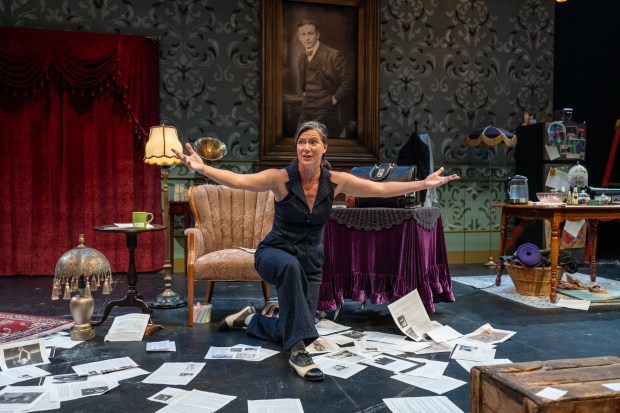
4 Stars

BEN HART: LABYRINTH

☆☆☆☆

At the Edinburgh Festival Fringe, magician Ben Hart’s real competition is simply – Ben Hart’s previous shows. Or at least you will believe upon attendance of his latest work, Labyrinth. One of the greatest appeals of the Fringe is the sheer quantity of shows a patron can go to in one day, one city. You could (we at WMR often do) fit in at least half a dozen magic shows in one day, running to venue to venue, gorging yourself on talent. But Hart’s truest showmanship talent is making the competition fully fall away in your mind while you are in his presence.

As always, Hart’s show follows a narrative theme. In Labyrinth, fairly self explanatorily, we are invited to reflect on the concept of following strings through a labyrinth, and the metaphorical implication of that concept as if in our thought processes and how decisions we make are strung together to the next step and overall impact on our lives, leading us through our own personal labyrinths. While a solidly relatable theme, Hart does not lean into it as heavily as may be expected. The opening stage is decorated with a clock face of strings, and the variations on this theme are mentioned to open various tricks, but the cohesion to the plot is not quite to Hart’s norm. It seems to be there more for conveniance than to demonstrate a story Hart wishes to tell through magic.

If we are a bit light on plot, the same cannot be said for enthusiasm of effects. Hart weaves into Labyrinth many tricks magic fans will be delighted to see, from found cards, mentalism, and physical effects. While a move here or there may not be quite quick enough yet for the trained eye, his talent is nevertheless unmistakable. A particulary impactful portion of the show is a shadow puppet interlude, during which Hart demonstrates that his skills and humor are ever growing. And while an ultimate reveal may follow a structure that magic fans will find familiar, the physical facet of this reveal is both unprecedented and highly impressive.

Hart is and has always been a spectacular showman. His persona on stage is larger than life, and the ambiance of his shows is perfected to support them in every aspect. From matching his personal vibe to the grandiose and mysterious venue, employing approrpiately dramatic lighting and sound effects, and designing a beautiful stage, Hart is obviously aware that atmosphere has a powerful impact on how a performance is received. But even more impressive is how adaptable said onstage persona is. At one moment enigmatic and intimidating, Hart can switch on a dime to be a jovial and welcoming everyman, easily bantering with audience participants and easing any concerns they may have about participating, even while lightly ribbing their self consciousness.

The Labyrinth is an excellent example of how Ben Hart has dominated the Fringe magic scene for so many years. It is a wholly accessible primer of well performed magical effects, formed together in a thought provoking narrative concept. A wise Fringe attendee would indeed let the string of this review lead them to Ben Hart this year.

JAMES PHELAN: SHOWMAN

☆☆☆☆

When assessing Fringe shows, it’s not always fair to judge the quality of the venue, with such a variety of possibilities and with performers not always having perfect control over which they are allocated to. However, it is impossible to deny the powerful effect of setting, for good or ill, on any performance experience. Entering James Phelan’s tent for Showman, the most obvious first impression is that not only does he have a beautiful venue, but his set design is gorgeously put together to make the absolute most of it. Phelan lets his audience in early to enjoy the ambiance and pre-show live music, a relaxing contrast to the usual Fringe rush to get seated as quickly as possible. Once he takes to the stage, that calming trend continues.

Phelan demonstrates his mentalist abilities in a variety of ways, but his specialty here is hypnotism, and this is where he spends the majority of the show—perhaps more than usual at the reviewed show. The entire audience might get involved at first, in a series of activities that prove both interesting and relaxing, before Phelan chooses those who stand out to join him for a deeper hypnotic experience. Phelan manages to demonstrate an astonishing range of hypnotic and mentalist effects, in a way that gets many un-hypnotized members of the audience involved from their seats.

If Phelan is known for any one thing as much as hypnotism, it’s his excellence in dealing with the audience, as a collective but most especially as individuals. Phelan manages to make friends with a solid proportion of them at the reviewed show. His carefully casual attitude makes those who join him onstage feel welcome, without ever doubting that he is the one in control. He is such a welcoming host that at the reviewed show one of his participants took off her shoes to allow her to more easily accomplish her tasks, even leaning on Phelan to do so—far from a common occurrence at a magic show, or even a hypnotism show. While this behavior is not encouraged, the fact that it happened exemplifies the audience’s immediate trust in and affection for Phelan as soon as they meet him.

The theme of Showman might be the contrast between fragility and permanence, but, even with his mentalist powers, Phelan may not have been able to predict just how well the reviewed show would emphasize this. Whether his participants were unexpectedly leaning on him to remove their shoes or generally struggling with their role in the show, Phelan experienced a remarkable range of ways that audience participants can inadvertently attempt to derail a magic show, through no fault of his own. The audience was left with no doubt that he uses genuine participants without relying on stooges. What began as a magic show temporarily transitioned into a masterclass in participant management, as Phelan masterfully ensured that he got what he needed from his audience with the calm demeanor of a gracefully gliding swan that was undoubtedly paddling beneath the surface with increasing urgency. This became, as well, an active demonstration of Phelan’s ability to transform the fragile relationship between audience participants and his show into a permanent reminder of the power and at times sheer force of will that makes a true Showman. The strength of Phelan’s theme was clearly developed through the ordinary course of his show as well, he certainly didn’t “need” the audience’s help, but the events of the reviewed show ended up handing him an unexpected way to underline his point.

Phelan will guarantee that his audience gets the full experience of Showman, of that they can be certain. At the reviewed show he risked the notorious wrath of his venue management by running well over his allocated time to ensure that he could complete his show in spite of participant-related delays. This commitment to his audience’s experience is undoubtedly at least one of the reasons why Phelan is regularly selling out this Fringe. Prospective audiences had better act fast if they want to catch him in his beautiful tent.

DAVID ALNWICK: MAGICIAN. NOT CREEPY.

☆☆☆☆

Music fans might have Taylor Swift and her Eras Tour, a wildly popular performer showing off her longevity and creativity in a massive three hour spectacle. David Alnwick is the Fringe magic equivalent of Taylor Swift. Alnwick’s informal Eras Tour might be modular in nature, with at least three hours’ worth of shows throughout every day of the Fringe, but if anything that makes it more accessible. While his most ardent fans have been known to follow him around for the day, those with less time to devote to him daily have the whole month to catch all his shows. Magician. Not Creepy. is Alnwick’s second regular show of the day. Here Alnwick demonstrates a range of the magic that earned him his renown, with a nod to the venue, which had historically hosted his creepier content.

In Magician. Not Creepy. Alnwick draws from several of his eras as a magician. One of the many things that Alnwick is known for is his card tricks, and he performs several of his regular favorites. These are a highlight, managing to be impressive and entertaining even for those who have seen them before. Magic fans may particularly appreciate the skill required to perform a well known card trick using a fairly tight jean pocket rather than the roomier suit jacket pocket that magicians tend to favor. Alnwick has perfect mastery over his deck and is not afraid to let his audience get close to him. He also performs some of his less regular and even new content, a real treat for long time fans in particular.

Alnwick might occasionally lightly tease his audience as a whole, but he is very welcoming to his participants. Once a member of the audience joins him onstage, they are transformed into a cherished member of the act, and Alnwick makes sure they know it. Alnwick primarily chooses his participants at random, based on instincts honed with over a decade of Fringe performances, and these prove unerringly accurate. For his more involved roles he gives the individual he lands on a clear out if they don’t want to participate, but at the reviewed show none took it—he is very beloved in Edinburgh.

Alnwick’s fans will know that of all the things he’s known for, the big overarching one is being perfect. Or, for those who believe that true perfection is not possible despite Alnwick regularly demonstrating evidence to the contrary, being so consistently close that he comes across as perfect anyway. At the reviewed show the one noticeable error was Alnwick opening a deck of cards too enthusiastically and throwing them all over the floor, but even this felt like a tribute to his earlier, messier shows that regularly ended with the stage covered in abandoned cards and other magical detritus.

Whether they know him by reputation or from his previous work, no one could possibly leave Magician. Not Creepy. at all disappointed. It’s a worthy stop for anyone from his biggest fans to those looking for a magic show to tick the genre off their Fringe list. Unlike Swift, Alnwick doesn’t make a big production out of regularly performing daily for three to four hours, it’s simply how he shows up for his fans, himself, and his art every year. Here, at the midpoint of his day, he is flawless as ever.

JACK KENYON: TABLE FOR TWO

☆☆☆☆

The Fringe is a busy time of year. It’s been described as the Olympics for culture critics, and it’s even busier for artists advertising, developing, and performing their work for the entire month. It can be difficult to find time for personal life. Jack Kenyon has found a solution. In Table for Two, Kenyon takes one audience member per show on a practice date, to help him recover from a rough breakup and prepare to re-enter the dating world. It’s a cute premise, and at the reviewed show Kenyon manages to have a good date.

Slightly hilariously for a show with this premise, the magic is explicitly themed on Kenyon attempting to fix the aspects of his character that his ex cited as reasons for ending their relationship. Of course in real life regularly referencing your ex’s complaints about you on a date is poor behavior, but in this magic show it provides a useful framework—and, as this is just a practice date, Kenyon has the excuse that he’s getting this unproductive date behavior out of his system. An early highlight is Kenyon demonstrating his newfound romanticism with a card trick, which is sweet, meaningful, and magical, perfectly setting the scene for the rest of the show.

The perspective that this show takes towards its own premise and conclusion feels very innocent, like the fluffiest of romcoms. Unlike many magicians who are eager to point out, often in the closing moments of the show, that they were in perfect control of everything that happened at all times, Kenyon often presents his magic almost as if it were real. A matching trick is, in Table for Two, an indication that Kenyon and his mock date have perfect chemistry, not framed as a demonstration of Kenyon’s abilities. It’s a different attitude towards magic than is usually seen at the Fringe, setting Kenyon apart, and it works perfectly for the style of show that he is performing.

As indicated in the advertising for Table for Two, there is one audience participation role that is especially involved, that of the audience member selected for the date. This participant is selected at random, but in a way that is easy to opt out of for those who would prefer not to be onstage for the majority of the show. Other participation roles are fairly minimal, easily executed by the individuals chosen.

Table for Two might be more of a magical experience than a magic show for the participant Kenyon takes on his nightly date, but it’s entertaining for those enjoying it as a show from the audience seats as well. Kenyon’s livestream set up ensures that the effects that happen on the restaurant table are visible to everyone watching. Whether audience members bought their tickets because they liked the look of Kenyon’s face on his poster and wanted to try their luck at a date, or just to see an unusual magic show, they will be happy that they attended.

KEANU HO: EASTERN ILLUSIONS REIMAGINED

☆☆☆☆

The impact of Chinese culture on the international conception and performance of magic is undeniable, perhaps most obviously in the ubiquity of the classic linking rings effect. However, while Edinburgh increasingly sees magic from a variety of international performers, China’s magical heritage is most often illustrated to Fringegoers by magicians with no personal connection to it. Luckily, this gap in the Fringe magic program has been filled this year by Keanu Ho, who has brought his Eastern Illusions Reimagined from Hong Kong. Ho updates tradition to perform a set that feels both modern and imbued with his own personality, while also acting as a means of cultural expression and exchange.

Eastern Illusions Reimagined is part of the Fringe’s Chinese Culture Week, and perhaps the emphasis on explaining Chinese magical heritage is in part due to this brief, but Ho expresses what feels like a real and deserved pride in that heritage. The linking rings, commonly described as Chinese linking rings, are of course given a prominent role in his opening act. At other points, Ho’s own personality shines through especially clearly. His card routine is a highlight of creative presentation. Describing it as a “card routine” doesn’t do justice to the experience of watching it; Ho turns a trick that many magic fans might have seen before into a moment that is exceptionally fun and exciting to see.

In between the magic, Ho is approachable and informal, chatting with his tech support and the Chinese Culture Week staff. It does, at times, feel less like a magic show and more like Ho is hosting a gathering of friends, introducing his new friends in the audience to his older friends who are involved in the production. There is of course plenty of magic presented, but these interludes highlight Ho’s hospitality as he invites the audience to witness and take part in his routines.

By magic show standards Eastern Illusions Reimagined is relatively light on audience participation. Most of the audience are able to join in from their seats, examining the props that Ho brings for them to examine. For the one more involved role, Ho was able to select the most enthusiastic audience member to participate, and she was clearly overjoyed to be able to experience the magic from a closer perspective. It’s worth noting that the Chinese Culture Week staff who sat in on the reviewed performance helped Ho curate his hospitable atmosphere, most notably in helping this participant get photos and videos of her time onstage.

Eastern Illusions Reimagined is a well crafted, well performed show, both as a piece of cultural exchange and as a magic show in its own right. Ho is an excellent performer who seems born for the stage. At the reviewed show Ho surprisingly revealed that he was mostly retired from performing magic prior to preparing for this Fringe run, and instead works as an educator and mentor to children in Hong Kong. His audience will undoubtedly hope that he continues to create and perform magic, they will be keen to see more from this engaging, exciting performer.

ELLIOT BIBBY: ABRACADADA

☆☆☆☆

In the opening moments of Abracadada, a family friendly show that attracts all ages, Elliot Bibby explicitly welcomes adults with kids to enter and exit the show as often as needed to cater to the little ones. He’s family friendly on both an artistic level and on a human level. The show itself is themed on childhood, from Bibby’s own childhood experiences through to his current experience as a father of two.

As the show progresses, it becomes clear that his opening remarks weren’t just empty words. Beyond the magic, the real factor that sets Bibby apart is in how he interacts with his audience. At the reviewed show Bibby had two very enthusiastic young siblings in his front row, heckling him in that adorable but still potentially disruptive way that kids do. Bibby made sure to get them both involved at appropriate points in the show. His navigation of their interruptions revealed not just the unflappably professional demeanor that has made him such an in demand magician, but also a keen sense of the potential rivalries of sibling politics, which he navigated flawlessly in his responses to them.

Most of the tricks that Bibby performs might be familiar to magic fans, but they are well themed and perfectly performed. Those who have seen any particular trick and think they might know how it works won’t get confirmation from Bibby. A highlight draws inspiration from Bibby’s other Fringe venture, with a child-friendly makeover that results in one of the many particularly adorable audience participation moments of the show. His final reveal is also impressive, he may employ a classic magician closer but manages to use it in an unusually visual, thematic, and engaging way.

The Abracadada theme feels fairly light touch in that as much a description of Bibby’s life as a magician and father as it is a theme for the show, and is used to encompass incidents from his own childhood as well—not a critique so much as a comment on the type of show that Bibby is choosing to perform. That being said, the care and attention to detail in the props and presentation results in an especially cohesive show. Bibby is also in a position to uniquely embody his theme, showing off his dad skills as much as his magic skills in how he speaks to his audience.

As at the writing of this review, Bibby has been regularly selling out his Abracadada run and appears poised to continue to do so. It’s not just families with young kids in the audiences. Bibby is a Fringe regular, and particularly as this is his first solo show in a little while, it’s attracted his long time fans as well, who are committed to him regardless of the theme. Abracadada might be a different theme than they’re used to, but it is a beautiful little triumph of a show. Bibby’s old and new fans left his venue slightly more joyful for having experienced it.

ANDREW FROST: JUST LET ME HAVE THIS

☆☆☆☆

Popular card magician Andrew Frost seldom uses other props, but in his new Fringe show Just Let Me Have This he breaks with tradition to briefly consult a dictionary. So, it’s fitting that as his audience filtered out, one woman could be heard saying to her friend, “I’m the definition of flabbergasted!”

Frost is a friendly stage presence from the moment that the audience enters, greeting folks as they come in and getting early arrivals to help with the set up for a trick while the rest make their way in. Like most magic shows Frost uses a significant portion of the audience in the act, and at the reviewed show his friendly demeanor is, at times, tested by the unexpected nature of these interactions. Luckily Frost is a true professional, remaining kind to his participants even when they mistakenly undercut the occasional reveal.

The magic that Frost performs is, as his fans will have come to expect, primarily card magic. It can be a challenge to make an hour of card magic feel varied enough to hold an audience’s attention, and even more so for an annual regular like Frost, but you wouldn’t know it to watch him perform. This year he does include a few other props, including a couple of books and even a mathematical prediction, which he performs with his usual skill. However, Frost evidently knows what his fans come back for, and the card tricks he performs are the clear highlights.

Frost also leans in to his storytelling talent this year, spending slightly more time telling the audience the stories from his life that augment the tricks. He is an entertaining speaker, frequently getting laughs as big as the applause for his magic. In a festival known for having possibly too many comedians, this may not be the factor that sets him apart, but it certainly increases his appeal.

If the sold out reviewed show is anything to go by, Frost’s previous ventures have cemented his status as the Fringe’s favorite card magician. In a way Just Let Me Have This is more of the same, with its perfect card magic to satisfy his fans and gain him more. It’s also different enough to make Frost a reliable performer to keep coming back to. Frost has become the must-see for card magic fans, and Just Let Me Have This will only help that reputation grow.

TAIWAN SEASON: BIRTHDAY PARTY

☆☆☆☆

It’s not really a party if there’s no magician around. Lin Lu-Chieh has had plenty of experience providing the magic in other people’s parties, but this year at Taiwan Season: Birthday Party he is both the magic and the celebrant, throwing an exceptionally magical birthday party for himself and inviting the entire Edinburgh Fringe to celebrate with him.

Lu’s magic and routines are consistently and delightfully birthday party themed. Scottish audiences may even learn a little bit about Taiwanese culture, with one of Lu’s early routines showcasing a candy that he grew up eating at friends’ birthday parties. A later highlight is Lu’s celebratory take on a dangerous magic classic, making this usually serious effect feel unusually playful and fun.

Both magic and birthday parties often require more than one person for maximum effect, and Lu does indeed invite the occasional participant to join him onstage. An affable host, Lu makes them all feel welcome. At the reviewed show, it was notable that Lu attracted a particularly friendly audience. When one participant who had arrived alone was involved in an effect that she couldn’t witness due to her role in it, an audience member seated near her quickly filled her in once she returned to her seat, without disrupting the next routine. The fact that his audience was willing to pitch in is a testament to the type of people that he is attracting to his show.

Lu’s Birthday Party is undoubtedly a success, both as a party and as a show. With its early time slot, Lu wisely keeps it family friendly to maximize appeal. While he does indulge in the very occasional joke that is more aimed at children, Birthday Party is largely performed to appeal to adult audiences as well. If birthday parties are the individual’s annual celebration of themselves, the Fringe is undoubtedly the performing arts community’s equivalent. Lu’s Birthday Party Fringe show is the perfect way to mark both occasions, celebrating himself and the art of magic.

JUSTIN WILLMAN: ONE FOR THE AGES

☆☆☆☆

How much magic makes a magic show… a magic show? What percentage of focus on sleight of hand, trickery, or carefully designed deceit is enough to say, ‘this is a Magic Show’? At this publication, we will review even the tiniest amount, eager to engage with every performance that even touches the world of magic. But that doesn’t mean it isn’t a topic worth pondering. Justin Willman is, undeniably, a magician. In his show One For the Ages, you will find all the comfortable classics you yearn for – cards to pick from, a thing turned into another thing, a word plucked from the very recesses of your mind. If you’re looking for originality in your magic, this is not the place. But the focus of One For The Ages seems a bit different. It seems magic tricks may be the skeleton, but humanity the filling.

Willman radiates openness (ironic for a magician) and down-to-earthness. His banter with the audience is eagerly received because for a lack of a better word, it is simply so normal. Willman is a working magician with a Netflix show and multiple appearances on daytime televison. Show attendees can be sure that every word he says and every breath he takes have been rehearsed down to the second. But he still manages to make it not feel that way. He makes every joke feel organic, and weaves his storytelling so languorously that you legitimately forget to expect the magic trick that comes at the end of it.

If this is an impressive skill to witness, it is not his only one. Willman’s sleight of hand is cleanly done and his show designed with enough variety to stay interesting, while still focusing around a few central moments that set a good pace for the night. Even more impressive is his – skill? luck? with audience participants. Perhaps Milwaukee is just a city teeming with character, and Willman had a 100% chance of getting a star as he brought multiple people on the stage to take part on long effects. But experience does not back that up, and more likely the culprit is just his practiced hand at setting participants up to succeed. The two main participants at the show reviewed were darn near show stealers in their own right, particularly a young lady who may have skewed a little too close to curiously skeptical for Willman’s taste in the end.

While the show was certainly designed to be completely family friendly and was clearly mostly intended for the under 18 set, it still full of tongue in check risque jokes to keep the elders entertained. Willman also wisely includes nods to Milwaukee’s favourite magic son (he was here for a few years in his young adulthood! That’s close enough!), Harry Houdini. And ranging from extensive audience interaction, literally running around the venue, and just exuberant clownishness, Willman’s show really does encompass enough to keep anyone entertained.

CHAMPIONS OF MAGIC: HOLIDAY SPECTACULAR TOUR 2025

☆☆☆☆

No good magician, nor performance artist of any type, backs away from a challenge. And to be part of an ensemble show when engaging in an artform that thrives on forging a unique identity is certainly that. Here at World Magic Review, we are wary of ensemble shows for exactly that reason, but the Champions of Magic prove that not only will they not back away from that challenge, but they will spend over a decade becoming quite possibly the best at it in the business.

The Champions’ show kicks off with an immediate burst of energy, with not a moment to lull an audience into it when there is so much trickery to accomplish in 90 minutes. This could go either way, and in the beginning the laughs are light, but the Champions’ effusive energy, particularly on the parts of magicians Richard Young and Sam Strange, ultimately wins them over.

This show has it all – cardistry, “close up” magic, grand illusions, mentalism, and escapology, and more. The four performers: the aforementioned Young and Strange, Liberty Larsen, and Fernando Velasco spread the disciplines between themselves, but still share so much stage time and assist in each other’s tricks so much that the entire show feels cohesive and well plotted. The Champions favor classic tricks that a magic fan is likely to be familiar with, but do an excellent job of constructing narratives around them in a way that make them feel unique. Not only that, but the Christmas theme is lightly, but cleverly, woven within the show.

The most and least compelling of the storylines are actually done by the same magician, Fernando Velasco. Velasco thrives with his variation on a Spirit Cabinet that connects the audience with the most famous Christmas ghost story. It is equal parts cheeky and earnest, and is delightful to see included in a non- Spiritualist centered magic show. He does misstep elsewhere, however, by missing an easy opportunity to localize a Houdini inspired escape when performing in Milwaukee, WI. Houdini grew up in nearby Appleton after his family moved to the US, and moved to Milwaukee for a portion of his young adulthood, which would undeniably make Milwaukeeans consider him a local boy and win any magician to call it out their favor. Coupled with fellow magician Larsen making nervous ‘windy city’ jokes when struggling to keep a card tower stable (and on a day the Packers lost to the Bears! Oh the controversy!), this unfortunately gave the impression that the simple work of making a few adjustments to connect to locals was not made a priority once tour cities were chosen.

Regardless, the Champions of Magic have created a fun holiday experience with this show, which easily delights the children of their audience and charms the adults too with their unfettered silliness and joy to be performing. Group magic shows are a difficult balance to maintain, and the Champions do it better than any other contemporary act.