4 Stars

DIARY OF A MAGICIAN

☆☆☆☆

Diary of a Magician is marketed as a family friendly show, and for good reason. Even before the titular magician Mu-Syuan Chang steps onstage the show’s support staff are on hand to make family units feel welcome, ushering children to the front row and making space for parents to accompany those too young to sit alone. While missing even a second of this performance is not recommended, children who enter the show slightly late are still made to feel welcome, with staff adding chairs to the front row so quickly and unobtrusively that it’s almost as magical as the act onstage.

Chang is equally welcoming of his young fans, making a point to interact with them to their comfort levels and at one point making his way along the front row to ensure that each child gets a special magical experience. Shorter adults may also appreciate this approach, as it’s easier to see over children’s heads than those of their parents. Like the seating choice, Diary of a Magician itself is appealing to all age groups, with highly visual effects that capture and keep children’s attention as well as theatre and artistry that keeps everyone in the audience wanting more.

The magic is themed on classical poetry, and the lines appear as a pre-caption ahead of each section. Each dreamscape style diary entry is beautifully brought to life by Chang’s magic. Magic regulars may recognize the basic structure of the effects that Chang employs, but they are rarely seen performed with such specific artistic sensibilities that are more reminiscent of the movements of a dancer or acrobat. A particular early highlight is an especially beautiful scene involving a light and a wooden staff that Chang uses to bring a starscape into the room, earning gasps from the youngsters and applause from their adults.

Chang’s excellent staging and lighting choices deserve a mention as well. Simple props turn the stage in turn into such varied locales as the night sky, a train station, and a field of flowers. Chang’s metal hoops routine is an especially strong use of lighting, with the multicolored lights making the hoops look like they’re lighting up as well, enhancing the artistry of this scene.

Magic is known for its heavy use of audience participation, but aside from getting the front row involved briefly from their seats, Diary of a Magician does not use audience participants, with Chang alone in his dreamscapes creating the magic entirely in his own hands. The audience does not feel this as a loss—in fact may only realize that this was the case on reflection after the show—and indeed for some it may be a huge plus. Whether due to youth, shyness, or social anxiety, those who have been put off witnessing a live magic show because of a fear of needing to go onstage can safely enjoy the magic of Diary of a Magician.

With such broad appeal to all ages and all types of audience members, it’s no surprise that even on the sunny weekend day that Diary of a Magician was reviewed it filled out the theatre. After the show children could be heard begging their parents to let them take a picture with Chang on the way out, and was he obligingly just outside the door to fulfill requests. Chang’s physically inventive style of magic is a welcome addition to the Edinburgh Fringe scene.

SURREAL: THE MIND-READING SHOW FROM BERLIN!

☆☆☆☆

Stepping in to Surreal: The Mind-Reading Show from Berlin! feels like stepping back in time.  We visit the era of mentalism presented as the junction of the scientific and the spiritual, embodied in a mythical, magical woman. Psychic Vivian and her partner in performance Roman Maria von Thurau take turns playing the role of the mentalist and the assistant. Decorative and magical in turn, their mentalism demonstrations are equal parts impressive and beautiful.

An early sequence sets the scene for the style of the show. Vivian is blindfolded on stage while Roman requests that members of the audience hold out objects for her to describe without seeing. Vivian successfully describes a varied range of such random objects, interspersed with a variety of fun facts that are so perfectly timed and perfectly amusing that the audience almost doesn’t care if they are genuinely true.

Roman, the mathematician of the pair, follows up with a pi-based routine that blends classic calculator based mentalism with what he describes as a pandemic boredom-induced knowledge of the digits of pi. Few performers can make a recitation of a random selection of the digits of pi fun to watch, but Roman manages it, with a final revelation that the audience won’t see coming.

The third star of Surreal is the beautifully realized animations interspersed amongst the magic, which were hand drawn by Vivian in preparation. Vivian accompanies her artwork with autobiographical self-mythologizing stories from hers and Roman’s life. It’s impossible to choose which is the highlight of the show, the artwork or the magic, and the audience is lucky to be treated to both.

At the reviewed show, Surreal was briefly interrupted by several small technical issues. Such are often the pitfalls of a review relatively early in the run. Vivian and Roman dealt with these with steadfast professionalism—future audiences can be confident that they will witness a beautiful show regardless of any such issues. Their vintage throwback style suited it; after all technology is known to behave erratically in the presence of psychic powers such as Vivian’s. The magic goes much more smoothly than the technology.

With its central location, post-workday time slot, and of course beautifully performed mentalism, Surreal will undoubtedly prove to be a hit this Fringe. Vivian and Roman’s vintage presentation of mentalist classics sets them apart from the crowd of magicians at this year’s festival. If Vivian and Roman are not ageless immortals who entertained eighteenth century nobility with their timeless performance style, the lineage from historic performances to theirs is especially clear to see, and renews magic fans’ appreciation for the heritage of magic as an art form. Fans of mentalism in its contemporary iteration in particular will be delighted by this stylish throwback.

More information on Surreal and its’ performance dates can be found here.

LIZ TOONKEL: MAGIC FOR ANIMALS

☆☆☆☆

The Fringe can get pretty hectic, with shows that don’t even start until the wee hours of the morning. Many such shows are completely dead on weekday nights. The fact that Liz Toonkel could pull a whole first row at her nearly-midnight time slot on a weekday is an impressive testament to the reputation that she’s built for Magic for Animals in the brief time that’s she’s had in Edinburgh so far.

Magic for Animals is deliberately onion-like in its construction. There is little time to think that it’s going to be a standard, classic magic show. Toonkel struts out in her instantly iconic outfit and briefly plays that role, but soon makes her way to what she’s really here to talk about: animal rights (it would be a shame to reveal too much in a review beyond that). There’s a lot in the show for vegans and vegetarians in the audience to love. A highlight of Toonkel’s animal rights themed magic, and in fact one of the effects that gets at the heart of the show is her take on the kind of sleights usually seen in coin tricks but using pearls, and performed in conjunction with a discussion of the abusive nature of pearl farms.

But the true highlight of Magic for Animals is less the trickery and more the perfect, beautiful construction of the show itself. It does touch on serious themes, beyond animal rights, but Toonkel leads the audience to where she wants them to go gently, using a reassuring succession of magic tricks to wind her way to the central thesis point of her performance.  Each trick and story gradually and gracefully leads her to her point, with the structure of the show functioning as the pearl shielding both audience and performer from what’s at its heart.

At the reviewed show, Toonkel played to an audience that was impressive for a weekday, but it was nevertheless an intimate performance. The close scrutiny perhaps didn’t do her magic any favors, some of the mechanics of her effects felt a little clumsy. This didn’t really affect the overall impression of the show. There’s so much more than magic going on, that while the tricks are used illustratively or connectively the magic itself isn’t the point. It wasn’t every trick, there were several great reveals that felt smoothly done.

Vegetarian or vegan feminists who love sequins may be the most obvious target audience, but Magic for Animals has a wide appeal. The way that Toonkel uses magic to tell her story is genuinely beautiful and interesting, the magic feels entirely, consistently in service of the story—magicians and magic fans might especially appreciate this.

YOLLIN LEE AND DAAN HO: COLLAGE

☆☆☆☆

Fringe newcomers Yollin Lee and Daan Ho present a beautiful array of magic tricks in their debut Fringe show, Collage. While the tricks that Lee and Ho perform might not be fundamentally unfamiliar to their audience, there’s a real emphasis on presenting the magic in an aesthetically appealing manner, which is very effective. From the opening sequence of sleights performed in a specially lit picture frame, to a paper-cutting reveal to a mentalism effect, magic has rarely looked so gorgeous. And in a Fringe year with several examples of this effect, Lee presents an exceptionally wonderous interpretation of the classic interlocking rings.

The other appeal, which if it is not unique is definitely at least incredibly unusual, is a specific stunt that Ho performs. Magicians often intersperse their proper magic with scary, dangerous stunts, but, without giving too much away, this one is definitely a huge change from the usual spikes or knives that magic fans are used to. It’s a memorable moment for just how weird it is, in the best possible way. Ho is evidentially well practiced at performing this, it goes off without a hitch.

Lee and Ho generally have a good rapport with the audience, inviting the odd individual up to generate prompts and witness the magic up close. However, a story themed on them trying to pick up women in bars using magic felt a little off. Luckily for them the participant they chose played along, but seeing two men laugh about using trickery to hassle a woman they pulled up from their audience into kissing them didn’t come across well. In a way it was the perfect misstep for their show—Collage is themed on how each one of us sees the world a bit differently, and as men they may not have had the experiences that might make that sequence a bit uncomfortable for the women watching them. A slight change in the way this is presented could easily turn it from an uncomfortable moment into a thematically appropriate acknowledgment of the limits of their own perspectives. However, aside from landing unfortunately close to the finale, this did not cancel out the wonder of all the rest of the show.

Between the beautiful magic and delightfully bizarre stunt work, Collage is well worth a visit. Lee and Ho are charming performers who will hopefully make Edinburgh a regular stop on their touring circuit.

SIEGFRIED AND JOY: LAS VEGAS IN EDINBURGH

☆☆☆☆

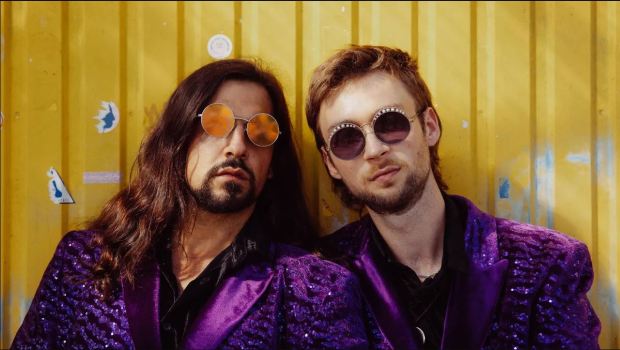
Siegfried and Joy make a strong impression from the moment they step out on their Las Vegas in Edinburgh stage. Wearing instantly iconic outfits of gold suits, silver shoes, and purple velvet shirts and accessorized with star-shaped sunglasses, they dance around their stage performing bits of classic magic. Luckily the outfits compliment the magic rather than overshadow it. Like their classic outfits jazzed up with more glitter than any other magic act this Fringe, they take classic magic and jazz it up, lending the tricks their sparkling personality and making for an incredibly fun show.

Siegfried and Joy are equally instantly noticeable for the great relationship they build with the audience. Siegfried greets every audience member with a high five as they enter the venue, sizing them up and welcoming them in straight from the outset. At the reviewed show they also dealt well with audience interruptions during their set. One man in their front row had to step out midway through, and while they playfully hassled him on his way out, they also welcomed him on his return. They also faced a brief heckling from an excited child in the front row, and responded to it by first making him laugh in the moment and, later on, giving him a co-starring role in their finale that he was enthusiastic to partake in. Toward the end of the show, they did come across as mildly bullying a woman who didn’t seem to want to come onstage, but when they did pull her up she appeared to be having fun with them. That moment aside, they were perfect models of how gracefully to deal with the vagaries of a live audience.

They performed some excellent magic as well. From the very start, when Siegfried licks his scissors before dramatically cutting Joy’s rope, they perform with their perfectly, hilariously ridiculous Vegas-inspired style. They’re really a three-person operation, and the occasional appearance of a young woman throughout the show is a genuinely funny and respectful take on the “female assistant” trope. A highlight is their bottles and glasses effect, which is well performed by all of them—although they may look to take more care when removing these props after this section, to avoid breaking the illusion. In a strong effect featuring just Siegfried, Joy, and an audience participant, they perform a card finding effect that many magic fans will have seen before, but with an added wetness element that only serves to make the final reveal more impressive. A lot of the stage time is taken up with magic themed humor, with tricks designed to flash, but when they get down to it they also have some genuinely fantastic reveals.

The real highlight of the show is the perfect intersection of stage chemistry and showmanship that is evident in every step that Siegfried and Joy take onstage. They spin each other regularly, often start a new trick by rubbing noses, and create an amazing, excited atmosphere over the course of the hour.

MAGICAL BONES: SOULFUL MAGIC VOLUME II

☆☆☆☆

Ever a popular one, Magical Bones’s shortened run for his new Fringe show has resulted in reliably busy showtimes. Soulful Magic Volume II may feel less polished than his previous year’s show, but it has all the trademark tricks (magic and otherwise) that make Bones worth a watch.

 A key feature that sets Bones apart is his breakdance background, and his dance skills rival even his impressive magic skills. In addition, showmanship doesn’t get much better than Bones moonwalking his way through a card selection, breakdancing to warm up for a Rubik’s cube solve, and doing a backflip to find a chosen card.

Bones also tends to use his Fringe shows to shed light on Black history. This year he highlights Ellen Armstrong, the first female black magician to tour her own show in the United States. He performs a themed effect to make Armstrong memorable in the minds of his audience. While the Fringe magic scene is still largely white it’s slowly but surely diversifying, no doubt at least in part to the success of Bones himself, who has always allowed his heritage to enrich his performances.

Soulful Magic II drew a large audience, and Bones gets a large number of them involved in the magic. An early mind reading card effect gets a whopping nine audience members involved, from the comfort of their seats. The audience establish their willingness to lie for him from this starting point, but he doesn’t let them get away with it—they don’t have to pretend to be impressed when he gets going. In the performance reviewed, the most trusting participant joins Bones for his dangerous bag trick, but while she proves willing to put herself in danger for him ultimately no audience members are harmed in this show.

An eternal highlight of Bones’s performances is a card finding effect performed to a bespoke hip hop soundtrack. No other magician imbues a standard deck with so much character and even cheekiness. Even if somehow nothing else about his performance appeals, he’s worth seeing for this effect alone.

With a very limited run by Fringe standards, Soulful Magic Volume II is well worth a ticket. It’s the less formal Bones, making friends with the audience, hanging out before his big UK tour, and showing off some of the cool things he can do.

ARRON JONES: ROCKSTAR MAGIC

☆☆☆☆

For Arron Jones’s second Fringe, he continues his trend of performing magic shows that no one would think to ask for in his new show Rockstar Magic. Here Jones, true to title, performs magic like a rockstar. There’s lots of music, plenty of card tricks, and even more hip thrusts than anticipated. Jones is the magician to go to when you think you’ve seen it all.

The show is perfectly themed in rockstar style magic. If there are digressions, they’re well reasoned enough to feel like they fit in, and engaging enough that no one in the audience is thinking too hard about it. Jones chats to his roadie Al throughout the performance, a helpful presence who assists with props and audience management, and generally adds a pleasant extra presence to the show.

The magic is well themed and all goes to plan. A highlight that the participants all seem to especially get into is an instructional section on how to smuggle drugs through an airport. While no concrete lessons are learned, probably for the best in case there are any airport staff in the audience, Jones displays his mind reading skills to perfection. Jones ends the show as both a rockstar and a magician, with an incredible keytar performance and a final reveal to send the audience on their way.

With such a specific theme, Jones draws an enthusiastic audience who instantly engage with his character. While his trainee drug smugglers were particularly keen, everyone brought onstage at the reviewed show seemed delighted to be in closer proximity to Jones, and played along with all the tasks and activities he assigned them. Jones reacted perfectly to interruptions as well, claiming responsibility for breaking a stray glass with his mind without skipping a beat.

Jones may be developing his trend of performing magic shows that no one would think to ask for, but by the end of one of his shows the audience will be convinced that it’s exactly what they always wanted. He’s fully committed to the bit every step of the way with this high energy performance. Those feeling that late afternoon slump will leave Rockstar Magic feeling energetic enough to take on the world.  Ladies, gentlemen, and everyone in between, bring your spare underpants to toss on the stage.  Just try not to faint when he walks through the audience.

HYPNOTIST MATT HALE: TOP FUN! 80S SPECTACULAR

☆☆☆☆

With the popularity of Stranger Things, eighties nostalgia is at an all-time high. However, that show itself is pretty scary. Some might prefer if it were an interactive comedy featuring pop music and led by a hypnotist, and those people are the target audience for Matt Hale’s Top Fun. With a vibe not unlike the silent disco dance party that regularly terrorizes Edinburgh city centre this time of year, but safely contained in a Fringe venue for the ethical fun seeker, Top Fun has been a regular sell out, and after experiencing it, it’s no surprise.

Hale is both a master hypnotist and the life and soul of the party he creates in every show. He has many willing volunteers at the reviewed show, and has no problem getting them hypnotized.  If the odd volunteer seems to have snapped out of the hypnotic state a bit early, they play along in their own way.  Hale has great rapport with his participants, and they clearly want the show to succeed even when the tricky business of hypnotism reveals its unpredictable nature. None of the activities he has them do are especially embarrassing; it’s a safe environment for those wanting to experience hypnotism.

Everything about the show, from the entry and exit music, to Hale’s outfit, and to all the activities performed by the hypnotized participants, is perfectly themed to the eighties. It’s impressive just how well he sticks to the theme, there’s not a single song or moment that isn’t impeccably eighties. Here in the birthplace of the Proclaimers (or about two miles from the birthplace of the Proclaimers, depending on your stance on Leith’s independence from Edinburgh) their most famous song is given the prominence that it deserves, and is well received by the audience.

Hypnotism is always a popular one at the Edinburgh Fringe, and with the on-trend eighties theme, Hale is proving especially sought after. However, as he points out, it’s not just him doing a trick, hypnotism is a give-and-take exercise, and the audience doesn’t really need to be hypnotized to have a good time and do silly things. Hypnotism may give his onstage participants permission to act a bit silly, but Hale himself gives the rest of the audience permission to be silly too. Top Fun lives up to its name, it’s truly a top fun place to be this Fringe.

CHRIS COOK ASKED A ROBOT TO WRITE HIM A FIVE-STAR SHOW AND THIS IS WHAT IT SAID

☆☆☆☆

In his 2023 Fringe show ‘Chris Cook Asked a Robot to Write Him a Five-Star Show and This Is What It Said’, magician Chris Cook toys with the idea of letting his show be born through requests to ChatGPT, a popular AI info generator. Never fear that your favourite magicians will be replaced by AI however, what ensues is the journey of Cook interacting with and responding to the suggestions rather than a thoughtless script provided by robot overlords.

The suggestions of effects provided to Cook by AI bring to attention exactly how formulaic magic shows can get when lacking a magician’s personal touch. From insistence for a revealed elephant (difficult to do in a Fringe venue hardly larger than an elephant itself) to a perfunctory “read a mind!”, ChatGPT clearly lacks the forethought and creativity that, fortunately, Cook is very capable of bringing. He attempts to respond to the best computer-generated ideas by nothing less than sourcing chemically disgusting candy in the hopes of opening his and his audience participants’ minds, and traveling through time.  

Cook is clearly aware that the factors that have historically elevated his shows are his confidence in forming classic magical effects around elements of modernity, and his mission of bringing out the best parts of humanity. The combination of these factors means that Cook’s shows almost always feel refreshing and authentic, and to fully hand over creation of a show to AI would seem to be sacrificing one of these aspects to the other. Instead, Cook creates a twist on this concept that makes this potential pitfall the very point of the entire exercise. He is a peerlessly skillful magician, not only in his relentless creativity but in his total technical competence in sleight of hand.

Ultimately, whether ChatGPT agrees or not, the most important part of technological progress is making sure that the world only becomes a better place for our children and generations to come, something Cook professes personal motivation for. And when it may seem like a cost of this progress could be a siloed perspective of only the base elements of magic, Cook reminds us that it is through connecting with our friends and loved ones and doubling down on our humanity that we are best able to take advantage of technological developments while never losing sight of the magic the world, and particularly Cook, is capable of.

HOW TO BE DUMPED: A SORT OF MAGIC SHOW

☆☆☆☆

How to be Dumped is subtitled, “a sort of magic show”, which is an accurate description. The multitalented Sam Lupton has written this part magic, part storytelling, and part musical theatre collage of performance art as a sort of active therapy to help himself get over his recent difficult breakup. It sounds like it will be a mess, but much like Lupton‘s self described mental state, that’s only how it starts, by the end of the show the disparate elements are revealed to be the necessary pieces to tell the whole of the story.

The biggest surprise to someone who just glanced at the poster before seeing this show is probably the musical aspect. Lupton walks the audience through the stages of a breakup, and each stage comes with an original musical number, which Lupton performs using his voice and a piano. The songs are a lot of fun, and weave the thread of the story that Lupton illustrates through magic.

The magical effects are performed well, with mis-sleights few and far between. An early moment that sets the tone is when Lupton uses magic to set up two members of the audience on a mock date. In true magician fashion, he reveals that he predicted from the start that the two participants chosen would be perfect for each other, only to play on that expectation of magical omnipresence to highlight the flaws and frustrations of online dating. It’s an interesting and thoughtful use of the tropes of magic that illustrate how Lupton approaches the tricks used in the show; it’s very much story-forward, and the way Lupton uses tricks highlights the storyline more than the magic itself.

That being said, there are some great reveals.  Lupton has audience members write down a regret before the show and then throw them in a garbage bin onstage, a fitting symbolic act.  He does rummage through the bin to find some regrets and successfully read them from people’s minds, politely respecting those that request they not be revealed to the audience, but concluding that the bin really was the best place for the secrets. 

Magicians have to lie in their shows, otherwise the audience couldn’t experience them as magical, but the heart of How to be Dumped feels like it’s come from somewhere honest. If it’s not quite a magic show, it feels like the performing artist’s version of kintsugi, repairing a shattered object with gold to make it whole. It’s an exceptionally creative sort-of magic show, and the patchwork of artistic talents fits that theme of reconstruction. No one could leave the show not wanting to see more from Lupton, although for the sake of his mental health hopefully on a different theme.