4 Stars

1 HOUR OF INSANE MAGIC AFTER DARK

☆☆☆☆

Billed as the adult version of the performers’ popular afternoon family show, 1 Hour of Insane Magic After Dark is proving equally popular with Fringe audiences. A significant part of the appeal is undoubtedly the opportunity to watch three beloved local showman let their dirty mouths run wild for an hour, but there is also plenty of perfectly performed magic and a couple of guest cabaret spots for variety.

The insane magicians take turns showcasing their tricks solo and in various configurations with each other.  Stunt magician Luke Osey performs the weirdest trick to open the show. It’s not so much a magic trick as it is an odd ability that he has cultivated for reasons known only to himself. Osey does frame his performance with magical jokes, giving it the aura of a trick, and employs a camera to ensure that everyone in the audience can see the action regardless of where they’re sitting.

Resident insane mentalist Cameron Gibson has been described on social media as an international sex symbol, and if anyone in the After Dark audience doesn’t agree with that the moment he steps in front of them in that magic outfit of his, they will have come around after watching him take control of everyone’s minds on stage throughout the evening. Gibson successfully reads audience minds in various configurations using “two truths and a lie” prompts, a clever use of time to allow successive reveals to build in impact.

Sleight of hand artist Elliot Bibby performs a classic of card magic using his tongue, in fitting with the After Dark theme. At the reviewed show Bibby made particular friends with one of his primary audience participants, even sharing a beer. That participant was so impressed by the magic he got to see up close that after the card was located he bowed down to Bibby, in awe of Bibby’s magical skills.

The guest spots at the reviewed show went to the Edinburgh-famous Performing Nerd Tom Crosbie, and an Australian contortionist who performs as Sassy Limbs. They are a fantastic confirmation that the Insane Magicians are able to attract the best of the cabaret performers to join them onstage. While Crosbie is the more magic-adjacent, the contrast between the two of them and with the Insane Magicians themselves works perfectly in the fabric of the show.

Unfortunately the reviewed show came to an end with a lack of a bang. The Insane Magicians had planned to end the evening with a dangerous stunt that their fans may remember from last year, but an issue with the props made it too dangerous to perform. It was a surprisingly wholesome twist ending. In the capitalist nightmare of modern society the old adage that “the show must go on” is often cited to encourage dangerous behavior, but Insane Magic is about the bond between the performers as much as it is about the tricks themselves, and it’s lovely to see Gibson and Bibby correctly choose to value Osey’s safety over an exciting ending for their show. Those who remember last year’s Insane Magic can attest that when it is able to be executed it’s a very cool stunt to see, and it’s comforting to know that when we do see it, it’s being performed as safely as possible. 

With a little bit of everything and a lot of magic, 1 Hour of Insane Magic After Dark is both the perfect start to a night out and the perfect end to a day at the Fringe. It’s tempting to return multiple times to enjoy the boys and their guest stars. Regardless of how the show ends, they will ensure that everyone in the audience has an insane evening.

CHRIS COOK: JAZZ MAGIC

☆☆☆☆

Of all the shows to describe as a “hidden gem” it may seem oddest when applied to one of Fringe institution Chris Cook’s ventures, but that is the lasting impression of his later evening show Jazz Magic. Cook has cultivated this aura of secrecy, even going so far as to list the show as “cabaret” so it shows up as a different color than the other magic shows in the PBH’s famous blue book. It’s not really a show, more like Cook’s office hours. While he appears delighted that people show up, the audience gets the impression that he would be equally content to sit alone in the air conditioned basement, drinking tea and practicing tricks by himself if no one visited.

As a non-show, Cook makes minimal plans for the hour and is open to suggestions from the audience. Each show becomes a personal experience for the exact audience that is in that evening. Introverts would be advised to bring their preferred dominant extrovert friend who would feel comfortable making requests, but even when the group is uncertain Cook runs through some of his best smaller-magic tricks that don’t often make it in to the scripted show. Cook is a multitalented showman who could undoubtedly perform an entire hour of card tricks, or make it through the whole hour with no card tricks, or, if the audience asks nicely, even do a handstand or some juggling. The options are endless.

It can be to tell when the magician is genuinely performing their new or unusual tricks for those who have seen that magician fairly frequently. At the reviewed Jazz Magic Cook did indeed perform tricks that he hasn’t been seen to perform before, and even that those who see a lot of magic shows may not have ever seen any magician perform before. It helps that the venue is pretty magical as well.  An unexpected magical moment occurred when Cook broke a wine glass and then fixed it with a few magical hand gestures—no one other than the venue staff knew that the wine glasses had screw-on bases (or did they?)

Cook impressively received a “keep it Fringe” grant to help fund his scripted show, but Jazz Magic feels even more Fringe. No where else but the PBH would a performer be able to essentially hold office hours every day for a whole month to try out new and in-progress magic tricks on a fresh audience every evening.  Audience members may find it helpful to bring suggestions, whether vague or specific, and perhaps a vibrator and a hat if they are so inclined. Cook will take it from there.

More information on Jazz Magic and its performance dates can be found here.

TOMAS MCCABE: 1 MURDER: THE MIND READING LAWYER

☆☆☆☆

Of all the jobs that would be easier for someone who can read minds, barrister must be right up there. Real life future barrister Tomas McCabe has combined his profession of the near future with his current job as a mentalist in 1 Murder: The Mind Reading Lawyer. Between the numerical name to push himself to the front of the Fringe program, the fun theme, and his adorable parents on hand to enthusiastically flyer for him across the streets of Edinburgh, McCabe appears to be having a very successful Fringe. Historically he’s often had a late night free Fringe spot, garnering a huge audience of largely drunk people, but this year he has maintained that success at a ticketed slot in the late afternoon, selling out his venue even on the weekday of this review.

The murder trial framing is a fun structure on which McCabe hangs his mentalist demonstrations. It is, however, primarily in place for structural purposes. This is a mentalism show and not the place to find an accurate reconstruction of a murder trial—hopefully to no surprise, given the clarity of the marketing material—but McCabe does take the time to ensure his audience knows that his show is not intended as an educational experience. Some in the audience may learn the British word for a trial lawyer, “barrister”, but that is the beginning and end of the informational portion of the show.

McCabe’s mind reading is accurate as ever. One of his recurring favorites is to have his audience write down anonymous confessions that he then reads from the minds of audience volunteers to ensure that the anonymity of the original confessor is maintained. It feels appropriate that, of all the mentalists, it’s a lawyer who has managed to successfully integrate mentalist-participant confidentiality into the fabric of his act without undercutting his ability to show off his mind reading skills.

The audience participants themselves who are chosen are for the most part self-selecting volunteers. If McCabe chooses random participants for some tasks, it’s the ones that are the least time consuming or attention grabbing. One of the cutest moments of the show is when he selects one of his younger fans to preside over the performance as his judge. This youngster gets a special experience and positive attention that will no doubt be a lasting memory.

Toward the end of The Mind Reading Lawyer, McCabe reveals that now that he has completed his education he will shortly be taking his talents to a real life barrister role, in an actual courtroom. McCabe will no doubt prove popular with his clientele for his reassuringly unflappable presence and, of course, mentalist abilities.

More information on 1 Murder: The Mind Reading Lawyer and its performance dates can be found here.

DOM CHAMBERS: MAGIC HUNT

☆☆☆☆

Magician Dom Chamber’s Magic Hunt is, above anything else, a lot of fun. Chambers employs an irreverently effective plot line that keeps the audience curious to see what happens next, and the style of his magic and jokes is exactly what his fans will have come to expect.

A sold out venue on a Tuesday evening, even on a 2 for 1 ticket day, is a sure sign that Chambers is catching on in Edinburgh. His style is a fairly specific taste and he seems to know it. Anyone who has ever seen Chambers, in a one man show or cabaret slot, will have probably seen him perform his apparent favorite card-to-wallet trick. It’s the perfect litmus test. While he has a fair range skill-wise, the vibe of his act is the natural continuation of that routine. Those who love it will love the rest of his show even more.

Chambers might tease his audience on occasion, but he knows how to get them on board—alcohol. If future audiences are interested it is recommended that they arrive early and queue up to sit in his front few rows.  Chambers may cheerfully subvert expectations in many areas of his performance, but when it comes to beer he does not mess around.

Magic often requires audience interaction, and that can often prove especially tricky for magicians. It’s impossible to anticipate the sheer variety of ways that those interactions can go differently than anticipated. At the reviewed show Chambers encountered an audience participant for a card trick who revealed that she did not know the English words for playing card names until he asked her to name her card to verify his finding. Luckily with his help and good humor he was able to salvage the situation, and even used the incident to augment the hilarity of his presentation of the trick.

Chambers’s hunt for the perfect magic trick has many twists and turns that would best be discovered over the course of the show. While he is demonstrably able to sell out his venue, he is perhaps not the most widely recognized of the Edinburgh Fringe magicians. He has an incredibly solid skill base, and his presentation style is fairly unusual. For those who like the idea of magic but haven’t found a magician who performs it in a way that speaks to their humor, it’s worth checking out Chambers. For the right audience he’s an instant favorite.

More information on Magic Hunt and its performance dates can be found here.

TOM BRACE: THE RIDE 4D

☆☆☆☆

With a sold out theatre on a sunny Monday evening, Tom Brace’s new Fringe experience The Ride 4D is evidentially a hot ticket. This is all the more impressive with a start time just ahead of 4pm—Brace’s magnetic pull on the young families of Edinburgh is so great that many left work early to make it to his show. It is a family friendly show, and the vast majority of the adults at the reviewed show were accompanied by their children. The Ride 4D takes place in Tomlannd, Brace’s new theme park, and all the magic is perfectly themed to immerse the audience in the experience.

An approachable performer with an audience largely composed of young children, Brace had an ample supply of willing, excited participants for his games and tricks. One of his best participants was a young girl early on in the show to play a fishing style magical theme park game. She looked absolutely thrilled to be chosen to join Brace on stage and really gave it her all, and as Brace says early on, in Tomland everyone is a winner. Brace involves many of his young fans in the show, and when adults are required it’s for good reason.

One of Brace’s regularly used props that makes a welcome return is his leaf blower. On a sweaty Edinburgh summer day in a classically overheated Fringe venue the breeze is a significant benefit to this show. The front rows get the best of it but it can even be felt further back. Later the audience also receives a sprinkling of water too. Brace is a Fringe regular and he has learned how to treat his audiences well.

On entering the venue each person in the audience is given a pair of 3D glasses, hinting at the vehicle for one of the final reveals. Audio cues throughout the show build anticipation for the filmed portion of the afternoon, and it does live up to the hype. Brace sets up several tricks to come to fruition throughout the film, and if there is a brief hiccup he breezes through it with the utmost professionalism. After all, magic is an art, not a science. A cleverly placed final reveal leaves the audience more impressed than not with the tricks.

Brace developed The Ride 4D following a trip to Disney World in Florida, and even with the notoriously rising prices of Fringe tickets, The Ride 4D is the cheaper option—not even including airfare from Edinburgh to Florida. For a family day out that will keep the kids occupied and even the parents engrossed, or a grown up day out for magic and/or theme park fans, you can’t go wrong with The Ride 4D.

More information on The Ride 4D and its performance dates can be found here.

ANDREW FROST: CARDS ON THE TABLE

☆☆☆☆

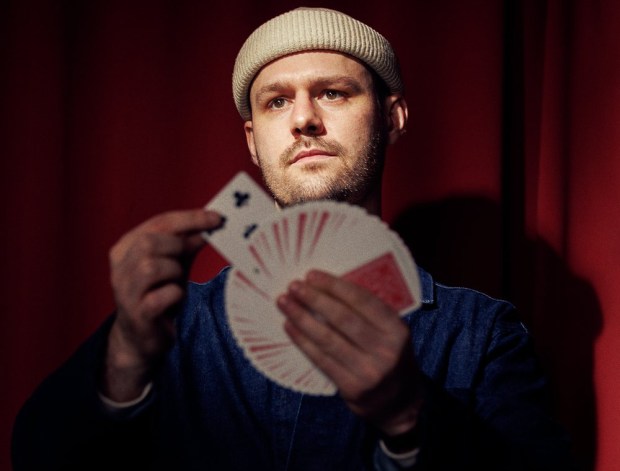
The show is called Cards on the Table. Upon entering the theatre, the audience sees a mostly empty table with a few books, a lamp, and a deck of playing cards. The first thing that magician Andrew Frost says as he steps on stage is, “I hope you like card tricks”. Anyone who chose to come to this show hoping for anything other than card tricks will be disappointed, and that would be on them.

What follows is, as promised, a full hour of card magic. Frost covers the expected types of tricks in this sub-genre, from fancy shuffling through to trick dealing and card finding. With a whole hour devoted to card magic, Frost is able to delve a little deeper and take common tricks that are recognizable to magic fans that extra step further that more generalist magicians wouldn’t often make time for, especially at a festival like the Fringe with its oft-proscribed time limits.

The unifying feature is Frost’s exceptional skill at card magic and his clear passion for this particular type of magic. If anyone is considering getting in to performing magic (or reviewing it) this is the perfect show to see for an example of what card magic should ideally look like. It’s a classic of magic for a reason, and seeing Frost is a reminder for all who need it of just how impressive card magic can look.  There’s no other theme but the cards and the variety of ways that they can be manipulated, which is all that is needed for Frost’s purposes.

Even at the sold out show that was reviewed, Frost got a decent proportion of the audience onstage for various tasks. Frost is an approachable performer and makes his participants feel welcome. He’s especially helpful in explaining card terminology and even in helping his audience with the most difficult bit of audience participation in a magic trick, remembering which symbol is spades and which is clubs. It’s self serving in that it enables his own show to go more smoothly, but the audience also comes away feeling like they have learned something new and that they can be that tiny bit more comfortable participating in future magic shows.

Cards on the Table is a must see for fans of card magic. Even fans of magic in general who have found card magic underwhelming in the past may gain an appreciation for it in Frost’s hands. Come prepared to be amazed by the entertainment value of the often seen but often under-appreciated type of magic.

More information about Cards on the Table and its performances can be found here.

LEWIS FULLER: UNGENTLEMANLY CONDUCT

☆☆☆☆

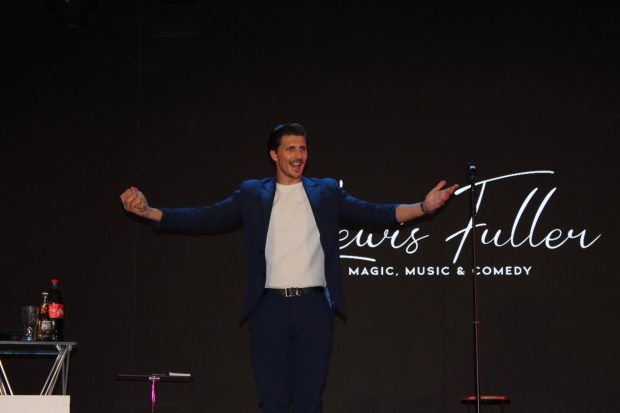
There are many ways to surprise a magic fan at the Edinburgh Fringe, and in Ungentlemanly Conduct Lewis Fuller found a new one: the unexpected singalong. The show is a patchwork of live magic and stunts, largely pre-filmed storytelling, and, of course, not just one but several opportunities for the audience to join Fuller in singing popular songs. It’s not the show any member of the audience would expect, even after studying the flyer, but if they’re willing to go along for the crazy ride they’re in for a treat of an hour.

Ungentlemanly Conduct is categorized as a magic show, and in amongst the many other features Fuller does in fact perform several magic tricks and feats, themed to accompany the story that he tells himself and via video. A fun themed effect sees Fuller perform a classic card trick, using credit and debit cards rather than playing cards. The participant involved has no need to sign or otherwise mark their card to personalize it for this effect. Fuller’s flattering, energetic stage presence makes the participants feel comfortable on stage through effects that pose threat to their money and their bodies, a true testament to his personable nature as a performer.

The plot line that weaves the show together combines a fairly standard story of a young magician dreaming of performing at the Edinburgh Fringe with an altogether weirder tale, loosely inspired by a recent Netflix show but with plot elements and twists that make it a fun new experience. Fuller seamlessly weaves the pre-filmed segments of the show with his onstage storytelling, stunts, and tricks. Over the course of the show the plot lines come together to provide this framework for his effects.

No performance is flawless, and at the reviewed show Fuller had to deal with the biggest wild card in a magic show, the overenthusiastic audience member. Fuller successfully managed and contained his enthusiasm by involving him in an effect, giving him the portion of the spotlight that he clearly craved without allowing him to overtake Fuller’s own performance.

Ungentlemanly Conduct is about as far from a traditional magic show as is readily available, which makes it a welcome entry in the fringe magic lineup. The sheer variety of performance genres involved may make it a little more difficult for Fuller to acquire a target audience that will truly appreciate him, but for that audience he’ll be exactly what they didn’t realize they were searching for. 

More information about Ungentlemanly Conduct and its performances can be found here.

DIARY OF A MAGICIAN

☆☆☆☆

Diary of a Magician is marketed as a family friendly show, and for good reason. Even before the titular magician Mu-Syuan Chang steps onstage the show’s support staff are on hand to make family units feel welcome, ushering children to the front row and making space for parents to accompany those too young to sit alone. While missing even a second of this performance is not recommended, children who enter the show slightly late are still made to feel welcome, with staff adding chairs to the front row so quickly and unobtrusively that it’s almost as magical as the act onstage.

Chang is equally welcoming of his young fans, making a point to interact with them to their comfort levels and at one point making his way along the front row to ensure that each child gets a special magical experience. Shorter adults may also appreciate this approach, as it’s easier to see over children’s heads than those of their parents. Like the seating choice, Diary of a Magician itself is appealing to all age groups, with highly visual effects that capture and keep children’s attention as well as theatre and artistry that keeps everyone in the audience wanting more.

The magic is themed on classical poetry, and the lines appear as a pre-caption ahead of each section. Each dreamscape style diary entry is beautifully brought to life by Chang’s magic. Magic regulars may recognize the basic structure of the effects that Chang employs, but they are rarely seen performed with such specific artistic sensibilities that are more reminiscent of the movements of a dancer or acrobat. A particular early highlight is an especially beautiful scene involving a light and a wooden staff that Chang uses to bring a starscape into the room, earning gasps from the youngsters and applause from their adults.

Chang’s excellent staging and lighting choices deserve a mention as well. Simple props turn the stage in turn into such varied locales as the night sky, a train station, and a field of flowers. Chang’s metal hoops routine is an especially strong use of lighting, with the multicolored lights making the hoops look like they’re lighting up as well, enhancing the artistry of this scene.

Magic is known for its heavy use of audience participation, but aside from getting the front row involved briefly from their seats, Diary of a Magician does not use audience participants, with Chang alone in his dreamscapes creating the magic entirely in his own hands. The audience does not feel this as a loss—in fact may only realize that this was the case on reflection after the show—and indeed for some it may be a huge plus. Whether due to youth, shyness, or social anxiety, those who have been put off witnessing a live magic show because of a fear of needing to go onstage can safely enjoy the magic of Diary of a Magician.

With such broad appeal to all ages and all types of audience members, it’s no surprise that even on the sunny weekend day that Diary of a Magician was reviewed it filled out the theatre. After the show children could be heard begging their parents to let them take a picture with Chang on the way out, and was he obligingly just outside the door to fulfill requests. Chang’s physically inventive style of magic is a welcome addition to the Edinburgh Fringe scene.

SURREAL: THE MIND-READING SHOW FROM BERLIN!

☆☆☆☆

Stepping in to Surreal: The Mind-Reading Show from Berlin! feels like stepping back in time.  We visit the era of mentalism presented as the junction of the scientific and the spiritual, embodied in a mythical, magical woman. Psychic Vivian and her partner in performance Roman Maria von Thurau take turns playing the role of the mentalist and the assistant. Decorative and magical in turn, their mentalism demonstrations are equal parts impressive and beautiful.

An early sequence sets the scene for the style of the show. Vivian is blindfolded on stage while Roman requests that members of the audience hold out objects for her to describe without seeing. Vivian successfully describes a varied range of such random objects, interspersed with a variety of fun facts that are so perfectly timed and perfectly amusing that the audience almost doesn’t care if they are genuinely true.

Roman, the mathematician of the pair, follows up with a pi-based routine that blends classic calculator based mentalism with what he describes as a pandemic boredom-induced knowledge of the digits of pi. Few performers can make a recitation of a random selection of the digits of pi fun to watch, but Roman manages it, with a final revelation that the audience won’t see coming.

The third star of Surreal is the beautifully realized animations interspersed amongst the magic, which were hand drawn by Vivian in preparation. Vivian accompanies her artwork with autobiographical self-mythologizing stories from hers and Roman’s life. It’s impossible to choose which is the highlight of the show, the artwork or the magic, and the audience is lucky to be treated to both.

At the reviewed show, Surreal was briefly interrupted by several small technical issues. Such are often the pitfalls of a review relatively early in the run. Vivian and Roman dealt with these with steadfast professionalism—future audiences can be confident that they will witness a beautiful show regardless of any such issues. Their vintage throwback style suited it; after all technology is known to behave erratically in the presence of psychic powers such as Vivian’s. The magic goes much more smoothly than the technology.

With its central location, post-workday time slot, and of course beautifully performed mentalism, Surreal will undoubtedly prove to be a hit this Fringe. Vivian and Roman’s vintage presentation of mentalist classics sets them apart from the crowd of magicians at this year’s festival. If Vivian and Roman are not ageless immortals who entertained eighteenth century nobility with their timeless performance style, the lineage from historic performances to theirs is especially clear to see, and renews magic fans’ appreciation for the heritage of magic as an art form. Fans of mentalism in its contemporary iteration in particular will be delighted by this stylish throwback.

More information on Surreal and its’ performance dates can be found here.

LIZ TOONKEL: MAGIC FOR ANIMALS

☆☆☆☆

The Fringe can get pretty hectic, with shows that don’t even start until the wee hours of the morning. Many such shows are completely dead on weekday nights. The fact that Liz Toonkel could pull a whole first row at her nearly-midnight time slot on a weekday is an impressive testament to the reputation that she’s built for Magic for Animals in the brief time that’s she’s had in Edinburgh so far.

Magic for Animals is deliberately onion-like in its construction. There is little time to think that it’s going to be a standard, classic magic show. Toonkel struts out in her instantly iconic outfit and briefly plays that role, but soon makes her way to what she’s really here to talk about: animal rights (it would be a shame to reveal too much in a review beyond that). There’s a lot in the show for vegans and vegetarians in the audience to love. A highlight of Toonkel’s animal rights themed magic, and in fact one of the effects that gets at the heart of the show is her take on the kind of sleights usually seen in coin tricks but using pearls, and performed in conjunction with a discussion of the abusive nature of pearl farms.

But the true highlight of Magic for Animals is less the trickery and more the perfect, beautiful construction of the show itself. It does touch on serious themes, beyond animal rights, but Toonkel leads the audience to where she wants them to go gently, using a reassuring succession of magic tricks to wind her way to the central thesis point of her performance.  Each trick and story gradually and gracefully leads her to her point, with the structure of the show functioning as the pearl shielding both audience and performer from what’s at its heart.

At the reviewed show, Toonkel played to an audience that was impressive for a weekday, but it was nevertheless an intimate performance. The close scrutiny perhaps didn’t do her magic any favors, some of the mechanics of her effects felt a little clumsy. This didn’t really affect the overall impression of the show. There’s so much more than magic going on, that while the tricks are used illustratively or connectively the magic itself isn’t the point. It wasn’t every trick, there were several great reveals that felt smoothly done.

Vegetarian or vegan feminists who love sequins may be the most obvious target audience, but Magic for Animals has a wide appeal. The way that Toonkel uses magic to tell her story is genuinely beautiful and interesting, the magic feels entirely, consistently in service of the story—magicians and magic fans might especially appreciate this.