
Edinburgh

CHRIS COOK: CONCEALED

☆☆☆☆

Chris Cook’s “Concealed” show, as per the title, is deliberately set in a cozy venue off the beaten Fringe path. Combined with the show’s low-key publicity, it sets an intimate tone for this afternoon act. Cook maintains this intentionally cultivated relaxed vibe throughout his series of street magic style tricks.

One of the reasons for this intimate show, Cook explains, is that several of his illusions are too physically small to be appreciated by the full audience in a large scale venue. Coin bending, one of the first tricks that he performs, is an obviously apt example of this. Audience members should perhaps be warned that when they lend Cook a coin they will not receive it back in working condition, but they do get a fun magical souvenir out of it, and Cook is kind enough to not use any volunteered pound coins for this particular effect. 

The small venue and audience size also allow Cook to perform an extended selection of card tricks. Exciting examples of these involve Cook producing a chocolate bar out of a brief flash of fire, and causing a deck of cards to disappear from within an audience member’s clasped hands. Cook ends with classic street magic sleight of hand, involving three cups and balls. Here his personal additions to the usual standards, and his use of the motifs of that trick to recall earlier moments in this show, make for an exciting finale.

“Concealed” is an ideal show to highlight the neatness and elegance of Cook’s magic style, some of which may get lost toward the back of a larger venue. It also allows Cook to engage more with his audience, as he performs magic surrounded by his viewers instead of up above them on a stage.

The choices that Cook makes in his different shows display his versatility as a magician, as they each have very different atmospheres and feature distinct aspects of Cook’s magical skills. For Fringe goers who are only able to see one of Cook’s shows (or perhaps even only one magic show) “Control” is the one to go to. However, for those with an extra hour to spend in Cook’s delightful company, “Concealed” is an engaging and entertaining option.


More information on Chris Cook and his performance dates can be found here
DAVID NARAYAN: THE PSYCHIC PROJECT

☆☆☆

At heart, David Narayan’s “The Psychic Project” is an incredibly fun history lesson.  Narayan illuminates his audience on some of the weirder aspects of Cold War history in this uniquely formatted magic show.

Narayan guides the audience through several basic magic tricks that have their roots in the Cold War era. Magic fans may recognize the series of five cards with different shapes, or have seen some variation of the dangerous bag trick in other shows. Some might have even heard brief explanations of these props from other magicians. For most magicians, however, historical explanation is just used as a few seconds to ground their take on the trick in magical history. For Narayan, on the other hand, the magical past is the central point of his show. The audience gets to hear much more in-depth explanations of the history behind the magic, and watch Narayan re-create the original versions of each trick with audience volunteers.

As this act combines both magic and history, it is best appreciated by those who enjoy both of those things. The historical narrative places the series of tricks in context, and the addition of the illusions in turn brings that historical narrative to life. It understandably appeared reasonably popular with parents and children on the day of the debut performance, as it is both an entertaining and educational show. The magic is interspersed with both Narayan’s historical lectures and a slideshow presentation on the relevant Cold War scientists, complete with audio of pertinent facts and quotes.

In a fitting tribute to history, the final couple of illusions focus on dangerous magic. The scientists who developed the techniques discussed were doing so to ultimately create better methods of hurting their enemies, after all. This does make the show more specifically geared toward those who prefer to watch magic for the thrill rather than for the wonder, but all benefit from the stark look at wartime magic. These final elements do contain an unexpectedly playful moment, however, blessedly lightening the mood. 

Narayan’s “The Psychic Project” is a fascinating combination of magic and history. Fans of both, but especially of magical history, are sure to find this show exceptionally engaging.


More information on David Narayan and his performance dates can be found here

AARON CALVERT: AWAKEN

☆☆☆

A popular mind reading magician, Aaron Calvert starts his “Awaken” show by correctly deducing what several members of his audience are thinking, as all good mentalists should. However, the main part and highlight of his performance is his hypnosis. This seems like the reason why he draws such a huge crowd at midday, as massive queues flock to his sizable venue, everyone fascinated and eager to be hypnotized.

Calvert begins his hypnosis segment with a bi-tonal sound that, combined with his verbal prompting, is designed to lull the susceptible members of his audience into a state of hypnosis. The benefits of this segment are not entirely lost on those of us who are less susceptible. The tone used is quite relaxing, and Calvert’s voice is pleasant and calming.

The success of this segment is, of course, dependent on Calvert finding enough suitable audience members to hypnotize. Calvert leads them on to the stage and puts them through a series of tasks to demonstrate that they are indeed under his sway. None of these tasks are difficult or embarrassing, and this portion of the act comes off more as a pseudo-scientific experiment to demonstrate Calvert’s abilities rather than a spectacle to entertain the audience at the expense of the participants—a welcome approach.

Calvert also makes an effort to include a flashier bit of hypnosis in his show. He guides one of his hypnotized subjects to pop a balloon through the power of negative thought. Here he again exhibits his care for his audience, making sure to calm his participant from this state of heightened negativity before restoring her mind to her own control.

The finale of the show, once all of the hypnotized individuals have been released from that condition, is designed to showcase Calvert’s ability to predict the group decisions of his entire audience, regardless of each individual’s susceptibility to hypnosis. However, it feels a bit rushed—perhaps, on this day, the other sections of the show took longer than expected—and the audience is left a bit confused as to whether Calvert actually achieved his goal or just shuffled things around a bit to make it look like they were in the right place.

“Awaken” is certainly an enjoyable show for fans of hypnosis. Any imperfections in Calvert’s mentalism are quickly forgotten, for Calvert is a talented performer whose showmanship makes him fun to watch on stage. In any case, an audience coming for hypnotic feats will leave well satisfied with their experience.


More information on Aaron Calvert and his performance dates can be found here

A CASE OF WONDERS BY SAM FITTON

☆☆

With a promisingly exciting premise, “A Case of Wonders” opens on Sam Fitton running through the train station, only to miss his train. He then falls asleep waiting for the next train, and enters a dream world where magic is real. The performance continues in this realm to showcase Fitton’s sleight of hand and juggling tricks.

Fitton’s show includes many high points. His magic tricks are frequently well performed and fun to watch. His pantomimed vending machine is a particularly creative means to incorporate his train station theme with classic coin tricks. Once the character that he performs overcomes his initial fear of his new environment, Fitton’s rapport with the audience improves noticeably. While a few of his interactions with audience volunteers feel a bit mean spirited, with the audience encouraged to laugh at their peers for not following Fitton’s vague instructions, Fitton rewards his volunteers with refreshments as he leads them back to their seats.

Unfortunately, the promising premise itself runs into a few performance issues as well. The extended introductory sequence feels a bit too long, without much of note happening. Fitton’s pretend surprise to be transported to a magical alternate reality is rather too exaggerated as well, making him appear genuinely uncomfortable to be performing in front of a crowd. Additionally, the Case of Wonders itself feels under-used, considering its place in the title of the show.

Many of these flaws may be significantly mitigated from a more childlike perspective. Fitton’s exaggerated acting and teasing of his volunteers seems like the sort of thing that would play much better to an audience full of children. This is no small thing, entertaining children is notoriously difficult. Many magicians give up on it entirely and only aim their shows at an adult audience. Fitton’s child friendly act thus establishes this show at the heart of an important niche of family magic.

“A Case of Wonders” is a perfect show to take young children in need of a bit of morning entertainment to. From an adult perspective it is not without its flaws, but is still solidly fun and admirably creative.


More information on Sam Fitton and his performance dates can be found here

WONDERS AT DUSK

☆☆☆☆☆

Scott Silven’s  “Wonders at Dusk” is aptly named, not just for the literal time at which it occurs but also for the thematic progression of the show itself. Silven’s opening remarks about his childhood struggle to pinpoint the moment at which dusk turns in to the proper darkness of night draft a verbal blueprint for the evening. The audience is drawn in by Silven’s autobiographical stories and gradually captivated by his mind reading powers, ultimately leaving the venue spellbound and in wonder at his skills.

This act is not entirely a magic show, but also includes elements of storytelling, as previously mentioned, and also Silven’s interesting take on mindfulness meditation. At various points in the evening, Silven encourages the audience to be present in the moment, likening time spent as his audience to a detour on the path of life. His act quickly becomes very relaxing. Unlike the vaguely threatening kind of relaxation common in hypnotism shows, in which the performer asks the audience to give up conscious control of their bodies, this is a much nicer relaxation, in which Silven simply asks that the audience soften the boundaries between their conscious and subconscious thoughts. Such a lowering of these boundaries will, says Silven, allow individuals in the audience to connect with each other in a manner conducive to their reception of his mentalist magic.

The magical elements of the show are similarly remarkable. Silven repeatedly correctly deduces information generated by the audience, always with safeguards to demonstrate the veracity of his magic. Hidden envelopes and pouches placed throughout the room prior to the audience’s arrival are proof to assure the audience that Silven predicted their responses before he had even seen the evening’s crowd. These hiding spots add an extra layer of whimsy to the evening, as Silven directs audience members on a hunt through his props, or climbs on top of furniture, to collect the evidence of his powers of prediction.

Silven’s “Wonders at Dusk” is indeed a wonderful show to experience. Its pacing and theme make for a calming end to the typically hectic day at the Fringe. At the same time, the magic is exciting to watch, with the final illusion in particular leaving the audience in amazement. We leave knowing that, just as surely as the dusk has become night, Silven’s uplifting magic has stolen over the evening and left its distinct impression on our minds.


More information on Scott Silven and his performance dates can be found here
AVA BEAUX: THE MYSTERIOUS TALES OF POE

☆☆☆

Ava Beaux’s Edgar Allan Poe-themed magic show ‘The Mysterious Tales of Poe’ can be found in a cozy room underneath The Street bar. Relatively new to performing, Beaux opens her show a little nervous at first, but quickly became more confident as she gets further along, and delivers a spellbinding performance.

Rather than jumping straight in to a succession of magic tricks, Beaux skillfully ties her show together through her re-telling of Poe’s short stories. Her act is not, in practice, strictly a magic show, as her spoken word performance shares an equal role. This is certainly to our benefit, as Beaux is a captivating storyteller. Her illusions and storytelling complement each other perfectly to bring Poe’s tales to life.

Beaux also uses sound and practical effects to enhance her act, her use of sound being particularly effective. The knocks of her tell-tale heart initially sound almost like background noise from the bar above, and gradually become more insistent and distinct as Beaux reaches the concluding lines of the story. This particular re-telling is an impressive highlight of her show.

While Beaux often uses her magic abilities to great effect, this aspect of her performance occasionally feels a little bit clumsier. Her hands at times stray a little too close to her suspiciously puffy sleeves, and her transitions after her tricks sometimes feel a bit hasty and awkward. Her final magic trick, as well, feels rushed, and, on the occasion of this review, did not land as solidly as she might have hoped. But while these are issues, given the multi-faceted nature of Beaux’s act they are fairly minor in context. Her magic tricks will probably quickly improve as she gains more experience, perhaps even over the course of this year’s Fringe.

The Mysterious Tales of Poe is well worth watching for the overall effect of Beaux’s performance. She excels at creating atmosphere—the audience truly feels transported in turn to a ship on a stormy ocean or a mysterious old mansion in the middle of the countryside. This show is an inventive and exciting addition to the Fringe magic scene. While her magic surely will continue to improve, Beaux’s storytelling is so fascinating that her audience can hardly notice any flaws.


More information on Ava Beaux and her performance dates can be found here

#DAVE: CULT OF DAVE

☆☆☆☆

It can sometimes be difficult to pinpoint why people choose their line of work, but Dave Alnwick does not leave his audience guessing why he became a magician: he wants you to join his cult.

In his “Cult of Dave” show, Alnwick makes the case for why he should be accepted into everyone’s hearts and minds as a God. He does this by performing his mentalist tricks and then giving the audience tips on how they can use the theories behind those tricks in their everyday lives. If they join his cult, he promises, he will teach them all of his skills.

This tutorial style makes his show especially interesting to watch. Alnwick reveals just enough to give the audience a greater appreciation for the difficulty of what he does. Some of his lessons do feel useful—advice on how to force a choice, or tips on how to tell whether or not someone is lying—although it is clear that these skills work best in the hands of a naturally charismatic individual like Alnwick.

It is that charisma that really makes this show fun. Alnwick has a great wit and charm that makes him entertaining to watch on stage, regardless of what he is doing. Even when he asks multiple members of the audience to choose numbers in preparation for his impressive final trick, he makes this potentially dull groundwork into an enjoyable part of his performance. He is the kind of performer who could probably make reading the dictionary into an entertaining show.

Alnwick does run in to the same problem as many other Free Fringe performers, in that the venues they perform in often have issues with outside noise permeating the main theatre. However, Alnwick reacted to this professionally and did not allow it to derail his show, and his excellent vocal projection was certainly appreciated at that juncture.

The “Cult of Dave” is a delightful show, both for magic enthusiasts and for anyone who just enjoys comedic live theatre. Alnwick skillfully controls his audience, creating impressive illusions while dispensing life advice in an incredibly fun performance.


More information on Dave Alnwick and his performance dates can be found here
CHRIS COOK: CONTROL

☆☆☆☆☆

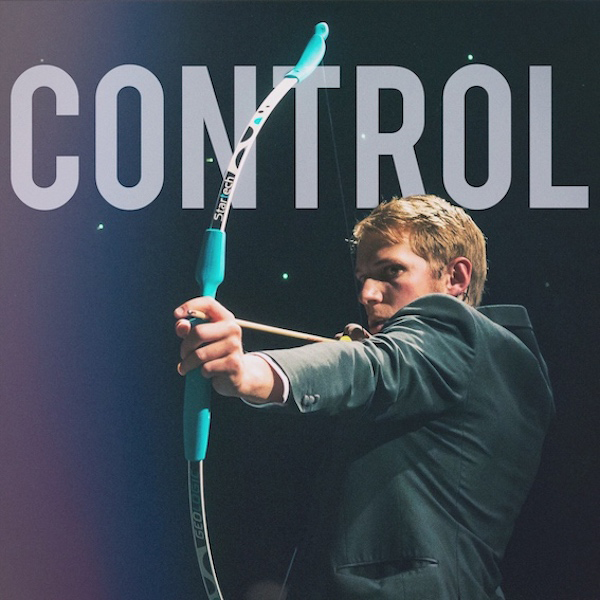
In his show “Control”, Chris Cook speaks a lot about not feeling in control of his life, and even says that he does not have complete control over what will happen in that show. But this is only partially correct- Cook quickly captivates his audience, and easily controls their full attention for the entire hour of his set.

Cook primarily performs sleight of hand tricks, and these are reliably inventive and surprising. It is a testament to his abilities that when he made a mess of a tomato that he ate onstage and took a moment to clean his hands, one almost expected he was about to reveal a new, uneaten tomato from the wreckage. His real tricks, however, are even more impressive.

Control includes many timely political references that both ingratiate Cook with the more liberal members of the audience, and help tie his tricks in to the story line of his show. Whether it’s a quick joke about mourning the death of the European Union, or Cook taking the time to read from and criticize Donald Trump’s book before using it as a prop in his next trick, the show decidedly favours the political left. American members of the audience in particular might be especially satisfied to find that Trump’s book does not emerge unscathed from its role in the show.

While the majority of Cook’s show does focus on sleight of hand, he does veer briefly into mentalism in an unexpectedly heartwarming final segment. His more serious themes are predominantly present as an undercurrent for the rest of the show, but here they take centre stage. Cook captivates the audience with his tricks and wit, and then uses that control over his viewers to instill his message of hope and motivation.

Cook’s “Control” is an excellent show that is definitely worth watching. Cook’s magic is creatively and skillfully performed. He excels both in performing big impressive tricks, and in creating small surprisingly magical moments in between the main illusions. In the end, it is his modesty that is particularly charming. Rather than using his considerable charisma solely to control his audience for the duration of the show, he gives that control back by inspiring us to exert what control we can over our own lives.


More information on Chris Cook and his performance dates can be found here

CASPAR THOMAS: MORE MAGIC AND MENTALISM

☆☆☆

Caspar Thomas’s “More Magic and Mentalism” act does not rely on the padding of a theme or series of stories. It is, instead, a solid hour of magic tricks linked only by Thomas’s cheerful and free flowing banter.

Thomas uses this format to showcase his variety of magical skills. This show includes everything—card tricks, objects vanishing into thin air only to be summoned back in to existence, magically accurate deductive reasoning, and the classic magic rings. While accidents do happen, and audience members in the front two rows might notice the glitter and clink of supposedly “vanished” coins a split second before they are scheduled to re-appear, these tricks are, on the whole, performed with precision and skill.

This skill is what sets Thomas’s act apart, and makes his show worthwhile. The large crowd that gathered outside the venue for Thomas’s Friday evening performance was evidence that his expertise is notable and appreciated. Additionally, his act is handy for newcomers to magic, as it takes them through a quick introduction to the varieties of magic that are common amongst modern magicians.

One particularly commendable feature of Thomas’s act is that he makes a point of requesting volunteers before randomly choosing them from the audience. It is common knowledge that all attendants of magic shows are fair game to be chosen by the magician and paraded about the stage, which can be very intimidating. Magicians like Thomas make their acts much more approachable.

A negative feature of note is the poorly situated venue. Loud conversation and amateur singing could be heard at several points throughout the performance. Thomas successfully played it off in front of the audience, which is why these disruptions did not spoil the show, but it would surely be even better if he could reach an understanding with the others in the venue to ensure that he commands the full attention of his audience.

Thomas’s “More Magic” show is unpretentiously enjoyable magic. This act goes for breadth over depth without sacrificing quality or amusement, making for a good show.


More information on Caspar Thomas and his performance dates can be found here

COLIN CLOUD: DARE

☆☆☆

The long, winding queue full of people waiting to see Colin Cloud’s “Dare” this evening attests to his undeniable renown. It can be so easy, as an ordinary audience member, to dismiss mind reading magic as an elaborate network of actors in league with the magician, or as normal people playing along with the magician out of compassion and pity. But despite those uncertainties, Cloud’s mind reading act clearly resonates with his substantial fan base, and it is easy to understand why.

Cloud frequently references his fascination with cults, and this becomes a theme throughout his performance, although without overwhelming his illusions. Whether it’s instructing the entire audience to wear masks of his own face or enjoying his ability to get the audience to clap on command, Cloud’s playful acknowledgement of his own charisma sets a lighthearted tone for the evening.

This is perhaps what gives Cloud’s show its broad appeal. While most of the crowd on a Saturday evening appeared to be adults, it was easy to imagine a higher percentage of families with young children attending on summer weekday evenings. Cloud is fascinating enough to hold adults’ attention, and his tricks are entertaining enough to engage with younger audiences.

Magicians who perform mind reading tricks generally employ measures to convince the audience of their integrity. Cloud’s most interesting procedure to this effect is to take advantage of the ubiquity of social media. Early on in the show, Cloud requests that everyone post an embarrassing secret or shameful desire to social media using the hashtag #colinclouddare. He later guesses individuals’ secrets, and invites the audience to check his accuracy by reading through that hashtag. This clever blend of magic and social media marketing proves to be a delightful way of involving the audience in the act.

Colin Cloud delivers classic mind reading magic in a show for all the ages, and sets himself apart by incorporating social media in fun and interesting ways. Cloud then links this back in to his theme of cults to neatly bind his act together. The net effect is a solidly enjoyable evening of magical entertainment. Cloud describes himself as a real-life Sherlock Holmes, and his Fringe show is definitive evidence in favour of that claim—with the caveat that, unlike a detective, a magician never reveals his secrets.


More information on Colin Cloud and his performance dates can be found here