stage magic

DAN BASTIANELLI: IDENTITY

☆☆☆☆

Talented Fringe regular Dan Bastianelli returns this year with a show called Identity, in which he explores just that. With an interesting premise and great variety of magic, Identity makes for a fun hour of magic.

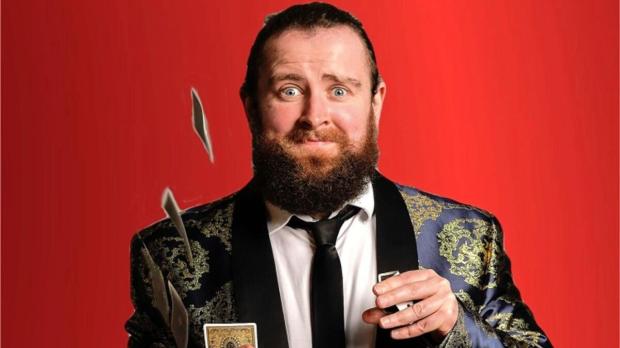
With flyer art featuring Bastianelli playing with his cards, it should come to no surprise to Identity audiences that playing cards feature heavily. Bastianelli is a skilled card magician, even impressing with his cardistry moves before he gets in to the magic. The card magic is a highlight, with magical classics performed with his distinct flair. Bastianelli varies the type of magic he performs with playing cards, to get a great deal of use out of this one type of magic. There is other magic too that uses a greater variety of props—audiences won’t be bored in Bastianelli’s audience.

The identity theme weaves in and out of the show, at times taking center stage, while at other times feeling more tangentially related to the effect being performed. A particularly strong moment of thematic magic is the restoration effect. The themes of being confident enough to be individual, and “destroying” the past self to become truer to one’s own nature, fit perfectly with the effect that Bastianelli performs. On the other hand, some of the routines seem to be explained to be related to identity simply because they are magic and being a magician is a part of Bastianelli’s identity. On the one hand, this feels like an appropriately cheeky use of theme for a magician, but after seeing Bastianelli advertise such an interesting theme it would have been nice to see it explored more deeply.

In an appropriately intimate venue for a show that involves so much close-up magic, and with Bastianelli’s friendly stage presence, the frequent participation in the show is not a concern for the audience. Audience members do all the usual tasks: picking cards, checking props, and letting Bastianelli read their minds. When Bastianelli distributes gifts to select participants, these are thoughtfully constructed pieces of magic, giving them impossible items to remember him by.

Identity is a lovely showcase of Bastianelli’s incredible range of magical talent. The reviewed show was unsurprisingly busy. Fans of close up in particular will appreciate Bastianelli’s latest.

THE UNFAIR ADVANTAGE

☆☆☆☆☆

With a lunchtime slot, for many of its Fringe attendees The Unfair Advantage is probably their first show of the day. The central location is a bonus, both for those who travel straight there and those who take a more circuitous route—at the reviewed show, at least one group was there because they had just walked out of a nearby show that they found far too disappointing, and were intrigued by this interesting premise at a nearby location. No one walked out midway through The Unfair Advantage—in fact, the entire audience stuck around even after the final reveal for an optional Q&A. Harry Milas has expertly put together this magic experience that is part performance, part education, part autobiography, and entirely fascinating.

The stated premise of The Unfair Advantage is that Milas will show the audience how to cheat at cards, using the card handling techniques he learned as a youth with an interest in magic. He does fulfill the brief, after the audience signs an NDA to ensure that his secrets remain so, demonstrating his skills both quickly and slowly, and from a variety of angles, so the audience can get a good look at what he’s doing. The show works as both an educational experience and an entertainment event. Milas balances information with performance with practiced skill.

When the audience gets involved in the show Milas largely asks for minor bits of input just to keep him on his toes, and ensure that those watching can verify that the techniques he’s using are what he says they are. It’s a deliberately intimate audience to ensure that everyone gets the best view of his table, making such tasks easy and unintimidating. There is one audience member who has a more involved role, but for this task Milas is sure to request a volunteer. It’s worth the unexpected attention for the effect of having a member of the audience take on this task, and Milas keeps the pressure off, making it as fair as possible.

Milas is open about the fact that the techniques that he demonstrates took him a long time to perfect—his goal is not the undoubted impossibility of teaching the audience how to do them over the course of a Fringe show, but raising their awareness and showing how they could develop these skills themselves if they want. This is certainly directly helpful for gamblers. However, Milas also makes clear the relevance of his memory and attention direction skills outside of that field, and points out just a few of the many other applications for the techniques that he uses in the show in everyday life. Even this expertly scripted and performed Fringe show is, in a roundabout way, an example of that. Milas created this hourlong unusual and therefore memorable experience that helpfully makes the lessons of his performance stick in the minds of his audience.

The Unfair Advantage is the perfect balance of information and entertainment for a Fringe show. It’s the perfect event for fans of card technique in particular, regardless of whether they come to it from a magic or gambling perspective. While magicians advertising that they will teach their audience card handling is certainly not unique, Milas’s practical advice and his perfectly formatted and executed show set The Unfair Advantage apart. This is the show to see to get your Fringe day off to the best start.

HONEST FRAUD

☆☆☆☆

Newcomers to the Edinburgh Fringe Ricardo Malerbi and Rudi Solon are tackling the dark side of deception in their show Honest Fraud. Every magician commits fraud against their audience, but at least in a magic show the audience is signing up for it. This is the dynamic that Malerbi and Solon explore. They make examples of real life fraud into entertainment, so their audience gets to examine fraudulent scenarios in the safe environment of a magic show. As a theme it has a lot of potential, and if Malerbi and Solon make a few detours, it’s no problem for the audience, who are along to enjoy the ride.

Malerbi and Solon use plenty of audience participants, and make participation particularly fun. The fun starts in their selection method. As Brazilians, they celebrate one of the cutest of their country’s native creatures, the capybara, throughout the show. There are several capybaras onstage, with the smallest and softest being tasked with participant selection. This mundane element of magic shows becomes newly adorable in Honest Fraud. Once selected, participants have a great time onstage with Malerbi and Solon, taking care to be the eyes of the audience and inspecting the magic tricks for any undisclosed deception.

The magic performed is interestingly personalized. An early highlight is a coin trick performed in Malerbi and Solon’s native Portuguese. For those who don’t speak Portuguese this would be an especially interesting section to bring a Brazilian friend to, to compare notes with. However, even those who couldn’t understand the words could enjoy the trick. This was a great demonstration of magic as a universal language, and the power of a well executed sleight. Malerbi and Solon also inject a lot of humor into their magic, most notably in a second series of coin tricks involving an audience participant selecting coins for them to mind read the color and values off of. The hilarious ending works so well due to their flawless demonstration of their mentalist skills moments earlier.

Honest Fraud has an interesting theme, but it could be developed further over the course of the show. The detour into coin and money themed magic is sensible enough as money is so often the goal of real-life fraudsters, but the effects, as impressive as they are, don’t feel like a real continuation of the theme. That being said, audiences looking to be wowed by magical reveals won’t be disappointed, and indeed the overwhelming chatter amongst those leaving the reviewed performance was of amazement at the reveals throughout the show.

It’s always exciting to welcome new performers to the Fringe, and Malerbi and Solon’s debut is no different. With their distinctive style and humor they fit right in with just how much they stand out. Audiences will leave in amazed delight and excited to see what they bring next.

THE TELEPATH AND THE CONJUROR

☆☆☆

The Oberons, Marc and Emily, make for a very sweet double act. Their introduction in The Telepath and the Conjuror is a retelling of their meet-cute as cruise ship performers. The type of magic performed and their style of performance feels classily vintage, and the largely well executed reveals make for a successful magic show.

The Oberons’ areas of expertise are divided as per their show title, with Marc handing the conjuring and Emily the telepathy. Prior to their meeting, Emily evidently worked as a singer, and while musical analysis is outside the scope of this publication, she does sing at several points in this show. At times she essentially performs a live soundtrack to Marc’s conjuring act, which is a really lovely combination of their skills. A highlight in this is the bottle appearing routine that they perform together, with Emily singing her appreciation and approval of Marc’s provision of her favorite beverage. Much of the magic performed feels old fashioned, with props like floating wands and metal circles, and mentalism performed blindfolded with items from the audience. This is not necessarily a bad thing, the material performed suits the style of the performance.

Several audience participants are used in the act, often chosen from volunteers. Where random participants are selected, the Oberons ensure they give them easier tasks. They have a plentiful supply of volunteers to choose from, with a welcoming stage presence that makes all feel comfortable joining in. At the reviewed performance they had several younger participants, and one in particular accentuated the reveal of the trick she was involved in, with her involuntary gasp of amazement ensuring that the rest of the audience knew that the trick had been successful.

The Telepath and the Conjuror has its niche in those who appreciate the classics of magic, whether as a newcomer to the art form or as a fan looking to be reminded of the roots of the genre. The Oberons have a pleasantly romantic stage chemistry—a good sign for an offstage couple—and are lovely to watch. As both a throwback to a classier era of magic than is often seen at the Fringe, and as a general reminder that love is real, The Telepath and the Conjuror is an excellent choice.

THE REMARKABLE BEN HART

☆☆☆☆☆

The Fringe’s favorite oddity Ben Hart is back, with a show title that sounds egotistical even by magic standards, The Remarkable Ben Hart. At the reviewed show the wind may have threatened to blow down his circus tent, but Edinburgh was not deterred. Not a seat was left empty on that windy Monday evening. The enthusiasm was justified, as was Hart’s ego, as Hart turned out one of his signature perfect and inventive performances.

The way that Hart uses magic is creative in both emphasizing the visual beauty of his effects and in making them more magically impressive. The assembly of his cutlery effect in particular addresses potential moments when skepticism might creep in, making the reveal all the more impressive. His mentalist routine is notable as well. Hart primarily performs physical magic, where, by its nature, the audience can see the magic happening.  Hart’s usual performance style takes advantage of that innate feature to create stylish visuals on his stage. With mentalism that innate materiality is not necessarily there, but Hart’s staging and showmanship make the effect blend seamlessly in to the distinct iconography of Hart brand, creating visual appeal to magic that is performed in the mind.

Aside from creative, visually beautiful magic, Hart loves a theme, and The Remarkable Ben Hart does not disappoint. The theme is not in fact just that he’s uniquely remarkable, although the audience may find themselves agreeing with that sentiment as well by the end of the show. While it would be a shame to make available from the start what Hart works so hard to build up over the course of an hour, future audiences can be reassured that this renowned storyteller has not given up on that element of his craft.

Like all performers, and especially magicians, Hart has to deal with members of the public in his show. Hart expertly choreographs his audience participants to ensure that they can perform their roles while also giving the whole of the audience a view of the magic, a notable challenge for a magician performing in the round. As the reviewed show took place during stormy weather, Hart also had to contend with Mother Nature herself heckling him, with howling winds that threatened to bring down his tent. Hart’s response to the wind revealed the practiced professionalism of a performer who regularly works in tents in Edinburgh—this is undoubtedly not the first time he has had to deal with that particular interruption.

The Remarkable Ben Hart is well worth braving the Edinburgh weather. Hart is constantly innovating in the performance of his craft, making him an exciting performer to return to year after year. Rain, shine, or hurricane, Hart’s tent is the place to be.

CHARLIE CAPER: THE FUTURE

☆☆☆☆

Charlie Caper is not only a magician but also a robotics inventor, and in The Future he brings both skill sets to the stage. Not even the stormy weather in Edinburgh could keep audiences away from his tent for the reviewed show, which was cozily packed full. Caper uses both of his areas of expertise to create a fun, unique experience for his audience.

Caper may be the magician, but when the robots are onstage they tend to steal the show—compliments to his robotics skills. Those who have seen Caper perform at previous Fringes may recognize some of the robot friends that he brings to The Future, and these adorable little creatures are always a welcome sight. However, it’s one of the new ones that causes the biggest stir amongst the audience, with its impressive tricks and surprising capabilities, even joining Caper at the end of the show to receive thanks from the audience as everyone filters out.

Caper often uses his audience to help out with the act, often just to pick a prompt from their seats or lend him an item for a trick. One particular highlight is his mind reading routine, in which his fun, silly bits of showmanship culminate in a visually beautiful form of technological reveal—all without the audience participant having to do anything more than say “yes” to verify that Caper is on the right track.

The magic and robots are perfect, but there are a few moments that indicate that The Future is still a work in progress, which is appropriate enough given that title. These are in the transitions, which are still a bit clunky. Caper even comments on needing to work on one in particular that was especially abrupt. These minor imperfections stand out a bit more as the content of the act as it happens between the transitions is all so perfect. It’s exciting to see Caper’s mind at work as the final joints of this come together.

As Caper describes it, The Future is an exciting place—not without threat, but at the same time, something to get excited about. A child friendly show, it’s especially worth a watch for families looking to inspire their children to pay attention in science class. That being said, the inspiring effects aren’t age dependent. Surely anyone who sees The Future with Caper will feel more curious and excited to watch it unfold outside of his tent.

ALEX J BYRNE: MAGIC MIC

☆☆☆

Alex J Byrne may mix in both comedy and magic in Magic Mic, but one form of entertainment that he does not include is striptease, perhaps disappointingly to some who came to his show based on the title. However and disappointment is sure to be short lived. Byrne’s bad jokes and puns keep the audience in good humor, and there is plenty of magic sprinkled in for variety.

With a lunchtime slot in a central venue, and a performer who has clearly earned himself a following, Magic Mic is a popular choice. The reviewed show on a rainy Monday was packed full, with Byrne even having to turn away a few of his fans who weren’t quite quick enough to get there. Those looking to enjoy Byrne’s distinct blend of comedy and magic would be advised to arrive early. As the basement room is a classically hot Fringe venue and The City Cafe which hosts the show sells cold drinks, it would be advisable to even arrive early enough to purchase something cool and hydrating before the show.

Byrne emphasizes the comedy element of his show, with his rapid fire of puns and jokes filling much of the run time of the show. It’s not a bad thing, the Fringe is known for its comedy and Byrne is certainly funny, so it feels justified. The magic, when it appears, is largely well done. If there are moments when it feels like the sleight of hand is a bit clumsy, or the angles of the audience allow them to catch him out on occasion, it’s only because the Fringe has such a high standard for magic. It does feel like a good problem to have, as at least some of the flashes would be fixed if Byrne weren’t so popular that every inch of his room was packed full—and those who are there for the striptease implications of the show title may even welcome Byrne flashing them, even if it’s not the type of flashing they expected. Byrne performs a variety of tricks that range from the more common, featuring cards or handkerchiefs, to less common ones that are great novelties.

Byrne involves many members of the audience in the magic of his show. Luckily for the extra full reviewed show, many participatory elements could be completed from the seats, and the especially enthusiastic members of the front row took care of anything requiring joining Byrne onstage, minimizing potential struggle through the seats. The audience was on Byrne’s side, and the loudest heckle he received was a compliment to one of his jokes—surely a sign of success.

Magic Mic is a popular show for good reason, Byrne is a likable performer who keeps the audience entertained with apparent ease. Magic Mic is a great option for lunchtime fun and magic.

1 HOUR OF INSANE MAGIC

☆☆☆☆☆

It’s easy to dismiss a group magic act as an excuse for the performers to do less work, but 1 Hour of Insane Magic isn’t just a 3-for-1 special. Cameron Gibson, Elliot Bibby, and Luke Osey do each get their moment in the spotlight over the proscribed 1 hour of (insane) magic, but the emphasis is very much on taking advantage of having three magicians in one show to perform tricks and showcase camaraderie in ways they wouldn’t be able to do in their solo shows. From the outside at least, it looks like even more work than three solo shows, but it’s worth it. They’ve created something truly special, and the data backs this up: they have a consistent and ongoing record of sellout shows across three years of the Fringe.

One of the elements that makes Insane Magic not just entertaining but interesting viewing is their approach to rehabilitating historic magic effects for the modern era. Their recreation of the “sawing a woman in half” trick is a great example of this, and requires help from the fourth Insane Magician, Laura Susana Tapia, who takes on the role of being sawn in half. While in the past this role would have been described as an “assistant”, Tapia’s role is emphasized to be that of a magician—she is, after all, doing the hard work of the effect. The performers takes the time to point out that historical conceptions of magic as a primarily male field weren’t because women were excluded from the stage, but because their hard work wasn’t acknowledged as “real” magic. Insane Magic honors the history of their profession and also honors Tapia’s role in the routine, with the men playing the role of her assistants for the effect. And it’s not just lip service for the one section, the men take turns playing “glamorous assistant” to each other over the whole show, demonstrating that the magician and assistant roles are as gender neutral here as they always should have been.

The type and amount of audience participation in Insane Magic is also a key draw for their audiences. The Insane Magicians involve many audience members in their act, and make sure to involve kids as often as is feasible. At the reviewed show the young participants were exceptionally enthusiastic to play their parts, and even to take on light responsibilities to contribute to the act. The one mildly alarming audience participant role is chosen from a pool of adult volunteers, ensuring a reassuring degree of safety and consent.

Those who make a habit of asking strangers at the Fringe what magic shows they’d recommend and why may pick up on a third factor that audiences especially appreciate about Insane Magic. Gibson, Bibby, and Osey just come across as really good guys. Audiences want to spend an hour in their company, almost as much because of how they treat each other and their audiences as because of the magic. The impressive magic is served up alongside a healthy portion of good vibes. It’s an upbeat, energetic show and the Insane Magicians have managed to curate an exceptionally friendly and welcoming environment, from the soundscape as the audience filters in to be seated right through to the greetings and photo ops on the way out. Even hecklers are responded to with friendliness. It’s a “soft” strength but one of the strengths that noticeably sets Insane Magic apart.

Insane Magic as a unit is in its third year at the Fringe, and is on track to once again sell out their entire run. Their legion of fans does not just extend as far as the Edinburgh Fringe—audience reviews of their recent Adelaide Fringe run indicate that Insane Magic has managed to attract groupies who will travel halfway around the world just to catch their Australian debut. They are truly a global phenomenon. Anyone hoping to catch them at the Edinburgh Fringe would do well to buy their tickets quickly.

KEVIN QUANTUM: UNBELIEVABLE MAGIC FOR NON-BELIEVERS

☆☆☆☆

As the only magician-scientist hybrid performing in Edinburgh (perhaps in the world) it makes sense that Kevin Quantum dedicates his latest Fringe show to those who appreciate magic as a mechanical phenomenon that can be explained in rational terms. In Unbelievable Magic for Non-Believers, Quantum demonstrates a series of tricks and routines that are naturally designed to flummox those looking for their rational explanation, and uses real life examples to show that the natural search for rationality in the irrational isn’t just for magic shows.

Quantum is a skilled magician and several of the routines he performs in Unbelievable Magic are particularly creative. His opening routine with a breakfast theme is especially fun to watch—who doesn’t love breakfast for dinner? Quantum’s performance of a well known effect that usually uses two people but here only uses one and a video camera is also interestingly innovative, and all the more impressive for it. Such fascinating magic also highlight another way that non-believers can enjoy magic without committing to becoming believers. When performed with the skill and creativity of a magician like Quantum, magic can be appreciated as a beautiful and funny art form regardless of the audience’s belief in it.

Real life intrudes on the magic in a couple of instances in Unbelievable Magic. The first is the previously mentioned examples of real life phenomena in which it is human nature to search for a rational explanation to an irrational world. While Quantum understandably skates around the sociological and political implications of this element of the show, which would probably take a whole different show to fully unpack, it’s clear enough to feel timely. The second element of reality comes in the form of Quantum’s science demonstration, a regular and exciting feature of his shows. Quantum leans in to the visually exciting parts of physics. Quantum’s demonstration of the properties of his Tesla coil mirrors his use of magic. While there is, again, a rational explanation, the effects can also be appreciated simply for their beauty.

Quantum often gets audience members involved in his show, and often in doing simple tasks from their seats. On the one occasion that he asks slightly more of his audience participant, and teases them a bit more, Quantum makes sure to find a volunteer rather than a randomly selected participant, a great way to ensure happy, active participation.

Creating magic designed to seduce non-believers into believing is a fairly common theme for magicians. Unbelievable Magic for Non-Believers is certainly an entertaining take on that classic, with Quantum’s particular blend of magic and reality adding an interesting perspective. Despite the title it is well worth a watch for believers and non-believers alike.

JOKERS! MAGIC SPECTACULAR

☆☆☆

A midafternoon compilation show, Jokers! Magic Spectacular is a solid option for those scouting out family friendly acts to check out while also having a good time. Hosted by the friendly Mr. Frosty, it’s an entertaining frolic through the magicians’ favorite bits that they have plucked from their main shows.

As well as introducing the acts, the host Mr. Frosty also performs a bit of magic in between them. He quickly notices the youngsters in the room and presents child friendly routines that keep the kids engaged. The props are classic and the tricks performed with skill. Frosty’s red ball trick with an adorably enthusiastic child helper is an early highlight. As the host he’s only one guaranteed to be back at every show, and is guaranteed to set the tone for family friendly fun.

The first to take the stage is Adam B, who bonds with the audience over their flavors of “neurospice” and performs a themed series of effects. Adam B is enthusiastic and friendly, bringing up the energy in the room with his knot-themed magic.  At the reviewed show the audience participants for this section seemed particularly pleased with their role, getting an up close look at Adam B’s work.

George Hunt, the introvert magician, is next in the reviewed lineup. Hunt puts the magic in the hands of the audience, with both a child and adult participant each able to take part at age appropriate moments. Each leaves the stage equally impressed with themselves and with Hunt—the introverted tendency to deflect attention works without distracting from the magic.

And finally, the show is headlined by the millennial magician Chris Fleming. Fleming’s double bluff is a fun interpretation of a classic of magic, keeping it fresh for the next generation. He’s a friendly performer and treats his participants kindly, even if they might not realize that until the end of the routine.

The Jokers! Magic Spectacular is a well hosted compilation that seems able to attract a fun variety of magic acts. It’s centrally located, perfect for a family friendly magic break in an afternoon at the Fringe.