stage magic

JEZO’S CAR-CRASH MAGIC SHOW

☆☆☆

A new entry in the family friendly Fringe schedule, JezO presents a car crash of a magic show in the best possible way. It’s a well-controlled disaster with plenty of explosions, tons of puns, and more car fresheners than anyone would expect to see at a magic show. The magic itself is not a disaster; the full effect of the show is really solid fun, especially for young children.

JezO invites many participants to join him onstage, and is very complimentary of all of them, but is especially great with the young children. At the reviewed show two little ones volunteered to join JezO onstage. A shy young girl who joined him for a restorative effect adorably seemed to come out of her shell the longer she spent with him onstage. JezO also dealt with a nine year old boy who initially seemed very chill but revealed a cheeky streak once he’d gotten a taste of the spotlight, and JezO celebrated his enthusiasm without undercutting his own magical reveal.

All participants, and most of the audience, received gifts from JezO, primarily stickers and especially car air fresheners. If the audience members play their cards right, they can walk away with essentially a lifetime supply of car air fresheners, great value in a Fringe where ticket prices are always on the increase.

The child-friendly magic tricks abound in the Car-Crash Magic Show. A highlight includes JezO’s creative take on dove magic. Animal rights activists need not fear, no real doves are harmed, but the prop is used in inventive and highly visual ways that keep both kids and their grownups entertained. There is an explosion, but it comes with warning and is not loud enough to cause hearing damage in the enclosed venue.

JezO’s Car-Crash Magic Show is a worthwhile addition to any family’s Fringe roster. At the reviewed show he even attracted a notable number of adults without kids—it’s an entertaining show and evidently word has spread. From the best kinds of bad jokes, to silly takes on magic, to a hilarious abundance of car air fresheners, there are numerous reasons to spend an hour in JezO’s hilarious company.


CHRIS COOK ASKED A ROBOT TO WRITE HIM A FIVE-STAR SHOW AND THIS IS WHAT IT SAID

☆☆☆☆

In his 2023 Fringe show ‘Chris Cook Asked a Robot to Write Him a Five-Star Show and This Is What It Said’, magician Chris Cook toys with the idea of letting his show be born through requests to ChatGPT, a popular AI info generator. Never fear that your favourite magicians will be replaced by AI however, what ensues is the journey of Cook interacting with and responding to the suggestions rather than a thoughtless script provided by robot overlords.

The suggestions of effects provided to Cook by AI bring to attention exactly how formulaic magic shows can get when lacking a magician’s personal touch. From insistence for a revealed elephant (difficult to do in a Fringe venue hardly larger than an elephant itself) to a perfunctory “read a mind!”, ChatGPT clearly lacks the forethought and creativity that, fortunately, Cook is very capable of bringing. He attempts to respond to the best computer-generated ideas by nothing less than sourcing chemically disgusting candy in the hopes of opening his and his audience participants’ minds, and traveling through time.  

Cook is clearly aware that the factors that have historically elevated his shows are his confidence in forming classic magical effects around elements of modernity, and his mission of bringing out the best parts of humanity. The combination of these factors means that Cook’s shows almost always feel refreshing and authentic, and to fully hand over creation of a show to AI would seem to be sacrificing one of these aspects to the other. Instead, Cook creates a twist on this concept that makes this potential pitfall the very point of the entire exercise. He is a peerlessly skillful magician, not only in his relentless creativity but in his total technical competence in sleight of hand.

Ultimately, whether ChatGPT agrees or not, the most important part of technological progress is making sure that the world only becomes a better place for our children and generations to come, something Cook professes personal motivation for. And when it may seem like a cost of this progress could be a siloed perspective of only the base elements of magic, Cook reminds us that it is through connecting with our friends and loved ones and doubling down on our humanity that we are best able to take advantage of technological developments while never losing sight of the magic the world, and particularly Cook, is capable of.

HOW TO BE DUMPED: A SORT OF MAGIC SHOW

☆☆☆☆

How to be Dumped is subtitled, “a sort of magic show”, which is an accurate description. The multitalented Sam Lupton has written this part magic, part storytelling, and part musical theatre collage of performance art as a sort of active therapy to help himself get over his recent difficult breakup. It sounds like it will be a mess, but much like Lupton‘s self described mental state, that’s only how it starts, by the end of the show the disparate elements are revealed to be the necessary pieces to tell the whole of the story.

The biggest surprise to someone who just glanced at the poster before seeing this show is probably the musical aspect. Lupton walks the audience through the stages of a breakup, and each stage comes with an original musical number, which Lupton performs using his voice and a piano. The songs are a lot of fun, and weave the thread of the story that Lupton illustrates through magic.

The magical effects are performed well, with mis-sleights few and far between. An early moment that sets the tone is when Lupton uses magic to set up two members of the audience on a mock date. In true magician fashion, he reveals that he predicted from the start that the two participants chosen would be perfect for each other, only to play on that expectation of magical omnipresence to highlight the flaws and frustrations of online dating. It’s an interesting and thoughtful use of the tropes of magic that illustrate how Lupton approaches the tricks used in the show; it’s very much story-forward, and the way Lupton uses tricks highlights the storyline more than the magic itself.

That being said, there are some great reveals.  Lupton has audience members write down a regret before the show and then throw them in a garbage bin onstage, a fitting symbolic act.  He does rummage through the bin to find some regrets and successfully read them from people’s minds, politely respecting those that request they not be revealed to the audience, but concluding that the bin really was the best place for the secrets. 

Magicians have to lie in their shows, otherwise the audience couldn’t experience them as magical, but the heart of How to be Dumped feels like it’s come from somewhere honest. If it’s not quite a magic show, it feels like the performing artist’s version of kintsugi, repairing a shattered object with gold to make it whole. It’s an exceptionally creative sort-of magic show, and the patchwork of artistic talents fits that theme of reconstruction. No one could leave the show not wanting to see more from Lupton, although for the sake of his mental health hopefully on a different theme.

DAVID ALNWICK: NECROMANCER – DAVID ALNWICK IS A MAGICIAN – SECRET MAGIC SHOW

☆☆☆☆☆

The Fringe’s very own energizer bunny David Alnwick and his backstage partner and sister Charlotte Alnwick have brought an incredible four shows to this year’s Fringe—albeit “only” three that are performed every day. The rest of us can only aspire to the Alnwick’s energy levels. His magical play The Mystery of Dracula will be reviewed separately, but the other three deserve more than the brief mention that could be squeezed into the Dracula review. Alnwick is deservedly showing off a bit with this line up, not many could pull off the full range of jazz magic to structured magical play in one Fringe, but he does it with apparent ease.

Their first two daily shows, David Alnwick is a Magician and Necromancer, are, when taken together, a playbook for how to craft a well themed magic show. Is a Magician is the comedy version, for Alnwick’s long term fans who remember him from his ‘cult’ days. It features all that classic Alnwick high energy humor. The highlight and climactic moment of the show is a card trick story featuring a beloved fixture of the Scottish magic scene who many in the audience might recognize by name.

On the other side of the coin is Necromancer, appealing to the horror-loving fan base that Alnwick has cultivated over the past couple of years. Framed as a series of scary games that the audience plays with Alnwick in the role of the Necromancer, it’s a divisive one—perhaps a bit too much for those who are easily frightened, but an excellent Fringe choice for those who enjoy being scared. A highlight for wordplay lovers is a game of “passed the parcel” to pick a participant for a frightening mind reading effect. Magicians and magic aficionados might enjoy seeing one of the tricks from Is a Magician repeated but made scary, an interesting insight into how to adapt the props and performing style to have an entirely different effect on the audience using the same fundamental trick.

Alnwick also performs a jazz magic style secret show every so often at varying times and venues. In these he intersperses a selection of fun tricks and cardistry with poetry recitation. It’s a combination that seems odd at first, but Alnwick makes both a logical argument and a compelling show of sheer charisma to convince the audience that it makes sense. These shows are a fun little diversion for Alnwick and his fans. He’s not telling a story but celebrating his versatility as a magician and performer.

Each of Alnwick’s shows stands on its own, and each is perhaps designed to appeal to a different segment of their fans. Those who have the opportunity to see all of them get a glimpse into the breadth of the possibility of magic as performed by one very talented magician, and where this magician draws the line between magic and theatre.  The shows in this review are advertised as magic, but The Mystery of Dracula is advertised as theatre (with magic components). Alnwick has demonstrated the range of performance that can be classified as magic for the past few years, so while the boundary that he has delineated is just one perspective, perhaps no one is more qualified to judge where that boundary should lay.  Entertainment value of each show aside, it’s exciting to see Alnwick push magic to its breaking point only to keep going. 

KEVIN QUANTUM: MOMENTUM

☆☆☆☆

Crowd pleaser Kevin Quantum is back, this Fringe down one healthy leg. Quantum injured his Achilles’ tendon shortly before the Fringe, but in true performer style is nonetheless onstage every afternoon this month, in a big plastic boot and zippered trousers so he can show it off. He has titled and themed his show on Momentum this year, both in terms of science and the course of life itself. It’s fittingly enough considering that he is visibly pushing himself forward at every show, maintaining the momentum of his career and art form in spite of his injury.

Momentum is a family show, and Quantum makes sure to get the younger audience members involved as often as is appropriate—even if that means asking children to volunteer the grown up they’re with to join Quantum onstage. However, Quantum gets as many children as possible involved in the actual magic, even running through the audience on his injured leg to perform pieces of close up magic to various children in their seats. A live stream makes sure that the entire audience is involved, but the chosen children get a special experience.

Unfortunately Quantum had a few angle issues with his live stream at the reviewed performance, both in the crowd sequence and a later bit themed on the Bermuda Triangle. It’s a tricky business performing for both the audience at large and maintaining the participant experience, and while at times Quantum deliberately plays on this to great effect, there are other instances where a prop appears slightly early, or a word card is seen from the wrong angle, that look a little less than perfect. However, it’s a nitpick in an overall entertaining show. The overwhelming majority of Quantum’s magic goes perfectly to plan.

Quantum’s background is in physics, and it’s his fascination with the patterns of a Newton’s Cradle that bookends the show. Magicians often end their performance with a dangerous stunt, and Quantum’s involves a giant flaming Newton’s Cradle. It’s a beautiful piece of equipment even regardless of the stunt, the flaming cannon balls are gorgeously hypnotic. The fact that Quantum manages to pull off the stunt with an injured foot is even more impressive.

Quantum is one of the established big names in all-ages magic at the Fringe, and he proves his reputation every year. Momentum looks like it’s going to be another in his long list of sellout Fringe shows, and deservedly so. Momentum is a solid hour of amazement.

AVA BEAUX: A MAGICIAN WITH CONFLICTING PERSONALITIES TRIES TO KEEP CONTROL ONSTAGE (POPCORN INCLUDED)

☆☆☆☆

In a city temporarily teeming with performers, Ava Beaux’s A Magician With Conflicting Personalities Tries To Keep Control Onstage (Popcorn Included) could not find a more apt audience. More than just a magic show, Beaux explores feelings on inadequacy and the relentless nagging of one’s own perfectionism in the field of performance. Her journey here is one not only familiar to magicians but anyone making a living off the ability to generate an audience, and to some degree anyone in general.

The show begins as one would expect from a magician- an oddly dressed performer presenting well-worn patter and quirky jokes around displays of magical effects. Beaux does not do anything particularly original in this department, sticking to time-honoured props like rope, newspaper, and metal rings, presumably to best set up the role of the Magician. We then are introduced to a vocal personification of Beaux’s internal thoughts, which spit negativity at her as she tries to keep up her act. Caught in a spell between the self critique and a desire to just perform what she loves, Beaux transitions through costume change to a mute but childishly delighted entertainer, and performs more effects in this persona.

Perhaps unintentionally, Beaux gives the impression that her mot confident and peaceful performing comes when mute, when not made to audibly interact with the audience. Actually, she may be among the rare magicians who can pull this off, as she has remarkable skills in physicality and graceful stage presence. Patter is a useful ingredient for magicians that contributes to distracting their audience away from trickery we are not meant to see, so experiencing a magician who can captivate a crowd with gestures alone is utterly impressive.

Beaux’s conflicting personalities compete throughout the show until the ultimate and heart warming climax. Her audiences cannot help but to be inspired and honoured by being permitted this glimpse into the mindset of the magician, although she does not, unfortunately, share her popcorn.

PETE HEAT: HUGE

☆☆☆☆☆

Pete Heat is as Huge as advertised. He absolutely towers over the audience, even in a Fringe venue without a raised platform, and is at least a head taller than every participant who joins him on stage. The title Huge is more descriptive of Heat than of anything that actually happens in the show, which is fitting for a performance that is fantastically weird and surreal (and even at times magical).

There is not a whole lot of magic actually performed in Huge. Heat is a comedy magician, but has reversed the usual proportion of comedy magic. Instead of telling a few jokes in between performing magic, he performs a few magic tricks in between telling jokes and the odd story. If it does occasionally come across as more of a stand up comedy show than a magic show, it definitely feels like the kind of stand up that could only have been written by a career magician. That being said, Heat is careful to cushion his comedy in enough magic that it doesn’t really feel like he’s completely lying about the genre of his act—it’s as if he carefully calculated exactly how many magic tricks he needs per hour to maintain the facade of magic.  The audience is too busy laughing to notice the lack of magic, although it might not be the right show for those looking for a trick a minute. 

The magic that Heat does perform is all perfect; with the little there is in the show, there’s no room for him to hide if anything doesn’t go to plan. Heat gets the whole audience involved in a way that genuinely feels unique. He states that the numbers and symbols on playing cards don’t really mean anything anymore, they’re far removed from the deeply meaningful symbolism of their ancestors, the tarot deck (this theory is not historically accurate, but an intriguing connection to attempt). Heat makes them interesting again by handing out blank cards and having the audience collectively create their own deck, which he then performs magic with. The delayed reveal is worth the wait. Heat also notably performs a mentalist routine that is simultaneously the best and worst mentalist routine at this Fringe. It’s far from a traditional mentalist bit, but is the most flawless mentalism sequence imaginable for the superbly weird show that Heat has put together.

Heat’s post-show merchandise deserves a mention as well. Audience members have the opportunity to purchase a book that Heat put together in anticipation of a mid-show career change. If you follow the instructions this book is the only example of its genre that you really need.

Huge might be several steps removed from what might be reasonably expected of a magic show, but Heat has carved a weird little niche for himself in the Fringe magic ecosystem. Should the repetitiveness of traditional magic become wearying, Huge is the show to see for a reminder of the ingenuity and creativity that magicians are capable of. And with an easily accessible evening time slot at a central venue, there’s no reason not to go.

MAGICIAN TWINPOSSIBLE

☆☆☆

Despite the classic Edinburgh Fringe rainy weather on the reviewed date of Twinpossible, Kane and Abel managed to pull a large crowd at their Voodoo Rooms venue. They present varied takes on their favorite theme each Fringe. As twins and a double act, the jokes and patterns are right there, and they seize each and every one of them.

Kane and Abel are great entertainers, but on occasion fumbled some of their classic magic effects. They opened with a side-by-side card trick using the same participant that went off without a hitch but were slightly clumsy in their performance of the in-between magic to fill the set-up time. This set the tone for the show -they’re not perfect but there’s usually at least one good reveal. 

Both twins are friendly with the audience, acknowledging that participating in their show is a little bit stressful but making their participants feel welcome. They make a point to indicate the “final participant” so everyone knows when they can relax and stop avoiding eye contact with them. Kane and Abel are kind to the crowd. At the end of a classic trick involving an egg they hand the remains to a random individual as a gift. Body builders looking for some crunchy protein may want to keep an eye out for this moment. They are also not above a thirst trap—magic fans who are so inclined can look forward to at least one of them removing their trousers during the course of the show. Twinpossible truly contains something for everyone. 


There’s a subset of magic shows that are especially predictable. The audience knows they’ll be amazed and witness impossibilities, but they know exactly what those will be—the card will be found and the rings will join together. Kane and Abel lean in this experience with their twin theme, they make all the references to twin relationships and idiosyncrasies that the audience would expect. It’s a safe, comfortable way to experience magic. There’s plenty to challenge as well as amaze at the Fringe, but maybe sometimes on a rainy Sunday afternoon safety and comfort is exactly what Edinburgh audiences want.

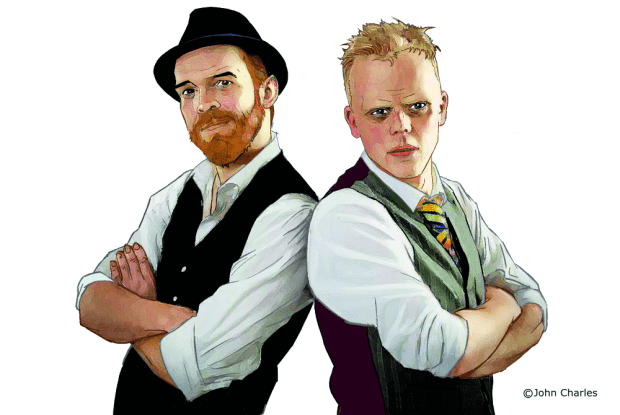
GRIFFIN AND JONES: A LIFE-CHANGING MAGIC SHOW!

☆☆☆☆

Magic is a truly versatile art. Depending on the magician, the audience, even the night performed, it can be lies that tell a truth, beauty through wonder, or even – just a bit of silliness. In this year’s Griffin and Jones contribution to the Edinburgh Fringe, ‘A Life-Changing Magic Show!’, we learn exactly what the two magicians are looking to accomplish (despite the title).

A Life-Changing Magic Show at times feels like it has a surprising lack of magic. Sure, we see the almost obligatory cards, torn newspaper, and chopped up piece of rope involved at one point or another. All the effects are performed well and engender the ideal amount of audience engagement. But the core of this show is Griffin and Jones’ idiotic-to-the-point-of-irresistible humor. Entire segments of time are devoted to just jokes, but told with such enthusiasm and conviction that the audience can barely even detect that something is missing from this magic show.

What is absolutely not missing is either extensive rehearsal, true chemistry, or some winning combination of the two. Griffin and Jones have been performing together for over a decade, so it would be concerning if the partnership weren’t working. But the very degree to which they play off each other in unshakeable comedic timing is something to be commended. In this show, they are doing exactly what they want to do, perfectly.

A Life-Changing Magic Show is clear about the message that it wants to share. Sometimes, pure silliness and stupidity can be the cathartic release needed to, yes, change your life. It can be just a moment of joy that shifts you into a new mindset. Even when Griffin and Jones quiet the tone of their show, they do it in a tongue-in-cheek fashion that doesn’t even allow themselves to take things too seriously. And if Griffin and Jones are having that much fun, how could the audience even not?

More information on Griffin and Jones can be found here.

ILLUSIONATI – A MAGICAL CONSPIRACY

☆☆

Welcome to Illusionati, the theatrical magic show about whether there is a secretive club of elite magicians controlling all who would dare to perform the art, you know, like the Magic Circle (just kidding). This concept is created by a magician by the name of The Great Baldini, and is performed with great enthusiasm even if not with great finesse.

The first part of The Great Baldini (henceforth referred to as Baldini)’s show sets a tone that the show may actually be theatre with some magic thrown in for garnish, which may not have been a bad idea going forward, although it was not the idea chosen. Over the hour we see Baldini vacillate between this former structure of basic tricks forced into the story he wants to tell, or at times, a story forced around a couple of genuinely new, creative trick presentations. These fresh presentations are delightful to see in an creative field so desperate for innovation. Unfortunately, in this show they seem under-developed, dragging on far beyond a reasonable audience member’s expected attention span, which dilutes the effect of the ultimate reveals.

Likewise on the theme of inconsistency, Baldini’s attempts at humor throw off any chance for the audience to be drawn into the show. He is too silly to take seriously, but not funny enough to be entertaining. At times this makes the experience of attending the show feel like watching a child perform magic. You nod and smile along encouragingly, but are mostly left wondering if it is all going to be over soon so you can stop performing back at them.

Similarly to that experience, there is no ill-will felt to the magician. Baldini seems like a legitimately amiable and well intended performer, with a perfectly good concept for a show, just one in need of a creative director and a more coherent vision of how he wants to tell the story.

More information on The Great Baldini can be found here.