stage magic

YOLLIN LEE AND DAAN HO: COLLAGE

☆☆☆☆

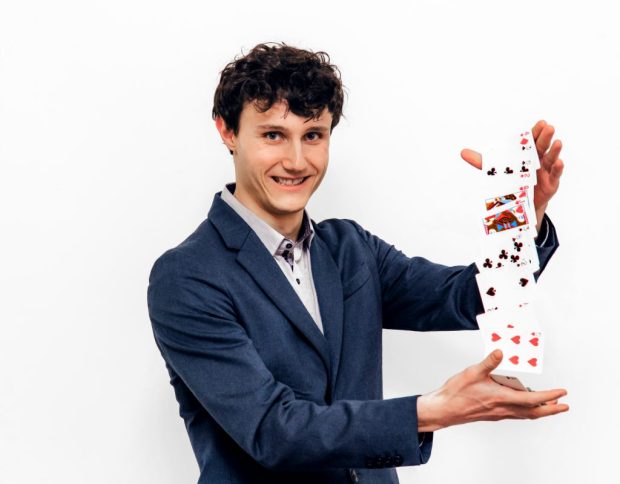
Fringe newcomers Yollin Lee and Daan Ho present a beautiful array of magic tricks in their debut Fringe show, Collage. While the tricks that Lee and Ho perform might not be fundamentally unfamiliar to their audience, there’s a real emphasis on presenting the magic in an aesthetically appealing manner, which is very effective. From the opening sequence of sleights performed in a specially lit picture frame, to a paper-cutting reveal to a mentalism effect, magic has rarely looked so gorgeous. And in a Fringe year with several examples of this effect, Lee presents an exceptionally wonderous interpretation of the classic interlocking rings.

The other appeal, which if it is not unique is definitely at least incredibly unusual, is a specific stunt that Ho performs. Magicians often intersperse their proper magic with scary, dangerous stunts, but, without giving too much away, this one is definitely a huge change from the usual spikes or knives that magic fans are used to. It’s a memorable moment for just how weird it is, in the best possible way. Ho is evidentially well practiced at performing this, it goes off without a hitch.

Lee and Ho generally have a good rapport with the audience, inviting the odd individual up to generate prompts and witness the magic up close. However, a story themed on them trying to pick up women in bars using magic felt a little off. Luckily for them the participant they chose played along, but seeing two men laugh about using trickery to hassle a woman they pulled up from their audience into kissing them didn’t come across well. In a way it was the perfect misstep for their show—Collage is themed on how each one of us sees the world a bit differently, and as men they may not have had the experiences that might make that sequence a bit uncomfortable for the women watching them. A slight change in the way this is presented could easily turn it from an uncomfortable moment into a thematically appropriate acknowledgment of the limits of their own perspectives. However, aside from landing unfortunately close to the finale, this did not cancel out the wonder of all the rest of the show.

Between the beautiful magic and delightfully bizarre stunt work, Collage is well worth a visit. Lee and Ho are charming performers who will hopefully make Edinburgh a regular stop on their touring circuit.

SIEGFRIED AND JOY: LAS VEGAS IN EDINBURGH

☆☆☆☆

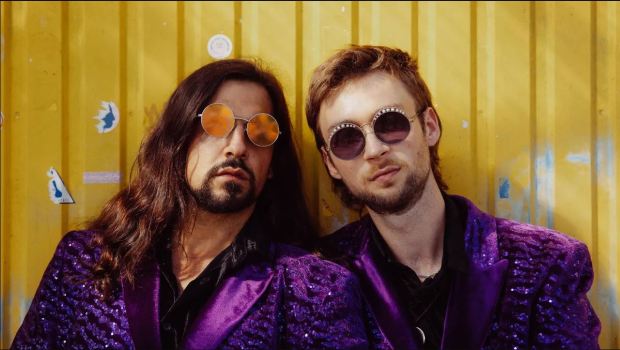
Siegfried and Joy make a strong impression from the moment they step out on their Las Vegas in Edinburgh stage. Wearing instantly iconic outfits of gold suits, silver shoes, and purple velvet shirts and accessorized with star-shaped sunglasses, they dance around their stage performing bits of classic magic. Luckily the outfits compliment the magic rather than overshadow it. Like their classic outfits jazzed up with more glitter than any other magic act this Fringe, they take classic magic and jazz it up, lending the tricks their sparkling personality and making for an incredibly fun show.

Siegfried and Joy are equally instantly noticeable for the great relationship they build with the audience. Siegfried greets every audience member with a high five as they enter the venue, sizing them up and welcoming them in straight from the outset. At the reviewed show they also dealt well with audience interruptions during their set. One man in their front row had to step out midway through, and while they playfully hassled him on his way out, they also welcomed him on his return. They also faced a brief heckling from an excited child in the front row, and responded to it by first making him laugh in the moment and, later on, giving him a co-starring role in their finale that he was enthusiastic to partake in. Toward the end of the show, they did come across as mildly bullying a woman who didn’t seem to want to come onstage, but when they did pull her up she appeared to be having fun with them. That moment aside, they were perfect models of how gracefully to deal with the vagaries of a live audience.

They performed some excellent magic as well. From the very start, when Siegfried licks his scissors before dramatically cutting Joy’s rope, they perform with their perfectly, hilariously ridiculous Vegas-inspired style. They’re really a three-person operation, and the occasional appearance of a young woman throughout the show is a genuinely funny and respectful take on the “female assistant” trope. A highlight is their bottles and glasses effect, which is well performed by all of them—although they may look to take more care when removing these props after this section, to avoid breaking the illusion. In a strong effect featuring just Siegfried, Joy, and an audience participant, they perform a card finding effect that many magic fans will have seen before, but with an added wetness element that only serves to make the final reveal more impressive. A lot of the stage time is taken up with magic themed humor, with tricks designed to flash, but when they get down to it they also have some genuinely fantastic reveals.

The real highlight of the show is the perfect intersection of stage chemistry and showmanship that is evident in every step that Siegfried and Joy take onstage. They spin each other regularly, often start a new trick by rubbing noses, and create an amazing, excited atmosphere over the course of the hour.

MAGICAL BONES: SOULFUL MAGIC VOLUME II

☆☆☆☆

Ever a popular one, Magical Bones’s shortened run for his new Fringe show has resulted in reliably busy showtimes. Soulful Magic Volume II may feel less polished than his previous year’s show, but it has all the trademark tricks (magic and otherwise) that make Bones worth a watch.

 A key feature that sets Bones apart is his breakdance background, and his dance skills rival even his impressive magic skills. In addition, showmanship doesn’t get much better than Bones moonwalking his way through a card selection, breakdancing to warm up for a Rubik’s cube solve, and doing a backflip to find a chosen card.

Bones also tends to use his Fringe shows to shed light on Black history. This year he highlights Ellen Armstrong, the first female black magician to tour her own show in the United States. He performs a themed effect to make Armstrong memorable in the minds of his audience. While the Fringe magic scene is still largely white it’s slowly but surely diversifying, no doubt at least in part to the success of Bones himself, who has always allowed his heritage to enrich his performances.

Soulful Magic II drew a large audience, and Bones gets a large number of them involved in the magic. An early mind reading card effect gets a whopping nine audience members involved, from the comfort of their seats. The audience establish their willingness to lie for him from this starting point, but he doesn’t let them get away with it—they don’t have to pretend to be impressed when he gets going. In the performance reviewed, the most trusting participant joins Bones for his dangerous bag trick, but while she proves willing to put herself in danger for him ultimately no audience members are harmed in this show.

An eternal highlight of Bones’s performances is a card finding effect performed to a bespoke hip hop soundtrack. No other magician imbues a standard deck with so much character and even cheekiness. Even if somehow nothing else about his performance appeals, he’s worth seeing for this effect alone.

With a very limited run by Fringe standards, Soulful Magic Volume II is well worth a ticket. It’s the less formal Bones, making friends with the audience, hanging out before his big UK tour, and showing off some of the cool things he can do.

ARRON JONES: ROCKSTAR MAGIC

☆☆☆☆

For Arron Jones’s second Fringe, he continues his trend of performing magic shows that no one would think to ask for in his new show Rockstar Magic. Here Jones, true to title, performs magic like a rockstar. There’s lots of music, plenty of card tricks, and even more hip thrusts than anticipated. Jones is the magician to go to when you think you’ve seen it all.

The show is perfectly themed in rockstar style magic. If there are digressions, they’re well reasoned enough to feel like they fit in, and engaging enough that no one in the audience is thinking too hard about it. Jones chats to his roadie Al throughout the performance, a helpful presence who assists with props and audience management, and generally adds a pleasant extra presence to the show.

The magic is well themed and all goes to plan. A highlight that the participants all seem to especially get into is an instructional section on how to smuggle drugs through an airport. While no concrete lessons are learned, probably for the best in case there are any airport staff in the audience, Jones displays his mind reading skills to perfection. Jones ends the show as both a rockstar and a magician, with an incredible keytar performance and a final reveal to send the audience on their way.

With such a specific theme, Jones draws an enthusiastic audience who instantly engage with his character. While his trainee drug smugglers were particularly keen, everyone brought onstage at the reviewed show seemed delighted to be in closer proximity to Jones, and played along with all the tasks and activities he assigned them. Jones reacted perfectly to interruptions as well, claiming responsibility for breaking a stray glass with his mind without skipping a beat.

Jones may be developing his trend of performing magic shows that no one would think to ask for, but by the end of one of his shows the audience will be convinced that it’s exactly what they always wanted. He’s fully committed to the bit every step of the way with this high energy performance. Those feeling that late afternoon slump will leave Rockstar Magic feeling energetic enough to take on the world.  Ladies, gentlemen, and everyone in between, bring your spare underpants to toss on the stage.  Just try not to faint when he walks through the audience.

CHRIS COOK: ARROWS

☆☆☆☆☆

Chris Cook has been a Fringe institution for a full decade, and celebrated this milestone with a one night only show Arrows in his home, the Voodoo Rooms. Arrows contained all the classic Cookery his fans have come to love, but as much as it’s a celebration of Cook’s full body of work, as the title suggests there’s one stunt effect in particular that’s highlighted as exceptional. It was both a celebration and genuine entertainment from a superstar performer, and for one Monday evening in August it was the place to be in Edinburgh. 

Arrows was as much a personal celebration for Cook as it was a show for the audience, which came through in several ways that only made the whole event more enjoyable. The audience itself was fantastic, with the majority consisting of personal friends and family or fans who were all immediately 100% behind everything that Cook said and did onstage. Cook even invited his girlfriend to join him onstage for an adorable final segment, and she briefly upstaged him with her perfect comic timing, getting one of the biggest laughs of the evening. 

The magic involved was mostly familiar favorites, cleverly put together to form a cohesive theme around the titular arrow sequence. The jazz magic style of the first few tricks seamlessly blended with the more structured arrow-based second half. A highlight was a card corner trick that Cook performed with one of the Voodoo Rooms staff, who seemed incredibly excited to be included onstage. 

However, the main point of the show was the arrow bits themselves. Cook had performed this neoclassical take on a bullet catch in a few previous Fringes and it’s a fan favorite—it retains the show of physical invulnerability from Cook, the magician, but shares this experience with an audience participant, and adds an aspirational element that is focused on Cook and his participant but that the entire audience can get involved in. It’s intended as a challenge to the audience to take concrete steps towards following their dreams, but of course art is always open to interpretation. It can equally have an effect on audience members who have just taken a big step towards following a lifelong dream, and come in to the show doubting if they’ve made the correct decision. Watching a charismatic man in a stylish outfit do an impossible thing and then say it’s worthwhile to follow your dreams can be oddly comforting, and a great reminder to those who are already living out a childhood dream of how lucky they are to have been able to do so.

Arrows was the perfect celebration of Cook’s first ten years of Fringe performing. Here’s to many more.

BARRY POTTER AND THE MAGIC OF WIZARDRY

☆☆

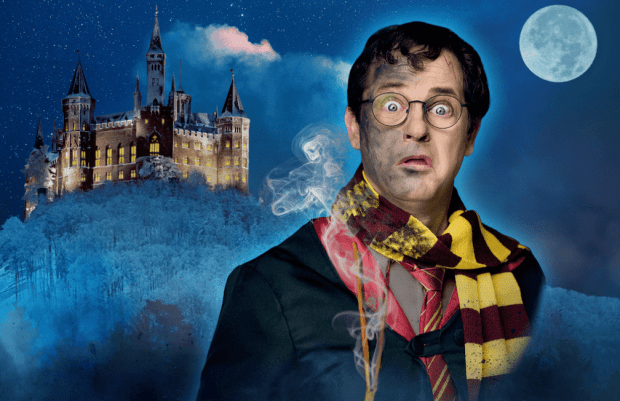
At a show called Barry Potter and the Magic of Wizardry, the audience has to have a good idea of what they’re getting themselves into. Potter does not disappoint. The magic may be recognizable by those who have seen muggle magicians, but there’s plenty of Hogwarts-magic style props and more wizardry puns than you can shake a hippogriff at. The execution did face some issues at the reviewed show, but he pressed forward with admirable professionalism.

Potter has a decent rapport with the audience, but surprisingly given the type of show, seemed to have trouble connecting with the younger audience members. One youngest was admittedly overly chatty from her seat, and he shut her down pretty harshly for an overactive toddler, calling her narcissistic and telling her that not everything is about her. It would have been an understandable, if unfortunate, reaction from a non-performer, but for a magician performing a self-aware childish kind of show it felt far too unkind. Potter was better with a young boy who joined him onstage for a coin trick, who had a great time getting in on the magical fun.

The magic performed was well themed but had a significant error on the day that the show was reviewed with the final reveal. As much as it’s a shame to end on an error, the rest mostly goes to plan, and if the patterns are familiar, it’s all perfectly themed. Potter uses familiar props, such as a golden snitch and photos of the Harry Potter film characters, to perform his effects. He tells a Harry Potter style story throughout the show, but a highlight is his playing card retelling of the original story. This did hit a few snags at the reviewed show but was nevertheless creative and engaging.

If it wasn’t perfect when it was reviewed, Barry Potter and the Magic of Wizardry was still a great time, thanks to the irrepressible professionalism of Potter himself.  There are plenty of fun reveals even when things go wrong, and errors of some sort are inevitable in a month-long live theater run. Harry Potter fans looking for a dose of nostalgia peppered with the best kinds of bad jokes need look no further.

COLIN CLOUD: AFTER DARK

☆☆☆☆☆

Scotland’s number one export may be petroleum (which surprisingly surpasses the beverage category) but its number one boomerang export is apparently its mentalists. After Dark sees the return of Colin Cloud’s magnificent hair to the Edinburgh Fringe stage after four years away, and Edinburghers have given him a warm welcome- the reviewed show was to a packed audience that queued all the way around McEwan Hall.

Many might remember Cloud’s incredibly extra approach to showcasing his mentalism abilities, and they will not be disappointed by this show. It’s a common final reveal for a magician to have a prediction to read out at the end of the show that demonstrates that they knew everything was going to happen, and Cloud is no different—except that he wrote and posted his predictions to a member of the audience several months prior to the show, and had that audience member bring the envelope up on stage at the start of the show. It was like a scene out of a Doctor Who finale, which was undoubtedly intentional. Cloud also demonstrates what is either a very impressive ability to know what is on IMDb pages, or a very sad but still kind of impressive encyclopedic knowledge of the whole of IMDb, in a mentalism feat that gets the whole audience involved in the fact checking.

This year Cloud has a new message, a new way to add meaning to his magic, by drawing on his own journey toward mental wellbeing. Cloud illustrates how random chance can feel like a guiding force toward the future during times of distress, using an origami fortune teller much like many would have used as schoolchildren to read audience members’ minds.  This feels like classic Cloud work. To visualize a personal low point, he switches gears into the kind of stunt work that his fans may be less used to seeing him perform. The stunt he performs usually comes across as kind of gross, but here, accompanied by the retelling of his story, it feels oddly wholesome and uplifting—it’s the overcoming of the physical danger that’s emphasized, more than the introduction of it. The story of his past is of overcoming that physical harm by lucky chance, but the danger presented onstage is overcome by choice, with the skill and practice of his profession.  Cloud demonstrates his personal growth even in the retelling of a personal low. 

After Dark may be initially presented as the return of the king, and that’s very much the case. However, he’s a changed king, and here he shares the life lessons he’s learned with all the ability and flair that made him renowned in the first place. Edinburgh welcomes his return to the point that his huge venue may very well be sold out for the rest of his run, but those lucky folks who have bought tickets can be sure they won’t regret it.  Cloud once again sets the standard for excellence in mentalism at the Fringe. 

YVAN ZIM: TANGLED D’ILLUSIONS

☆☆☆

A talented French-Irish edfringe newcomer, Yvan Zim presents his Tangled D’Illusions show in a pleasantly central basement bar. He’s a skilled magician and presents new interpretations of many classics. If there’s no real theme, most of the audience is too awestruck to notice.

There are many highlights in the magic that Zim performs. If rope tricks are often considered less inherently interesting, Zim’s incorporation of his software development background and inclusion of other props makes his a bit more fun. The audience participatory element is especially well handled, he gently teases and encourages those who help him trim his rope. An effect involving eggs also gets a lot of the audience involved from their seats, although ethical vegans may want to avoid lending Zim any possessions. And anyone who has ever been vaguely disappointed by the lack of violence usually involved when magicians “cut” a deck of cards will be overjoyed by how Zim concludes his show.

Some of Zim’s tricks could be benefitted by a bit more care going in to maintaining the illusion of magic. There’s the occasional point where Zim appears to be examining chosen audience cards before he places them back in the deck, or where he seems to be tipping himself off to the location of his special item within supposedly randomized envelopes. It’s not every trick, and his skills are still impressive enough, but it’s something that might be worth working on.

A lunchtime show at a venue that evidentially does not have an age restriction, Zim has plenty of young children in the audience. He’s great at getting them involved on their terms, choosing children to join him onstage who actively volunteer. A young participant for a card trick at the reviewed show was adorably enthusiastic. Zim had her climb up on a stool (after getting her grown ups’ permission) so she was about the same height as him. They had a great rapport as she helped him shuffle the deck and find her friend’s card.

Tangled D’Illusions is a pleasant way to spend an hour. It’s not especially designed for kids but is definitely family friendly, and Zim himself is great with all ages of participants. As part of the Laughing Horse festival it’s easy to turn up without a ticket, a great option for those who find themselves looking for entertainment around lunchtime.

BEN HART: JADOO

☆☆☆☆☆

Ben Hart and his shows are a staple of the Edinburgh Fringe magic scene. At some point you would expect that surely a performer cannot only have hits, no misses. But in Hart’s latest offering, Jadoo, we are yet again awestruck by his capacity to entertain and enthrall.

It is unfair to criticize a magician at the Edinburgh Fringe too harshly for a challenging venue situation, knowing what we all do about the difficulty of turning a normal, historic city into a living breathing theatre with every random building and business a stage. But we cannot go the other way around and not commend a magician for creating perfection in their experience starting from even the room their audience sits within. Assembly George Square Garden’s Palais du Variete has reappeared in this location for many Augusts, but if we were not aware of that we would believe it had been built from the ground up wholly for Hart’s use. It is hard to imagine a better ambiance to sink into than this smoky, mirrored, almost entirely in-the-round venue. The mystery evoked by one’s surroundings here are an unmatchable fit for the seductively spectacular story Hart tells in Jadoo.

Hart hearkens back to his interactions with India and Indian magic, both from experiences travelling there and from familial connections. Any magic aficionado is aware of the impact historical Indian street magicians have had on what we consider to be classical magic staples. At times the origins of these effects are uncertain, in question whether they are legitimate immigrations to “Western” awareness or made up by Golden Age magicians in an effort to appeal to the mysteriousness of the colonized ‘other’. That being said, magicians like Hart with actual roots in this country are well positioned to reframe and reclaim these effects and mold their own, highly personal stories around them.

Hart tells stunningly beautiful stories through stunningly beautiful sleights. From transforming a simple cloth into airborne moths, shocking the audience with his capacity for pain, and performing the impossible with something as simple as sand, Hart captivates the audience with his skill and storytelling. To again mention the physical surroundings, it is a choice of surprising bravery to have a magician perform in a room literally ringed with mirrors. If at times this boldness betrays him, it is to no real detriment to the overall show, for the force of his personability keeps his audience thoroughly on his side and hypnotized by the magic unfolding in front of them.

If one is looking for their last theatrical and magical experiences as the Fringe wanes to an end, Ben Hart’s Jadoo is an absolutely unmissable one.

DAVID ALNWICK: THE MYSTERY OF DRACULA

☆☆☆☆☆

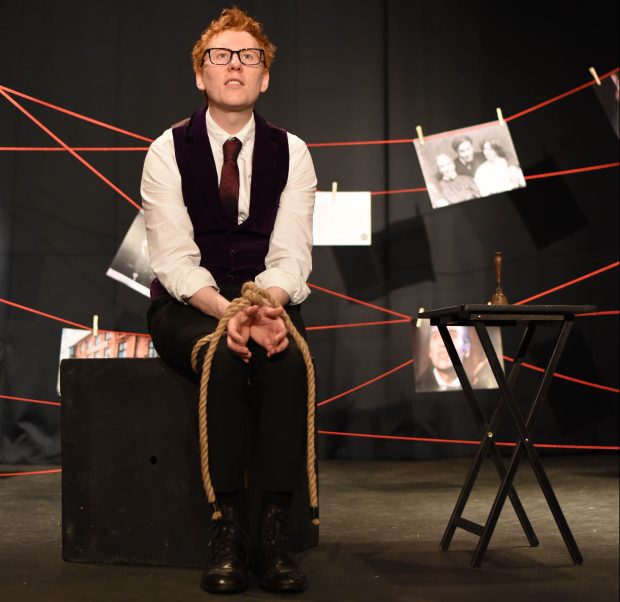
Reviewing The Mystery of Dracula means bending the rules, for it is only very loosely a magic show. From the minds of the Alnwick team, the Fringe’s favorite genre-bending siblings, it’s a slight deviation from their theatrical magic offerings of recent Fringes into more of a proper play, albeit told using magic. Magician David Alnwick is here a researcher investigating the origins of the Dracula story, and along the way illustrates his occult findings with stage magic. It’s a style of performance that he has honed over the past few Fringes and it shows. Like seemingly everything that Alnwick produces, the magic itself is flawless, and the storytelling aspect is equally perfectly performed.

As the public have come to expect, the Mystery of Dracula is nothing short of a triumph from concept to performance. Alnwick uses magic sparingly. The mentalism cards he uses in an early effect may look familiar to magic fans, but what is unfamiliar is just how perfectly placed they are in the narrative—plucked from Alnwick’s extensive repertoire for their important role in the story. Alnwick tells the history of magic alongside that of Dracula, and indulges the audience in a display of Victorian-style escapology along the way. It seems a bit random at first, but by the end of the hour is revealed to be a crucial element of the final effect.

There would have been no room for Alnwick to hide if his magic were anything less than flawless due to how little of it is used, but luckily that is never a concern. Dracula is as much a story about the origins of magic and their interconnection to occult beliefs as it is a magic show. Alnwick has never really needed magic to hold an audience’s attention, at least not for as long as this publication has been reviewing him, and this is the proof of it. If it’s more a story than magic, it’s difficult to imagine anyone other than a magician thinking to tell it; and if they did they wouldn’t tell it with nearly as much passion or insight as Alnwick.

It’s easy to dismiss a magician’s stories as more fiction than fact, the necessity of their tricks outranking any need for truthfulness. However, watching Dracula with a Yorkshire local reveals that the settings that Alnwick describes are at least real, the photographs are indeed recognizable as actual locations in the town of Whitby. Hopefully Alnwick has arranged to receive referral fees for customers of one particular restaurant that will undoubtedly receive an influx of new customers after this show.

For Alnwick fans, Dracula fans, and indeed every discerning Fringe fan, The Mystery of Dracula is a must-see show this Fringe. It’s perfectly balanced, not quite so scary as his proper horror or so comedic as his lighter-hearted shows. Alnwick doesn’t look to be giving up his place of prominence in the Fringe magic scene anytime soon.