
5 Stars

JAMES PHELAN: THE DREAMER – LIVE

☆☆☆☆☆

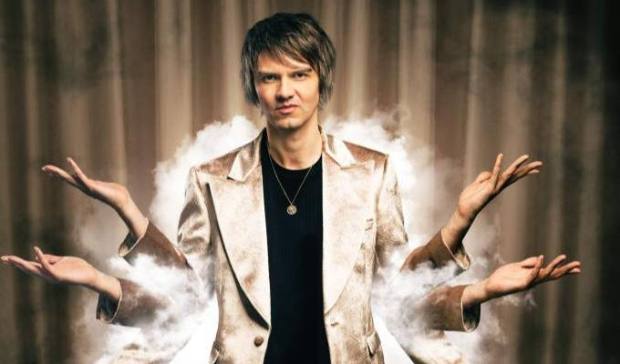
This year, James Phelan joins the extra daring magicians who have set their shows on round stages. As The Dreamer skews more toward mentalism and hypnotism, it may be a more achievable aesthetic decision than for a physical magic based show, but still demonstrates a deserved confidence in his skills. That being said, Phelan notably spends a relatively low proportion of his time actually on the stage. He instead fills his time pacing through the audience, trawling for participants to join the show and getting to know everyone who catches his eye. It’s a personal show, and in keeping with that theme, Phelan takes the time to get to know some of the members of his audience personally. However, curiosity about Phelan’s personal life is not the primary draw. His mentalist and hypnotist routines are interesting to watch and engagingly performed.

Straight from the start Phelan gets everyone involved in the magic, with a opening filmed mentalist effect that works on everyone who takes part. Phelan’s attractive and widespread advertising lured in audience members to the reviewed show who had not been to a magic show in their lives, and for them in particular, seeing the universal effect of this particular trick was absolutely mind blowing. Phelan also gets the whole audience involved in his hypnotism warm up exercises, which provide audience-wide entertainment regardless of whether those audience members ultimately participate in the hypnosis.

Both due to Phelan’s friendly performance persona and habit of centering the performance away from the stage, despite the sizable venue The Dreamer is not an intimidating show to participate in. The more involved participation points are in the hypnotism section of the show, and these are on an opt-in basis due to the nature of hypnotism as a practice. Audience members can be confident that if Phelan selects them at random they will not be asked to do anything too confusing to help him demonstrate his skills.

The foundation for The Dreamer is in Phelan’s parents’ IVF journey, in the early days of that science—appropriately enough for a magician, Phelan’s very existence is due to an impossibility becoming possible. While it is not an uncommon message for a magic show, Phelan thus has a personal stake in The Dreamer’s messaging that everyone watching it should follow their dreams regardless of how impossible they might seem. If it weren’t for his parents’ pursuit of their “impossible” dream, he would never exist to create the moments that bring his audiences together in the first place. Phelan’s effective use of hypnosis in particular drives the point home, playing with audience expectations of the movability of mental barriers.

Phelan makes great use of his status as both a magician and real life magic trick for his parents in the performance of The Dreamer. He’s the perfect performer to celebrate the achievability of the impossible. The focus is decidedly on the mind, this is not the right show to go to “see” magic on the stage, but for those who are interested in feeling it, and watching others feel its effects, The Dreamer is the place to be.

More information on The Dreamer and its performance dates can be found here.
AVA AND BEAUX: TALES OF MAGIC

☆☆☆☆☆

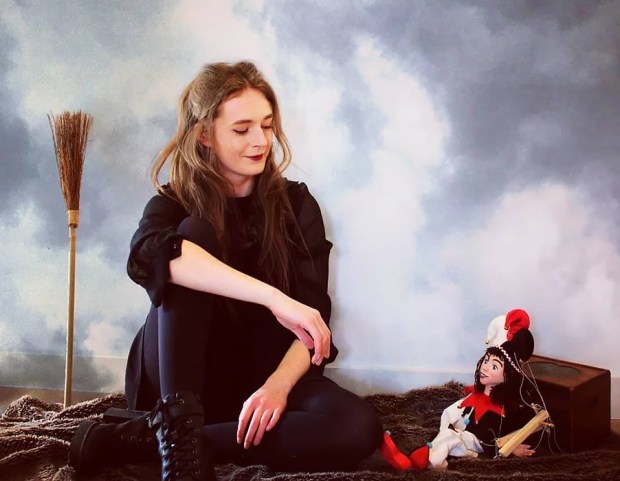
When the audience steps in to the Voodoo Rooms for Ava and Beaux’s Tales of Magic, they may look at the magician on stage and think they’re only there to see one performer. However, Ava and Beaux are two magicians for the price of one—with several other characters in the Tales, essentially an entire theatre ensemble and an adorable pet for the price of one magician, or “magish” as she prefers to be called. Tales of Magic is a beautiful, cohesive story composed of disparate elements that come together, by the end, for a satisfying conclusion.

If the audience might come in expecting a magic show, they will be so enthralled that they may not even notice how relatively little of the stage time is spent on magic tricks until they reflect back afterward. The magic that is performed is all in theme and in character and performed with skill and artistry. One of the highlights simply for the oddity of its presentation is a series of rope tricks framed as an informational lecture on intestinal worms. Watching it, it’s difficult to remember exactly how the narrative reached that point, but it also, somehow, feels very Ava Beaux.

The split between Ava and Beaux is present once again in this year’s show, although with the many characters these two don’t always feel center stage. At the start their roles feel fairly well defined, with Ava introducing the show and reading her audience’s minds, and Beaux taking on the more physical tasks such as a beautifully choreographed hoops routine. Over the course of the show, and in keeping with the theme, they gradually collapse together. Their roles become less well defined as the two halves of the one performer resolve into a perfect ending.

As a theatrical show with some magic, this show is relatively light on audience participation. And despite the occasional spookiness of her performance Ava Beaux is one of the kinder magishes. She doesn’t ask the audience to do anything embarrassing or confusing. At the reviewed show her final participant had to step back to her seat for reading glasses, and Ava Beaux seamlessly switched around the order of her finale so that her participant would not feel rushed.

Ava Beaux consistently has one of the conceptually oddest approaches to performing magic at the Fringe, making her a favorite amongst regular visitors. Her act is distinct and her name tends to stick in people’s minds. As well as a unique magic experience, Tales of Magic presents an opportunity for the pet owners of Edinburgh to remember to appreciate their furry friends. Ava Beaux and the ensemble cast that she brings to life are the perfect diversion in the Fringe lineup.

More information on Tales of Magic and its performance dates can be found here.
PETE HEAT: BOGUS

☆☆☆☆☆

Anyone who has been on social media in at least the past year will have witnessed irrefutable proof that society is ill equipped to handle conflict in a post truth world. There might be a moment of hope when a mutual shares content debunking obvious propaganda, only for that hope to immediately be dashed when they then immediately share equally egregious propaganda slanted in the opposite direction and claim it to be the unbiased truth. This is the foundation of Pete Heat’s Fringe show Bogus. Heat gets all that across in a manner that is very silly, very magical, and very effective.

As per usual in Heat’s Fringe offerings, magic does not make up a huge proportion of the show. Heat is a comedy magician who gives equal weight to both the comedy and the magic. The magic is remarkably slick, even if there are members of the audience who have seen Heat perform the same tricks before it’s by and large impossible to spot the moment that the deception is achieved. Those who take part in especially novel effects may find themselves quizzed by other members of the audience after the show, as they simply can’t believe that the participants are not stooges.

One of the more interestingly involved reveals is to a trick involving made up language, which leaves audiences flummoxed. Heat uses technology in Bogus in an inventive way, creating magical moments unique to this era. Random number tricks are often used as predictive effects, for the magician to show off their mentalist skills, and Heat’s version of this is both extra impressive and extra hilarious.

As methods to dispel the notion of objective reality go, magic may feel like a fairly obvious one. It’s the perfect option for discussing the effect of both deliberate propaganda and social media AI algorithms, as it uses similar principles. However, magic is explicitly for entertainment rather than for the lethal combination of infotainment and deliberate fracturing of the laboring classes often seen in non-magical misdirection. Heat’s other primary prong is, perhaps a little more unexpectedly, animal facts. This is equally effective in its own way, and far more cuddly.

Like any other magic show, Bogus is designed to leave the audience with more questions than answers, but explicitly draws the connection to the outside world. Outside of Bogus, we’re faced with nonconsensual, malicious, and dispassionate misdirection, and we don’t even know how tall the perpetrators are. Inside Bogus, we’re faced with benevolent misdirection from a very tall man—clearly the better option.  The irony of his infotainment approach to addressing contemporary media illiteracy suits Heat’s style.  And even audience members who aren’t in it for the big themes can enjoy the incredible magic and hilarious jokes. 

More information on Bogus and its performance dates can be found here.

1 HOUR OF INSANE MAGIC

☆☆☆☆☆

In the crowded marketplace of Fringe magic the challenge of putting on a show is often acquiring an audience. Last year’s sellout sensation 1 Hour of Insane Magic does not have that problem, but there are extra challenges that come with success, in their case in performing a magic show to an audience on three sides. Fortunately the Insane Magicians—stunt magician Luke Osey, sleight of hand artist Elliot Bibby, and mentalist Cameron Gibson—were clever enough to put together a flash-free set, it’s an insanely magical show from every angle.

The highlight of watching a performance that contains a whole three magicians is, of course, watching them perform together. Right at the start the Insane Magicians pull an audience participant on stage for them to tag team with a bombardment of their varied magical skills. They take turns playing off each other and joining forces for their reveals. At times, even when just one is taking the lead of the segment, the other two are on hand in the traditional “glamorous assistant” role to ensure that the audience participants and main performer have everything they need to hand.

Gibson is the only one of the Insane Magicians to verbally admit to being a nerd, but it’s obvious to the audience that they are all nerds, and not just because they have chosen magic as a career. The Insane Magicians publicized this year’s show in part by showing off their big new illusion, a table for sawing someone in half. Not only have they gone to the trouble of resurrecting a classic of magic, but they also make it as historically accurate as possible with the help of their secret fourth Insane Magician, Erin McIntyre. In the modern era it can seem difficult to perform this type of magic in a way that doesn’t come across as misogynistic, but the Insane Magicians make it look easy.  They make it clear that in their version of the effect McIntyre is the primary performer and the others are simply her three glamorous assistants, helping her show off the skill that she mastered.

Bibby, Gibson, and Osey have had and continue to have separate careers outside of performing together, and throughout the show they pay tribute to the adventures that have brought them together and at times apart throughout their friendship. They illustrate the beauty of this Insane Magic era of their friendship with a lovely effect involving several audience participants joining in from their seats, giving enough input to make the trick extra astonishing while keeping the attention on the three insanely magical friends sharing the stage.

As with its previous Fringe outing, 1 Hour of Insane Magic has proved insanely popular. Anyone wanting to experience the show who does not have a ticket yet had better buy one quickly, as they regularly sell out over a week in advance. 1 Hour of Insane Magic is the most insane family friendly fun available this Fringe.

CHRIS COOK: THE ART OF TAKING PART

☆☆☆☆☆

Last year, Chris Cook celebrated ten years of performing at the Fringe. This year, promotion for his new show The Art of Taking Part sounds almost like an abdication of his role as a magician, giving the show over to the audience to provide entertainment for each other. In practice this is not the case. The audience does not need to fear that they are being put on the spot to create the show for their peers, Cook’s guiding hand ensures that the show stays magically on course.

On the rainy weekday evening that this show was reviewed, the fact that Cook managed to get any audience at all was very impressive. Those that were there were the ones who really wanted to experience the show, which was actually perfect for the type of performance that it is. Every participant that Cook brought to the stage was enthusiastic in taking on their roles. There is an element of random selection as well, and for two of the elements requiring a very minor bit of physical skill Cook had the misfortune of selecting one of the most physically incapable people in the room, possibly in the world—this reviewer. Even then, Cook managed to keep the show on track with kindness and professionalism.

To celebrate The Art of Taking Part, Cook regularly rewards his participants for joining him on stage. This is not achieved just through physical gifts, although those do appear on occasion, but Cook also places emphasis on tricks that happen in his participants’ hands, or that center the participant as the one taking credit for the magic part of the segment. One trick in particular sees a volunteer member of the audience take over the role of the central performer, and at the reviewed show she really got in to it, fully appreciating her share of the spotlight. Nevertheless it is clear that Cook is pulling the magical strings, there are plenty of skilled reveals over the course of the show.

Over the course of the show, The Art of Taking Part is revealed to be as much a manifesto on the nature of magic as an art form as it is the title of the show—the necessity of interaction with the audience is one of the key aspects of magic that sets it apart from most other performance arts. Cook devotes his show in part to celebrating this feature of magic, which gives the performer a unique ability to connect directly with members of the audience on a personal level. Arguably this facet is the crucial factor that has enabled Cook to create ten years of Fringe shows that are slowly but surely making the world a better place. At the same time, it’s a deeply silly show that gives the audience a chance to embrace the fun of magic, often in their own hands.

Cook’s habitual emphasis on guiding his audience toward self improvement is still very much present this year; regular fans will not be disappointed. For the perfect blend of seriousness and silliness The Art of Taking Part is the place to be.

More information on The Art of Taking Part and its performance dates can be found here.

COLIN CLOUD: CONSEQUENCES

☆☆☆☆☆

Colin Cloud is no stranger to the Edinburgh Fringe. His gigantic, sold out venue on a rainy Monday evening is a testament to the work he has put in to building his Scottish fanbase. These days he is usually based in the US, and recently became renowned for putting a small American town called Las Vegas on the map as a holiday destination when he opened his new headline show there. This year is also Cloud’s first full Fringe run since the pre-pandemic era, and to mark those special occasions his show Consequences is a mentalist retelling of how the consequences of various moments in his life have led to the moments that each audience spends in his company.

It’s easy to assume that a magician has full control over everything that happens in their theatre—which is not always the case, as much as they might pretend—but Cloud regularly caters to the skeptics in his audience by inviting outside input in to his shows. As the audience files in to Consequences each evening they find Cloud sitting onstage wearing a blindfold, with instructions on the screen behind him to ask their social media friends and followers for random words to be used to create one of the impossible moments later in the show. Cloud’s use of popular technology to make his magic seem even more impossible is one of his signatures, and always gets a great reaction from the audience.

As with many of his colleagues, Cloud’s road toward his career in magic began when he was a child, and the audience is treated to stories that provoke a range of emotions in the retelling. Each is accompanied by a mentalism effect to illustrate key themes in the story. Cloud is often described by both himself and others as the real life Sherlock Holmes, an apt comparison, and in Consequences his childhood love of mystery books is cited as one of the factors leading to his present reality. His mentalism is here framed as deductive reasoning, and of course, like magicians, the best mystery writers are masters of misdirection. Fellow fans of Conan Doyle will especially enjoy Cloud’s book trick, and trying to guess popular words from the famous stories while Cloud deduces them magically.

Cloud gets a fair few members of the audience involved in his show, sometimes at random but often also by choice. He is kind to his participants and especially apologetic when, on occasion, he asks them to do a slightly more confusing task for the sake of the trick. With a venue large enough for balcony seating, those who wish to secure their safety from the stage are able to put an entire staircase between themselves and Cloud.

It won’t be news to fans of magic and mentalism in Edinburgh that Consequences is an excellent, must see show of this year’s Fringe. Cloud is the go-to for those who want to tick magic off their Fringe checklist without having to fear the risk of a poor quality performer, and he does not disappoint. Each year has added a ever growing depth and nuance to the structure and format of his shows, and Consequences is a welcome addition to that trend, with a blend of storytelling and Cloud’s classic comedy mentalism that feels distinctly unique. While each evening of Consequences offers a moment for the audience to reflect on the results of both Cloud’s and their own pasts, Cloud’s constant self improvement is a testament to the reality that dealing with the consequences of the past never stops, and the power of each individual to take advantage of that to undertake actions in their present to improve their future consequences. 

More information on Consequences and its performance dates can be found here.

BEN HART: HEX

☆☆☆☆☆

Edinburghers fear not: the witch is back.  Ben Hart is always one of the more stylishly dressed magicians. This year he looks so sharp in his tan suit that Americans might feel compelled to vote for him for president. Hart has performed at the Fringe for the past ten years, and this year’s show Hex is billed as a retrospective, composed of the best tricks and bits from previous years.

Ever the storyteller, captive to his magical talents and creativity, Hart does weave a delicate yet cohesive storyline through the themes of the various effects. This is so perfectly done and perfectly revealed that it would be a shame to say any more in a review. Suffice it to say that if there is such a thing as a good year to skip Hart’s show, this is not it.

Due to the nature of this show regular attendees of Hart’s Fringe offerings may recognize specific effects from past years. Hart is such a creative performer that it feels like a real treat to revisit these effects; these are all the most inventive, personalized routines that were genuine highlights of previous years.  That being said, while perhaps Hart’s long time superfans who have attended all ten of his Fringe shows may recognize all of the effects performed in Hex, for the rest there will be novelty. Magicians love recovering lost items via citrus fruit, and Hart’s take on this classic theme is an early highlight in the Hex magic lineup. As with this effect, while the bones of oft-repeated magic tricks are occasionally detectable through the meat of Hart’s performance, they are entirely transformed by his tinkering with the specifics of the presentation.

A self described witch, Hart curates an intense, otherworldly stage presence. Nevertheless he allows gaps in the intensity to welcome his audience participants into the show. Hex’s participation points are clearly delineated and easy to engage with—for many, the participant does not have to get up on the stage to be a part of the magic, and at no point does Hart even ask anyone do anything even as challenging as remembering a playing card suit. Hart uses magic as a vehicle to reawaken the wonder in his audience, and removes any potential difficulty in participating in it, keeping both the challenges as well as the secrets for himself.

Hart is consistently one of the best magicians at the Fringe. Each show has a theme, or sometimes a story, and while Hart himself has a specific, recognizable performance style, each show that he creates also has its own defined character that feels both distinct and entirely inseparable from his baseline stage presence. Describing the precise genius of Hart’s performance to any degree of adequacy is a regular, welcome challenge. In its own way Hex is no different… and, of course, completely different. Hart will undoubtedly continue to be a highlight of the Fringe for as long as he is willing to grace Edinburgh with his presence.

More information on HeX and its performance dates can be found here.

CHRIS COOK: ARROWS

☆☆☆☆☆

Chris Cook has been a Fringe institution for a full decade, and celebrated this milestone with a one night only show Arrows in his home, the Voodoo Rooms. Arrows contained all the classic Cookery his fans have come to love, but as much as it’s a celebration of Cook’s full body of work, as the title suggests there’s one stunt effect in particular that’s highlighted as exceptional. It was both a celebration and genuine entertainment from a superstar performer, and for one Monday evening in August it was the place to be in Edinburgh. 

Arrows was as much a personal celebration for Cook as it was a show for the audience, which came through in several ways that only made the whole event more enjoyable. The audience itself was fantastic, with the majority consisting of personal friends and family or fans who were all immediately 100% behind everything that Cook said and did onstage. Cook even invited his girlfriend to join him onstage for an adorable final segment, and she briefly upstaged him with her perfect comic timing, getting one of the biggest laughs of the evening. 

The magic involved was mostly familiar favorites, cleverly put together to form a cohesive theme around the titular arrow sequence. The jazz magic style of the first few tricks seamlessly blended with the more structured arrow-based second half. A highlight was a card corner trick that Cook performed with one of the Voodoo Rooms staff, who seemed incredibly excited to be included onstage. 

However, the main point of the show was the arrow bits themselves. Cook had performed this neoclassical take on a bullet catch in a few previous Fringes and it’s a fan favorite—it retains the show of physical invulnerability from Cook, the magician, but shares this experience with an audience participant, and adds an aspirational element that is focused on Cook and his participant but that the entire audience can get involved in. It’s intended as a challenge to the audience to take concrete steps towards following their dreams, but of course art is always open to interpretation. It can equally have an effect on audience members who have just taken a big step towards following a lifelong dream, and come in to the show doubting if they’ve made the correct decision. Watching a charismatic man in a stylish outfit do an impossible thing and then say it’s worthwhile to follow your dreams can be oddly comforting, and a great reminder to those who are already living out a childhood dream of how lucky they are to have been able to do so.

Arrows was the perfect celebration of Cook’s first ten years of Fringe performing. Here’s to many more.

COLIN CLOUD: AFTER DARK

☆☆☆☆☆

Scotland’s number one export may be petroleum (which surprisingly surpasses the beverage category) but its number one boomerang export is apparently its mentalists. After Dark sees the return of Colin Cloud’s magnificent hair to the Edinburgh Fringe stage after four years away, and Edinburghers have given him a warm welcome- the reviewed show was to a packed audience that queued all the way around McEwan Hall.

Many might remember Cloud’s incredibly extra approach to showcasing his mentalism abilities, and they will not be disappointed by this show. It’s a common final reveal for a magician to have a prediction to read out at the end of the show that demonstrates that they knew everything was going to happen, and Cloud is no different—except that he wrote and posted his predictions to a member of the audience several months prior to the show, and had that audience member bring the envelope up on stage at the start of the show. It was like a scene out of a Doctor Who finale, which was undoubtedly intentional. Cloud also demonstrates what is either a very impressive ability to know what is on IMDb pages, or a very sad but still kind of impressive encyclopedic knowledge of the whole of IMDb, in a mentalism feat that gets the whole audience involved in the fact checking.

This year Cloud has a new message, a new way to add meaning to his magic, by drawing on his own journey toward mental wellbeing. Cloud illustrates how random chance can feel like a guiding force toward the future during times of distress, using an origami fortune teller much like many would have used as schoolchildren to read audience members’ minds.  This feels like classic Cloud work. To visualize a personal low point, he switches gears into the kind of stunt work that his fans may be less used to seeing him perform. The stunt he performs usually comes across as kind of gross, but here, accompanied by the retelling of his story, it feels oddly wholesome and uplifting—it’s the overcoming of the physical danger that’s emphasized, more than the introduction of it. The story of his past is of overcoming that physical harm by lucky chance, but the danger presented onstage is overcome by choice, with the skill and practice of his profession.  Cloud demonstrates his personal growth even in the retelling of a personal low. 

After Dark may be initially presented as the return of the king, and that’s very much the case. However, he’s a changed king, and here he shares the life lessons he’s learned with all the ability and flair that made him renowned in the first place. Edinburgh welcomes his return to the point that his huge venue may very well be sold out for the rest of his run, but those lucky folks who have bought tickets can be sure they won’t regret it.  Cloud once again sets the standard for excellence in mentalism at the Fringe. 

BEN HART: JADOO

☆☆☆☆☆

Ben Hart and his shows are a staple of the Edinburgh Fringe magic scene. At some point you would expect that surely a performer cannot only have hits, no misses. But in Hart’s latest offering, Jadoo, we are yet again awestruck by his capacity to entertain and enthrall.

It is unfair to criticize a magician at the Edinburgh Fringe too harshly for a challenging venue situation, knowing what we all do about the difficulty of turning a normal, historic city into a living breathing theatre with every random building and business a stage. But we cannot go the other way around and not commend a magician for creating perfection in their experience starting from even the room their audience sits within. Assembly George Square Garden’s Palais du Variete has reappeared in this location for many Augusts, but if we were not aware of that we would believe it had been built from the ground up wholly for Hart’s use. It is hard to imagine a better ambiance to sink into than this smoky, mirrored, almost entirely in-the-round venue. The mystery evoked by one’s surroundings here are an unmatchable fit for the seductively spectacular story Hart tells in Jadoo.

Hart hearkens back to his interactions with India and Indian magic, both from experiences travelling there and from familial connections. Any magic aficionado is aware of the impact historical Indian street magicians have had on what we consider to be classical magic staples. At times the origins of these effects are uncertain, in question whether they are legitimate immigrations to “Western” awareness or made up by Golden Age magicians in an effort to appeal to the mysteriousness of the colonized ‘other’. That being said, magicians like Hart with actual roots in this country are well positioned to reframe and reclaim these effects and mold their own, highly personal stories around them.

Hart tells stunningly beautiful stories through stunningly beautiful sleights. From transforming a simple cloth into airborne moths, shocking the audience with his capacity for pain, and performing the impossible with something as simple as sand, Hart captivates the audience with his skill and storytelling. To again mention the physical surroundings, it is a choice of surprising bravery to have a magician perform in a room literally ringed with mirrors. If at times this boldness betrays him, it is to no real detriment to the overall show, for the force of his personability keeps his audience thoroughly on his side and hypnotized by the magic unfolding in front of them.

If one is looking for their last theatrical and magical experiences as the Fringe wanes to an end, Ben Hart’s Jadoo is an absolutely unmissable one.