5 Stars

CHARLIE CAPER: MAGICAL

☆☆☆☆☆

Ever the street performer, Charlie Caper knows how to get his audience hooked quickly. At the reviewed show of his street magic spectacular Magical, Caper was repeatedly interrupted by a Furby he’d brought along from his other show as a flyering aid. Caught without a screwdriver, he proceeded to hack in to the Furby on his computer to get it to stop talking. While that didn’t end up being the most impressive part of the show, it was an incredible first impression, getting the audience on his side pretty much instantly.

Caper’s street magic skills are unmatched. He even performs coin magic with a very large coin for good visibility, making sure that the whole audience can see the effect. While street performance audiences might wander away halfway through, that’s slightly more difficult from the basement of an Edinburgh venue, and Caper structures his show with build and motifs to reward the audience for their fidelity. His bowtie is a perfect example. It might disappear and reappear at random moments—even those who have seen Caper before and therefore expect this running gag may struggle to spot it going—and Caper makes sure to include miniature bowties on various props.

Audience participation is always a chaos factor, and magicians often get the best and the worst of it. Caper was lucky at the reviewed show to get an adorable young boy as a participant for his cup and balls routine. The magician-participant relationship started strong, with Caper jokingly suggesting a few obvious misdirection tactics, and the participant yelling cheerfully for the whole audience to hear, “you can’t trick me!” Naturally Caper proceeded to blow his tiny mind, and the minds of a good few older members of the audience along with it. The participant’s full-body expressions of amazement were visible from the back of the large room.

No Caper show would feel complete without at least one robot. The Magical audience is treated to several, including getting a glimpse of a larger one that features prominently in his other show. Caper has produced many robots over the years, and the audience is treated to a routine from a returning favorite, Caper’s mini-me who performs magic with him. Caper’s little assistant is always a highlight.

Magical is both a perfect exemplar of street magic and a wholesome treatise on living life more magically. Caper closes on an inspiring note, encouraging the audience to romanticize life even when it doesn’t perfectly resemble a fairy tale. Caper’s Magical is a reset and reminder of exactly how good magic can be in the right hands.
DAVID ALNWICK: OBJECTIVELY THE BEST MAGICIAN

☆☆☆☆☆

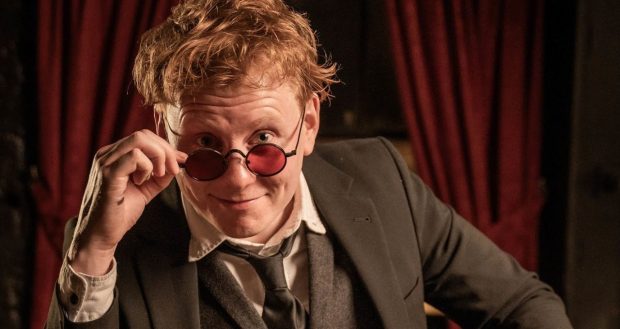
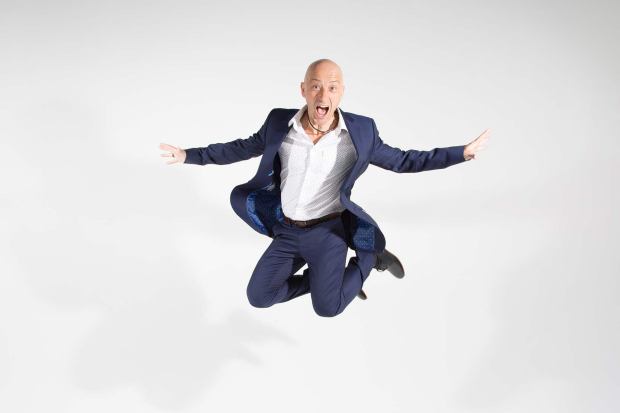
Ask David Alnwick to describe himself, and for at least this Fringe he’ll say Objectively the Best Magician. “What can’t I do”, he exclaims after a particularly impressive (to himself) trick. The ego may in fact be justified. The trick is also genuinely impressive to people who aren’t Alnwick. Alnwick doesn’t try to convince the audience that he is Objectively the Best Magician, he knows who he is and inhabits that role completely, delivering a perfectly scripted, plotted, and performed comedy magic show.

The overwhelming impression that the audience gets from Objectively the Best Magician, aside from the magic, is the energy. Alnwick works hard with his three daily Fringe shows plus a roaming secret show, but the audience can’t tell from the high energy he exudes in this first one of the afternoon. That’s what the audience talks about as they leave the show. It’s not because the magic is underwhelming in any way—it’s perfect, but Edinburgh audiences have come to expect that—it’s that this Fringe veteran on his 15th year has perfected the vibe of his show to such an extent.

Alnwick does of course back up his reputation with perfectly performed magic. His card magic is always a highlight. Alnwick loses and finds several audience cards in increasingly impressive ways, showing off his fancy shuffling skills along the way. He also demonstrates a textbook mentalist escalation series of effects over the course of the show, culminating in a visually exciting reveal that proves his absolute mastery over everything that happens in his show.

A kind performer, Alnwick uses plenty of audience participants and treats them well. He’ll only make a slight bit of fun of his participants if they deserve it. At the reviewed show, a mid-show participant was slightly reluctant to take part, but was egged on and teased by her friends. Alnwick made a point to get said friends involved later in the show, not for anything extensive but for enough that the initial participant got back at them.  If his participants are kind to him, Alnwick will have their back. 

Whether or not Alnwick is truly Objectively the Best Magician is for every magic fan to decide for themselves. But he’s certainly a Fringe institution, particularly for his iconic brand of high energy comedy magic. Anyone who would seek to challenge his claim had better check out this show first.

MATT HALE: FUNBELIEVABLE! 90S REWIND

☆☆☆☆☆

Retro-fan hypnotist Matt Hale is back in Edinburgh, this time with Funbelievable! 90s Rewind, celebrating all things 90s. The care with which Hale balances the skill and structure of his show with leading the party is evident even before the show starts. Hale’s manager, revealed later to also be his wife, asks each group coming in to the venue how many they are, and then works with Gilded Balloon staff to get them seated to perfectly fill in every gap of the sold out room. Fringe seating at popular shows can often feel like a lawless game of speed and chance, so it’s a nice change of pace to be carefully slotted in to the right spot. Once Hale gets going, there’s no bad seat in the house.

Hale doesn’t even wait for the hypnotism to get the party started, bounding out on to the stage and getting the audience pumped up. That being said, like any reputable hypnotist, before inviting up his participants he makes sure to reassure everyone that hypnotism cannot be done against anyone’s will. This is by necessity a volunteer-only participation show, those who do not want to join in can simply stay in their seats. Hale makes sure to make his show feel like a safe place to experience hypnosis even before anyone volunteers for it.

The reviewed show was extremely busy (if not fully sold out) and Hale had no problem getting plenty of volunteers onstage. He even added an extra chair when more people wanted to come up than he had planned, ensuring that as many people as possible could experience hypnosis. Hypnotism is a tricky business, while everyone can be hypnotized there’s no one technique that will get to every single person, especially not in a stage performance. Like all hypnotists, Hale had a bit of an attrition rate, kindly escorting some of his participants back to the audience before getting in to the meat of the show. However, between Hale’s supportive pep talk and the hypnotic process itself he got great results. After the show his participants could be heard eagerly discussing their experiences, detailing how they felt both in control and unusually happy to follow Hale’s suggestions throughout the course of their time onstage.

As for those suggestions themselves, Hale follows through on his promise to not embarrass his participants. The prompts were uniformly 90s music themed, and everyone on the stage, as well as in the audience, was excited to hear each song. Hale curates a party atmosphere throughout the show. While he and the hypnotized volunteers lead the party, the entire audience gets to be involved in experiencing it.

Hale’s latest hypno-party is a 90s soundtracked success. His track record of well attended party hypnoshows has earned him a loyal following, as evidenced by a packed full Sunday show. Hale performs worldwide and his fans can be found everywhere. Take a tour of the blue mountains in Australia and you may even find Hale fans on the bus with you, so eager to recommend him that they do the detective work through their emails to make sure they get the spelling of his name right. Whether his audience volunteers to be hypnotized and help him lead the party, or whether they prefer to enjoy the party from the audience seats, everyone at Hale’s Funbelievable! 90s Rewind will have a great time.

DAVID ALNWICK: THE DARE WITCH PROJECT

☆☆☆☆☆

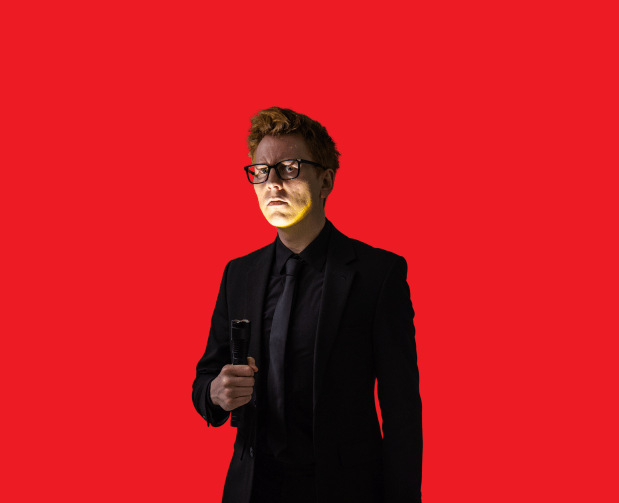
David Alnwick has a habit of creating shows that are so unusual that they require a whole new category all to themselves in the Fringe listings. This year he has gone a step further in bringing a live found footage horror show, The Dare Witch Project. Naturally, as a debut, it’s completely unlike any of his previous shows. However, it still feels like a distinctly Alnwick show, it has his trademark perfection at every turn, from the plot to the magic and every step in between.

While The Dare Witch Project doesn’t feel like a typical magic show in any sense of the term, traditional or not, Alnwick is still a magician and uses magic to accentuate the show. The way that magic is used here is particularly creative, it doesn’t just illustrate the story but is an integral part in how it’s told and how the audience experiences it. With so few tricks they need to be perfect, and Alnwick is skilled enough that it’s no surprise they meet that requirement. Alnwick leans more on the cinematic cousins of magical misdirection to drive the show forward.

A Fringe veteran and legend with an especially versatile skill set, Alnwick has tons of fans in Edinburgh, who may not necessarily be fans of horror as a genre. It’s still worth at least considering attending The Dare Witch Project even if you are among them. It has the Alnwick hallmarks of excellence and originality that earned him such support, and Alnwick and the Voodoo Rooms staff helpfully lay out flyers on each chair that are the perfect size to cower behind when it gets too frightening. It’s not every day you get the opportunity to watch a new genre being born, not even at the Fringe.

The Dare Witch Project is an absolute must see for horror fans. It’s not just scary, there’s humor and nostalgia to lighten the mix, and the creative use of magic adds an extra level of interest. For horror fans it will be the perfect show.  For the rest, it’s exceptional enough to still be well worth seeing. 

AVA & BEAUX: TALES OF MAGIC

☆☆☆☆☆

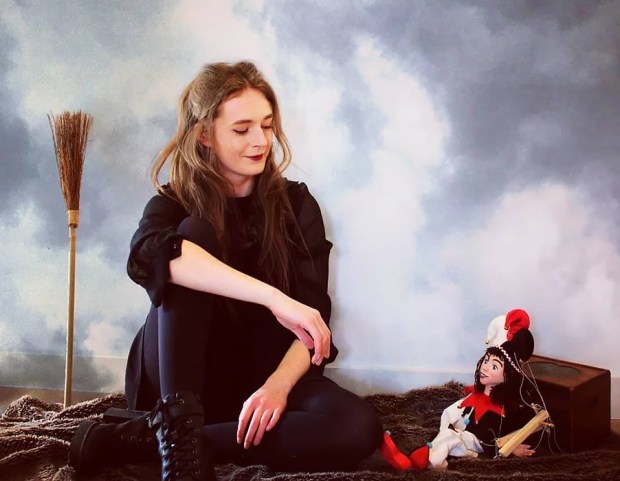
Ava Beaux’s audiences get treated to two magicians for the price of one, with her split stage personas making their return to the Fringe stage.  And both are clearly very popular, the venue is completely packed full at the reviewed show on an Oasis weekend day.  Ava Beaux’s followers cannot be deterred. In Ava & Beaux: Tales of Magic her two sides might not always get along, but do manage to get their story told, trading off responsibilities for that task throughout the performance.

The audience meets Ava first, a perfectionist of a performer who is the verbal storyteller, and even gets a few magic tricks in to illustrate. The story gets a bit complicated, but Ava helpfully recaps at various junctures. This story provides the framework for both Ava and Beaux’s magic routines. A highlight from Ava’s performance is a restoration effect using a paper moon. The magic itself is performed well, and the act of tearing the paper releases a shimmer in the air, like a cloud of magic that forms around her. It’s especially appropriate for a sky-themed effect in Edinburgh, where even in the summer clouds often feature, although they are rarely as beautiful as on Ava’s stage.

The less inhibited Beaux also makes regular appearances. These parts of the show tend to feature a more physical performance, perhaps best typified by the section in which Beaux personifies the adorable main character of Ava’s magic story. Beaux leaves all manner of magical props that appear from her body all over the audience, getting everyone involved in the act. This both illustrates the story and injects a lovely playfulness in to the show.

Ava Beaux had managed to create and embody two distinct characters and give them a conflict and rapport that all feel real. As odd as it sounds, it almost feels like a shame that they can’t appear onstage at the same time. They seem like they’d make an excellent double act, they perfectly complement each other’s performance style.

Both Ava and Beaux invite audience participants to join in their magic. While both have different styles, they are both respectful in their own way. Notably, for one slightly messy effect Beaux makes sure to protect her participant’s property from contamination. At the reviewed show the participants were all eager to join either side of the performer onstage. One participant even accidentally played magician herself, magically producing an extra prop at the end of the trick that had been left behind on her person. Beaux was quick to give this new sidekick her due.

If the Fringe is known for both weirdness and magic, Ava Beaux is the perfect performer to see to get both in the schedule at once. Her beautiful show features an equally beautiful ending that is not to be missed. For a truly unique experience, Ava & Beaux’s Tales of Magic is the one to see.

CHRIS COOK: FAKE

☆☆☆☆☆

If anyone is most qualified to tell the world not to believe everything they see, it would probably be a magician. That’s what Chris Cook would like the audiences for his new show Fake to believe, at least. A Fringe veteran and mainstay, Cook is notable for creating an all new show at each Fringe, making him exciting to see every year. Fake is no different in that respect. Cook squeezes even more in than usual this year yet his hour long show flies by.

Despite his trademark approach of illustrating his points with a relatively minimal amount of magic, Cook’s excellence in magic is crucial as ever, and he does not disappoint. Even those who have seen Cook perform a few of his favorites in prior years would have trouble spotting the exact moment when the magic happens, and there is magic that is new to him this year too. A returning favorite is Cook’s take on the linking rings trick, but here he also demonstrates the classic. Cook’s returning fans may be surprised to even see this prop sitting on his stage as they walk in. They will be reassured as he performs—Cook’s magic remains as creative as ever.

The theme of artistic fraud for a magic show could go in so many different directions. Cook keeps his story straight by mostly sticking to art history, with a few relevant diversions, telling the tale of the art fraud perpetrated by a specific forger. One of the main differences between art fraud and magic is that magic audiences expect and welcome deceit. Where the purchaser of a fraudulent work of art might feel ripped off, the magic audience that is deceived has gotten their money’s worth. That is to say, to those who don’t know art history, Cook’s entire art history tale could be made up, for all they know. Cook demonstrates to the audience that he is not a reliable source of information—entirely appropriately for a magician—and thus shows them the modern relevance of discussing historic fraud. ‘Fake news’ may be a modern buzzword, but humans have had limited knowledge and attention since probably forever. It’s not a new problem and no one is immune, not even art experts, magic fans, or magicians. For humanity, falling for misdirection (whether it’s magic, art fraud, or fake news) is a feature, not a bug. After Cook’s show his audience will have had an entertaining demonstration of just how easily they are fooled. Maybe he won’t fix the culture wars in one Fringe, but raising awareness of the flawed innate tendency to believe that one’s own view is the only true objective one chips away at what fuels them. Cook is once again making the world a better place, one audience at a time.

With his lightly magical approach, the audience is slightly more safe from being called upon to join in the act than they may be at the average magic show, but participation is still an element. At the reviewed show Cook made some great picks for his participants. One in particular helped him with imagined props, getting in to the fun and enhancing the sequence. Ever the professional, Cook ably balanced giving his participant his due with making sure the show stayed on track.

Cook is a master of crafting perfectly themed magic and storytelling shows. Fake is exactly that, a magically told story, with the chance to look at some art on the way. Cook’s final message is uplifting, for those who look to art for meaning in these troubled times. And either way, the show will make the audience think. For a bit of magic, a bit of storytelling, and a lot of heart, Cook’s Fake is the show to see.

THE UNFAIR ADVANTAGE

☆☆☆☆☆

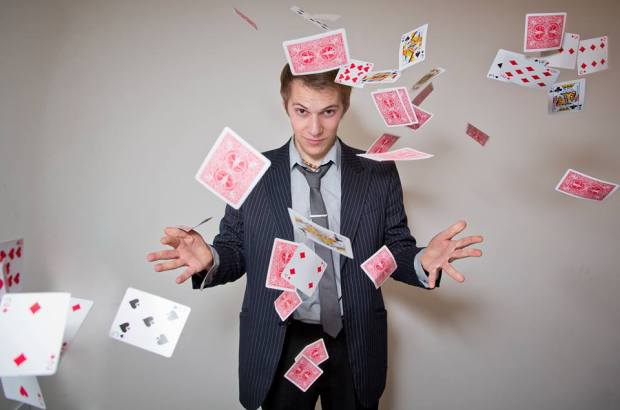
With a lunchtime slot, for many of its Fringe attendees The Unfair Advantage is probably their first show of the day. The central location is a bonus, both for those who travel straight there and those who take a more circuitous route—at the reviewed show, at least one group was there because they had just walked out of a nearby show that they found far too disappointing, and were intrigued by this interesting premise at a nearby location. No one walked out midway through The Unfair Advantage—in fact, the entire audience stuck around even after the final reveal for an optional Q&A. Harry Milas has expertly put together this magic experience that is part performance, part education, part autobiography, and entirely fascinating.

The stated premise of The Unfair Advantage is that Milas will show the audience how to cheat at cards, using the card handling techniques he learned as a youth with an interest in magic. He does fulfill the brief, after the audience signs an NDA to ensure that his secrets remain so, demonstrating his skills both quickly and slowly, and from a variety of angles, so the audience can get a good look at what he’s doing. The show works as both an educational experience and an entertainment event. Milas balances information with performance with practiced skill.

When the audience gets involved in the show Milas largely asks for minor bits of input just to keep him on his toes, and ensure that those watching can verify that the techniques he’s using are what he says they are. It’s a deliberately intimate audience to ensure that everyone gets the best view of his table, making such tasks easy and unintimidating. There is one audience member who has a more involved role, but for this task Milas is sure to request a volunteer. It’s worth the unexpected attention for the effect of having a member of the audience take on this task, and Milas keeps the pressure off, making it as fair as possible.

Milas is open about the fact that the techniques that he demonstrates took him a long time to perfect—his goal is not the undoubted impossibility of teaching the audience how to do them over the course of a Fringe show, but raising their awareness and showing how they could develop these skills themselves if they want. This is certainly directly helpful for gamblers. However, Milas also makes clear the relevance of his memory and attention direction skills outside of that field, and points out just a few of the many other applications for the techniques that he uses in the show in everyday life. Even this expertly scripted and performed Fringe show is, in a roundabout way, an example of that. Milas created this hourlong unusual and therefore memorable experience that helpfully makes the lessons of his performance stick in the minds of his audience.

The Unfair Advantage is the perfect balance of information and entertainment for a Fringe show. It’s the perfect event for fans of card technique in particular, regardless of whether they come to it from a magic or gambling perspective. While magicians advertising that they will teach their audience card handling is certainly not unique, Milas’s practical advice and his perfectly formatted and executed show set The Unfair Advantage apart. This is the show to see to get your Fringe day off to the best start.

THE REMARKABLE BEN HART

☆☆☆☆☆

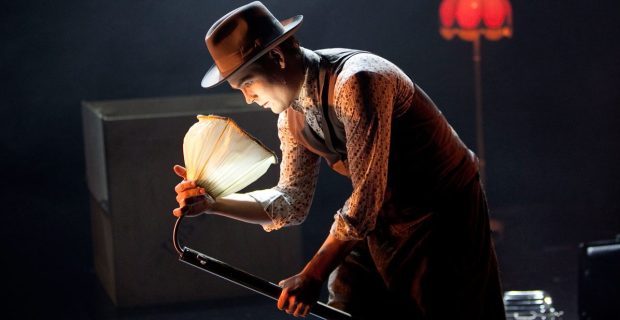
The Fringe’s favorite oddity Ben Hart is back, with a show title that sounds egotistical even by magic standards, The Remarkable Ben Hart. At the reviewed show the wind may have threatened to blow down his circus tent, but Edinburgh was not deterred. Not a seat was left empty on that windy Monday evening. The enthusiasm was justified, as was Hart’s ego, as Hart turned out one of his signature perfect and inventive performances.

The way that Hart uses magic is creative in both emphasizing the visual beauty of his effects and in making them more magically impressive. The assembly of his cutlery effect in particular addresses potential moments when skepticism might creep in, making the reveal all the more impressive. His mentalist routine is notable as well. Hart primarily performs physical magic, where, by its nature, the audience can see the magic happening.  Hart’s usual performance style takes advantage of that innate feature to create stylish visuals on his stage. With mentalism that innate materiality is not necessarily there, but Hart’s staging and showmanship make the effect blend seamlessly in to the distinct iconography of Hart brand, creating visual appeal to magic that is performed in the mind.

Aside from creative, visually beautiful magic, Hart loves a theme, and The Remarkable Ben Hart does not disappoint. The theme is not in fact just that he’s uniquely remarkable, although the audience may find themselves agreeing with that sentiment as well by the end of the show. While it would be a shame to make available from the start what Hart works so hard to build up over the course of an hour, future audiences can be reassured that this renowned storyteller has not given up on that element of his craft.

Like all performers, and especially magicians, Hart has to deal with members of the public in his show. Hart expertly choreographs his audience participants to ensure that they can perform their roles while also giving the whole of the audience a view of the magic, a notable challenge for a magician performing in the round. As the reviewed show took place during stormy weather, Hart also had to contend with Mother Nature herself heckling him, with howling winds that threatened to bring down his tent. Hart’s response to the wind revealed the practiced professionalism of a performer who regularly works in tents in Edinburgh—this is undoubtedly not the first time he has had to deal with that particular interruption.

The Remarkable Ben Hart is well worth braving the Edinburgh weather. Hart is constantly innovating in the performance of his craft, making him an exciting performer to return to year after year. Rain, shine, or hurricane, Hart’s tent is the place to be.

1 HOUR OF INSANE MAGIC

☆☆☆☆☆

It’s easy to dismiss a group magic act as an excuse for the performers to do less work, but 1 Hour of Insane Magic isn’t just a 3-for-1 special. Cameron Gibson, Elliot Bibby, and Luke Osey do each get their moment in the spotlight over the proscribed 1 hour of (insane) magic, but the emphasis is very much on taking advantage of having three magicians in one show to perform tricks and showcase camaraderie in ways they wouldn’t be able to do in their solo shows. From the outside at least, it looks like even more work than three solo shows, but it’s worth it. They’ve created something truly special, and the data backs this up: they have a consistent and ongoing record of sellout shows across three years of the Fringe.

One of the elements that makes Insane Magic not just entertaining but interesting viewing is their approach to rehabilitating historic magic effects for the modern era. Their recreation of the “sawing a woman in half” trick is a great example of this, and requires help from the fourth Insane Magician, Laura Susana Tapia, who takes on the role of being sawn in half. While in the past this role would have been described as an “assistant”, Tapia’s role is emphasized to be that of a magician—she is, after all, doing the hard work of the effect. The performers takes the time to point out that historical conceptions of magic as a primarily male field weren’t because women were excluded from the stage, but because their hard work wasn’t acknowledged as “real” magic. Insane Magic honors the history of their profession and also honors Tapia’s role in the routine, with the men playing the role of her assistants for the effect. And it’s not just lip service for the one section, the men take turns playing “glamorous assistant” to each other over the whole show, demonstrating that the magician and assistant roles are as gender neutral here as they always should have been.

The type and amount of audience participation in Insane Magic is also a key draw for their audiences. The Insane Magicians involve many audience members in their act, and make sure to involve kids as often as is feasible. At the reviewed show the young participants were exceptionally enthusiastic to play their parts, and even to take on light responsibilities to contribute to the act. The one mildly alarming audience participant role is chosen from a pool of adult volunteers, ensuring a reassuring degree of safety and consent.

Those who make a habit of asking strangers at the Fringe what magic shows they’d recommend and why may pick up on a third factor that audiences especially appreciate about Insane Magic. Gibson, Bibby, and Osey just come across as really good guys. Audiences want to spend an hour in their company, almost as much because of how they treat each other and their audiences as because of the magic. The impressive magic is served up alongside a healthy portion of good vibes. It’s an upbeat, energetic show and the Insane Magicians have managed to curate an exceptionally friendly and welcoming environment, from the soundscape as the audience filters in to be seated right through to the greetings and photo ops on the way out. Even hecklers are responded to with friendliness. It’s a “soft” strength but one of the strengths that noticeably sets Insane Magic apart.

Insane Magic as a unit is in its third year at the Fringe, and is on track to once again sell out their entire run. Their legion of fans does not just extend as far as the Edinburgh Fringe—audience reviews of their recent Adelaide Fringe run indicate that Insane Magic has managed to attract groupies who will travel halfway around the world just to catch their Australian debut. They are truly a global phenomenon. Anyone hoping to catch them at the Edinburgh Fringe would do well to buy their tickets quickly.

LUKE OSEY: THE MAGIC HANGOVER

☆☆☆☆☆

Luke Osey’s The Magic Hangover has got to be one of the weirdest magic shows of this Fringe, and it’s all the better for it. Osey’s trademark high energy and infectious humor keeps the story bounding along, and the perfect magic highlights plot elements to great effect.

For those who have followed Osey’s career to any degree at all, it will come as no surprise to find that the magic performed in The Magic Hangover is perfectly themed and executed. Fans may at times recognize signature props and elements, but each is used in such an entirely new way that it feels more like a self referential Easter egg than like Osey repeating a trick. Osey uses magic with exceptional creativity. There are at times elements of classic tricks that peek through—a dangerous item is created and concealed, or a money routine has a citrus—but as well he creates bespoke routines to showcase his sleight of hand skills in ways that suit the story.

The Magic Hangover has a decent ratio of story and comedy along with the magic. While the humor will not be to everyone’s taste, Osey is a talented comedian who may very well get the audience to laugh even when they’re not sure they want to. The plot line works well with the magic, and lends an element of sweetness that is as welcome as it is unexpected in this style of late night show. The conclusion of the mystery that unfolds ties in perfectly with the big magical reveal, and again demonstrates Osey’s skill at making classic magic effects feel fresh by knitting them seamlessly into his theme.

Osey is a personable performer and works well with the members of the audience who join in on his act, whether he invited them to or not. Intentional audience participation is sprinkled throughout the show, and is easily completed with Osey’s friendly instructions. At the reviewed show Osey also had to contend with the occasional heckling, and justifiably shut down one individual (only after they annoyed the rest of the audience) without missing a step. On the other hand, Osey also received a positive heckle from a member of the audience who couldn’t contain his admiration for one of Osey’s jokes, and this resulted in a sweet moment of mutual appreciation.

The Magic Hangover works perfectly as both a wacky late night show and a showcase of magical skill and creativity. Osey leans in to the surrealist weirdness, using the uniquely odd products of his imagination to create a show that no one else would, and pulling it off with textbook panache. Whether it’s the weirdest end to your Fringe day, or the perfect way to kick off the kind of evening that will result in your own magic hangover, The Magic Hangover is the place to be.