4 Stars

1 HOUR OF INSANE MAGIC

☆☆☆☆

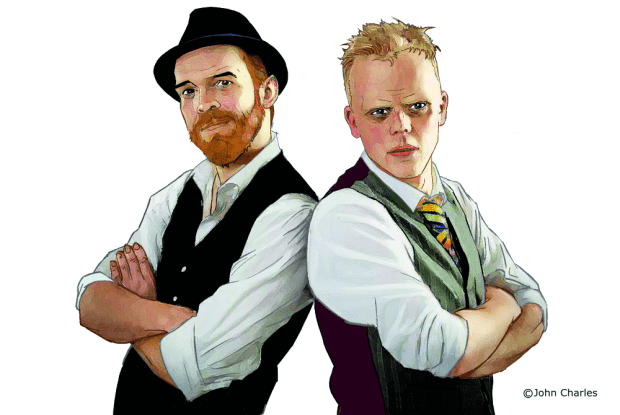
 Barely a week in to their stay at Teviot, Elliot Bibby, Cameron Gibson, and Luke Osey are having a fantastic Fringe. They managed to sell over 50% of the tickets for their show 1 Hour of Insane Magic before the Fringe even started, and most recently confirmed that they’re now at over 75% sold out. They could have sat back and phoned it in for the rest of the month and called it a huge success. Luckily for their audiences they’ve chosen not to do that, they put together a great show and really seem to care about making it a great experience for every audience.

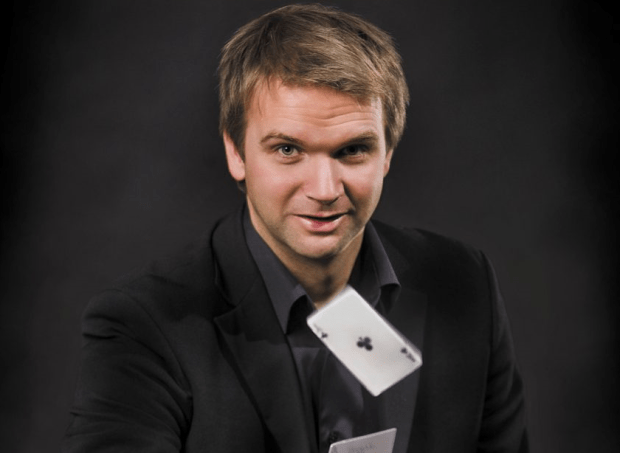
The youngest of the bunch, and apparently the physically invulnerable one, Osey has a formidable amount of magic experience for his age, primarily in creating and selling magic tricks. He’s still inventing, but as of last year is a performer as well. People who have come to the show for his promo photo in particular may be wanting and expecting him to willfully put his body in harm’s way, and he does not disappoint. Osey shoulders the weirdest and most painful looking tasks in the show with apparent ease.

The human embodiment of Kenergy-punk, Gibson is the resident Insane mentalist. Off-stage he is now also known for his magic shop and event space Wonder & Co. As someone who has gone above and beyond the usual call of magic in fulfilling his professional dreams recently, he’s perfectly suited to inspire the next generation, and in a memorable middle segment that’s exactly what he does. Audience members sitting next to the lucky child in question at the reviewed show were adorably distracted by her wonder and delight well into the following segment—the only good kind of audience distraction in performance art.

Bibby is famous within Edinburgh magic scene, he’s organized year-round magic showcases that have been gathering points for the city’s best magicians since before the pandemic, and in past Fringes he’s always seemed keen to hop in to magical supergroups. Throughout the show he’s frequently seen helping out his co-performers during their segments. He has the most classic magician role in the group, but is no less insane for it. A funny card trick sees him taking a creative approach to ensuring that his participants don’t interrupt him, offering them the kindness of a shared meat stick that prevents them from talking before his big reveal.

The Insane Magicians perform plenty of fantastic tricks in their time on stage, but the real magic is in taking their three strong solo acts and making them all work together—which is exactly what they did. The solo performances are interspersed with magic that brings all three of the magicians to the stage at once, which are easily the best parts of the show. Group magic acts have a general reputation for limiting what any one member can truly accomplish, but the simple solution that’s made this one so insanely good is the apparently genuine affection that the three magicians have for each other. It’s translated into the kind of stage chemistry that isn’t usually found outside of well-established double acts, an impressive feat for a trio that only started performing together earlier this year.

There are plenty of great reasons to see 1 Hour of Insane Magic. The pacing is perfect, the tricks all go right, they’re family friendly but universally enjoyable, audiences get to see three whole magicians for one ticket price, and the patter is all very funny. However, what sets them apart is how well their shared bond translates into stage chemistry. The Insane Magicians highlight that they have all had high profile international professional experiences, so while Edinburgh Fringe tickets may be going fast, but if an international tour isn’t in the works, it should be. Edinburghers had better act quick to catch them on home turf.

More information on 1 Hour of Insane Magic can be found here.

MARIO THE MAKER MAGICIAN

☆☆☆☆

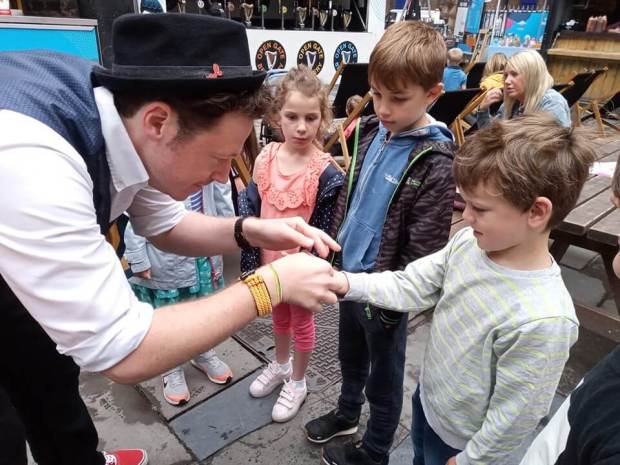
While 11AM on a Fringe weekend morning might feel like an early start to adults, the kids in Mario the Maker Magician’s audience were bright-eyed and full of excitement. In his self-titled Edinburgh Fringe premier he gives them ample opportunity to burn off their excess energy, quickly establishing a pantomime-adjacent performance style that gets them all involved and keeps them engaged. The focus is always on the children, but Mario gets the adults involved too when he needs a participant with a little more focus or who doesn’t mind a bit more teasing. And no one, regardless of age, could fail to be enchanted by his magic, brought to life with the help of his adorable robots and grounded with the educational bent of his show writing.

It’s that motivational and quasi-educational element of the show that makes it feel especially worthwhile for families with young children. Mario includes famous artists and scientists in his act, using their work to inform his own and making them stick in the minds of his young fans. He also takes the extra step to draw motivational conclusions from each famous individuals’ lives, encouraging the audience to live their lives to the fullest. It’s a classic conclusion to come to for a children’s act but is presented in a way that is memorable and effective.

Mario’s magic is presented adorably. His brightly colored shoelaces and red clown noses are used to great effect to kick off the show. Children (and adults) who find themselves coveting the clown noses need not fear—without giving too much away, they may not feel this jealousy by the end of the show. Later tricks involve Mario’s very sweet homemade robots, who seem to have minds of their own but never fail to be hilariously magical. A highlight here is a robotic play on the classic cup and ball trick, which has never before felt so delightfully silly. 

Adult participants in Mario’s show face some playful teasing, but his child participants are treated like the VIPs that they are. The children who join him onstage are made to feel magical and made integral to the show, the focus squarely on their own hopes and dreams, which Mario celebrates and encourages them to pursue.

Mario the Maker Magician is a popular children’s show to see this Fringe; even on a classic rainy Edinburgh morning, on the first weekend of the Fringe, he had a very nearly sold out audience. But luckily for the children’s guardians it’s not one that they will dread to sit through, there’s enough to keep them amazed and entertained as well. Housed in the inflated purple cow, Mario is a worthwhile family destination.

More information on Mario the Maker Magician can be found here.

LEWIS BARLOW: THE WAY OF THE MAGICIAN

☆☆☆☆

As much as everyone loves a plot-driven magic show, sometimes a magic fan is in the mood for the classic: a series of tricks loosely tied together by stories that the magician happens to find interesting. The Way of the Magician is the perfect show for those occasions. Lewis Barlow is faultless in his performance of a variety of card and coin tricks, often themed on characters from his life or magical history.

Barlow excels at his card finding and trick dealing in particular. The audience expects him to find the cards they choose, nothing is more basic in the performance of magic, yet Barlow finds a way to display that concept in new, increasingly interesting ways—proving that he can surprise and amaze, even regardless of whether or not collects the chosen card back from his participant. More “practical” displays of trick dealing prove fascinating as well, linking in with Barlow’s brief but fascinating educational segment on a historical card cheat.

New technology abounds at Magicfest. Barlow makes great use of a live camera stream to make sure that his magic is visible to the whole audience. This results in several wholesome moments in the show. Early troubles with the camera bring local celebrity and Magicfest big boss Kevin Quantum to the rescue, in a display of Quantum’s hands-on care and support for the artists in his festival. Later on Barlow takes a second to admire how good his card tricks look on the big screen—a well-deserved moment of self love. The audience concurs with his assessment.

Audience members are treated well by Barlow. They are often used to simply choose a card from their seats, perhaps a wise time saving move to reduce show time spent waiting for large numbers of participants to shuffle back and forth down the rows of seats. With so many card finding tricks, this is a significant factor. When choosing individuals to actually join him on stage Barlow kindly opens the floor to volunteers in the first instance, allowing for a very enthusiastic young audience member to experience the magic up close.

If The Way of the Magician indicates anything about what it’s like to be a magician, it’s implicitly, in the freedom that Barlow takes in creating a show out of random things that he likes and finds interesting. Maybe sometimes that’s all that is needed. 

More information on Lewis Barlow can be found here.

NEIL KELSO: SOUNDS IMPOSSIBLE – A MUSICAL MAGIC SHOW

☆☆☆☆

Magicians are inherently nerds, regardless of whether or not they lean in to it in their shows. In the more interesting shows they might reveal their nerdiness about something other than magic, and Neil Kelso does in Sounds Impossible: A Musical Magic Show. His discussion of musical theory will probably be new to just about everyone in the audience, even those of us who learned piano casually as children. While the magic is itself impressive, it is a secondary aspect of the performance, enhancing the discussion and performance of music. This is to Kelso’s benefit, setting him apart and making for an especially interesting show.

The magic starts classically and visibly, with a trick that happens both in Kelso’s hands and in the hands of his audience members. However, a highlight of the show is the perfect combination of the musical and magical aspects in a card finding effect that uses the piano to find the cards. An audience member in the front row of the reviewed show had a satisfying reaction as the magic revealed itself, gasping loudly and clutching her partner’s arm. Seeing that Kelso can provoke this reaction in his audience is a reminder to frequent magic show attendees of how it feels to see these incredible feats for the first time.

Kelso evidentially knows at least as much about the history of pianos and music as he does about magic, and it’s great to get to hear some of this knowledge from him. He covers everything from historical differences in tuning standards—listing a few famous composers and describing how the instruments of their day would be tuned higher or lower than the one he plays on—to the effects of air pollution and recent research in to how to potentially counteract it, for example how living under a flight path might affect people. The magic draws people in, but once they are there they may wish that more of the performance were dedicated to this musical education.

Sounds Impossible: A Musical Magic Show does indeed sound impossible at first, but Kelso pulls off the premise and more. With a broad appeal, he gets people from both sides—impressing the magic fans with his breadth of music knowledge and the music fans with the magic tricks. He has a pretty universal appeal. Fans of either aspect of his performance will be sure to see something new.

ARRON JONES: ONE HOUR STRAIGHTJACKET ESCAPE MAGIC SHOW

☆☆☆☆

Arron Jones performs a few pieces of scary magic in his One Hour Straightjacket Escape Magic Show, but perhaps the scariest feature is how much of the show is left in the hands of his audience participants. This presents an interesting unstated theme. Like all magicians Jones presumably put a lot of effort in to creating this show, and from the start he places his trust in these strangers—albeit strangers who wandered in to the back of a pub just to see him—to carry out the bulk of the fulfillment of his creation. It’s a kind of wholesome, calculated laziness.

The only people who will be disappointed with this show will be those who genuinely wanted to watch a man struggle to escape a straightjacket for a full hour—while Jones does eventually make his way out, the majority of the hour is spent with him apparently content to be tied up. Those of us hoping for creatively themed magic under this unusual self-imposed restriction will have no complaints.

By and large Jones’s trust in his audience is justified. Anyone who has tried to talk someone else through a new task will know the sheer variety of unpredictable ways that people mess up at unfamiliar instructions, and Jones does indeed come up against this—early on in the reviewed show. He deals with this well enough, not breaking character, and the participant in question both has a good time and eventually figured out how to do the task requested of him.

A highlight is a card trick that culminates in an assisted striptease for an exciting reveal. The participant chosen for this looked thrilled to be helping him. Like most of us, she had been enjoying Jones’s custom music that accompanied a lot of his set up and transition times, and her visible enthusiasm made her a fantastic choice to share the stage with him.

The risk of going to a show titled as One Hour Straightjacket Escape Magic Show is that it turns in to a repetitive rehashing of the magician escaping from various binds. Jones does not fall in to this category, instead having put together one of the most creative of the magazine-style magic shows at this fringe. The straightjacket restricts his movements but he more than rises to the challenge. This is the magic show to see if you think you’ve seen it all.

MAGIC GARETH’S MAGIC EYE

☆☆☆☆

The Edinburgh-renowned Magic Gareth managed all but a full house on a sunny Edinburgh Sunday morning—the first magical feat of the reviewed performance of Magic Gareth’s Magic Eye. The one potential critique of the show is both immediately obvious at the start of the show while not being at all his fault, that due to the shape of the stage and audience layout individuals who chose to sit at the far edges are unable to see Gareth on stage. There is a brief moment of shuffling around when he first comes on, and future audiences are advised to arrive early and get central seats. That being said, the rest of the show—the bits that Gareth has control over—are difficult to fault. Even the smallest members of his audience are happily engaged for the full hour.

Gareth’s magic and child-friendly stunts consistently amaze, and get the whole audience involved. His fun take on Russian roulette culminates in a surprise that, from personal experience, is a refreshing treat for a hot summer day. And when he has an extra special prop to show off he makes sure to run around the whole audience so that everyone gets a chance to touch it. This prop’s use results in one of the visual highlights of the show, featuring Gareth using a hilarious makeshift blindfold to show off his skills without using sight. Cameras came out up and down the audience as everyone wanted their memento.

Given his reputation as a children’s performer it would be expected that Gareth is good with the children in his audience, and he is indeed great with them. He involves the little ones at every possible opportunity, making them feel important without giving them anything too taxing or stressful to do. His final words onstage are especially sweet for the kids, making sure that every single person in his audience leaves the show feeling special.

Magic Gareth is so well known as a children’s performer that even us Edinburghers without children of our own have often heard of him, and in Magic Gareth’s Magic Eye he more than lives up to his reputation. Children’s entertainment doesn’t get much better than this.

More information on Magic Gareth can be found here.

CAMERON GIBSON: MYSTERIES; AN HOUR OF IMPOSSIBILITIES

☆☆☆☆

If previous years’ trends are anything to go by, Fringe goers love watching a beautiful and stylish Scottish mentalist read people’s minds.  For all in search of this, Cameron Gibson is the mentalist to go to this year.  There is more to recommend him than just physical beauty—he is also a funny and compelling performer.  In his wordily titled Mysteries; An Hour of Impossibilities Gibson displays a well structured mentalist show. 

Gibson does not limit himself to mentalism, opting for a classic cup and ball to get the show going, to great success.  A few tipsy audience members who had wandered in apparently entirely aware of what they were getting themselves in for could be heard commenting that Mysteries; An Hour of Impossibilities was already the best show they had seen this year as Gibson set his cup and ball to the side.  The one slight hiccup came in his transition to the more mentalism-themed part of the show, when a supposedly suggestible participant was slightly less suggestible than expected, but Gibson did not miss a beat, and her initial hesitation only made the second step of Gibson’s work with her that much more impressive. 

However the main event is Gibson’s mind reading using personality questionnaires that he had asked the audience to fill in immediately on entering the venue.  The quasi-psychological twist of using personality tests rather than just random bits of information adds interest.  Gibson outlines the personality types of his participants based on their responses, in what he freely admits are horoscope-level generalizations, before accurately mind reading more specific details.  The range of information gleaned and individuals read made for an exciting final segment. 

With a convenient  pre-dinner time slot at the ever popular Voodoo Rooms Gibson is this year’s must-see for the Fringe’s mentalism fans.  An hour in his affable company will only leave audiences wanting more. 

More information on Cameron Gibson can be found here.

LUIS CARREON: LA BESTIA

☆☆☆☆

The Chicago Magic Lounge has a dual identity, and if one comes early to a show, they have the privilege in witnessing both sides. Magicians tend bar while hobbyists and hangers-on chat loudly about their own illusions, their own connections with “big names” in the magic world. Little jokes are made for the purpose of dropping names, and all at a volume intended to let everyone hear but not everyone understand. This bar is not a land for the casual attendee, this is where the diehards reign. That being said, there is a universal appeal here as well- in a venue that one goes through a fake laundromat entrance to access, this is only another sign that you have been accepted into a deliciously secret space, with tantalizing rumors abound.

But let yourself be ushered into the performance space, and your experience develops in a whole different way. Because while the Lounge itself may have two faces, Artist in Residence Luis Carreon is a man utterly secure in his own identity, and eager to invite his audience into experiencing it. This is the identity the Lounge thrives in sharing, the showmanship talent they have done so well cultivating.

Carreon’s pet schtick in his show La Bestia is, to be blunt, his ethnicity. Tricks and jokes alike are formed primarily around his Mexican background. This tactic lends a sense of cohesion to a show where otherwise the stream of tricks would seem picked at random, a collection of standard coin, card and similar familiar effects. However, a well-constructed persona can color a show, but cannot serve as the sole narrative, which Carreon seems to attempt. Carreon delights and charms the audience with ease through his authenticity. A smidge more confidence would seem to be all he needs to free him from overplaying his history and allow him to integrate it into a more developed narrative to build his show around.

Ultimately, Carreon is a talented performer who lacks only a little polish and experience. His comedic timing is clever and refreshing – when he lets it be. Carreon’s audience is captivated by every joke he lets breathe. He need only to stop overfilling his performance with any joke, trick, and pop culture reference he can think of, to stop throwing material at the wall hoping it will stick. The material that the audience gets time and space to absorb does stick, and spectacularly so.

Luis Carreon is a charming performer, and faultlessly adept at sleight of hand. While La Bestia may be at moments bloated with material, one gets the sense that this is because Carreon is so in love with his art that he cannot imagine not sharing his favourite parts of it with his crowd. This openness and delight with communicating the magic of magic wins his audience to him, and deservedly so. La Bestia is an experience well worth attending, and one that will likely only get better each time.  

More information on Carreon and his performance dates can be found here.

TOM BRACE: EMBRACE THE IMPOSSIBLE

☆☆☆☆

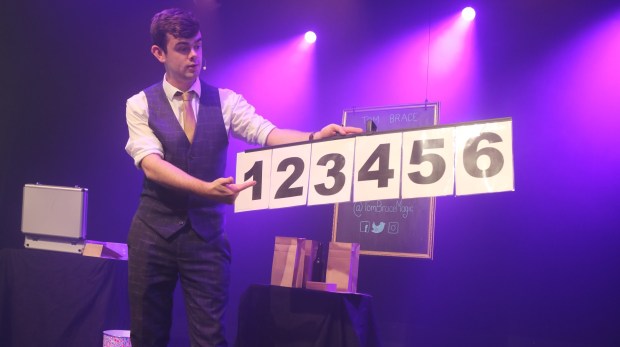
Tom Brace: Embrace the Impossible is a truly all-ages show. There’s the brightly colored props and exciting flashy effects to keep the kids entertained, and a pleasant nostalgia-fest for us adults—for those of us around Brace’s age, harkening back to a time when we were children ourselves, before we were fully aware of the often disastrous state of the world. The nineties theme runs throughout the show, which goes by quickly. Brace brings plenty of excitement to keep the audience interested.

It is not often that a magician who faces the sheer number of issues outside of his control that Brace faced on the day that this show was reviewed turns this in to such a positive. People both arrived and left late, and he could not have been more graceful about this, allowing both sets of individuals to run across his stage to get to and from the exit efficiently. Brace also had to deal with a dodgy microphone, which turned in to a lovely moment when his friend and techie joined him onstage to fix it. Sadly it did not last, and Brace eventually gave up on the microphone, but with his projection the whole audience could easily still hear him. He did not miss a beat through dealing with all this—perhaps a more impressive skill than any of the magic.

That being said, the magic was excellent as well. A card trick themed on Who Wants to be a Millionaire was a highlight of the show reviewed, with an enthusiastic participant (the very same lady who arrived late carrying two pints) who was happy to let Brace work his way through her phone book to find a friend who would pick up when she called. They found someone, in the end, leading to a much anticipated reveal, although with the onstage chemistry between Brace, his participant, and even her offstage friends, no one in the audience minded the extra long build up.

Just off bustling Bristo Square, Embrace the Impossible in Brace’s fantastic company is a great way to spend an hour of the Fringe, especially but not exclusively for those of us who remember the nineties. It may not be the kind of show that ordinarily comes with a lesson, it’s more of a good time show. However, the reviewed show certainly did—that if you can accept the uncontrollable problems in your life and make the best of it, you may just end up even more memorable than if you get caught up in trying to be perfect. Brace’s audience can safely expect a great show regardless of how much goes wrong around him.

More information on Brace and his performance dates can be found here.

LUKE OSELAND: DRUNK MAGIC

☆☆☆☆

Luke Oseland is evidentially locally renowned.  Enterprising neighbors of his venue, on noticing the busy queue on the evening that Drunk Magic was reviewed, called down “Would you like to see a magic trick?” before mooning the tipsy crowd.  This feat prompted cheers, but not as many as Oseland received for his first ever Fringe show.  A babyfaced twenty year old, Oseland may make those of us in our late twenties feel like dinosaurs—a few members of his audience could be heard fondly reminiscing about their own university days after the show.  However, despite his youth he has put together a strong, well-arranged show. 

Oseland never misses a trick.  He has a “free shot Friday” policy, luring audience participants to join him onstage with alcohol—and that’s not the only free drinks on offer, Oseland is generous with his booze.  He is never short of enthusiastic volunteers to help him out.  This easy rapport with the audience is a standout feature of the show.  The one time this drunk young man made a slightly unkind comment to an audience member he immediately self-corrected and apologized profusely.  He even managed to convince a stranger going to the toilet to buy him a pint of Guinness on the way back, and only just missed splitting the G—perhaps the one trick of the evening that didn’t go quite right. 

Wisely, Oseland performs his more dangerous stunt tricks first in the show, when he has not yet been drinking for as long.  A card trick in this section is particularly effective, with an expressive participant offering words of encouragement.  His later alcohol-themed reinterpretations of magic are perhaps the more interesting to see, as he has so perfectly fit the tricks in to his theme.  Many magicians have used a stopwatch to time themselves getting out of a straightjacket, but Oseland’s take is much more fun and challenging.  He is funniest in his off-the-cuff remarks to the audience, and while his more scripted patter has its moments it does occasionally feel like he is still developing his unique voice—the sole tell that this is his first Fringe.  

This publication was advised to see Oseland by the secretary of The Pentacle Club of Cambridge, who said that Oseland would be famous one day.  It’s easy to see why.  Oseland has carved out the perfect niche for his skill set and current drinking capacity, but it’s clear that his magical skill, creativity, and general charisma will give him ample room to pivot to a less drunken performance when he has to, and take him far.  Fringe goers can go to Drunk Magic to catch this star on the rise. 

More information on Oseland and his performance dates can be found here.