4 Stars

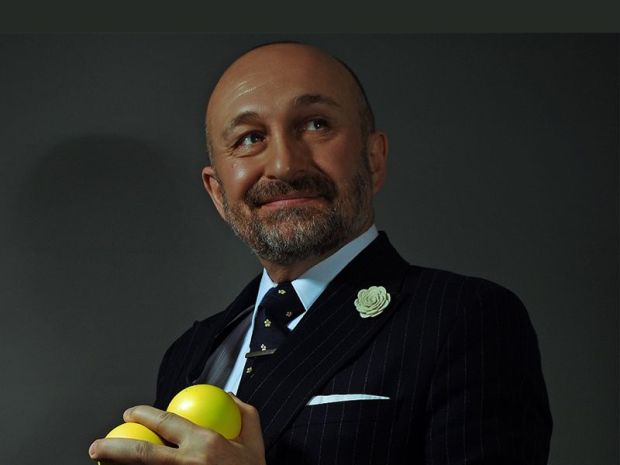
TOM BRACE SAWS HIMSELF IN HALF

☆☆☆☆

There’s a big illusion in Tom Brace’s latest Fringe show, Tom Brace Saws Himself in Half, and chances are most of the audience will have guessed what it is by the time they have bought their tickets. With such a famous historical illusion the element of surprise is no longer available, as soon as anyone sees that table with a box on it they’ll know what’s about to happen, so what’s left is the showmanship. On this front, Brace certainly delivers.

As The Sawing happens right at the end of the show—Brace does not perform the entire show while sawn in half—there is plenty of time for him to demonstrate other effects. The goal of the show is to get himself in to the magic hall of fame, so Brace has put together a series of tricks that exemplify the relevant criteria. His favorite random number generator makes a return appearance for a numbers effect that gets the entire audience involved, to mass amazement, even with the necessary limitation of having just one person in the random number generator itself. In a show that plays on a classic magician/assistant illusion it feels especially fitting that this particular prop makes an appearance. If Brace could be said to have an onstage “assistant” in his career it would probably be that random number generator, which, while it cannot fit in an illusion, is in all other respects his constant, reliable sidekick.

Brace gets a few members of the audience involved, with the trip into the random number generator being the biggest task asked of any one of them. For that task he makes sure to pick from a pool of volunteers who demonstrated their willingness to be a part of the show via a pre-show task. Audience participants can be a tricky bunch, and at the reviewed show Brace had to deal with a participant who did not know the details of the ring she brought up for him to do magic on. Ever the professional, he had the audience laughing with her, and made sure to get his reveal completed suitably impressively.

With such an odd title, Brace takes a suitably slightly sarcastic approach to the magic that he performs in Tom Brace Saws Himself in Half. This builds to the event itself, in which he attempts an impossibility even by magic standards. While it would be a shame to reveal what happens in that moment, it’s a great take on this classic. Brace balances poking fun at the sketchy history of this effect with demonstrating it in a genuine, impressive way.

When watching the traditional version of the sawing in half illusion it’s easy to think, ‘maybe the coward waving the blades should take a turn in that box if he wants a share of the applause that comes after’. Tom Brace Saws Himself in Half is the show for people who have had that thought. It also feels like a love letter to magic as an art form, acknowledging its imperfections and mixed history and working from a place of affection to drive its progress forward. A magician sawing himself in half isn’t something that even magic fans see often, if ever. If you’re curious, you won’t be disappointed.

ANDY BOYD: THE PROFESSIONAL SHOWOFF

☆☆☆☆

Andy Boyd can do anything, probably…. Or at least that’s the impression that audiences will get after watching his show The Professional Showoff. A friendly and hilarious performer with a unusual breadth of skills, Boyd presents a range of entertainment feats across the genres of magic, juggling, and robotics.

While all of his routines are fun, the cutest are by far the ones with the robots. Boyd has built himself a robotic assistant—cultural commentary on the role of assistants in historic magic is perhaps implied with a raised eyebrow, but it’s not that kind of show—and this adorable helper successfully performs a magic trick of its own, with Boyd assisting in getting an audience member to participate. Boyd’s juggling and adjacent skills are impressive as well. He opens his show with a series of hoop tricks, and even those who have seen this prop used before will probably see new variations from Boyd. It’s very mildly intimidating for the audience but super cool to watch.

There is of course plenty of magic as well. Boyd’s card tricks are fantastic, and at times these blend with his other skills—as with the robot. Even when he’s just using the cards, the more physical elements of the performance have a flair that reveals his juggling abilities, with the particular skill he brings to these elements. His finale is so impressive that, at the reviewed show, audience members who arrived as strangers clutched each other in amazement.

Boyd gets a significant proportion of the audience involved to varying degrees. Luckily for the audience, they are not asked to come to the stage for any of the mildly intimidating bits, Boyd keeps all the difficult moments for himself. Boyd is a friendly performer and, at least at the reviewed show, seems to attract an especially friendly audience. Many bits of audience participation are performed from the seats, and none of the participation is scary.

Andy Boyd has such an infectiously high energy in The Professional Showoff, and everyone in the audience walks out smiling, looking in higher spirits than when they went in. It’s the kind of medley show audiences would usually expect from a group of performers, but here all done by one exceptionally skilled one. Boyd radiates pure joy. The Professional Showoff is the show to go to for an incredible time and a genuine energy boost.

DAN BASTIANELLI: IDENTITY

☆☆☆☆

Talented Fringe regular Dan Bastianelli returns this year with a show called Identity, in which he explores just that. With an interesting premise and great variety of magic, Identity makes for a fun hour of magic.

With flyer art featuring Bastianelli playing with his cards, it should come to no surprise to Identity audiences that playing cards feature heavily. Bastianelli is a skilled card magician, even impressing with his cardistry moves before he gets in to the magic. The card magic is a highlight, with magical classics performed with his distinct flair. Bastianelli varies the type of magic he performs with playing cards, to get a great deal of use out of this one type of magic. There is other magic too that uses a greater variety of props—audiences won’t be bored in Bastianelli’s audience.

The identity theme weaves in and out of the show, at times taking center stage, while at other times feeling more tangentially related to the effect being performed. A particularly strong moment of thematic magic is the restoration effect. The themes of being confident enough to be individual, and “destroying” the past self to become truer to one’s own nature, fit perfectly with the effect that Bastianelli performs. On the other hand, some of the routines seem to be explained to be related to identity simply because they are magic and being a magician is a part of Bastianelli’s identity. On the one hand, this feels like an appropriately cheeky use of theme for a magician, but after seeing Bastianelli advertise such an interesting theme it would have been nice to see it explored more deeply.

In an appropriately intimate venue for a show that involves so much close-up magic, and with Bastianelli’s friendly stage presence, the frequent participation in the show is not a concern for the audience. Audience members do all the usual tasks: picking cards, checking props, and letting Bastianelli read their minds. When Bastianelli distributes gifts to select participants, these are thoughtfully constructed pieces of magic, giving them impossible items to remember him by.

Identity is a lovely showcase of Bastianelli’s incredible range of magical talent. The reviewed show was unsurprisingly busy. Fans of close up in particular will appreciate Bastianelli’s latest.

1 HOUR OF INSANITY

☆☆☆☆

Newly arrived sister show to the ridiculously popular 1 Hour of Insane Magic, the thematically named 1 Hour of Insanity may just have one magician rather than three, but more than makes up for it in insanity. The performers spend most of the show separately demonstrating their skills, although they do join in each others’ acts at times. It’s popular with a good crowd even the day after 2-for-1 tickets ended—while the show may be new, the talent of the performers has evidentially already gained renown.

Each performer is highly talented in their own right. The two most obviously visually exciting are perhaps the circus performers. Hunter the juggler transfixes the audience with his juggling skills, injecting playful humor into his performance. Meanwhile, Miss Lily Phoenix’s excellent hoops routine surely demonstrates an insane amount of skill, and she brings along a variety of exciting hoops for her part of the show. While circus women who sign on to the same show as a magician run the risk of taking on “assistant-y” roles, and Phoenix is no exception, her fellow performers do at least return the favor, glamorously assisting her in accessing her props.

Comedians and magicians may not have the same reputation for being visually exciting, but this is an hour of insanity, and the resident comedian and magician give it their all. Comedian Josh Glanc emcees the entire production, and also includes the audience in a couple of his own sets. His invitation to join in on the clowning is happily accepted, and a whole band of audience participants has a great time onstage with him. Magician Tom Bolton also brings an exciting series of tricks, including a card finding routine that gets plenty of the younger members of the audience involved.

There is plenty of audience involvement in 1 Hour of Insanity. A family friendly show, there are plenty of children in the audience, and plenty of ways for them to get involved in age-appropriate ways. There are also moments that call for adult involvement, and the performers balance these well throughout the show. The audience is always a wildcard and Glanc experienced this the most at the reviewed show, with one of his participants not behaving in the way that Glanc expected. Glanc dealt with this well, playing the situation off in good humor and quickly pivoting to an audience member who was willing to join the fun.

1 Hour of Insanity is quickly proving popular, often selling out and seemingly always selling well. It’s like a family-friendly version of Fringe legend La Clique, perfect for circus and variety fans who have children, or even adults who prefer to enjoy their variety shows without the risk of getting covered in butter and other substances. For a bit of everything and a lot of craziness, 1 Hour of Insanity is the show to go to.

HONEST FRAUD

☆☆☆☆

Newcomers to the Edinburgh Fringe Ricardo Malerbi and Rudi Solon are tackling the dark side of deception in their show Honest Fraud. Every magician commits fraud against their audience, but at least in a magic show the audience is signing up for it. This is the dynamic that Malerbi and Solon explore. They make examples of real life fraud into entertainment, so their audience gets to examine fraudulent scenarios in the safe environment of a magic show. As a theme it has a lot of potential, and if Malerbi and Solon make a few detours, it’s no problem for the audience, who are along to enjoy the ride.

Malerbi and Solon use plenty of audience participants, and make participation particularly fun. The fun starts in their selection method. As Brazilians, they celebrate one of the cutest of their country’s native creatures, the capybara, throughout the show. There are several capybaras onstage, with the smallest and softest being tasked with participant selection. This mundane element of magic shows becomes newly adorable in Honest Fraud. Once selected, participants have a great time onstage with Malerbi and Solon, taking care to be the eyes of the audience and inspecting the magic tricks for any undisclosed deception.

The magic performed is interestingly personalized. An early highlight is a coin trick performed in Malerbi and Solon’s native Portuguese. For those who don’t speak Portuguese this would be an especially interesting section to bring a Brazilian friend to, to compare notes with. However, even those who couldn’t understand the words could enjoy the trick. This was a great demonstration of magic as a universal language, and the power of a well executed sleight. Malerbi and Solon also inject a lot of humor into their magic, most notably in a second series of coin tricks involving an audience participant selecting coins for them to mind read the color and values off of. The hilarious ending works so well due to their flawless demonstration of their mentalist skills moments earlier.

Honest Fraud has an interesting theme, but it could be developed further over the course of the show. The detour into coin and money themed magic is sensible enough as money is so often the goal of real-life fraudsters, but the effects, as impressive as they are, don’t feel like a real continuation of the theme. That being said, audiences looking to be wowed by magical reveals won’t be disappointed, and indeed the overwhelming chatter amongst those leaving the reviewed performance was of amazement at the reveals throughout the show.

It’s always exciting to welcome new performers to the Fringe, and Malerbi and Solon’s debut is no different. With their distinctive style and humor they fit right in with just how much they stand out. Audiences will leave in amazed delight and excited to see what they bring next.

CHARLIE CAPER: THE FUTURE

☆☆☆☆

Charlie Caper is not only a magician but also a robotics inventor, and in The Future he brings both skill sets to the stage. Not even the stormy weather in Edinburgh could keep audiences away from his tent for the reviewed show, which was cozily packed full. Caper uses both of his areas of expertise to create a fun, unique experience for his audience.

Caper may be the magician, but when the robots are onstage they tend to steal the show—compliments to his robotics skills. Those who have seen Caper perform at previous Fringes may recognize some of the robot friends that he brings to The Future, and these adorable little creatures are always a welcome sight. However, it’s one of the new ones that causes the biggest stir amongst the audience, with its impressive tricks and surprising capabilities, even joining Caper at the end of the show to receive thanks from the audience as everyone filters out.

Caper often uses his audience to help out with the act, often just to pick a prompt from their seats or lend him an item for a trick. One particular highlight is his mind reading routine, in which his fun, silly bits of showmanship culminate in a visually beautiful form of technological reveal—all without the audience participant having to do anything more than say “yes” to verify that Caper is on the right track.

The magic and robots are perfect, but there are a few moments that indicate that The Future is still a work in progress, which is appropriate enough given that title. These are in the transitions, which are still a bit clunky. Caper even comments on needing to work on one in particular that was especially abrupt. These minor imperfections stand out a bit more as the content of the act as it happens between the transitions is all so perfect. It’s exciting to see Caper’s mind at work as the final joints of this come together.

As Caper describes it, The Future is an exciting place—not without threat, but at the same time, something to get excited about. A child friendly show, it’s especially worth a watch for families looking to inspire their children to pay attention in science class. That being said, the inspiring effects aren’t age dependent. Surely anyone who sees The Future with Caper will feel more curious and excited to watch it unfold outside of his tent.

KEVIN QUANTUM: UNBELIEVABLE MAGIC FOR NON-BELIEVERS

☆☆☆☆

As the only magician-scientist hybrid performing in Edinburgh (perhaps in the world) it makes sense that Kevin Quantum dedicates his latest Fringe show to those who appreciate magic as a mechanical phenomenon that can be explained in rational terms. In Unbelievable Magic for Non-Believers, Quantum demonstrates a series of tricks and routines that are naturally designed to flummox those looking for their rational explanation, and uses real life examples to show that the natural search for rationality in the irrational isn’t just for magic shows.

Quantum is a skilled magician and several of the routines he performs in Unbelievable Magic are particularly creative. His opening routine with a breakfast theme is especially fun to watch—who doesn’t love breakfast for dinner? Quantum’s performance of a well known effect that usually uses two people but here only uses one and a video camera is also interestingly innovative, and all the more impressive for it. Such fascinating magic also highlight another way that non-believers can enjoy magic without committing to becoming believers. When performed with the skill and creativity of a magician like Quantum, magic can be appreciated as a beautiful and funny art form regardless of the audience’s belief in it.

Real life intrudes on the magic in a couple of instances in Unbelievable Magic. The first is the previously mentioned examples of real life phenomena in which it is human nature to search for a rational explanation to an irrational world. While Quantum understandably skates around the sociological and political implications of this element of the show, which would probably take a whole different show to fully unpack, it’s clear enough to feel timely. The second element of reality comes in the form of Quantum’s science demonstration, a regular and exciting feature of his shows. Quantum leans in to the visually exciting parts of physics. Quantum’s demonstration of the properties of his Tesla coil mirrors his use of magic. While there is, again, a rational explanation, the effects can also be appreciated simply for their beauty.

Quantum often gets audience members involved in his show, and often in doing simple tasks from their seats. On the one occasion that he asks slightly more of his audience participant, and teases them a bit more, Quantum makes sure to find a volunteer rather than a randomly selected participant, a great way to ensure happy, active participation.

Creating magic designed to seduce non-believers into believing is a fairly common theme for magicians. Unbelievable Magic for Non-Believers is certainly an entertaining take on that classic, with Quantum’s particular blend of magic and reality adding an interesting perspective. Despite the title it is well worth a watch for believers and non-believers alike.

MAT RICARDO: THE EXTRORDINARY GENTLEMAN

☆☆☆☆

Mat Ricardo’s The Extraordinary Gentleman isn’t a magic act -while magic involves pretense, everything that Ricardo performs he is actually doing for real. The skills that he demonstrates are wildly impressive, and he keeps the audience laughing throughout.

A whole circus in one man, Ricardo gets through a wide variety of tricks in his hour long show. Those who don’t like any one of his routines in particular just have to wait a few minutes and he’ll be doing something completely different. An early highlight is his cigar box work, even those who have seen cigar box juggling by others in the past will probably see a new-to-them trick in amongst this segment of the show. This is a recurring theme. With each skill that Ricardo shows off, he first demonstrates his ability in more recognizable tricks, and then shows the audience how he has put his own stamp on the classics.

One of the aspects of the performance that differs from magic is that Ricardo does not involve audience participants. He has other ways of making the audience feel anxious, with dangerous props and demonstrations that he wields with abandon. It is always worth remembering that Ricardo is a professional, he does not put the audience in any real danger, and any dangerous situations he places himself in are his choice and thus on his own head. Ricardo manages the balance between keeping the audience in suspense and reassuring them of their safety with the careful skill of a practiced professional.

The Extraordinary Gentleman may contain plenty of circus and cabaret tricks that have been around for a while, but it avoids feeling like a throwback with Ricardo’s innovations and even just the stamp of his personality that is so clear on everything that he performs. If there are elements that come across as a bit old fashioned, they feel more like a homage than a historic artifact.

Ricardo is an entertaining performer who clearly has plenty of skills to show off to his audiences. If there’s a theme to the show it’s that he can do so much more than anyone in the audience, both in terms of quantity and quality—but also that any one of us could perform these extraordinary feats too, if we put in the time that he has. An hour in his company is undoubtedly an hour well spent.

JAMES PHELAN: THE MAN WHO WAS MAGIC

☆☆☆☆

In the hierarchy of Fringe venues, James Phelan has undoubtedly earned the use of one of the best this year, with The Man Who Was Magic finding its home in the beautiful McEwan Hall. Phelan honors the venue with an equally beautiful magic show that makes great use of the space. With a well-balanced mix of hypnotic effects, mind reading, and magic, Phelan’s show is as ever the crowd pleaser, with a real heart to back up the tricks.

One of Phelan’s notable strengths as a performer is in his crowd work, and this was readily apparent at the reviewed show. With his quick wit and charm Phelan has an easy chemistry with everyone who he invites to get involved in the show. Participants are made to feel comfortable, and as Phelan keeps all the hard work for himself participation feels particularly unthreatening. McEwan Hall is a big room, but like every good host Phelan turns the space into a welcoming home.

The hypnotism and magic performed are all done with exceptional skill. At the reviewed performance there were a few noticeable teething issues—nothing out of the ordinary for the second day of the Fringe—but if there were any genuine problems with the tricks performed, Phelan played them off so well that the audience was left unsure if these were planned “mistakes” to set up the reveal, which is surely the truest tell of magical excellence. A crowd-pleasing highlight is Phelan’s ring trick, with a reveal that neatly ties in to the show’s theme of making the important things permanent, which in this case took the form of a permanent testament to the impermanent moment of the reveal.

That theme of creating permanence may initially seem at odds with the medium of live performance, a necessarily impermanent art. Phelan navigates this in part with the obvious, the gifting of souvenirs to his various participants, and in part in autobiographical storytelling and general inspiration. In a way his slick handling of early-Fringe issues contributed to the theme as well, with the temporary technological problems becoming surpassed by the permanent impression of controlled professionalism that he leaves on the audience. Phelan even refreshes a form of final reveal that in other hands feels overused, breathing new life into this classic magical ending by imbuing it with new meaning.

Phelan, the Man Who Was Magic himself, is certainly one to see this year for anyone in need of an uplifting hour, which would probably be just about everyone this year. His show is one of those impermanent things that is worth being made permanent, whether in reviews, in the futures of those who he takes the time to inspire, or even just in the memories of everyone in his audiences.

JOSH STALEY: FOOL ME ONCE

☆☆☆☆

If the complicated role of a magician could be distilled to just one core job, it would definitely be to fool their audience. The stated premise of Josh Staley’s Fool Me Once is thus in a way the first time of the evening that he fulfills his core duties—he does, in the end, fool his audience more than once. It’s a simple premise and Staley uses it effectively.

Staley uses both sleight of hand magic and mentalism to fool the audience. An early highlight is his coin routine. In fact, at the reviewed show, as he completed this routine a member of the audience audibly whispered to her friends, “I love the coins”, a sentiment that, at that point, was surely shared by everyone else watching, and which Staley confirmed that he shared as well. Staley also read several minds, both from written prompts and from words that existed solely in the minds of his audience members.

Audience participation in Fool Me Once is used thoughtfully and effectively. Several participants are able to get involved from their seats, including for an exciting finale to the above-mentioned beloved coin routine that sees a magical element happen in the hands of an audience member. When audience participants get more involved, whether in coming onstage to have a turn at presenting a reveal or even just completing an impressive shuffle, Staley celebrates their achievements and makes sure they get applause for their contribution to his show.

It’s not always a good sign when the magician has to deal with significant numbers of audience member mistakes and interruptions, but at the reviewed show Staley dealt with several such matters with exemplary professionalism. An early example saw a participant helping Staley with a card trick misunderstand his instructions to hide her chosen card in the deck, instead hiding it under his box of props. On discovering this miscommunication Staley recovered the effect with a joke and a well performed bit of sleight of hand. Staley also had to contend with a gaggle of chatty youngsters, and managed to shut down their side conversations with quick good humor.

The reviewed show of Fool Me Once was nearly if not entirely sold out, on a Saturday evening in Adelaide at a prime time slot with plenty of competition. It’s no surprise, it’s a well staged show and Staley is a charming performer. If any tickets remain for the rest of his Fringe run future audiences will surely have to hurry to nab them.