☆☆☆
The Edinburgh Fringe can offer pretty much anything one might be interested in, but even so, you may be surprised to learn that this includes the opportunity to join a cult. In his show The Cult of Astaroth, magician and cultmaster Ash Pryce presents a compelling argument as to why we should all praise Astaroth.
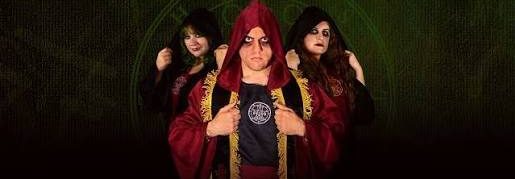
Those familiar with ceremonial religion will be right at home in the little Banshee Labyrinth room where the cult has their inductions. The show begins with the procession of the elders, played by Liz Dooley and CC Massey, and of the cult’s leader, played by Pryce. Attendees are also presented with prayer books, filled with the various prayers that they will need to recite over the course of the evening. It is unlikely that Cult will attract an audience that is not receptive to playing along with some light fictional demon worship, but if one such person finds their way in, there is no penalty and no public shaming for not joining in prayer.
Through a series of parables with an acolyte of Astaroth, we learn the various tenants of the cult’s belief. What’s more, lest we forget, this show is the creation of of a professional magican, and for each tenant there is a corresponding ritual – which you may also recognize as a magic trick. If considered as a whole a magic show, the effects are in a small proportion to the narrative in general. But if seen as a theatrical performance, they exist to highlight appropriate points and make the experience feel that much more immersive and creative. The tricks are well performed and perfect thematic ties to the message of their respective rituals.
The acting over the course of the show can come across as a bit overly hammy, particularily by Pryce and Dooley, but the performance is so intentionally tounge in cheek that it doesn’t detract from the experience dreadfully. Again, this is a show that is reaching exactly the right audience. Anyone who chooses a demonic cult show at the Edinburgh Fringe is likely already someone up for expirimentality and campiness. If this audience expands, it may behoove the cast to sharpen the script and dramatics, but in its current phase of life the vibe is exactly right.
As we learn at the end of The Cult of Astaroth, the Five Wisdoms we have been taught come from theraputic tools that have been beneficial to Pryce over the course of his personal healing journey. Attendees of the performance receive a program of the show at the end that includes more detailed explanations of these tools and how one might utiilize them to their own psychological benefit. The care put into this project is clear, and this knowledge inspires audiences to return again to watch the entire performance over through a more enlightened lens. Praise Astaroth!