Month: August 2024

DAVE REUBENS: FREAKY MAGIC

☆☆☆

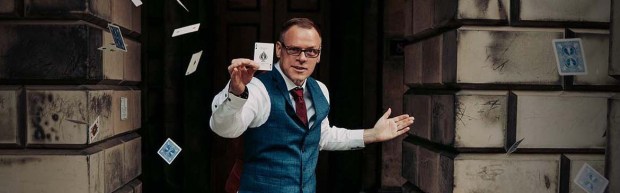
Dave Reubens weaves a freaky tale this Fringe. His Freaky Magic is themed on an heirloom book of cult tales that he received from his ancestors, and the show is structured as a reconstruction of the magical experiments that it contains. Reubens has many skills and the show makes room for him to show off a range of them.

The exact tricks involved may not be especially novel to those who see a lot of magic shows, and if the performance by and large goes to plan there is the odd moment that the sleight involved feels a little more obvious than would be ideal. Specifically, an early moment involving an audience participant’s paper money sees Reubens fondling his contract for a bit longer than he could get away with. He doesn’t quite give away the magic at any point in the show, but it consistently feels like it could be slicker.

The inventive plot line that runs through the show makes it compelling. As has historically been the case with Reubens, he’s family friendly and best suited for slightly older children. The plot of Freaky Magic is gently frightening in a way that will hold kids’ attention and make the show extra memorable for them. Reubens makes an effort to involve the younger audience members in the act, at moments that are age appropriate and suited to the child’s temperament. A shy child on the younger side might be asked to keep an eye on a book from her seat, while a slightly older child might be asked to get involved onstage to commune with the dead.

As with all magic shows, the most unpredictable element is the audience, and the variety of reactions to the tricks can be memorable. It can be refreshing to see the responses of those with less experience—so much of magic is about surprise. A popular category of effect involves a step where an onstage audience participant reveals that a piece of paper has been magically torn. At the moment of this revelation at the reviewed show of Freaky Magic, a seated member of the audience could distinctly be heard to gasp, “someone ate it!” Reubens has many planned jokes and his humor lands with the audience, but sometimes an unfiltered exclamation of amazement just can’t be beat.

Freaky Magic may not yet be perfect, but it’s certainly a fun show, especially for fans of low stakes horror. Younger audience members in particular may be enthusiastic, and will be treated well by Reubens. With the majority of seats filled on a sunny Edinburgh afternoon, he is clearly deservedly successful this Fringe.

More information on Freaky Magic and its performance dates can be found here.

DANIEL SINCLAIR: COMEDY HYPNOSIS SHOW

☆☆☆

Hypnotism tends to be a favorite at the Edinburgh Fringe. Whether people genuinely want to experience hypnosis, want an excuse to be silly, or doubt the reality of hypnosis and come looking for proof, it always gets a large crowd. Daniel Sinclair’s lunchtime Comedy Hypnosis Show at the very central Voodoo Rooms is no exception. The focus is on those looking for direct experience, but Sinclair caters to all classes of audience in his show.

For the ones looking for fun, Sinclair starts his show with the audience being asked to repeat a pledge to have fun and be silly. This is followed up with the audience reshuffling and then being asked to physically interact with each other, splitting up existing groups and making friends of strangers. Hypnotism is not an exact science and no one hypnotist’s stage methods will work on the entire audience, but Sinclair ensures that everyone has a chance to be a bit silly at his show, regardless of their susceptibility to his methods.

The hypnotism portion is of course the primary part of the show. Sinclair places emphasis on allowing everyone who expresses interest to have the opportunity to try to be hypnotized, filling the stage and front row with the keenest for the most focused experience, and encouraging those who don’t manage to get one of these seats to get involved too from wherever they are. A fair proportion of those who take part experience at least some level of hypnosis—clearly his methods are suitable for purpose.

Sinclair acknowledges that there will be skeptics in his audience. Once he has his best hypnotized participants, he shows off the features of their state to prove the veracity of his claims. This is not a big portion of the show, and the focus is always on giving the hypnotized folks the best experience. However it is nice to see Sinclair acknowledging and interacting with all the segments of his audience.

In a popular genre with relatively few performers, hypnotism shows in Edinburgh will undoubtedly all be busy, and even in that environment Sinclair does his best to get as many people as possible involved. Everyone who finds themselves in Sinclair’s audience will find themselves entertained, regardless of their view of hypnotism prior to seeing his show.

AVA AND BEAUX: TALES OF MAGIC

☆☆☆☆☆

When the audience steps in to the Voodoo Rooms for Ava and Beaux’s Tales of Magic, they may look at the magician on stage and think they’re only there to see one performer. However, Ava and Beaux are two magicians for the price of one—with several other characters in the Tales, essentially an entire theatre ensemble and an adorable pet for the price of one magician, or “magish” as she prefers to be called. Tales of Magic is a beautiful, cohesive story composed of disparate elements that come together, by the end, for a satisfying conclusion.

If the audience might come in expecting a magic show, they will be so enthralled that they may not even notice how relatively little of the stage time is spent on magic tricks until they reflect back afterward. The magic that is performed is all in theme and in character and performed with skill and artistry. One of the highlights simply for the oddity of its presentation is a series of rope tricks framed as an informational lecture on intestinal worms. Watching it, it’s difficult to remember exactly how the narrative reached that point, but it also, somehow, feels very Ava Beaux.

The split between Ava and Beaux is present once again in this year’s show, although with the many characters these two don’t always feel center stage. At the start their roles feel fairly well defined, with Ava introducing the show and reading her audience’s minds, and Beaux taking on the more physical tasks such as a beautifully choreographed hoops routine. Over the course of the show, and in keeping with the theme, they gradually collapse together. Their roles become less well defined as the two halves of the one performer resolve into a perfect ending.

As a theatrical show with some magic, this show is relatively light on audience participation. And despite the occasional spookiness of her performance Ava Beaux is one of the kinder magishes. She doesn’t ask the audience to do anything embarrassing or confusing. At the reviewed show her final participant had to step back to her seat for reading glasses, and Ava Beaux seamlessly switched around the order of her finale so that her participant would not feel rushed.

Ava Beaux consistently has one of the conceptually oddest approaches to performing magic at the Fringe, making her a favorite amongst regular visitors. Her act is distinct and her name tends to stick in people’s minds. As well as a unique magic experience, Tales of Magic presents an opportunity for the pet owners of Edinburgh to remember to appreciate their furry friends. Ava Beaux and the ensemble cast that she brings to life are the perfect diversion in the Fringe lineup.

More information on Tales of Magic and its performance dates can be found here.
PETE HEAT: BOGUS

☆☆☆☆☆

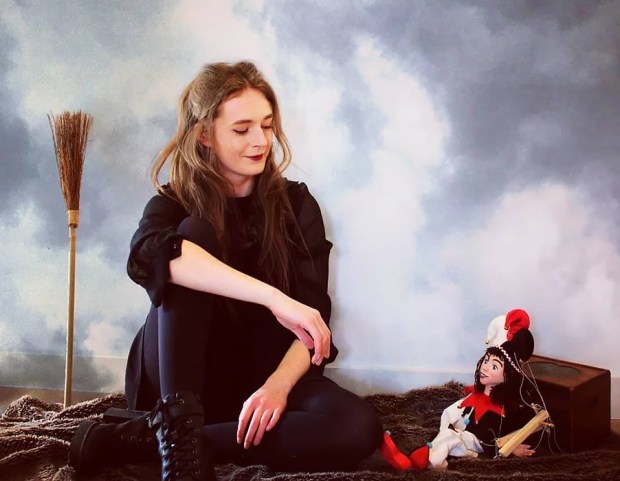
Anyone who has been on social media in at least the past year will have witnessed irrefutable proof that society is ill equipped to handle conflict in a post truth world. There might be a moment of hope when a mutual shares content debunking obvious propaganda, only for that hope to immediately be dashed when they then immediately share equally egregious propaganda slanted in the opposite direction and claim it to be the unbiased truth. This is the foundation of Pete Heat’s Fringe show Bogus. Heat gets all that across in a manner that is very silly, very magical, and very effective.

As per usual in Heat’s Fringe offerings, magic does not make up a huge proportion of the show. Heat is a comedy magician who gives equal weight to both the comedy and the magic. The magic is remarkably slick, even if there are members of the audience who have seen Heat perform the same tricks before it’s by and large impossible to spot the moment that the deception is achieved. Those who take part in especially novel effects may find themselves quizzed by other members of the audience after the show, as they simply can’t believe that the participants are not stooges.

One of the more interestingly involved reveals is to a trick involving made up language, which leaves audiences flummoxed. Heat uses technology in Bogus in an inventive way, creating magical moments unique to this era. Random number tricks are often used as predictive effects, for the magician to show off their mentalist skills, and Heat’s version of this is both extra impressive and extra hilarious.

As methods to dispel the notion of objective reality go, magic may feel like a fairly obvious one. It’s the perfect option for discussing the effect of both deliberate propaganda and social media AI algorithms, as it uses similar principles. However, magic is explicitly for entertainment rather than for the lethal combination of infotainment and deliberate fracturing of the laboring classes often seen in non-magical misdirection. Heat’s other primary prong is, perhaps a little more unexpectedly, animal facts. This is equally effective in its own way, and far more cuddly.

Like any other magic show, Bogus is designed to leave the audience with more questions than answers, but explicitly draws the connection to the outside world. Outside of Bogus, we’re faced with nonconsensual, malicious, and dispassionate misdirection, and we don’t even know how tall the perpetrators are. Inside Bogus, we’re faced with benevolent misdirection from a very tall man—clearly the better option.  The irony of his infotainment approach to addressing contemporary media illiteracy suits Heat’s style.  And even audience members who aren’t in it for the big themes can enjoy the incredible magic and hilarious jokes. 

More information on Bogus and its performance dates can be found here.
KEVIN QUANTUM: ANTI-GRAVITY

☆☆☆☆

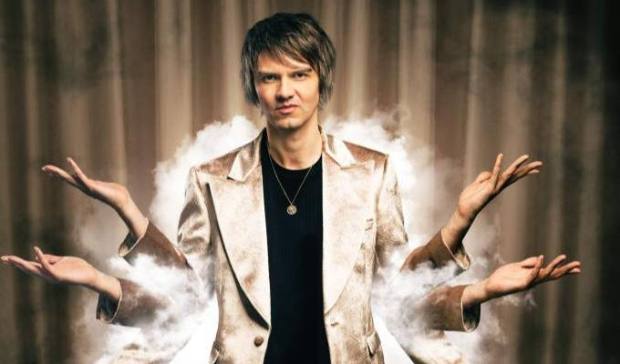
One of Kevin Quantum’s most frequently used pull quotes is that he’s “like a sexy Doctor Who”, which takes a lot of pressure off anyone else who writes a review of his shows. No one could possibly top that (although one must ask, is Doctor Who not a sexy Doctor Who?) Opinions of his looks aside, the Doctor Who comparison is fitting, especially with this year‘s show Anti-Gravity. The lightly educational and plentifully magical show is reminiscent of classic Who-niverse creations, which balanced child friendly history and science with science fiction to make learning fun for its target audience of young viewers. Although in Quantum’s case, the mixing is science with magic.

It will come as no surprise that Anti-Gravity has a focus on levitations in all their forms, it is after all an accurately titled show. Quantum comes out for a pre-show segment that perfectly encapsulates the scientific and magical themes of the show, with demonstrations of Bernoulli’s principle using both science and magic. The levitations build in scale until a final trick that is both completely expected given the theme of the show and also something of a surprise simply as it’s not a type of magic that is often performed.

With Anti-Gravity, Quantum is not just looking to inspire future magicians in his audience, but future creators of all types. Over the course of the show Quantum demonstrates how close an unexplained science experiment feels to magic, blurring the lines between what is currently possible and not yet discovered or invented. It’s the kind of inspirational message best delivered by a hybrid scientist-magician.

There’s a mix of audience types and ages at Quantum’s show that reflects the universality of his appeal. There are plenty of families with young children, but also lots of childless adult couples and adult group attendants. While the inspiring message may land best with the youngsters, the unusual magic performed will be appreciated by all, even the most seasoned magic fans.

More information about Anti-Gravity and its performances can be found here.

ADAM B MAGIC: WELCOME TO MY REALITY

☆☆☆

Getting an audience can be challenging during the Fringe. At the reviewed show of Welcome to My Reality, Adam B received the Weegie hug of death—he was lucky enough to be chosen as the first stop for a Glaswegian language exchange group’s day trip to the Fringe. The large international crowd made for an extra energetic show. Adam presented a series of mostly comedy magic, loosely themed on his mental health struggles. If at times it comes across as a bit of a therapy session, the magic keeps it engaging, and Adam does not dwell excessively on the negative.

At the reviewed show Adam had a plentiful crop of potential audience participants to pick from. The sheer size of the audience dictated convenient choices of individuals at the front and open edges of the rows of seats, and all selected were enthusiastic on stage. While this did not come up at the reviewed show, the audience gets the impression that as a self-described “neurospicy” individual Adam would be more respectful than most if he happened to select an audience member who did not want to join him. The one slightly awkward moment was when Adam tried to bond with a specific member of the audience over their mental health conditions; perhaps because she ended up being the only one to volunteer her fellow neurodivergence she seemed to feel a bit picked on in front of the large group.

The specifics of the tricks that Adam performs are not quite so unusual that a regular attendant of magic shows will see anything new, but they’re different enough that more causal magic fans certainly will, and Adam performs them well. A story narrated with the use of a string is a particular highlight with the members of the audience sitting near the reviewer. This was especially impressive as this was pretty far toward the back of the room, and he managed to make such a delicate piece of magic both visible and impressive from the stage.

Adam employs a variety of stories to compliment his magic, and if at times they feel disjointed this is in line with what he explains of his ADHD theme. The stories range from a fantasy involving skydiving bubbles, to the struggle of making connections with others while dealing with mental health issues, to more standard magician fare when performing with his colorful handkerchiefs—a wide range. The demonstrable creativity is a welcome addition that keeps even the most experienced magic show attendants interested in his performance.

Lunchtime show slots can feel like early morning meetings by Fringe standards, and Adam is a great way to start the day. He will undoubtedly continue to pack out the room even when the Glaswegians aren’t in town.

CAMERON YOUNG: THE SCOTTISH MAGICIAN

☆☆☆

It must be acknowledged that there is absolutely an innate appeal to spending an hour looking at a man in a kilt. Cameron Young, a Scottish magician who titled and themed his show The Scottish Magician seems to understand the allure. His show contains plenty of magic and plenty of celebration of Scottish culture—exactly as promised.

The celebration of Scotland starts immediately, with an audience participant invited to take part in a trick in exchange for the chance to win a classic Scottish snack. Young is kind to his participants, frequently offering rewards in the form of magical mementos as thanks for taking part in the show. He gets increasing numbers of volunteers as the audience catches on to this and everyone decides that they want a physical reminder of the magic.

While much of the magic included is familiar favorites, Young also includes some fun reinterpretations that make the classics feel fresh. Of particular note is his take on a ring effect, which involves an exciting series of revelations. It is, however, a mixed result, as this effect specifically is one of the ones that is unfortunately easy to catch out from the first few rows, even when the audience is not trying to break the spell of the magic. Young is much more successful at concealing the sleights of the classic tricks, perhaps indicating that this one simply requires a bit more practice. The audience is lucky to see his fresh new magic in progress.

The narrative around the tricks does feel at times a bit disjointed, with Young chatting at various points about his childhood adventures as a secret budding magician and then, at times, breaking into rhapsodic praise of Scotland—its food, drink, and celebrities. Aside from the kilt and the lovely accent, his enthusiasm in speaking on these varied topics does keep the audience’s attention. If it’s a slightly disjointed show thematically, it is nevertheless unfailingly entertaining.

It is hopefully not surprising to magic fans at the Edinburgh Fringe to hear that Young is not the only Scottish magician at the festival. He is, however, the only one who has themed his show on his love for his country. For mostly skillful magic, an enjoyable series of stories, a safe space to shout a bit about your love for Scotland, and of course a man in a kilt, The Scottish Magician is the show to see.

More information on The Scottish Magician and its performance dates can be found here.

1 HOUR OF INSANE MAGIC AFTER DARK

☆☆☆☆

Billed as the adult version of the performers’ popular afternoon family show, 1 Hour of Insane Magic After Dark is proving equally popular with Fringe audiences. A significant part of the appeal is undoubtedly the opportunity to watch three beloved local showman let their dirty mouths run wild for an hour, but there is also plenty of perfectly performed magic and a couple of guest cabaret spots for variety.

The insane magicians take turns showcasing their tricks solo and in various configurations with each other.  Stunt magician Luke Osey performs the weirdest trick to open the show. It’s not so much a magic trick as it is an odd ability that he has cultivated for reasons known only to himself. Osey does frame his performance with magical jokes, giving it the aura of a trick, and employs a camera to ensure that everyone in the audience can see the action regardless of where they’re sitting.

Resident insane mentalist Cameron Gibson has been described on social media as an international sex symbol, and if anyone in the After Dark audience doesn’t agree with that the moment he steps in front of them in that magic outfit of his, they will have come around after watching him take control of everyone’s minds on stage throughout the evening. Gibson successfully reads audience minds in various configurations using “two truths and a lie” prompts, a clever use of time to allow successive reveals to build in impact.

Sleight of hand artist Elliot Bibby performs a classic of card magic using his tongue, in fitting with the After Dark theme. At the reviewed show Bibby made particular friends with one of his primary audience participants, even sharing a beer. That participant was so impressed by the magic he got to see up close that after the card was located he bowed down to Bibby, in awe of Bibby’s magical skills.

The guest spots at the reviewed show went to the Edinburgh-famous Performing Nerd Tom Crosbie, and an Australian contortionist who performs as Sassy Limbs. They are a fantastic confirmation that the Insane Magicians are able to attract the best of the cabaret performers to join them onstage. While Crosbie is the more magic-adjacent, the contrast between the two of them and with the Insane Magicians themselves works perfectly in the fabric of the show.

Unfortunately the reviewed show came to an end with a lack of a bang. The Insane Magicians had planned to end the evening with a dangerous stunt that their fans may remember from last year, but an issue with the props made it too dangerous to perform. It was a surprisingly wholesome twist ending. In the capitalist nightmare of modern society the old adage that “the show must go on” is often cited to encourage dangerous behavior, but Insane Magic is about the bond between the performers as much as it is about the tricks themselves, and it’s lovely to see Gibson and Bibby correctly choose to value Osey’s safety over an exciting ending for their show. Those who remember last year’s Insane Magic can attest that when it is able to be executed it’s a very cool stunt to see, and it’s comforting to know that when we do see it, it’s being performed as safely as possible. 

With a little bit of everything and a lot of magic, 1 Hour of Insane Magic After Dark is both the perfect start to a night out and the perfect end to a day at the Fringe. It’s tempting to return multiple times to enjoy the boys and their guest stars. Regardless of how the show ends, they will ensure that everyone in the audience has an insane evening.

1 HOUR OF INSANE MAGIC

☆☆☆☆☆

In the crowded marketplace of Fringe magic the challenge of putting on a show is often acquiring an audience. Last year’s sellout sensation 1 Hour of Insane Magic does not have that problem, but there are extra challenges that come with success, in their case in performing a magic show to an audience on three sides. Fortunately the Insane Magicians—stunt magician Luke Osey, sleight of hand artist Elliot Bibby, and mentalist Cameron Gibson—were clever enough to put together a flash-free set, it’s an insanely magical show from every angle.

The highlight of watching a performance that contains a whole three magicians is, of course, watching them perform together. Right at the start the Insane Magicians pull an audience participant on stage for them to tag team with a bombardment of their varied magical skills. They take turns playing off each other and joining forces for their reveals. At times, even when just one is taking the lead of the segment, the other two are on hand in the traditional “glamorous assistant” role to ensure that the audience participants and main performer have everything they need to hand.

Gibson is the only one of the Insane Magicians to verbally admit to being a nerd, but it’s obvious to the audience that they are all nerds, and not just because they have chosen magic as a career. The Insane Magicians publicized this year’s show in part by showing off their big new illusion, a table for sawing someone in half. Not only have they gone to the trouble of resurrecting a classic of magic, but they also make it as historically accurate as possible with the help of their secret fourth Insane Magician, Erin McIntyre. In the modern era it can seem difficult to perform this type of magic in a way that doesn’t come across as misogynistic, but the Insane Magicians make it look easy.  They make it clear that in their version of the effect McIntyre is the primary performer and the others are simply her three glamorous assistants, helping her show off the skill that she mastered.

Bibby, Gibson, and Osey have had and continue to have separate careers outside of performing together, and throughout the show they pay tribute to the adventures that have brought them together and at times apart throughout their friendship. They illustrate the beauty of this Insane Magic era of their friendship with a lovely effect involving several audience participants joining in from their seats, giving enough input to make the trick extra astonishing while keeping the attention on the three insanely magical friends sharing the stage.

As with its previous Fringe outing, 1 Hour of Insane Magic has proved insanely popular. Anyone wanting to experience the show who does not have a ticket yet had better buy one quickly, as they regularly sell out over a week in advance. 1 Hour of Insane Magic is the most insane family friendly fun available this Fringe.

CHRIS COOK: THE ART OF TAKING PART

☆☆☆☆☆

Last year, Chris Cook celebrated ten years of performing at the Fringe. This year, promotion for his new show The Art of Taking Part sounds almost like an abdication of his role as a magician, giving the show over to the audience to provide entertainment for each other. In practice this is not the case. The audience does not need to fear that they are being put on the spot to create the show for their peers, Cook’s guiding hand ensures that the show stays magically on course.

On the rainy weekday evening that this show was reviewed, the fact that Cook managed to get any audience at all was very impressive. Those that were there were the ones who really wanted to experience the show, which was actually perfect for the type of performance that it is. Every participant that Cook brought to the stage was enthusiastic in taking on their roles. There is an element of random selection as well, and for two of the elements requiring a very minor bit of physical skill Cook had the misfortune of selecting one of the most physically incapable people in the room, possibly in the world—this reviewer. Even then, Cook managed to keep the show on track with kindness and professionalism.

To celebrate The Art of Taking Part, Cook regularly rewards his participants for joining him on stage. This is not achieved just through physical gifts, although those do appear on occasion, but Cook also places emphasis on tricks that happen in his participants’ hands, or that center the participant as the one taking credit for the magic part of the segment. One trick in particular sees a volunteer member of the audience take over the role of the central performer, and at the reviewed show she really got in to it, fully appreciating her share of the spotlight. Nevertheless it is clear that Cook is pulling the magical strings, there are plenty of skilled reveals over the course of the show.

Over the course of the show, The Art of Taking Part is revealed to be as much a manifesto on the nature of magic as an art form as it is the title of the show—the necessity of interaction with the audience is one of the key aspects of magic that sets it apart from most other performance arts. Cook devotes his show in part to celebrating this feature of magic, which gives the performer a unique ability to connect directly with members of the audience on a personal level. Arguably this facet is the crucial factor that has enabled Cook to create ten years of Fringe shows that are slowly but surely making the world a better place. At the same time, it’s a deeply silly show that gives the audience a chance to embrace the fun of magic, often in their own hands.

Cook’s habitual emphasis on guiding his audience toward self improvement is still very much present this year; regular fans will not be disappointed. For the perfect blend of seriousness and silliness The Art of Taking Part is the place to be.

More information on The Art of Taking Part and its performance dates can be found here.