mentalism

THE MAGIC SHOW STARRING LIAM A BLACK AS THE GLITTERING PRINCE OF MAGIC

☆☆

One of the great features of the Fringe is that you can see shows in pretty much any venue imaginable. Bars, pubs, and restaurants all clear out their back rooms to use as venues, the university partners with the Fringe to allow use of many of their buildings, and even churches allow the use of their halls, like the one on Nicolson Square where Liam Black has staged his show, The Magic Show Starring Liam A Black as the Glittering Prince of Magic. The ostentatious wordiness of the title promises a certain kind of show, and Black largely delivers on this.

It has been said that the easiest way to be at the top of your field is to pick a small field. In that vein, Black is indisputably the best magician at the Fringe at costume changes—he has a huge number of them and each costume is more elaborate, more glittery, and overall more fabulous than the last. In fact, it can be safely said that Black’s show has the greatest concentration of glitter of all Fringe magic shows. Aside from his own costumes, Black includes a sparkly assistant and team of glitter-clad dancers in his act, and is actually too much of a pastiche for this to come across as sexist. The group song and dance numbers are a highlight.

However, there are a few areas where Black feels a bit flat, and unfortunately the magic is one of them. At the reviewed show his final reveal, for example, was sadly fairly obvious from the start—the word was written a bit too clearly for it to be hidden from the audience when shown upside down. Black also spent an unfortunate amount of time playfully lambasting the audience at large for not laughing at a few of his early jokes. This was fair enough at first but eventually felt like he was berating his audience for the fact that he wasn’t being funny. Whether the audience warmed up or he moved on to better material, they did eventually start to laugh with him. The show is a solid concept, and there are definitely plenty of elements that felt like he had gotten them right, but also plenty of room for improvement.

That being said, The Magic Show Starring Liam A Black as the Glittering Prince of Magic is more than just a magic show, it’s a satire of classic magic tropes with enough glitter to make a whole church sparkle. At its best it perfectly balances paying tribute to the classic magic shows of the past with poking fun at their less than ideal features. While perhaps not perfectly executed on this occasion, the concept there, and this reviewer for one will be curious to see what Black comes up with next.

More information on Liam A Black and his performance dates can be found here.

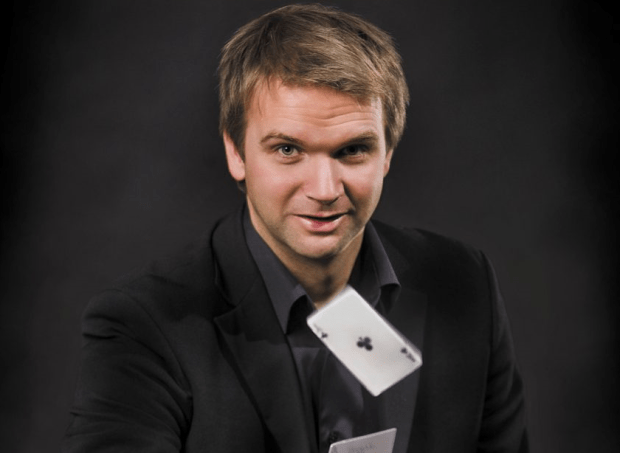
TOMAS MCCABE: HOW TO READ MINDS

☆☆☆☆

Whether due to the late timeslot on a Friday evening, the gentle Irish accent, Tomas McCabe’s invitation to learn secret knowledge in How to Read Minds, or the appeal and reputation of the performer himself, McCabe was able to gather a huge crowd on the day that his Fringe show was reviewed.  A popular regular, McCabe’s audiences have evidentially not been diminished by the overall slowdown of this post-pandemic Fringe.  He demonstrated exactly how he earned this renown over the course of his hourlong show. 

The flipside of this success is that McCabe was at times faced with a merry mob of chatty revelers rather than a nicely attentive audience.  He dealt with this as well as could reasonably be expected of him, by ignoring the interruptions other than to drown them out by pushing on with his show.  Luckily thanks to his projection coupled with his tech assistant’s help those who wished to follow along were perfectly able to.  Said tech assistant incidentally also emerged over the course of the hour as the current most eligible bachelor of this year’s Fringe.  Ladies, contact McCabe for his number. 

McCabe demonstrated his mind reading techniques on both the audience as a whole and on a select few individuals who were invited up to the stage.  Each method was equally impressive in its own right.  A highlight involved the use of audience members’ anonymized secret confessions to aid in the demonstration.  McCabe teased his audience, but from a place of nonjudgement.  The purpose of the exercise, aside from learning techniques to help trick people in to thinking you could read their mind, was to create a space for everyone to freely express their errors in judgement without undue negative reaction.  The teasing tone was dependent on the subject matter, when McCabe came across a confession that a member of his audience was planning on coming out to his parents the next day McCabe was quick to wish him luck with the conversation. The only trick that McCabe missed was due to an inebriated would-be participant forgetting her role, which he laughed off without embarrassing her. 

McCabe is one of the more popular Fringe magicians and earns it all the more with every show.  For a fun bit of mentalism, Fringe audiences cannot go wrong with McCabe. 

More information on Tomas McCabe and his performance dates can be found here.
AVA BEAUX: WHICH WITCH

☆☆☆☆☆

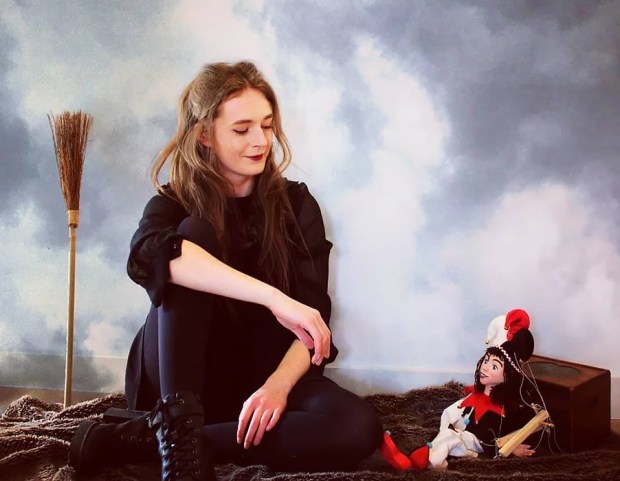
Ava Beaux makes a name for herself as a rare female magician, or “magish”, as she prefers to be called.  For reference for those who may be unfamiliar with the gender balance of magishes, out of a total of over fifty magic show listings in this year’s Fringe just two feature a female magish.  Percentage-wise this year is sadly probably one of the better ones, post-pandemic overall numbers are down and regardless of the total number of shows usually only two or three feature women as magishes.  If memory serves Ava Beaux herself was the only female magish at last year’s Fringe, participating virtually over youtube.  That being said, while she mentions this in Which Witch, this is not the point of the show nor why it is worth watching. 

Which Witch creates two characters out of the one performer, Ava and Beaux, and features their struggle for control.  Ava is the one who is recognizable as a conventional magish, while Beaux likes to wear extravagant hats and has trouble communicating with the default world.  In both personas Ava/Beaux performs excellent magic.  Appropriately, Beaux has a weirder take on tricks, which was wonderful to see—although it is perhaps worth noting that ethical vegans may prefer not to be Beaux’s audience participant.  Ava/Beaux relies primarily on sleight of hand, but it was Ava’s mind reading trick that got the biggest reaction on the evening of this review. 

Ava and Beaux each charm the audience in their own way.  Ava has her hilarious stream of stories that keep the audience laughing while marveling at her tricks, while Beaux’s unfettered delight at finding herself in the audience’s presence immediately wins us over, in spite of the warnings.  Neither one makes her audience participants feel unsafe in her presence; while Beaux is less predictable any potential for destruction is focused on her own props. 

The finale of the show is visually gorgeous, it is worth sitting through the show even if you hate magic for the chance to see the last few minutes.  The theme of finding the power to take control of your own healing from trauma caused by others is unexpectedly heartfelt, and appropriately timed for a world where both global events and political elites cause suffering that is often impossible for any ordinary individual to stop—but we can take control of our narrative. 

Ava Beaux’s longer term fans may have a different appreciation for Which Witch.  She has always been a storyteller, but here we see her put down literary inspiration and step in to her own story.  It has been a privilege to watch her grow in to her talents and hone her skills.  Those finding Ava Beaux for the first time this year may have to settle for a perfect, stunning magic show, but surely everyone who sees her will be excited to see what she does next. 

More information on Ava Beaux and her performance dates can be found here.

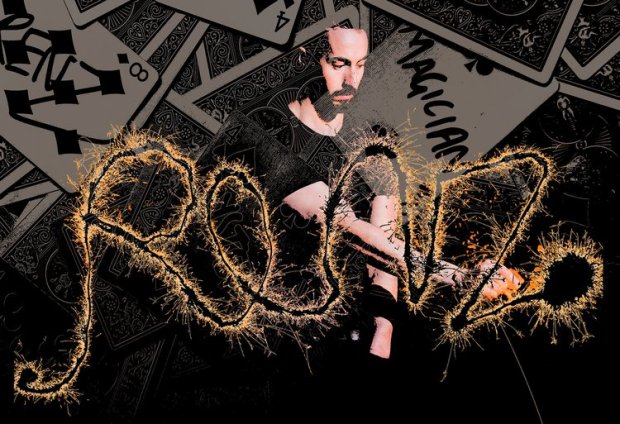
RENZ NOVANI: ORACLE: DO YOU WANT TO SEE THE FUTURE?

☆☆☆☆

The Fringe is a very loud place, from flyerers clamoring to grab attention to performers using their best projection to ensure that their audience can hear them in distracting venues.  It’s part of the appeal, but can get tiring.  Stepping up the stairs to Renz’s calming, lilting voice and softer charisma is a welcome reprieve.  The audience of his show Oracle: Do You Want to See the Future gets to listen to him as he leads them through a series of mentalist effects in a bid to show that he, too, joins the oracles of mythology in ability to see the future. 

Renz dips in to a range of methods to display his mentalist and predictive powers.  Perhaps most fun and impressive is when he requests that audience members generate creative responses to his prompts for him to read from their minds, giving the rest of the audience insight both in to their fellow audience members and Renz himself via the range of prompts available.  You’ll find no ESP cards here, Renz’s methods create a unique experience of his skills at each show. 

The audience members who join Renz’s show as magical participants can expect an especially uplifting experience in an already uplifting show, being rewarded for leaving their seats with compliments and kindness.  Renz is a supportive presence, an audience member who initially has some trouble with Renz’s instructions becomes a temporary co-star in his own right.  Joining Renz on stage is not the only way that the audience participates in the show, which ends up feeling like a culmination of the audience’s collective participation.  

If Renz cheats the question in his ultimate conclusions regarding precognition it is no more than is reasonably expected of magicians, and the result is more inspirational than prospective audiences might anticipate.  While we at World Magic Review don’t claim to possess Renz’s precognitive abilities, we do foresee that Renz’s future audiences will very much enjoy his show. 

More information on Renz Novani and his performance dates can be found here.

ANDREW MCKINLAY: NECESSARY LIES

☆☆☆

Andrew McKinlay’s Necessary Lies has found its home in that most archetypical of free fringe venues: the back of a bar.  It’s also an archetypical fringe magic show.  An overarching theme is noticeable and appreciated to bring some shape to the string of tricks that McKinlay performs.  There are the expected unexpected moments of a magic show, and McKinlay is a strong performer, the audience doesn’t see anything to break the illusions. 

A mentalist, McKinlay uses all the classic props and doesn’t shy away from poking fun at himself for it—“It wouldn’t be a mentalist show without notecards and a sharpie”, after all.  ESP shapes are used prominently as well, in a fun sequence in which McKinlay tests whether or not the audience as a collective has the mind reading abilities to tell where he has placed the shapes. 

The small weekday evening audience of the reviewed show bonded over such moments.  Given the size, there were several times that entire audience was involved in a single trick, and even once where the whole group was all up on stage with McKinlay, effectively performing for ourselves.  This temporary sense of community, both in support of McKinlay as the magician of the evening and in response to knowing that we were collectively choosing to be manipulated by him, is the kind of magic that was most difficult to translate to the pandemic era and is a welcome sign of increasing normalcy. 

Necessary Lies has all the classic mentalist ingredients, with a little bit extra structure to make the audience think without asking them to think too hard.  McKinlay brings his full force of energy to even his small weekday shows, easily holding attention in an uncontrollable bar environment.  The Fringe going audience could do a whole lot worse than spend an hour in his company. 

More information on Andrew McKinlay and his performance dates can be found here.

DAVE ALNWICK: EXCEPTIONAL MAGIC & SUPER CHILL MAGIC

☆☆☆☆

At an Edinburgh Fringe where many familiar magicians are absent or performing limited runs, Dave Alnwick is back for full Fringe long of three to five shows a day.  By numbers alone, he accounts for exactly one third of the magic listings on the PBH Free Fringe website this year.  His two daytime shows, Super Chill Magic and Exceptional Magic, are intentionally very similar to accommodate his many fans, which is why they are both best addressed in this one review. 

The household name status that Alnwick has achieved at the Fringe makes the audience experience at his shows extra special.  People who manage to secure spots at the fronts of his queues have the camaraderie of successful pilgrims, holding spots in the queue for strangers who have urgent errands and exchanging phone numbers so those who remain can immediately update the errand-runner if anything changes.  The hype might sound excessive but as soon as the show starts, Alnwick proves that he’s earned it. 

Both Super Chill and Exceptional Magic have a bit of sleight of hand but rely more heavily on mentalism, Alnwick’s specialty.  Everything is performed flawlessly, as his audiences have learned they can expect.  A card trick that he performs with two audience participants in each show is a particular highlight, with Alnwick leaving his deck of cards in the participants’ hands for the majority of the effect.  In the talent-scouting portion of the reviewed Super Chill Magic, Alnwick found an excellent participant who briefly stole the show, and would not be out of place on his own stage, perhaps at next year’s Fringe.  Choosing participants who will best enhance the show is a skill in itself, and one that Alnwick has clearly mastered over his long career. 

Super Chill and Exceptional Magic are well timed to accommodate Alnwick’s variety of fans.  Super Chill Magic is in the early afternoon, earlier than most shows, for the Fringe tourists to kick off a busy day of show-hopping.  Exceptional Magic, on the other hand, is just about late enough for locals to pop in after a day in the office, and to catch those unwilling to get out of bed in time for Super Chill Magic.  Both Alnwick and this reviewer agree that attendance at both is not necessary for any but the most devout of his followers.  Either one is sufficient to re-cement the legend of Alnwick in the Fringe collective consciousness for another year. 

More information on Dave Alnwick and his performance dates can be found here.
DINO DORADO: EXPERIENCE

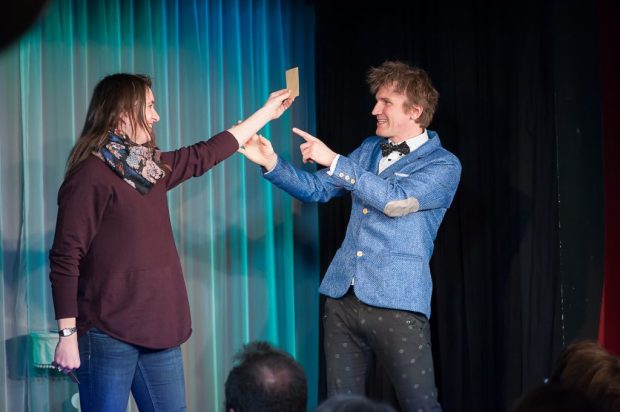
Dino Dorado welcomes his audience to Experience himself and his mind reading tricks in this show.  Incredibly enough he is even performing in his non-native language—Dorado is Austrian but his English is strong enough for an entire mind reading show.  This is extraordinary enough from a monolingual English perspective.  Dorado’s mind reading itself, however, is patchy.  He has difficulty recovering from a rough start, although he does, in the end, get himself back on track.

The rough patch hit Dorado at the very start of his show.  Dorado mis-read his participants’ minds on his first few attempted effects.  This is understandable, mistakes do happen.  Magicians are people too.  However, as a performer Dorado could have dealt with the situation a bit better.  He was visibly dispirited at each miscalculation, and seemed to lose a bit more of his performance persona at every misstep.  Dorado would have been better off keeping his performance energy high and keeping the audience engaged in watching him.

That being said, Dorado’s mind reading skills picked up as the show went on.  His spirits and energy picked up in direct correlation as his effects began to have more successful results.  By the time he managed to correctly determine two pieces of meaningful information thought up by two different participants, he had fully regained his enthusiastic energy and the audience’s wonder.  His early errors did have the beneficial side effect of making his later successes appear that little bit more impressive in contrast.

Once Dorado had gotten his mind reading back on track, his exuberant stage presence was able to shine.  All of Dorado’s audience participants—although perhaps especially his later participants, who he was better able to read—were made to feel welcome on his stage.  Dorado likes to get physically close with his participants of all genders, but his mannerisms make this playful and nonthreatening.

Dorado’s show was a mixed Experience on the evening that it was reviewed.  He could not consistently back up his requests for applause from the audience with solid magic, or even consistent showmanship.  However, if the latter half of his show is any indication, he does have the potential for a much better performance.


More information on Dino Dorado and his performance dates can be found here

RENZ NOVANI: POET OF THE IMPOSSIBLE

☆☆☆

For a magic show, Poet of the Impossible is curiously light on magic, at least in the illusions sense.  Renz Novani’s poetry and storytelling share the spotlight with his magic tricks.  It is clear from the beginning that this is because Renz is a compelling performer, both with and without his magic. It does mean that his show might feel exceptionally niche—his best audience will be those who enjoy both magic and poetry—but those boundary-defying qualities also lend him a wider appeal, as a performer first and foremost over his role as a poet or magician.

In a fun twist on classic playing card trickery, Renz frames an opening trick by talking about his early days of learning magic out of books, and then having an audience participant read instructions from a magic book to guide him through a trick.  The audience feels as if we are taking part in this childhood anecdote.  But of course the instructions that are read out are incomplete, and the audience is still amazed to see the trick succeed.

Renz ventures into less conventional magical props with his use of tarot cards for a mind reading trick.  He does briefly use them for their intended purpose, while acknowledging that he himself is not a believer in such fortune telling.  When he finishes by using the tarot cards to reveal his mentalist trickery he dazzles the audience on his own terms rather than those set by the cards that he is using.

Poet of the Impossible winds down show by Renz telling stories about magic while performing the magic that he describes.  In one he describes a childhood dream about fairies fixing his broken toy while fixing it on stage in front of the audience.  He uses this to then draw a parallel between dreaming and watching magic, with both allowing for temporary escape from reality.

Renz’s graceful magic combined with his spoken word performance gently reshape his audience’s perception of reality while keeping us grounded in the real world.  While fans of both magic and poetry might get the most out of Poet of the Impossible, the elegance of his performance is enchanting to all.


More information on Renz Novani and his performance dates can be found here

BILLY REID – STORYTELLER

☆☆☆

In Storyteller, Billy Reid structures his performance around stories from his childhood, using magic to illustrate them and bring them to life.  “Illustrate” is perhaps the key word here, as aside from being incredibly well performed, Reid’s magic tricks are more often than not exceptionally aesthetically pleasing.

Reid sets this tone from his first card trick.  He starts it classically enough, with an audience participant picking a card that Reid then shuffles back in to his deck, but when the cards start changing to match the story that Reid tells, the fact that in the end he successfully finds the right card is actually the least exciting part of the act.  The artistic trend continues in Reid’s mentalist tricks, as he reads a volunteer’s mind by painting the scene that she is thinking of on a canvas on stage, his firm and decisive brush strokes keeping the audience engaged in trying to work out the final image.

Like all of this year’s solo shows at MagicFest, Storyteller is performed at the Scottish Storytelling Centre, and one of Reid’s tricks in particular would not look out of place in one of their exhibitions.  Reid uses a blank card deck that he has illustrated himself to tell the story of his love for Scotland in a trick that showcases both his magical and artistic skills.  This is a particularly inventive highlight of Reid’s beautifully creative show.

Reid’s tricks rely on audience participation just as much as any other magician’s, but Reid is notable in that he invites volunteers to step forward before randomly selecting a participant himself.  While both approaches have their merits, Reid’s worked for him in that his volunteers were visibly excited to participate, and the shyer members of his audience were presumably a little bit less stressed.  It is certainly more enjoyable to watch audience participants who participate enthusiastically.

Storyteller is a gorgeous production.  One of the personal details that Reid shares is that as a child he was passionate about his art classes, which is no surprise to his audience after seeing this show.  Reid smoothly combines his illustrative and performance skills into a remarkable experience.


More information on Billy Reid and his performance dates can be found here

LEWIS BARLOW – CARDS, COINS & MINDS

☆☆☆☆

Lewis Barlow chose a very straightforward name for his show—Cards, Coins, and Minds—and he does exactly what it says on the tin, performing a series of coin and card tricks and reading a few audience members’ minds.  The premise is simple, but the magic is enthralling.  Barlow performs to an audience comprised largely of adults accompanied by young children, and he easily holds the attention of all ages.

Barlow begins with a quick few coin tricks.  While these are entertaining enough, a few of the younger children were still a bit fidgety until he brought out the cards.  Using a younger audience member as one of his first participants was both a nice way to include that segment of the audience and perhaps helpful in getting them on board with sitting still for the rest of the show.

Following this is his mind reading, where Barlow continues to excel.  He has mastered the art of timing his preparatory work just long enough to build anticipation while not continuing so long that he loses the attention of the children.  He uses both cards and less traditional magic props to maximize effect, and finishes up with a wonderfully performed déjà vu themed card trick that leaves the audience amazed as we exit the theatre.

If there is one critique to be raised of Barlow’s performance, it is in his poor handling of young child shouting out that she wanted to have a go at volunteering in his show.  Considering his experience (Barlow has been a magician for twenty years, he tells the audience in this show) one might have expected him to have contingency plans prepared for audience interference.  Seeing this instance apparently catch him unawares was especially surprising considering how well he otherwise dealt with his younger audience members.

In Cards, Coins, and Minds, Barlow’s performance is both pleasantly straightforward and captivatingly complex.  Barlow’s gentle stage presence inspires audience trust, and his evident magical skill enchants the audience.  Cards, Coins, and Minds is an excellent piece of family magic to entertain guardian and child alike.


More information on Lewis Barlow and his performance dates can be found here