Edinburgh

CHRIS FLEMING: MILLENNIAL MAGICIAN

☆☆☆☆

Chris Fleming’s Millennial Magician features several PowerPoints and quasi-educational content about what makes a millennial a millennial. Some of this will be genuinely educational, even for millennials.  In particular younger millennials who did not grow up in the UK may learn a few new cultural references, although there are absolutely universal cross-cultural elements of the millennial experience that are celebrated. However the majority of Millennial Magician is devoted to the second half of the title, and the magic that Fleming performs is consistently fun and consistently perfect.

One of the highlights of Millennial Magician is Fleming’s magical take on beer pong. Like so much in a magic show, this may have been at least in part due to the audience participant chosen at the reviewed show. Fleming had a magician’s trick method to introduce to speed the game along, but the participant he chose immediately revealed himself to be a champion beer pong player, sinking shots with apparent ease. Fleming didn’t allow this to disrupt the magic but took a moment to celebrate the physical talent of his participant. The reveal was nevertheless impressive, perhaps all the more so for coming on the heels of this unexpected display of talent. It’s also a genuinely inventive take on a couple of standard magic tricks joined together in a creative way, appealing to the magic fans in the audience in search of novelty.

Like the champion beer pong player, Fleming’s audience participants look to be having a universally great time. At the reviewed show participants were willing to trust Fleming with their phones (which to a millennial is perhaps an even bigger deal than trusting him with their life), join him for an impromptu dance break, and drink his mysterious liquids to verify his magical talents. Fleming is an approachable performer and the audience enjoys taking part in his magic.

Millennial Magician is a strong Fringe debut and an all around great way to spend an hour in the afternoon. Fleming’s fun personality and interesting takes on magic will make the time fly by. Anyone who manages to snag a spot in his show this year will leave curious to see what else he can come up with, and hoping that he finds his way back to future Edinburgh Fringes.

More information on Millennial Magician and its performance dates can be found here.

STUART LIGHTBODY: THE MAN WITH THE GOLDEN HANDS

☆☆☆☆☆

Stuart Lightbody may come from South Africa, but the story that he tells in The Man with the Golden Hands is recognizable to people of many nationalities: the United States government clutching at straws to gain advantage over its Cold War enemies. Any degree of knowledge of this crazy time in history will make everything that Lightbody says in his show sound feasible, regardless of specific knowledge or ignorance of the matters in question.

Specifically, Lightbody has framed his show as a discussion of the CIA’s use of misdirection techniques during the Cold War. It makes sense on the surface, and it allows him to demonstrate a wide range of skills. Lightbody runs through the range but excels at sleight of hand in particular. Watching him shuffle his cards is genuinely ridiculously impressive, he has such perfect control over his deck it’s like he has 52 extra hands. His card finding trick is perhaps too much fun for even a card trick, with an ending that no one will anticipate. It’s both a classic and completely fresh at the same time, in a way that perfectly dovetails in with his spy theme. It’s well worth the hour even if the rest of the show doesn’t appeal just to watch Lightbody’s card and coin tricks.

The participants in The Man with the Golden Hands by and large look to be having a great time on stage with Lightbody. For tricks like his card routine, the participants have a front row view and are extra flabbergasted by his reveal. In one memorable trick, Lightbody asks for participants first from the extroverts in the audience and then from the introverts. This is clever as well as kind, and in fitting with the theme. The extroverts have the extra moments onstage to bask in the attention, while the introverts are literally instructed to hide behind an extrovert—likely exactly what they would feel inclined to do anyway.

The theme is consistent and constant throughout the hour. Lightbody has put together a show that is both cohesive and highly entertaining. It’s a masterpiece that has deservedly won awards at international Fringes, and is deservedly popular here in Edinburgh. The Man with the Golden Hands isn’t just a magic show, and Lightbody doesn’t just show the audience how spies use misdirection but even teaches the audience how to use those skills themselves. Does that appeal to you? If so, make sure to catch the show before the end of the Fringe. Don’t worry, Lightbody isn’t looking for you.

More information on The Man With the Golden Hands and its performance dates can be found here.

DAVID ALNWICK: NECROMANCER: THE VHS GAME

☆☆☆☆☆

David Alnwick might have gained renown as a magician, but this year, of his four Fringe shows (three daily, still impressive) only half are traditional magic shows. Fans from previous years may remember the lighthearted style of Comedian Magician, the intimate close up of David Alnwick’s Secret Magic Show, and the spooky magical theatre of Dracula. Necromancer is best classed as a magic show only because there isn’t a genre option for “live action video game”. Alnwick, or as he is for the hour, The Necromancer, does use magic to make his game work, and the integration of the tricks into the show is exceptional.

When the audience does it right Necromancer both starts and ends in their own hands. The first throwback of the show is the paper tickets given out as placeholders by Banshee Labyrinth, which have QR codes that can be scanned while queuing for a good seat. The pre-show interaction perfectly sets the scene, and the post-show follow up is the perfect ending.

Once the audience enters the lair of the Necromancer a series of magic tricks are presented as games for either specific participants or the entire audience at once to take part in. These are perfectly chosen from Alnwick’s vast repertoire of magic. Participants are not given especially challenging tasks. Even a mind reading effect requiring the participants to reveal a truth about themselves along with several false statements is done with cards containing the truths and falsehoods to choose from, so no one has to think on the spot. With a relatively niche theme in the context of Fringe magic, the majority of the audience at the reviewed show were especially enthusiastic about participating. When one randomly selected participants revealed that she was only attending as a companion to one of Alnwick’s fans, Alnwick was quick to invite his fan to participate in her stead.

The Necromancer plays to win over those who enter his domain, but will he prevail? A game against the darker half of a master magician is surely more rigged than even the sketchiest casino. For years Alnwick has won over the hearts of Edinburgh with his magic, and this year his alter ego seeks to add its souls to the collection. The Necromancer is scary, not for the easily frightened, but the perfect show for fans of horror, video games, and creative magic.

More information on The Necromancer and its performance dates can be found here.
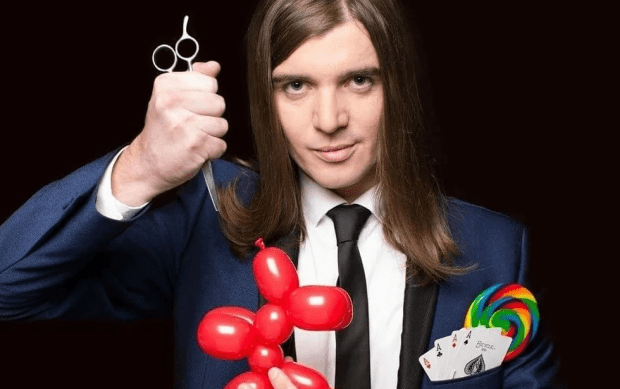
SAM HURST: MAGIC! MAYHEM! MEMES!

☆☆

The nostalgia hits as soon as the audience steps in to the venue for Sam Hurst’s Magic Mayhem and Memes! show, to music classics that every millennial will recognize. The nostalgia doesn’t ever stop, with song references and memes of varying vintages. It’s certainly accessible even for the younger end of millennial, and probably even gen Z if they have spent enough time on the internet. If the Meme/millennial theme isn’t always a constant in the show, the fun is, and the time flies by.

The reviewed show was not without its challenges. Chief among these was a little French boy who tested Hurst’s skills with audience participants. Hurst had evidentially planned an early segment to cater to his younger viewers, always a nice thing to see in a magic show, but with younger viewers comes greater chaos. Hurst managed to muddle through with a mixture of simple French, miming, and the universal language of magic.  Additionally, Hurst experienced issues with the technology components of his show initially failing to perform their duties.  His good humor despite these setbacks made the audience feel safe in his hands.

Unfortunately the magic itself was at times noticeably imperfect as well. Hurst could have performed the red balls tricks with a bit more finesse, and a noticeably discolored thumb in full view right at the end slightly undercut the final reveal. However, it’s clear that Hurst is a skilled magician, his version of the classic cup and balls trick was flawless, even to audience members who have seen it countless times before. If the audience and technical issues at the reviewed show might have thrown him off slightly, hopefully future shows will be smoother sailing.

Magic Mayhem and Memes! can be confirmed to contain all three of those elements in significant quantities. It feels like the adult version of a children’s birthday party. The silliness is infectious and Hurst’s humor keeps the whole audience laughing. If it isn’t always perfect it’s difficult to care too much. Millennials have gone through a lot worse than an imperfect magic show. Hurst won’t fix that but he will temporarily distract us from it—about all that can be reasonably expected from a magician. This is the show to nourish the inner child of every millennial.

TIM LICATA: CLOSE-UP AND PERSONAL

☆☆☆☆

Anyone in Edinburgh who commutes up and down Leith Walk will be familiar with the name Tim Licata, resident magician at the Joker and the Thief pub. And after watching his Fringe show Close-Up and Personal, they may be tempted to stop by the pub specifically to watch his magic. In Close-Up and Personal Licata reveals his family lore through magic, acting, and occasionally even dance.

The dancing is both a surprise and an unexpected highlight. Licata recounts the start of his love of magic by performing a ‘70s themed routine, complete with props commonly available in beginners magic sets and his delightful dancing. Those in the audience who were not alive in the ‘70s may suddenly find themselves wishing they could travel through time just to see whatever it was that inspired Licata to create such a performance. Although after Licata, it will surely fail to live up to expectations.

Each one of Licata’s magic routines is perfectly themed and placed in the story that he tells about his life and his family. The card tricks in particular are exceptionally fun to watch, whether themed on the more standard topic of a family member’s skill at poker, or the ridiculously entertaining presentation of a card trick to illustrate a story about a serial killer. Many magicians joke that for those who aren’t particularly fans of card magic card tricks can be boring to watch, but that will not cross the mind of anyone in Licata’s audience. The card tricks may not have necessarily gone to plan at the reviewed show, although Licata integrates the perceived missteps so readily that it’s difficult to tell if they were genuine errors or dramatic flourishes to underscore the points of his stories—a true sign of a great magician.

The participation in Close-Up and Personal is  mostly volunteer with a bit of random selection. The more involved participation is done by the volunteers, or those selected by a random choice game with easy moments to opt out for those who prefer it. Licata is kind to his participants, even pouring a couple of them drinks. In a close up venue and with Licata’s friendly presence, participation in his show feels more like joining in a fun game than being put on the spot in front of strangers.

Close-Up and Personal is one of the cozier magic Fringe shows, and not just because of the close up venue. Licata may at times bring up murder and organized crime, but the energy of the show is too soft and fun for any of these themes to feel threatening. It’s the Fringe equivalent of curling up with a mug of hot chocolate and a mystery novel, the perfect nightcap of a show before bed.

More information on Close-Up and Personal and its performance dates can be found here.

JAMES PHELAN: THE DREAMER – LIVE

☆☆☆☆☆

This year, James Phelan joins the extra daring magicians who have set their shows on round stages. As The Dreamer skews more toward mentalism and hypnotism, it may be a more achievable aesthetic decision than for a physical magic based show, but still demonstrates a deserved confidence in his skills. That being said, Phelan notably spends a relatively low proportion of his time actually on the stage. He instead fills his time pacing through the audience, trawling for participants to join the show and getting to know everyone who catches his eye. It’s a personal show, and in keeping with that theme, Phelan takes the time to get to know some of the members of his audience personally. However, curiosity about Phelan’s personal life is not the primary draw. His mentalist and hypnotist routines are interesting to watch and engagingly performed.

Straight from the start Phelan gets everyone involved in the magic, with a opening filmed mentalist effect that works on everyone who takes part. Phelan’s attractive and widespread advertising lured in audience members to the reviewed show who had not been to a magic show in their lives, and for them in particular, seeing the universal effect of this particular trick was absolutely mind blowing. Phelan also gets the whole audience involved in his hypnotism warm up exercises, which provide audience-wide entertainment regardless of whether those audience members ultimately participate in the hypnosis.

Both due to Phelan’s friendly performance persona and habit of centering the performance away from the stage, despite the sizable venue The Dreamer is not an intimidating show to participate in. The more involved participation points are in the hypnotism section of the show, and these are on an opt-in basis due to the nature of hypnotism as a practice. Audience members can be confident that if Phelan selects them at random they will not be asked to do anything too confusing to help him demonstrate his skills.

The foundation for The Dreamer is in Phelan’s parents’ IVF journey, in the early days of that science—appropriately enough for a magician, Phelan’s very existence is due to an impossibility becoming possible. While it is not an uncommon message for a magic show, Phelan thus has a personal stake in The Dreamer’s messaging that everyone watching it should follow their dreams regardless of how impossible they might seem. If it weren’t for his parents’ pursuit of their “impossible” dream, he would never exist to create the moments that bring his audiences together in the first place. Phelan’s effective use of hypnosis in particular drives the point home, playing with audience expectations of the movability of mental barriers.

Phelan makes great use of his status as both a magician and real life magic trick for his parents in the performance of The Dreamer. He’s the perfect performer to celebrate the achievability of the impossible. The focus is decidedly on the mind, this is not the right show to go to “see” magic on the stage, but for those who are interested in feeling it, and watching others feel its effects, The Dreamer is the place to be.

More information on The Dreamer and its performance dates can be found here.

DAN BASTIANELLI: DECEPTION

☆☆☆☆

Dan Bastianelli is a popular guy. At the reviewed evening of Deception his partner and a crowd of his friends attended to support him. They were the most useful type of hecklers. In the opening moments of the show they helped Bastianelli warm up the audience with their exaggerated reactions, and then all quieted down once he got in to the main body of the performance. They deserve more stars than a review site can give them for their exemplary show of support. However, it’s clear that Bastianelli doesn’t need them there every evening, as his perfectly performed magic and nicely structured show speak for themselves.

With an intentionally intimate venue, Bastianelli’s focus is on close up magic. The audience is indeed very close, leaving no room for error. Luckily Bastianelli is a very skilled performer and doesn’t make any errors, or at least none that are visible from about four feet away. Bastianelli performs a variety of magic but the card tricks in particular are all highlights. For fans of card magic, the physical element of the shuffles and findings can be very beautiful, and Bastianelli adds additional elements of physical beauty with card folding and a secret surprise at the very end of the show that is very pretty and very difficult to describe without spoiling it entirely, but it worth looking forward to.

At a close up magic show with an audience that is small by necessity, the audience must go in assuming that the majority of them will end up participating in one form or another. In Deception most of the participation is fairly laid back and achieved from the participants’ seats. Bastianelli comes across as friendly, perhaps an impression augmented at the reviewed show by the presence of several of his friends, and even for the few who stand in the stage area it feels like a relaxed kind of show.

Deception is framed by its butterfly theme, as hinted by the posters. Bastianelli uses this effectively to aid in the description of card tricks and in very pretty non-magic effects performed solely for the audience to enjoy his beautiful props. Other minor motifs run through the show as well, giving Bastianelli extra scaffolding for his effects and narrative. The structure is as admirably precise as the magic, allowing the separate effects to flow together in a way that feels natural.

Bastianelli makes it clear in his advertising that Deception is a close up magic show, and hopefully his audiences are self selecting for those who enjoy these kinds of physically smaller effects. For fans of close up magic this will be the perfect Fringe show to see.

More information on Deception and its performance dates can be found here.

ALEX KOUVATAS: THE MAGIC OF LOVE

☆☆☆

Alex Kouvatas is back at his venue in the basement of the Burrito’n’shake, an admirably central venue. This year they seem to treat him and his fellow performers a bit better, with a relatively quiet environment. If there is the occasional disruption, Kouvatas is ready and willing to get them to quiet down. This year’s show, The Magic of Love, is well themed and performed, if there is the occasional area for improvement.

Kouvatas is an incredibly likable performer. The reviewed show on a weekday afternoon may not have had the largest audience, but he got everyone involved and engaged with the show. Given a slightly longer time slot he would have undoubtedly transformed the group of strangers into new friends. If there is a slightly juvenile element to his performance, especially at the start of the show, it almost feels like an adjustment period as he code switches from performing his children’s show earlier in the day. Performing two shows for an entire month is tiring, it’s not surprising that it takes him a minute to switch to adult mode, although the effect may be slightly jarring to those who don’t track the Fringe magic schedule so closely.

This year’s tricks have moments of exceptional creativity. There’s an unusual visualization trick that gives the audience participant an especially pleasant experience. While this may be limited to the one audience member, they can share it with their neighbors as they retake their seat. Kouvatas also performs a lovely effect involving a story about his family, with impressive magic and a heartfelt message. As Kouvatas continues to develop his brand of themed storytelling magic hopefully more and more of the show will be this beautiful.

There are moments in Kouvatas’s performance where the experienced magic fan may note a slight clumsiness in his performance of certain effects. It’s not all of them, but even with one like the previously mentioned effect involving his family story, the method of the trick could be better concealed. On the other hand, there are moments like the visualization trick that were perfectly performed. Kouvatas’s magic feels like a work in progress, but hopefully one that he continues, as he is a charming and creative performer.

For a sweet magic show with easy access to burritos, The Magic of Love is the one to go to. Kouvatas is always improving and pushing himself creatively. Every Fringe the audience leaves his show wanting to see what he comes up with next.

More information on The Magic of Love and its performance dates can be found here.

CHRIS DINWOODIE: OFF THE CUFF: STAND-UP COMEDY MAGIC

☆☆☆

When audience members find a magician through the Scottish Comedy Festival section of the Fringe, it does prompt the reasonable hope that the magician in question will be both Scottish and funny. Chris Dinwoodie does not disappoint in either respect with his debut Fringe show Off the Cuff. Dinwoodie has a relatively strong accent, which he jokes about right at the start of the show. Luckily he is understandable even to international visitors (if only just at times), as he is hilarious all throughout the show.

If the magic that Dinwoodie performs is not necessarily unique to him, he does perform it especially well. A particularly impressive card counting trick may seem familiar as a trick usually seen performed with two audience participants, but Dinwoodie’s version with just one is that little bit more interesting to frequenters of magic shows. Even without trying to work out the trick, after seeing the exact same one multiple times it can be difficult not to develop theories as to how it’s done, and it’s refreshing to see a variation that disrupts the more obvious of those takes. Dinwoodie’s sillier interludes, such as his playing with a poker chip, are still exciting to watch just as they show off his manual dexterity skills in a fun, visual way.

Dinwoodie interacts with his audience like a comedian, frequently teasing anyone he can spot in the audience. His association with the Scottish Comedy Festival is a warning as much as it’s an advertisement. While this takes up a fair portion of the comedy element of his stage time, he isn’t mean about it. The only marginally tetchy comment at the reviewed show was directed at an audience member who had been making a habit of heckling Dinwoodie, and thus deserved what was coming to him.

Dinwoodie’s ability to gently tease while maintaining the audience’s goodwill was in fact proved beyond doubt at the reviewed show. One of his friendly targets revealed herself to be a Scottish country dancer, and when invited to show off a couple of steps at the end of the show took him up on it for an unexpected end to the afternoon. After soaking up the spotlight for the hour, it was very sweet that Dinwoodie was willing to share his final moments onstage with a talented audience member.

Off the Cuff has plenty of draws that are no doubt each contributing to keeping his venue so busy. Magic fans will enjoy watching a master of that art. Comedy fans will enjoy Dinwoodie’s wit—at this Fringe he is undoubtedly functioning in part as a magic ambassador for fans of comedy who might not see a magician otherwise, and is doing an excellent job in that role. Scotland fans may also enjoy Dinwoodie’s excellent accent. With so many features of excellence and such a central, well ventilated venue, it’s no surprise that Off the Cuff is proving so popular.

TOM BOLTON: GROW UP MAGIC MAN

☆☆☆☆

It would help many people to learn the balance of how much to grow up to function in adult society without losing the joy associated with childhood. Magicians may not have all the answers, but in Grow Up Magic Man, Tom Bolton uses his childhood experiences of magic to try to reintroduce a little bit more of that joy to the adults in his audience, and keep the spark alive for a little bit longer in the children.

Grow Up Magic Man is a family friendly show, and Bolton places an emphasis on inviting the children in his audience to get involved. The shyer children are invited to get involved from their seats while the ones who are visibly excited to join Bolton onstage—even clambering over the seats in a theatre that was clearly not build for magicians—are given roles that are easy to follow and often allow them to be the stars of the routine. One of the most excited children is invited up for the Rubik’s cube trick, which sees the magic happen right in the participant’s hands. The finale trick is exceptional, giving one young participant an experience to remember, and providing a highly visual end to the show.

The way that Bolton presents his magic tends to be fairly sweet, and one of the sweetest is an effect in which he emphasizes the bond between one of the parent-child pairings in the audience. This is a particular effect that is often performed in a way that the participants themselves can’t fully appreciate, which always feels like a shame as they’re the ones putting themselves on display for the rest of the audience to gawk at. Bolton has found a way to remedy this flaw without undercutting the magic of the trick. It takes a little bit more of his stage time, but demonstrates Bolton’s commitment to offering the whole of his audience a magical experience.

A Fringe newcomer, Bolton has not yet built up his Edinburgh fanbase. If the audience of the reviewed show is an indication, Grow Up Magic Man is currently highly under-appreciated. Families with teenage and preteen children may be a particularly good audience for this show, but it has something for everyone. Grown up magic fans will also appreciate the perfect magic and fun story, and maybe even find a renewed belief in magic.

More information on Grow Up Magic Man and its performance dates can be found here.