Edinburgh Fringe

JAMES PHELAN: THE MAN WHO WAS MAGIC

☆☆☆☆

In the hierarchy of Fringe venues, James Phelan has undoubtedly earned the use of one of the best this year, with The Man Who Was Magic finding its home in the beautiful McEwan Hall. Phelan honors the venue with an equally beautiful magic show that makes great use of the space. With a well-balanced mix of hypnotic effects, mind reading, and magic, Phelan’s show is as ever the crowd pleaser, with a real heart to back up the tricks.

One of Phelan’s notable strengths as a performer is in his crowd work, and this was readily apparent at the reviewed show. With his quick wit and charm Phelan has an easy chemistry with everyone who he invites to get involved in the show. Participants are made to feel comfortable, and as Phelan keeps all the hard work for himself participation feels particularly unthreatening. McEwan Hall is a big room, but like every good host Phelan turns the space into a welcoming home.

The hypnotism and magic performed are all done with exceptional skill. At the reviewed performance there were a few noticeable teething issues—nothing out of the ordinary for the second day of the Fringe—but if there were any genuine problems with the tricks performed, Phelan played them off so well that the audience was left unsure if these were planned “mistakes” to set up the reveal, which is surely the truest tell of magical excellence. A crowd-pleasing highlight is Phelan’s ring trick, with a reveal that neatly ties in to the show’s theme of making the important things permanent, which in this case took the form of a permanent testament to the impermanent moment of the reveal.

That theme of creating permanence may initially seem at odds with the medium of live performance, a necessarily impermanent art. Phelan navigates this in part with the obvious, the gifting of souvenirs to his various participants, and in part in autobiographical storytelling and general inspiration. In a way his slick handling of early-Fringe issues contributed to the theme as well, with the temporary technological problems becoming surpassed by the permanent impression of controlled professionalism that he leaves on the audience. Phelan even refreshes a form of final reveal that in other hands feels overused, breathing new life into this classic magical ending by imbuing it with new meaning.

Phelan, the Man Who Was Magic himself, is certainly one to see this year for anyone in need of an uplifting hour, which would probably be just about everyone this year. His show is one of those impermanent things that is worth being made permanent, whether in reviews, in the futures of those who he takes the time to inspire, or even just in the memories of everyone in his audiences.


LIN LU-CHIEH: TAIWAN SEASON: DAZED AND CONFUSED

☆☆☆

Who doesn’t love talking about themselves? Autobiographical magic shows are a classic for a reason, especially for a magician introducing themselves to a new marketplace. Lin Lu-Chieh’s Taiwan Season: Dazed and Confused is excitingly not just his Edinburgh Fringe debut, but his fully-English-language debut, and it’s a memorable introduction. Dazed and Confused is light on magic but big on heart, and Lin is easy to watch onstage.

Lin utilizes the magic in his show in a consistently thoughtful way, the tricks feel well chosen to highlight the story. If there is the occasional moment where the sleight of hand feels a little bit clumsy—maybe a card edge peeking out where it shouldn’t, or a prop that is slightly fumbled—it’s only because the Edinburgh Fringe has such a high standard of magic, and it doesn’t have a huge effect on the overall enjoyment of the audience. There are plenty of magic highlights in the show, most notably a sequence in which Lin demonstrates his enthusiastic performance of the first card trick he learned to all of his friends and classmates. Lin has perfected the balancing act of performing the same trick over and over just often enough for it to feel entertaining each time, making this routine particularly fun to watch.

Naturally following from the light sprinkling of magic is a light sprinkling of audience participation. At the reviewed show, Lin found ample participants in the front row who were visibly delighted to take part onstage. Lin’s personable stage presence made joining in on the act an appealing proposition.

The story that Lin tells about his journey into magic is compellingly relatable. At a time where the concept of finding and staying in one dream job forever is increasingly unrealistic, Lin’s tale of stumbling in to magic as a just one attempt of many to find something that he is both passionate about and able to excel at will ring true for many who are watching. Lin simultaneously demonstrates and pokes fun at the advice he received early on from his father, that miracles aren’t real but are just the result of persistence. With enough strategically applied persistence, he may not yet be a baseball star but at least he is able to create miracles in front of his audience.

With a lunchtime time slot, central venue, and family friendly theme, Taiwan Season: Dazed and Confused is sure to be a hit this Fringe. Lin’s magic-flavored recollections of his childhood easily hold the audience’s attention, and his creative approach to magic performance leaves them excited to see what he does next. 

DAVID ALNWICK: COMEDIAN MAGICIAN

☆☆☆☆☆

David Alnwick’s career as a Fringe magician may have now led him to primarily perform darker, spookier work that increasingly bends the boundaries of magic as a genre of performance, reshaping the definitions of the art form to suit his needs in much the same way that he appears to reshape reality itself in his tricks. However, he first built his Edinburgh fan base on his comedy magic, and in Comedian Magician that is what he celebrates. It’s a throwback to the Dave Alnwick brand that many may still remember, and a retrospective on how Alnwick’s outlook on magic, performance, and his career have evolved over the course of his time at the Fringe.

Many magicians in the past couple of years have performed retrospectives to mark the occasion of their tenth year at the Fringe, however as it transpires Alnwick’s first Fringe was 2010. Those who remember both 2020 and the tentatively sized 2021 Fringe will understand why Alnwick did not take that route—although he did, memorably, comprise a full third of the magic shows that the PBH free fringe hosted at that 2021 Fringe. This celebration of his career is long overdue.

As such, Comedian Magician is made up of classics of Alnwick’s comedy magic repertoire interspersed with vignettes from various points of his career. The magic is, as per usual with Alnwick, flawless. If Alnwick has not written the book on how to perform magic it can only be because he’s been too busy with the creation and performance of his four shows per Fringe. One of the many highlights is a recurring favorite in which Alnwick tells a story encompassing both one if Edinburgh’s primary off-season festivals, the International Magic Festival, and a beloved Glaswegian magician who occasionally makes an appearance there. The vignettes are insightful as well, for example audiences at the Fringe may not have an understanding of the trade offs involved in performing at the PBH free fringe rather than the paid venues.

Audience participation is as frequent as a comedy magic audience would expect. The most involved participant is the one for that previously mentioned card trick, and in recognition of that Alnwick seeks a volunteer for that role. At the reviewed show Alnwick chose the first volunteer, despite his young age. The volunteer looked absolutely thrilled to be trusted and take part. Alnwick undoubtedly played a role in a core memory for him that day.

Alnwick’s fans may be used to the feeling of surprise that they get when they rediscover his seemingly limitless skills at each of his shows, but it’s always a wonderful feeling. His audiences celebrate his talents at every Fringe, and it’s great to see Alnwick himself get in on the party.

DAVID ALNWICK: THE MYSTERY OF DRACULA

☆☆☆☆☆

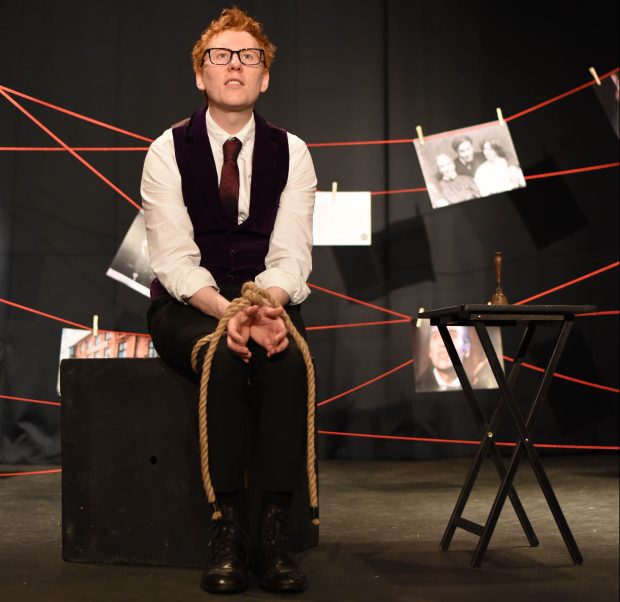
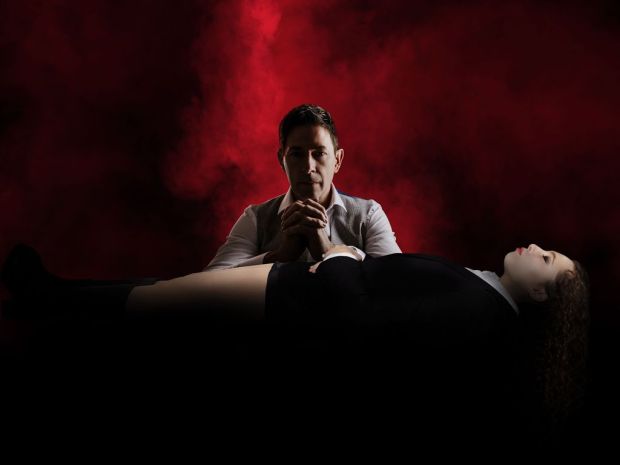
If David Alnwick is known for anything other than being likely one of the busiest performer at the Fringe, it’s his habit of bringing the same show back to the Fringe for another year, tinkered into something recognizable to returning fans but demonstrably better—even when it comes to his many 5 star shows. This is the case with The Mystery of Dracula, Alnwick’s magical play about the origins of both the story of Dracula and the art of magic, and where they intertwine.

Alnwick’s magic is honed to perfection, a crucial step to creating a show that uses magic tricks so sparingly. Magic is used here as an illustration of the history that Alnwick discusses, although at times the boundaries between academic demonstration and supposedly genuine conjuring (at least, we hope it’s only “supposedly genuine”) is blurred to great effect. The audience’s impression of the effects are often of not the usual assertion that Alnwick, the magician, knows all, but rather to pose the question, “does he really?”

The Mystery of Dracula may be nominally about Dracula and come around to also be about magic. However, other timely themes come through too, of vulnerability of loneliness and the all too realistic possibility of a charismatic voice persuading lonely individuals into self destructive behaviors in search of community. The pressure felt by Alnwick’s timeless character is recognizable to anyone who has ventured into spaces both on and offline offering community in exchange for money, loyalty, or your immortal soul.

As a play with a light sprinkling of magic, audience participation is similarly kept to a minimum.  Several participants may be chosen to take part from their seats, and when a few are called to the stage Alnwick gives clear directions to make their roles easy to follow. The biggest point of participation comes at the end, when the entire audience becomes complicit by default in Alnwick’s performance. The audience does not need to do anything in particular to achieve this, their presence is sufficient.

The Mystery of Dracula is a retelling of history, but in a far more clever, universalized way than the audience might expect. Alnwick perfectly captures the loneliness of both an obsessed academic and the mythic immortal who he’s obsessed with in a dark satire of fandom and the search for community, palatably ensconced in the trappings of dark academia. Alnwick’s own fans will never be disappointed to see what he creates next.

THE POLDARK SHOW: STAGE HYPNOTIST

☆☆☆☆

The beautiful venue choice and staging perfectly sets the scene for the style of The Poldark Show—Stage Hypnotist. The audience enters a church hall to find a velvet draped stage, and the sense of classy grandeur is a constant throughout the show. Hypnotist Poldark is clearly a master of the craft, balancing respect for his participants with showmanship and entertainment for the offstage members of the audience.

Poldark’s brand of hypnosis is notable at this Fringe for its calming, meditative qualities in a field that currently seems to favor sharp, loud noises as a methodology. The Poldark version is more pleasant on the audience ear, even providing a relaxing environment for those who did not put themselves forward to be hypnotized. No one method of hypnotism will work on everyone, but at the reviewed show Poldark had a very respectable success rate, that gave him ample supply of hypnotized individuals for his demonstrations.

There is a gently comedic element to The Poldark Show, in a respectful and family friendly way. The hypnotized participants are not asked to do anything embarrassing. His final hypnotic demonstration is less for comedic effect and more just for the wow factor. Even those who have seen a wide variety of other hypnotism shows are unlikely to have seen anything even remotely close to this. Poldark has a kind stage presence, and at the reviewed show some who did not manage to get hypnotized or were awoken from that state during the performance even played along just to try to help him out. However, ever the professional, Poldark spotted them quickly and found opportune moments to quickly ensure that they were okay and invite them to return to the rest of the audience.

The hypnotism takes the majority of the show’s run time, but Poldark does still take a moment to get the whole audience involved in a warm up imaginative exercise. It may start similar to an exercise often used in this kind of show, but once again Poldark demonstrates his unusual take on stage hypnotism—it’s actually a completely different exercise to what the audience probably anticipates.

The Poldark Show is without a doubt the place to be this Fringe for a pleasant hypnotic experience, whether as an onstage participant or a curious onlooker. Unfortunately the reviewed show was the final one of this Fringe, but Poldark will be heading out on tour, and will hopefully return to Edinburgh someday. Fans of being hypnotized or watching hypnotism are advised to look him up.

DEE CHRISTOPHER: THE PSYCHIC VAMPIRE

☆☆☆

Scottish vampire hunters have it easy. Dee Christopher openly advertises himself as The Psychic Vampire for any who are so inclined to seek out—during the Fringe, he even has a regular time slot and location where they can find him. Luckily Christopher wouldn’t need to use his vampiric powers to protect himself, as anyone who finds themselves in his show will not fail to be charmed by his hilarious performance.

Christopher structures his show around stories about his long life as a vampire, with each story containing his encounters with magical or mystical events (or, memorably, what sounded like a fairly standard whisky tasting competition—a different kind of magic) that lead in to his display of a magical routine. These stories and Christopher’s dry comedy are a highlight. He’s a gifted speaker and makes great use of vampire pop culture references to keep the audience entertained. Even magic aside, Christopher could undoubtedly find work simply appearing as a vampire at events.

The magical portion of the performance is a bit more mixed. The effects are perfectly vampire themed across the board, and Christopher’s vampire-specific flourishes to build to his reveals are excellent. However, at the reviewed show there were a couple tricks that, while they didn’t go wrong, felt like they could have been performed with more polish. The reveal of a dangerous bag variation fell a bit flat when Christopher struggled to remove a prop from its bag. Similarly, he performed a fun vampire take on Russian roulette only to undercut his reveal by spending a suspiciously long time with the final prop hidden behind his open suitcase before allowing the audience to examine it. There were also plenty of tricks that went well, but the risk of crafting a themed show that’s lighter on magic to make room for storytelling is that the performance of each trick has a proportionally higher effect on the overall impact of the show. Christopher’s theme is a strong point and a draw; regardless of how the magic goes the audience was visibly enjoying the performance.

Audience members get involved in a variety of ways, whether just from their seats or whether they join Christopher onstage. At the reviewed show a highly giggly group comprised the majority of the onstage participants, with Christopher cleverly making use of their energy to enhance the performance rather than risking them disrupting him from their seats. They appeared thrilled to approach Christopher and experience the magic firsthand. Those with an above average fear of needles may be best advised to avoid participating in The Psychic Vampire, but other than that Christopher provides an exciting participant experience.

The Psychic Vampire is one of the especially well themed shows of the Fringe. Magic fans will enjoy seeing such creative presentations of the effects performed. With such a gift for theme and storytelling, Christopher would undoubtedly be even better at a festival that allows for shows of longer than an hour. While some of the magic itself may benefit from a bit of work, whether through practice or reworking, Christopher is such an entertaining performer that his show flies by as though he has enchanted time with his vampiric super-speed.

RICHARD WISEMAN: THE INVENTION OF MAGIC

☆☆☆☆

The Invention of Magic isn’t really a magic show. It’s more properly a lecture on psychology and magical history, albeit distinctly from the perspective of a magician, Richard Wiseman. Wiseman even has a slideshow of psychological illusions and history to accompany the lecture. It’s perfect for those who miss the fun bits of school, learning from engaging lecturers, without having to suffer through the assignments and exams that are a necessary evil of structured academia.

The structure of discussing history or science before performing a magic trick will be familiar to magic fans. The discussion is usually a fairly perfunctory element of the performance that feels more like an exercise in building anticipation than a genuine attempt to educate. Wiseman has created a similar model, but with the emphasis switched. There is education ahead of magic, but the educational component is the important bit, and the magic is more of an illustration than the primary draw.

Given that, the audience is for the most part talked to rather than interacted with. The one primary moment of audience participation involves the entire audience in the same trick, which makes it an especially interesting variation on a classic. It’s one with a long set up, rumored to have made Churchill himself late for work, and involving the whole audience keeps everyone engaged for what is ultimately a great reveal.

Fans of magic will enjoy learning more about the history of the practice. Wiseman mainly discusses an inventor of magic called Paul Curry, which, even to many unwitting fans of his work, may be an unknown name. Wiseman reveals that many popular effects and puzzles are descended from Curry’s work. Curry was evidentially an influential figure in magical history and it’s great to see Wiseman putting in the effort to keep him alive in popular memory.

In case prospective audiences needed yet another reason to attend The Invention of Magic, Wiseman is performing on the PBH Free Fringe, as a means of raising money for that organization. Often described as the fringe of the Fringe, the PBH is the only venue that is both free for artists and audiences, single-handedly working to keep the arts accessible to everyone in Edinburgh. In the spirit of Curry creating magic that would go on to amaze future audiences he would never get to meet, Wiseman is working to preserve the future of accessible art for the next generation.

ADULTS ONLY MAGIC SHOW

☆☆☆☆

There are a lot of reasons that audience members might find themselves in the Adults Only Magic Show. There is of course the obvious: dicks. And, perhaps surprisingly: well themed and executed magic tricks, and a wholesome friendship between two performers, magicians Sam Hume and Justin Williams, who have been working together for a decade. The high energy Adults Only Magic Show delivers on all fronts.

Fringe magic fans may be most used to shows with just one magician, maybe two if they’re lucky. The Adults Only Magic Show has not just two magicians but an extra two performers, emcee/glamorous assistant Magnus “Danger” Magnus, and the sexiest assistant in the history of sexy assistants, a topless man called Richard Sullivan. While Hume and Williams are undoubtedly the stars of the show, their auxiliary performers are on hand to hype up the crowd, help out with props, and contribute to the general nudity of the evening.

It’s easy to look at the marketing for this show and assume that the emphasis will be entirely on the sex appeal of the performers, but the magic is very present and very well done. Magicians tend to perform their reveals with their own distinct flourish, but few reveal quite as much as Hume and Williams in the name of a good trick. Hume also makes time for the performance of the first card trick that Williams ever saw him perform. In amongst the nudity is a level of sweetness that can only come from two close friends who are palpably enthusiastic about making magic together.

Hume and Williams take the bribery route to getting their audience participants enthusiastic to join them onstage, with drinks tickets and even at times actual drinks. The worst audience participants may have to go through is some temporary light stress and respectfully aggressive flirting. It’s clear that Hume and Williams keep an eye on each individual’s boundaries and limit their interactions depending on the personality and preferences of who they get onstage.

Adults Only Magic Show may not be for everyone. The promotional material makes it clear that the show contains nudity and sexual humor, so hopefully those who aren’t interested in that will self select out of the audiences. There is an absolute appeal for those who are into men. And even for magic fans and magicians, it’s interesting to see a sexy take on magic performed with such clear passion for the magic itself. In addition to showing off their bodies, Hume and Williams will show their audience just how adaptable magic is as a performance art.

SIN CITY CIRCUS SISTERS

☆☆☆☆

Anyone who goes to Sin City Circus Sisters expecting a standard Fringe magic show will be disappointed in the best possible way. While there are enough magical elements for it to feel like it technically qualifies as a magic show, there is also a significant emphasis on circus-style stunts. They still look impossible, but instead of achieving that effect using magic, they’re actually doing it. Stacey Stardust takes care of most of the magic while Lygia Way does most of the stunts, and they each assist each other to help make the show so incredibly impressive.

The finale lurks onstage like a Chekov’s box and it’s no surprise that it’s a highlight. This style of big illusion work is not often seen at the Fringe. When it is, the implied allusions to a more traditional era of magic can feel misogynistic, unless the magicians take extra care to frame it an a progressive way, or have a male cast member in the traditional “magician’s assistant” role. Seeing an effect like this performed by two women isn’t usually an option, given the demographic tendencies of working magicians, and seeing it here feels very wholesome.

Given the style of Sin City Circus Sisters, specific audience members are not often called on to participate in the show. The odd task might be assigned to an audience member, but it will be simple and quickly dealt with. Stardust and Way keep all the attention on themselves, and as there are two of them they can take on a lot of the tasks often given to the audience. Magic fans may have seen jugglers in other acts coerce a stranger to lie on the floor so the juggler can juggle knives over their poor victim’s body, but here Stardust puts her body on the line for Way to juggle over. The stunts may at times be dangerous, but Stardust and Way never place the audience in harm’s way.

The presentation and outfits of the circus sisters are noticeably sexier than Fringe magic acts tend to be. Based on audience reaction at the reviewed performance, the surface level sexiness works as intended, but it also feels exaggerated in a cheeky, ironic nod to the history of women’s roles in magic acts. Maybe this is the sexy exorcism of voyeurism in magic that the art form requires to move forward. Or maybe, it’s just sexiness positivity. Either way, definitely a positive aspect of the show.

Sin City Circus Sisters is, above all, a lot of fun. Way and Stardust joke that they go well with alcohol to encourage drinks purchases at their PBH venue, but the audience doesn’t need to drink to enjoy the amazing levels of skill on display over the course of the show. If they don’t return to Edinburgh, they’re worth a ticket to Vegas.

LIAM A BLACK: THE MAGIC SHOW – THE RETURN OF THE GLITTERING PRICE OF MAGIC

The prince returns to a cavernous warehouse underneath central Edinburgh in The Return of The Glittering Prince of Magic – Starring Liam A Black. If magicians use a traditionally glitzy assistant, said assistant is usually dressed in eye-catching sparkly outfits. Here Black is both the magician and the sparklingly dressed assistant. With not just one or two but several glittery coats, he certainly lives up to the “Glittering” description in his title.

The parade of beautiful coats is a highlight of the show. Black is a clothes horse for sparkly fashion. The changes are not exactly incorporated into the act, this is not a quick-change show. Instead, every few routines Black steps offstage to re-dress himself in the next item of clothing. Whoever creates these outfits for him deserves applause, they are magnificent.

Unfortunately, the clothes being a highlight is not the best sign for a magic show. Black does in fact do magic in between changing his outfits. Magic fans will find his tricks familiar. One slightly more unusual highlight is a juggling trick involving unusual balls, which, in the light of the venue, sparkle almost as much as Black’s outfits. However, by and large the magic feels significantly less inspired than the clothes. There is no theme except the glitter, and with the exception of that one mentioned juggling routine, even the glitter is limited to Black’s clothes. Black is not the best magician at the Fringe, despite his intentionally deceptively trimmed pull quote from an earlier review. His performance does, however, showcase quite well why he may have felt the need to subterfuge so desperately.

Fashion fans may find The Return of the Glittering Prince of Magic worthwhile, but even fans on glitter may find themselves wanting more from Black. The magic sadly lacks the sparkle of the clothes. As a show to have onstage in the background while having a drink it could be worse, but it also could be better. Even Black himself seems disinterested in the magic he performs, leaving the audience struggling to care.