author: Hannah S

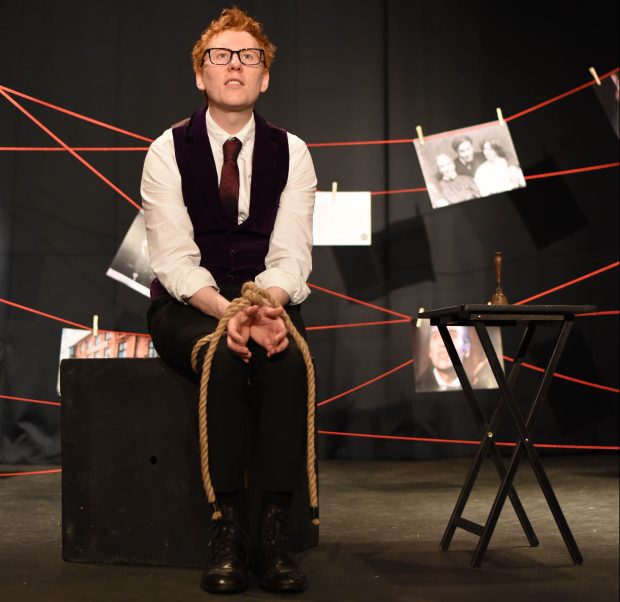
CHRIS COOK: ARROWS

☆☆☆☆☆

Chris Cook has been a Fringe institution for a full decade, and celebrated this milestone with a one night only show Arrows in his home, the Voodoo Rooms. Arrows contained all the classic Cookery his fans have come to love, but as much as it’s a celebration of Cook’s full body of work, as the title suggests there’s one stunt effect in particular that’s highlighted as exceptional. It was both a celebration and genuine entertainment from a superstar performer, and for one Monday evening in August it was the place to be in Edinburgh. 

Arrows was as much a personal celebration for Cook as it was a show for the audience, which came through in several ways that only made the whole event more enjoyable. The audience itself was fantastic, with the majority consisting of personal friends and family or fans who were all immediately 100% behind everything that Cook said and did onstage. Cook even invited his girlfriend to join him onstage for an adorable final segment, and she briefly upstaged him with her perfect comic timing, getting one of the biggest laughs of the evening. 

The magic involved was mostly familiar favorites, cleverly put together to form a cohesive theme around the titular arrow sequence. The jazz magic style of the first few tricks seamlessly blended with the more structured arrow-based second half. A highlight was a card corner trick that Cook performed with one of the Voodoo Rooms staff, who seemed incredibly excited to be included onstage. 

However, the main point of the show was the arrow bits themselves. Cook had performed this neoclassical take on a bullet catch in a few previous Fringes and it’s a fan favorite—it retains the show of physical invulnerability from Cook, the magician, but shares this experience with an audience participant, and adds an aspirational element that is focused on Cook and his participant but that the entire audience can get involved in. It’s intended as a challenge to the audience to take concrete steps towards following their dreams, but of course art is always open to interpretation. It can equally have an effect on audience members who have just taken a big step towards following a lifelong dream, and come in to the show doubting if they’ve made the correct decision. Watching a charismatic man in a stylish outfit do an impossible thing and then say it’s worthwhile to follow your dreams can be oddly comforting, and a great reminder to those who are already living out a childhood dream of how lucky they are to have been able to do so.

Arrows was the perfect celebration of Cook’s first ten years of Fringe performing. Here’s to many more.


HYPNOTIST MATT HALE: TOP FUN! 80S SPECTACULAR

☆☆☆☆

With the popularity of Stranger Things, eighties nostalgia is at an all-time high. However, that show itself is pretty scary. Some might prefer if it were an interactive comedy featuring pop music and led by a hypnotist, and those people are the target audience for Matt Hale’s Top Fun. With a vibe not unlike the silent disco dance party that regularly terrorizes Edinburgh city centre this time of year, but safely contained in a Fringe venue for the ethical fun seeker, Top Fun has been a regular sell out, and after experiencing it, it’s no surprise.

Hale is both a master hypnotist and the life and soul of the party he creates in every show. He has many willing volunteers at the reviewed show, and has no problem getting them hypnotized.  If the odd volunteer seems to have snapped out of the hypnotic state a bit early, they play along in their own way.  Hale has great rapport with his participants, and they clearly want the show to succeed even when the tricky business of hypnotism reveals its unpredictable nature. None of the activities he has them do are especially embarrassing; it’s a safe environment for those wanting to experience hypnotism.

Everything about the show, from the entry and exit music, to Hale’s outfit, and to all the activities performed by the hypnotized participants, is perfectly themed to the eighties. It’s impressive just how well he sticks to the theme, there’s not a single song or moment that isn’t impeccably eighties. Here in the birthplace of the Proclaimers (or about two miles from the birthplace of the Proclaimers, depending on your stance on Leith’s independence from Edinburgh) their most famous song is given the prominence that it deserves, and is well received by the audience.

Hypnotism is always a popular one at the Edinburgh Fringe, and with the on-trend eighties theme, Hale is proving especially sought after. However, as he points out, it’s not just him doing a trick, hypnotism is a give-and-take exercise, and the audience doesn’t really need to be hypnotized to have a good time and do silly things. Hypnotism may give his onstage participants permission to act a bit silly, but Hale himself gives the rest of the audience permission to be silly too. Top Fun lives up to its name, it’s truly a top fun place to be this Fringe.

BARRY POTTER AND THE MAGIC OF WIZARDRY

☆☆

At a show called Barry Potter and the Magic of Wizardry, the audience has to have a good idea of what they’re getting themselves into. Potter does not disappoint. The magic may be recognizable by those who have seen muggle magicians, but there’s plenty of Hogwarts-magic style props and more wizardry puns than you can shake a hippogriff at. The execution did face some issues at the reviewed show, but he pressed forward with admirable professionalism.

Potter has a decent rapport with the audience, but surprisingly given the type of show, seemed to have trouble connecting with the younger audience members. One youngest was admittedly overly chatty from her seat, and he shut her down pretty harshly for an overactive toddler, calling her narcissistic and telling her that not everything is about her. It would have been an understandable, if unfortunate, reaction from a non-performer, but for a magician performing a self-aware childish kind of show it felt far too unkind. Potter was better with a young boy who joined him onstage for a coin trick, who had a great time getting in on the magical fun.

The magic performed was well themed but had a significant error on the day that the show was reviewed with the final reveal. As much as it’s a shame to end on an error, the rest mostly goes to plan, and if the patterns are familiar, it’s all perfectly themed. Potter uses familiar props, such as a golden snitch and photos of the Harry Potter film characters, to perform his effects. He tells a Harry Potter style story throughout the show, but a highlight is his playing card retelling of the original story. This did hit a few snags at the reviewed show but was nevertheless creative and engaging.

If it wasn’t perfect when it was reviewed, Barry Potter and the Magic of Wizardry was still a great time, thanks to the irrepressible professionalism of Potter himself.  There are plenty of fun reveals even when things go wrong, and errors of some sort are inevitable in a month-long live theater run. Harry Potter fans looking for a dose of nostalgia peppered with the best kinds of bad jokes need look no further.

COLIN CLOUD: AFTER DARK

☆☆☆☆☆

Scotland’s number one export may be petroleum (which surprisingly surpasses the beverage category) but its number one boomerang export is apparently its mentalists. After Dark sees the return of Colin Cloud’s magnificent hair to the Edinburgh Fringe stage after four years away, and Edinburghers have given him a warm welcome- the reviewed show was to a packed audience that queued all the way around McEwan Hall.

Many might remember Cloud’s incredibly extra approach to showcasing his mentalism abilities, and they will not be disappointed by this show. It’s a common final reveal for a magician to have a prediction to read out at the end of the show that demonstrates that they knew everything was going to happen, and Cloud is no different—except that he wrote and posted his predictions to a member of the audience several months prior to the show, and had that audience member bring the envelope up on stage at the start of the show. It was like a scene out of a Doctor Who finale, which was undoubtedly intentional. Cloud also demonstrates what is either a very impressive ability to know what is on IMDb pages, or a very sad but still kind of impressive encyclopedic knowledge of the whole of IMDb, in a mentalism feat that gets the whole audience involved in the fact checking.

This year Cloud has a new message, a new way to add meaning to his magic, by drawing on his own journey toward mental wellbeing. Cloud illustrates how random chance can feel like a guiding force toward the future during times of distress, using an origami fortune teller much like many would have used as schoolchildren to read audience members’ minds.  This feels like classic Cloud work. To visualize a personal low point, he switches gears into the kind of stunt work that his fans may be less used to seeing him perform. The stunt he performs usually comes across as kind of gross, but here, accompanied by the retelling of his story, it feels oddly wholesome and uplifting—it’s the overcoming of the physical danger that’s emphasized, more than the introduction of it. The story of his past is of overcoming that physical harm by lucky chance, but the danger presented onstage is overcome by choice, with the skill and practice of his profession.  Cloud demonstrates his personal growth even in the retelling of a personal low. 

After Dark may be initially presented as the return of the king, and that’s very much the case. However, he’s a changed king, and here he shares the life lessons he’s learned with all the ability and flair that made him renowned in the first place. Edinburgh welcomes his return to the point that his huge venue may very well be sold out for the rest of his run, but those lucky folks who have bought tickets can be sure they won’t regret it.  Cloud once again sets the standard for excellence in mentalism at the Fringe. 

YVAN ZIM: TANGLED D’ILLUSIONS

☆☆☆

A talented French-Irish edfringe newcomer, Yvan Zim presents his Tangled D’Illusions show in a pleasantly central basement bar. He’s a skilled magician and presents new interpretations of many classics. If there’s no real theme, most of the audience is too awestruck to notice.

There are many highlights in the magic that Zim performs. If rope tricks are often considered less inherently interesting, Zim’s incorporation of his software development background and inclusion of other props makes his a bit more fun. The audience participatory element is especially well handled, he gently teases and encourages those who help him trim his rope. An effect involving eggs also gets a lot of the audience involved from their seats, although ethical vegans may want to avoid lending Zim any possessions. And anyone who has ever been vaguely disappointed by the lack of violence usually involved when magicians “cut” a deck of cards will be overjoyed by how Zim concludes his show.

Some of Zim’s tricks could be benefitted by a bit more care going in to maintaining the illusion of magic. There’s the occasional point where Zim appears to be examining chosen audience cards before he places them back in the deck, or where he seems to be tipping himself off to the location of his special item within supposedly randomized envelopes. It’s not every trick, and his skills are still impressive enough, but it’s something that might be worth working on.

A lunchtime show at a venue that evidentially does not have an age restriction, Zim has plenty of young children in the audience. He’s great at getting them involved on their terms, choosing children to join him onstage who actively volunteer. A young participant for a card trick at the reviewed show was adorably enthusiastic. Zim had her climb up on a stool (after getting her grown ups’ permission) so she was about the same height as him. They had a great rapport as she helped him shuffle the deck and find her friend’s card.

Tangled D’Illusions is a pleasant way to spend an hour. It’s not especially designed for kids but is definitely family friendly, and Zim himself is great with all ages of participants. As part of the Laughing Horse festival it’s easy to turn up without a ticket, a great option for those who find themselves looking for entertainment around lunchtime.

DAVID ALNWICK: THE MYSTERY OF DRACULA

☆☆☆☆☆

Reviewing The Mystery of Dracula means bending the rules, for it is only very loosely a magic show. From the minds of the Alnwick team, the Fringe’s favorite genre-bending siblings, it’s a slight deviation from their theatrical magic offerings of recent Fringes into more of a proper play, albeit told using magic. Magician David Alnwick is here a researcher investigating the origins of the Dracula story, and along the way illustrates his occult findings with stage magic. It’s a style of performance that he has honed over the past few Fringes and it shows. Like seemingly everything that Alnwick produces, the magic itself is flawless, and the storytelling aspect is equally perfectly performed.

As the public have come to expect, the Mystery of Dracula is nothing short of a triumph from concept to performance. Alnwick uses magic sparingly. The mentalism cards he uses in an early effect may look familiar to magic fans, but what is unfamiliar is just how perfectly placed they are in the narrative—plucked from Alnwick’s extensive repertoire for their important role in the story. Alnwick tells the history of magic alongside that of Dracula, and indulges the audience in a display of Victorian-style escapology along the way. It seems a bit random at first, but by the end of the hour is revealed to be a crucial element of the final effect.

There would have been no room for Alnwick to hide if his magic were anything less than flawless due to how little of it is used, but luckily that is never a concern. Dracula is as much a story about the origins of magic and their interconnection to occult beliefs as it is a magic show. Alnwick has never really needed magic to hold an audience’s attention, at least not for as long as this publication has been reviewing him, and this is the proof of it. If it’s more a story than magic, it’s difficult to imagine anyone other than a magician thinking to tell it; and if they did they wouldn’t tell it with nearly as much passion or insight as Alnwick.

It’s easy to dismiss a magician’s stories as more fiction than fact, the necessity of their tricks outranking any need for truthfulness. However, watching Dracula with a Yorkshire local reveals that the settings that Alnwick describes are at least real, the photographs are indeed recognizable as actual locations in the town of Whitby. Hopefully Alnwick has arranged to receive referral fees for customers of one particular restaurant that will undoubtedly receive an influx of new customers after this show.

For Alnwick fans, Dracula fans, and indeed every discerning Fringe fan, The Mystery of Dracula is a must-see show this Fringe. It’s perfectly balanced, not quite so scary as his proper horror or so comedic as his lighter-hearted shows. Alnwick doesn’t look to be giving up his place of prominence in the Fringe magic scene anytime soon.

JEZO’S CAR-CRASH MAGIC SHOW

☆☆☆

A new entry in the family friendly Fringe schedule, JezO presents a car crash of a magic show in the best possible way. It’s a well-controlled disaster with plenty of explosions, tons of puns, and more car fresheners than anyone would expect to see at a magic show. The magic itself is not a disaster; the full effect of the show is really solid fun, especially for young children.

JezO invites many participants to join him onstage, and is very complimentary of all of them, but is especially great with the young children. At the reviewed show two little ones volunteered to join JezO onstage. A shy young girl who joined him for a restorative effect adorably seemed to come out of her shell the longer she spent with him onstage. JezO also dealt with a nine year old boy who initially seemed very chill but revealed a cheeky streak once he’d gotten a taste of the spotlight, and JezO celebrated his enthusiasm without undercutting his own magical reveal.

All participants, and most of the audience, received gifts from JezO, primarily stickers and especially car air fresheners. If the audience members play their cards right, they can walk away with essentially a lifetime supply of car air fresheners, great value in a Fringe where ticket prices are always on the increase.

The child-friendly magic tricks abound in the Car-Crash Magic Show. A highlight includes JezO’s creative take on dove magic. Animal rights activists need not fear, no real doves are harmed, but the prop is used in inventive and highly visual ways that keep both kids and their grownups entertained. There is an explosion, but it comes with warning and is not loud enough to cause hearing damage in the enclosed venue.

JezO’s Car-Crash Magic Show is a worthwhile addition to any family’s Fringe roster. At the reviewed show he even attracted a notable number of adults without kids—it’s an entertaining show and evidently word has spread. From the best kinds of bad jokes, to silly takes on magic, to a hilarious abundance of car air fresheners, there are numerous reasons to spend an hour in JezO’s hilarious company.

HOW TO BE DUMPED: A SORT OF MAGIC SHOW

☆☆☆☆

How to be Dumped is subtitled, “a sort of magic show”, which is an accurate description. The multitalented Sam Lupton has written this part magic, part storytelling, and part musical theatre collage of performance art as a sort of active therapy to help himself get over his recent difficult breakup. It sounds like it will be a mess, but much like Lupton‘s self described mental state, that’s only how it starts, by the end of the show the disparate elements are revealed to be the necessary pieces to tell the whole of the story.

The biggest surprise to someone who just glanced at the poster before seeing this show is probably the musical aspect. Lupton walks the audience through the stages of a breakup, and each stage comes with an original musical number, which Lupton performs using his voice and a piano. The songs are a lot of fun, and weave the thread of the story that Lupton illustrates through magic.

The magical effects are performed well, with mis-sleights few and far between. An early moment that sets the tone is when Lupton uses magic to set up two members of the audience on a mock date. In true magician fashion, he reveals that he predicted from the start that the two participants chosen would be perfect for each other, only to play on that expectation of magical omnipresence to highlight the flaws and frustrations of online dating. It’s an interesting and thoughtful use of the tropes of magic that illustrate how Lupton approaches the tricks used in the show; it’s very much story-forward, and the way Lupton uses tricks highlights the storyline more than the magic itself.

That being said, there are some great reveals.  Lupton has audience members write down a regret before the show and then throw them in a garbage bin onstage, a fitting symbolic act.  He does rummage through the bin to find some regrets and successfully read them from people’s minds, politely respecting those that request they not be revealed to the audience, but concluding that the bin really was the best place for the secrets. 

Magicians have to lie in their shows, otherwise the audience couldn’t experience them as magical, but the heart of How to be Dumped feels like it’s come from somewhere honest. If it’s not quite a magic show, it feels like the performing artist’s version of kintsugi, repairing a shattered object with gold to make it whole. It’s an exceptionally creative sort-of magic show, and the patchwork of artistic talents fits that theme of reconstruction. No one could leave the show not wanting to see more from Lupton, although for the sake of his mental health hopefully on a different theme.

DAVID ALNWICK: NECROMANCER – DAVID ALNWICK IS A MAGICIAN – SECRET MAGIC SHOW

☆☆☆☆☆

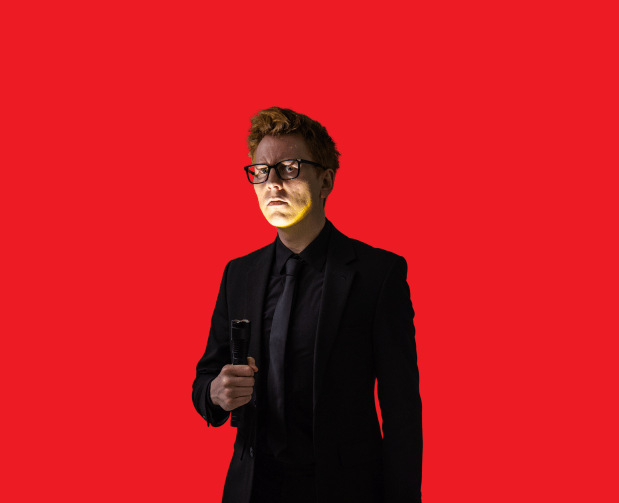
The Fringe’s very own energizer bunny David Alnwick and his backstage partner and sister Charlotte Alnwick have brought an incredible four shows to this year’s Fringe—albeit “only” three that are performed every day. The rest of us can only aspire to the Alnwick’s energy levels. His magical play The Mystery of Dracula will be reviewed separately, but the other three deserve more than the brief mention that could be squeezed into the Dracula review. Alnwick is deservedly showing off a bit with this line up, not many could pull off the full range of jazz magic to structured magical play in one Fringe, but he does it with apparent ease.

Their first two daily shows, David Alnwick is a Magician and Necromancer, are, when taken together, a playbook for how to craft a well themed magic show. Is a Magician is the comedy version, for Alnwick’s long term fans who remember him from his ‘cult’ days. It features all that classic Alnwick high energy humor. The highlight and climactic moment of the show is a card trick story featuring a beloved fixture of the Scottish magic scene who many in the audience might recognize by name.

On the other side of the coin is Necromancer, appealing to the horror-loving fan base that Alnwick has cultivated over the past couple of years. Framed as a series of scary games that the audience plays with Alnwick in the role of the Necromancer, it’s a divisive one—perhaps a bit too much for those who are easily frightened, but an excellent Fringe choice for those who enjoy being scared. A highlight for wordplay lovers is a game of “passed the parcel” to pick a participant for a frightening mind reading effect. Magicians and magic aficionados might enjoy seeing one of the tricks from Is a Magician repeated but made scary, an interesting insight into how to adapt the props and performing style to have an entirely different effect on the audience using the same fundamental trick.

Alnwick also performs a jazz magic style secret show every so often at varying times and venues. In these he intersperses a selection of fun tricks and cardistry with poetry recitation. It’s a combination that seems odd at first, but Alnwick makes both a logical argument and a compelling show of sheer charisma to convince the audience that it makes sense. These shows are a fun little diversion for Alnwick and his fans. He’s not telling a story but celebrating his versatility as a magician and performer.

Each of Alnwick’s shows stands on its own, and each is perhaps designed to appeal to a different segment of their fans. Those who have the opportunity to see all of them get a glimpse into the breadth of the possibility of magic as performed by one very talented magician, and where this magician draws the line between magic and theatre.  The shows in this review are advertised as magic, but The Mystery of Dracula is advertised as theatre (with magic components). Alnwick has demonstrated the range of performance that can be classified as magic for the past few years, so while the boundary that he has delineated is just one perspective, perhaps no one is more qualified to judge where that boundary should lay.  Entertainment value of each show aside, it’s exciting to see Alnwick push magic to its breaking point only to keep going. 

KEVIN QUANTUM: MOMENTUM

☆☆☆☆

Crowd pleaser Kevin Quantum is back, this Fringe down one healthy leg. Quantum injured his Achilles’ tendon shortly before the Fringe, but in true performer style is nonetheless onstage every afternoon this month, in a big plastic boot and zippered trousers so he can show it off. He has titled and themed his show on Momentum this year, both in terms of science and the course of life itself. It’s fittingly enough considering that he is visibly pushing himself forward at every show, maintaining the momentum of his career and art form in spite of his injury.

Momentum is a family show, and Quantum makes sure to get the younger audience members involved as often as is appropriate—even if that means asking children to volunteer the grown up they’re with to join Quantum onstage. However, Quantum gets as many children as possible involved in the actual magic, even running through the audience on his injured leg to perform pieces of close up magic to various children in their seats. A live stream makes sure that the entire audience is involved, but the chosen children get a special experience.

Unfortunately Quantum had a few angle issues with his live stream at the reviewed performance, both in the crowd sequence and a later bit themed on the Bermuda Triangle. It’s a tricky business performing for both the audience at large and maintaining the participant experience, and while at times Quantum deliberately plays on this to great effect, there are other instances where a prop appears slightly early, or a word card is seen from the wrong angle, that look a little less than perfect. However, it’s a nitpick in an overall entertaining show. The overwhelming majority of Quantum’s magic goes perfectly to plan.

Quantum’s background is in physics, and it’s his fascination with the patterns of a Newton’s Cradle that bookends the show. Magicians often end their performance with a dangerous stunt, and Quantum’s involves a giant flaming Newton’s Cradle. It’s a beautiful piece of equipment even regardless of the stunt, the flaming cannon balls are gorgeously hypnotic. The fact that Quantum manages to pull off the stunt with an injured foot is even more impressive.

Quantum is one of the established big names in all-ages magic at the Fringe, and he proves his reputation every year. Momentum looks like it’s going to be another in his long list of sellout Fringe shows, and deservedly so. Momentum is a solid hour of amazement.