5 Stars

CHRIS COOK: FAKE

☆☆☆☆☆

If anyone is most qualified to tell the world not to believe everything they see, it would probably be a magician. That’s what Chris Cook would like the audiences for his new show Fake to believe, at least. A Fringe veteran and mainstay, Cook is notable for creating an all new show at each Fringe, making him exciting to see every year. Fake is no different in that respect. Cook squeezes even more in than usual this year yet his hour long show flies by.

Despite his trademark approach of illustrating his points with a relatively minimal amount of magic, Cook’s excellence in magic is crucial as ever, and he does not disappoint. Even those who have seen Cook perform a few of his favorites in prior years would have trouble spotting the exact moment when the magic happens, and there is magic that is new to him this year too. A returning favorite is Cook’s take on the linking rings trick, but here he also demonstrates the classic. Cook’s returning fans may be surprised to even see this prop sitting on his stage as they walk in. They will be reassured as he performs—Cook’s magic remains as creative as ever.

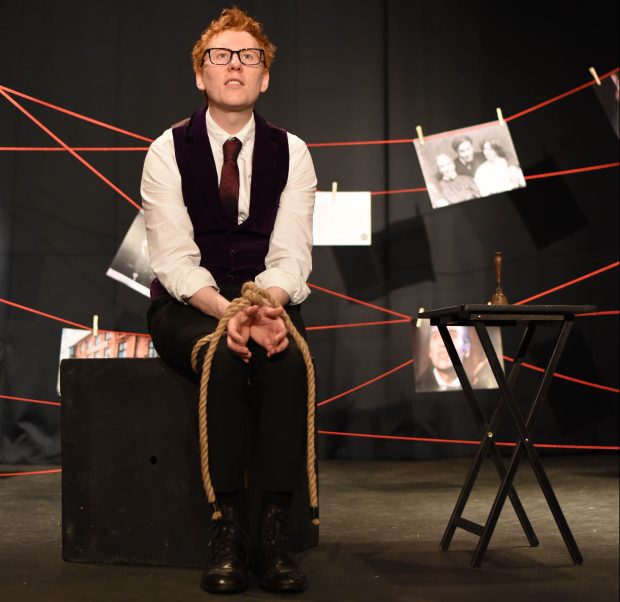
The theme of artistic fraud for a magic show could go in so many different directions. Cook keeps his story straight by mostly sticking to art history, with a few relevant diversions, telling the tale of the art fraud perpetrated by a specific forger. One of the main differences between art fraud and magic is that magic audiences expect and welcome deceit. Where the purchaser of a fraudulent work of art might feel ripped off, the magic audience that is deceived has gotten their money’s worth. That is to say, to those who don’t know art history, Cook’s entire art history tale could be made up, for all they know. Cook demonstrates to the audience that he is not a reliable source of information—entirely appropriately for a magician—and thus shows them the modern relevance of discussing historic fraud. ‘Fake news’ may be a modern buzzword, but humans have had limited knowledge and attention since probably forever. It’s not a new problem and no one is immune, not even art experts, magic fans, or magicians. For humanity, falling for misdirection (whether it’s magic, art fraud, or fake news) is a feature, not a bug. After Cook’s show his audience will have had an entertaining demonstration of just how easily they are fooled. Maybe he won’t fix the culture wars in one Fringe, but raising awareness of the flawed innate tendency to believe that one’s own view is the only true objective one chips away at what fuels them. Cook is once again making the world a better place, one audience at a time.

With his lightly magical approach, the audience is slightly more safe from being called upon to join in the act than they may be at the average magic show, but participation is still an element. At the reviewed show Cook made some great picks for his participants. One in particular helped him with imagined props, getting in to the fun and enhancing the sequence. Ever the professional, Cook ably balanced giving his participant his due with making sure the show stayed on track.

Cook is a master of crafting perfectly themed magic and storytelling shows. Fake is exactly that, a magically told story, with the chance to look at some art on the way. Cook’s final message is uplifting, for those who look to art for meaning in these troubled times. And either way, the show will make the audience think. For a bit of magic, a bit of storytelling, and a lot of heart, Cook’s Fake is the show to see.

THE UNFAIR ADVANTAGE

☆☆☆☆☆

With a lunchtime slot, for many of its Fringe attendees The Unfair Advantage is probably their first show of the day. The central location is a bonus, both for those who travel straight there and those who take a more circuitous route—at the reviewed show, at least one group was there because they had just walked out of a nearby show that they found far too disappointing, and were intrigued by this interesting premise at a nearby location. No one walked out midway through The Unfair Advantage—in fact, the entire audience stuck around even after the final reveal for an optional Q&A. Harry Milas has expertly put together this magic experience that is part performance, part education, part autobiography, and entirely fascinating.

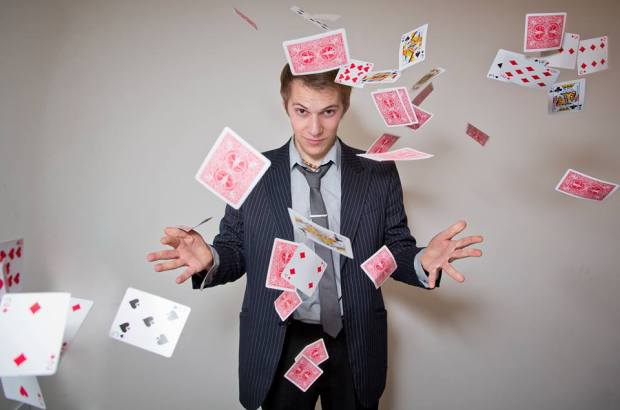
The stated premise of The Unfair Advantage is that Milas will show the audience how to cheat at cards, using the card handling techniques he learned as a youth with an interest in magic. He does fulfill the brief, after the audience signs an NDA to ensure that his secrets remain so, demonstrating his skills both quickly and slowly, and from a variety of angles, so the audience can get a good look at what he’s doing. The show works as both an educational experience and an entertainment event. Milas balances information with performance with practiced skill.

When the audience gets involved in the show Milas largely asks for minor bits of input just to keep him on his toes, and ensure that those watching can verify that the techniques he’s using are what he says they are. It’s a deliberately intimate audience to ensure that everyone gets the best view of his table, making such tasks easy and unintimidating. There is one audience member who has a more involved role, but for this task Milas is sure to request a volunteer. It’s worth the unexpected attention for the effect of having a member of the audience take on this task, and Milas keeps the pressure off, making it as fair as possible.

Milas is open about the fact that the techniques that he demonstrates took him a long time to perfect—his goal is not the undoubted impossibility of teaching the audience how to do them over the course of a Fringe show, but raising their awareness and showing how they could develop these skills themselves if they want. This is certainly directly helpful for gamblers. However, Milas also makes clear the relevance of his memory and attention direction skills outside of that field, and points out just a few of the many other applications for the techniques that he uses in the show in everyday life. Even this expertly scripted and performed Fringe show is, in a roundabout way, an example of that. Milas created this hourlong unusual and therefore memorable experience that helpfully makes the lessons of his performance stick in the minds of his audience.

The Unfair Advantage is the perfect balance of information and entertainment for a Fringe show. It’s the perfect event for fans of card technique in particular, regardless of whether they come to it from a magic or gambling perspective. While magicians advertising that they will teach their audience card handling is certainly not unique, Milas’s practical advice and his perfectly formatted and executed show set The Unfair Advantage apart. This is the show to see to get your Fringe day off to the best start.

THE REMARKABLE BEN HART

☆☆☆☆☆

The Fringe’s favorite oddity Ben Hart is back, with a show title that sounds egotistical even by magic standards, The Remarkable Ben Hart. At the reviewed show the wind may have threatened to blow down his circus tent, but Edinburgh was not deterred. Not a seat was left empty on that windy Monday evening. The enthusiasm was justified, as was Hart’s ego, as Hart turned out one of his signature perfect and inventive performances.

The way that Hart uses magic is creative in both emphasizing the visual beauty of his effects and in making them more magically impressive. The assembly of his cutlery effect in particular addresses potential moments when skepticism might creep in, making the reveal all the more impressive. His mentalist routine is notable as well. Hart primarily performs physical magic, where, by its nature, the audience can see the magic happening.  Hart’s usual performance style takes advantage of that innate feature to create stylish visuals on his stage. With mentalism that innate materiality is not necessarily there, but Hart’s staging and showmanship make the effect blend seamlessly in to the distinct iconography of Hart brand, creating visual appeal to magic that is performed in the mind.

Aside from creative, visually beautiful magic, Hart loves a theme, and The Remarkable Ben Hart does not disappoint. The theme is not in fact just that he’s uniquely remarkable, although the audience may find themselves agreeing with that sentiment as well by the end of the show. While it would be a shame to make available from the start what Hart works so hard to build up over the course of an hour, future audiences can be reassured that this renowned storyteller has not given up on that element of his craft.

Like all performers, and especially magicians, Hart has to deal with members of the public in his show. Hart expertly choreographs his audience participants to ensure that they can perform their roles while also giving the whole of the audience a view of the magic, a notable challenge for a magician performing in the round. As the reviewed show took place during stormy weather, Hart also had to contend with Mother Nature herself heckling him, with howling winds that threatened to bring down his tent. Hart’s response to the wind revealed the practiced professionalism of a performer who regularly works in tents in Edinburgh—this is undoubtedly not the first time he has had to deal with that particular interruption.

The Remarkable Ben Hart is well worth braving the Edinburgh weather. Hart is constantly innovating in the performance of his craft, making him an exciting performer to return to year after year. Rain, shine, or hurricane, Hart’s tent is the place to be.

1 HOUR OF INSANE MAGIC

☆☆☆☆☆

It’s easy to dismiss a group magic act as an excuse for the performers to do less work, but 1 Hour of Insane Magic isn’t just a 3-for-1 special. Cameron Gibson, Elliot Bibby, and Luke Osey do each get their moment in the spotlight over the proscribed 1 hour of (insane) magic, but the emphasis is very much on taking advantage of having three magicians in one show to perform tricks and showcase camaraderie in ways they wouldn’t be able to do in their solo shows. From the outside at least, it looks like even more work than three solo shows, but it’s worth it. They’ve created something truly special, and the data backs this up: they have a consistent and ongoing record of sellout shows across three years of the Fringe.

One of the elements that makes Insane Magic not just entertaining but interesting viewing is their approach to rehabilitating historic magic effects for the modern era. Their recreation of the “sawing a woman in half” trick is a great example of this, and requires help from the fourth Insane Magician, Laura Susana Tapia, who takes on the role of being sawn in half. While in the past this role would have been described as an “assistant”, Tapia’s role is emphasized to be that of a magician—she is, after all, doing the hard work of the effect. The performers takes the time to point out that historical conceptions of magic as a primarily male field weren’t because women were excluded from the stage, but because their hard work wasn’t acknowledged as “real” magic. Insane Magic honors the history of their profession and also honors Tapia’s role in the routine, with the men playing the role of her assistants for the effect. And it’s not just lip service for the one section, the men take turns playing “glamorous assistant” to each other over the whole show, demonstrating that the magician and assistant roles are as gender neutral here as they always should have been.

The type and amount of audience participation in Insane Magic is also a key draw for their audiences. The Insane Magicians involve many audience members in their act, and make sure to involve kids as often as is feasible. At the reviewed show the young participants were exceptionally enthusiastic to play their parts, and even to take on light responsibilities to contribute to the act. The one mildly alarming audience participant role is chosen from a pool of adult volunteers, ensuring a reassuring degree of safety and consent.

Those who make a habit of asking strangers at the Fringe what magic shows they’d recommend and why may pick up on a third factor that audiences especially appreciate about Insane Magic. Gibson, Bibby, and Osey just come across as really good guys. Audiences want to spend an hour in their company, almost as much because of how they treat each other and their audiences as because of the magic. The impressive magic is served up alongside a healthy portion of good vibes. It’s an upbeat, energetic show and the Insane Magicians have managed to curate an exceptionally friendly and welcoming environment, from the soundscape as the audience filters in to be seated right through to the greetings and photo ops on the way out. Even hecklers are responded to with friendliness. It’s a “soft” strength but one of the strengths that noticeably sets Insane Magic apart.

Insane Magic as a unit is in its third year at the Fringe, and is on track to once again sell out their entire run. Their legion of fans does not just extend as far as the Edinburgh Fringe—audience reviews of their recent Adelaide Fringe run indicate that Insane Magic has managed to attract groupies who will travel halfway around the world just to catch their Australian debut. They are truly a global phenomenon. Anyone hoping to catch them at the Edinburgh Fringe would do well to buy their tickets quickly.

LUKE OSEY: THE MAGIC HANGOVER

☆☆☆☆☆

Luke Osey’s The Magic Hangover has got to be one of the weirdest magic shows of this Fringe, and it’s all the better for it. Osey’s trademark high energy and infectious humor keeps the story bounding along, and the perfect magic highlights plot elements to great effect.

For those who have followed Osey’s career to any degree at all, it will come as no surprise to find that the magic performed in The Magic Hangover is perfectly themed and executed. Fans may at times recognize signature props and elements, but each is used in such an entirely new way that it feels more like a self referential Easter egg than like Osey repeating a trick. Osey uses magic with exceptional creativity. There are at times elements of classic tricks that peek through—a dangerous item is created and concealed, or a money routine has a citrus—but as well he creates bespoke routines to showcase his sleight of hand skills in ways that suit the story.

The Magic Hangover has a decent ratio of story and comedy along with the magic. While the humor will not be to everyone’s taste, Osey is a talented comedian who may very well get the audience to laugh even when they’re not sure they want to. The plot line works well with the magic, and lends an element of sweetness that is as welcome as it is unexpected in this style of late night show. The conclusion of the mystery that unfolds ties in perfectly with the big magical reveal, and again demonstrates Osey’s skill at making classic magic effects feel fresh by knitting them seamlessly into his theme.

Osey is a personable performer and works well with the members of the audience who join in on his act, whether he invited them to or not. Intentional audience participation is sprinkled throughout the show, and is easily completed with Osey’s friendly instructions. At the reviewed show Osey also had to contend with the occasional heckling, and justifiably shut down one individual (only after they annoyed the rest of the audience) without missing a step. On the other hand, Osey also received a positive heckle from a member of the audience who couldn’t contain his admiration for one of Osey’s jokes, and this resulted in a sweet moment of mutual appreciation.

The Magic Hangover works perfectly as both a wacky late night show and a showcase of magical skill and creativity. Osey leans in to the surrealist weirdness, using the uniquely odd products of his imagination to create a show that no one else would, and pulling it off with textbook panache. Whether it’s the weirdest end to your Fringe day, or the perfect way to kick off the kind of evening that will result in your own magic hangover, The Magic Hangover is the place to be.

BEN HART: UP CLOSE

☆☆☆☆☆

One of the more unusual features of Ben Hart as a magician is that his Fringe shows are of late designed to be performed in the round. This is an extra challenge in a performance art known for its reliance on angles to execute the effects properly, and in Up Close Hart ups the stakes even further. The intimate venue and minimalist decor and props are cleverly designed to leave Hart with no space to hide. The magic is, as ever, nothing short of a masterclass. The intimacy of the venue also gives Hart a chance to show off his crowd work skills, to great effect. Even his outfit takes advantage of the venue size, with trouser embroidery that adds an extra element of visual interest to watching his perform.

Up Close is a mix of routines that Hart has performed before, in his larger scale shows, as well as effects that his fans may not have seen in his prior shows. The more familiar tricks in particular serve Hart in a variety of ways. They are, of course, impressive in their own right for newcomers to his act. There’s also an extra interest for Hart’s fans in seeing him execute these effects flawlessly in such a stripped back environment. And, after watching Hart experiment with ways to bring close up magic to the stage in his larger scale shows over the years to occasionally mixed reactions, it’s satisfying to see him find space to fully showcase a genre of magic that seems like a particular passion.

A particularly well formatted bit involves a classic spoon effect, with an extra element of spellcasting that makes it feel distinct to Hart. Hart excels at performing effects that are recognizable classics of magic, adapted so perfectly to his own style that they feel refreshed specifically for his fans. Hart’s Ouija board routine is a recurring success, with two audience participants getting involved who are ready after the show to swear to the others that Hart must have indeed conjured spirits, as there is no other explanation for what they experienced.

The intimacy of the Up Close venue works both ways—not only does the audience get a better view of Hart, he gets a better view of them at the same time. This is not as scary as it may sound. The only audience member who got told off at the reviewed show was on her phone, and Hart’s gentle chastising earned him one of the first rounds of applause of the evening. Hart cultivated the community of his audience, sharing the spotlight at every opportunity. One participant’s especially well mixed shuffle got an especially enthusiastic reaction, as the audience was clearly happy to help Hart celebrate one of their own. The already commanding Hart gained power from the communal atmosphere, at one point successfully holding the audience’s attention for a long few seconds while trying to change the sheet of paper in his little notepad—maybe a more true test of sheer charisma than any magic trick.

Hart’s audiences have come to expect perfection and he does not disappoint. The casual-witchy Up Close even has a suitably casual-witchy theme, developed by Hart in a suitably cheeky manner that is perfect for this type of show. A perennial Fringe highlight across two continents, Hart had a solid audience at the reviewed Tuesday evening show, a testament to the loyalty of his fans. Always changing, evolving, and experimenting, Hart is a rewarding performer to return to year after year. Up Close will only further cement his role as a trail blazer in the progression of magic as an art form.

DAVID ALNWICK: COMEDIAN MAGICIAN

☆☆☆☆☆

David Alnwick’s career as a Fringe magician may have now led him to primarily perform darker, spookier work that increasingly bends the boundaries of magic as a genre of performance, reshaping the definitions of the art form to suit his needs in much the same way that he appears to reshape reality itself in his tricks. However, he first built his Edinburgh fan base on his comedy magic, and in Comedian Magician that is what he celebrates. It’s a throwback to the Dave Alnwick brand that many may still remember, and a retrospective on how Alnwick’s outlook on magic, performance, and his career have evolved over the course of his time at the Fringe.

Many magicians in the past couple of years have performed retrospectives to mark the occasion of their tenth year at the Fringe, however as it transpires Alnwick’s first Fringe was 2010. Those who remember both 2020 and the tentatively sized 2021 Fringe will understand why Alnwick did not take that route—although he did, memorably, comprise a full third of the magic shows that the PBH free fringe hosted at that 2021 Fringe. This celebration of his career is long overdue.

As such, Comedian Magician is made up of classics of Alnwick’s comedy magic repertoire interspersed with vignettes from various points of his career. The magic is, as per usual with Alnwick, flawless. If Alnwick has not written the book on how to perform magic it can only be because he’s been too busy with the creation and performance of his four shows per Fringe. One of the many highlights is a recurring favorite in which Alnwick tells a story encompassing both one if Edinburgh’s primary off-season festivals, the International Magic Festival, and a beloved Glaswegian magician who occasionally makes an appearance there. The vignettes are insightful as well, for example audiences at the Fringe may not have an understanding of the trade offs involved in performing at the PBH free fringe rather than the paid venues.

Audience participation is as frequent as a comedy magic audience would expect. The most involved participant is the one for that previously mentioned card trick, and in recognition of that Alnwick seeks a volunteer for that role. At the reviewed show Alnwick chose the first volunteer, despite his young age. The volunteer looked absolutely thrilled to be trusted and take part. Alnwick undoubtedly played a role in a core memory for him that day.

Alnwick’s fans may be used to the feeling of surprise that they get when they rediscover his seemingly limitless skills at each of his shows, but it’s always a wonderful feeling. His audiences celebrate his talents at every Fringe, and it’s great to see Alnwick himself get in on the party.

DAVID ALNWICK: THE MYSTERY OF DRACULA

☆☆☆☆☆

If David Alnwick is known for anything other than being likely one of the busiest performer at the Fringe, it’s his habit of bringing the same show back to the Fringe for another year, tinkered into something recognizable to returning fans but demonstrably better—even when it comes to his many 5 star shows. This is the case with The Mystery of Dracula, Alnwick’s magical play about the origins of both the story of Dracula and the art of magic, and where they intertwine.

Alnwick’s magic is honed to perfection, a crucial step to creating a show that uses magic tricks so sparingly. Magic is used here as an illustration of the history that Alnwick discusses, although at times the boundaries between academic demonstration and supposedly genuine conjuring (at least, we hope it’s only “supposedly genuine”) is blurred to great effect. The audience’s impression of the effects are often of not the usual assertion that Alnwick, the magician, knows all, but rather to pose the question, “does he really?”

The Mystery of Dracula may be nominally about Dracula and come around to also be about magic. However, other timely themes come through too, of vulnerability of loneliness and the all too realistic possibility of a charismatic voice persuading lonely individuals into self destructive behaviors in search of community. The pressure felt by Alnwick’s timeless character is recognizable to anyone who has ventured into spaces both on and offline offering community in exchange for money, loyalty, or your immortal soul.

As a play with a light sprinkling of magic, audience participation is similarly kept to a minimum.  Several participants may be chosen to take part from their seats, and when a few are called to the stage Alnwick gives clear directions to make their roles easy to follow. The biggest point of participation comes at the end, when the entire audience becomes complicit by default in Alnwick’s performance. The audience does not need to do anything in particular to achieve this, their presence is sufficient.

The Mystery of Dracula is a retelling of history, but in a far more clever, universalized way than the audience might expect. Alnwick perfectly captures the loneliness of both an obsessed academic and the mythic immortal who he’s obsessed with in a dark satire of fandom and the search for community, palatably ensconced in the trappings of dark academia. Alnwick’s own fans will never be disappointed to see what he creates next.

STUART LIGHTBODY: THE MAN WITH THE GOLDEN HANDS

☆☆☆☆☆

Stuart Lightbody may come from South Africa, but the story that he tells in The Man with the Golden Hands is recognizable to people of many nationalities: the United States government clutching at straws to gain advantage over its Cold War enemies. Any degree of knowledge of this crazy time in history will make everything that Lightbody says in his show sound feasible, regardless of specific knowledge or ignorance of the matters in question.

Specifically, Lightbody has framed his show as a discussion of the CIA’s use of misdirection techniques during the Cold War. It makes sense on the surface, and it allows him to demonstrate a wide range of skills. Lightbody runs through the range but excels at sleight of hand in particular. Watching him shuffle his cards is genuinely ridiculously impressive, he has such perfect control over his deck it’s like he has 52 extra hands. His card finding trick is perhaps too much fun for even a card trick, with an ending that no one will anticipate. It’s both a classic and completely fresh at the same time, in a way that perfectly dovetails in with his spy theme. It’s well worth the hour even if the rest of the show doesn’t appeal just to watch Lightbody’s card and coin tricks.

The participants in The Man with the Golden Hands by and large look to be having a great time on stage with Lightbody. For tricks like his card routine, the participants have a front row view and are extra flabbergasted by his reveal. In one memorable trick, Lightbody asks for participants first from the extroverts in the audience and then from the introverts. This is clever as well as kind, and in fitting with the theme. The extroverts have the extra moments onstage to bask in the attention, while the introverts are literally instructed to hide behind an extrovert—likely exactly what they would feel inclined to do anyway.

The theme is consistent and constant throughout the hour. Lightbody has put together a show that is both cohesive and highly entertaining. It’s a masterpiece that has deservedly won awards at international Fringes, and is deservedly popular here in Edinburgh. The Man with the Golden Hands isn’t just a magic show, and Lightbody doesn’t just show the audience how spies use misdirection but even teaches the audience how to use those skills themselves. Does that appeal to you? If so, make sure to catch the show before the end of the Fringe. Don’t worry, Lightbody isn’t looking for you.

More information on The Man With the Golden Hands and its performance dates can be found here.

DAVID ALNWICK: NECROMANCER: THE VHS GAME

☆☆☆☆☆

David Alnwick might have gained renown as a magician, but this year, of his four Fringe shows (three daily, still impressive) only half are traditional magic shows. Fans from previous years may remember the lighthearted style of Comedian Magician, the intimate close up of David Alnwick’s Secret Magic Show, and the spooky magical theatre of Dracula. Necromancer is best classed as a magic show only because there isn’t a genre option for “live action video game”. Alnwick, or as he is for the hour, The Necromancer, does use magic to make his game work, and the integration of the tricks into the show is exceptional.

When the audience does it right Necromancer both starts and ends in their own hands. The first throwback of the show is the paper tickets given out as placeholders by Banshee Labyrinth, which have QR codes that can be scanned while queuing for a good seat. The pre-show interaction perfectly sets the scene, and the post-show follow up is the perfect ending.

Once the audience enters the lair of the Necromancer a series of magic tricks are presented as games for either specific participants or the entire audience at once to take part in. These are perfectly chosen from Alnwick’s vast repertoire of magic. Participants are not given especially challenging tasks. Even a mind reading effect requiring the participants to reveal a truth about themselves along with several false statements is done with cards containing the truths and falsehoods to choose from, so no one has to think on the spot. With a relatively niche theme in the context of Fringe magic, the majority of the audience at the reviewed show were especially enthusiastic about participating. When one randomly selected participants revealed that she was only attending as a companion to one of Alnwick’s fans, Alnwick was quick to invite his fan to participate in her stead.

The Necromancer plays to win over those who enter his domain, but will he prevail? A game against the darker half of a master magician is surely more rigged than even the sketchiest casino. For years Alnwick has won over the hearts of Edinburgh with his magic, and this year his alter ego seeks to add its souls to the collection. The Necromancer is scary, not for the easily frightened, but the perfect show for fans of horror, video games, and creative magic.

More information on The Necromancer and its performance dates can be found here.