magic

ALEX KOUVATAS: THE MAGIC OF LOVE

☆☆☆

Alex Kouvatas is back at his venue in the basement of the Burrito’n’shake, an admirably central venue. This year they seem to treat him and his fellow performers a bit better, with a relatively quiet environment. If there is the occasional disruption, Kouvatas is ready and willing to get them to quiet down. This year’s show, The Magic of Love, is well themed and performed, if there is the occasional area for improvement.

Kouvatas is an incredibly likable performer. The reviewed show on a weekday afternoon may not have had the largest audience, but he got everyone involved and engaged with the show. Given a slightly longer time slot he would have undoubtedly transformed the group of strangers into new friends. If there is a slightly juvenile element to his performance, especially at the start of the show, it almost feels like an adjustment period as he code switches from performing his children’s show earlier in the day. Performing two shows for an entire month is tiring, it’s not surprising that it takes him a minute to switch to adult mode, although the effect may be slightly jarring to those who don’t track the Fringe magic schedule so closely.

This year’s tricks have moments of exceptional creativity. There’s an unusual visualization trick that gives the audience participant an especially pleasant experience. While this may be limited to the one audience member, they can share it with their neighbors as they retake their seat. Kouvatas also performs a lovely effect involving a story about his family, with impressive magic and a heartfelt message. As Kouvatas continues to develop his brand of themed storytelling magic hopefully more and more of the show will be this beautiful.

There are moments in Kouvatas’s performance where the experienced magic fan may note a slight clumsiness in his performance of certain effects. It’s not all of them, but even with one like the previously mentioned effect involving his family story, the method of the trick could be better concealed. On the other hand, there are moments like the visualization trick that were perfectly performed. Kouvatas’s magic feels like a work in progress, but hopefully one that he continues, as he is a charming and creative performer.

For a sweet magic show with easy access to burritos, The Magic of Love is the one to go to. Kouvatas is always improving and pushing himself creatively. Every Fringe the audience leaves his show wanting to see what he comes up with next.

More information on The Magic of Love and its performance dates can be found here.

CHRIS DINWOODIE: OFF THE CUFF: STAND-UP COMEDY MAGIC

☆☆☆

When audience members find a magician through the Scottish Comedy Festival section of the Fringe, it does prompt the reasonable hope that the magician in question will be both Scottish and funny. Chris Dinwoodie does not disappoint in either respect with his debut Fringe show Off the Cuff. Dinwoodie has a relatively strong accent, which he jokes about right at the start of the show. Luckily he is understandable even to international visitors (if only just at times), as he is hilarious all throughout the show.

If the magic that Dinwoodie performs is not necessarily unique to him, he does perform it especially well. A particularly impressive card counting trick may seem familiar as a trick usually seen performed with two audience participants, but Dinwoodie’s version with just one is that little bit more interesting to frequenters of magic shows. Even without trying to work out the trick, after seeing the exact same one multiple times it can be difficult not to develop theories as to how it’s done, and it’s refreshing to see a variation that disrupts the more obvious of those takes. Dinwoodie’s sillier interludes, such as his playing with a poker chip, are still exciting to watch just as they show off his manual dexterity skills in a fun, visual way.

Dinwoodie interacts with his audience like a comedian, frequently teasing anyone he can spot in the audience. His association with the Scottish Comedy Festival is a warning as much as it’s an advertisement. While this takes up a fair portion of the comedy element of his stage time, he isn’t mean about it. The only marginally tetchy comment at the reviewed show was directed at an audience member who had been making a habit of heckling Dinwoodie, and thus deserved what was coming to him.

Dinwoodie’s ability to gently tease while maintaining the audience’s goodwill was in fact proved beyond doubt at the reviewed show. One of his friendly targets revealed herself to be a Scottish country dancer, and when invited to show off a couple of steps at the end of the show took him up on it for an unexpected end to the afternoon. After soaking up the spotlight for the hour, it was very sweet that Dinwoodie was willing to share his final moments onstage with a talented audience member.

Off the Cuff has plenty of draws that are no doubt each contributing to keeping his venue so busy. Magic fans will enjoy watching a master of that art. Comedy fans will enjoy Dinwoodie’s wit—at this Fringe he is undoubtedly functioning in part as a magic ambassador for fans of comedy who might not see a magician otherwise, and is doing an excellent job in that role. Scotland fans may also enjoy Dinwoodie’s excellent accent. With so many features of excellence and such a central, well ventilated venue, it’s no surprise that Off the Cuff is proving so popular.

TOM BOLTON: GROW UP MAGIC MAN

☆☆☆☆

It would help many people to learn the balance of how much to grow up to function in adult society without losing the joy associated with childhood. Magicians may not have all the answers, but in Grow Up Magic Man, Tom Bolton uses his childhood experiences of magic to try to reintroduce a little bit more of that joy to the adults in his audience, and keep the spark alive for a little bit longer in the children.

Grow Up Magic Man is a family friendly show, and Bolton places an emphasis on inviting the children in his audience to get involved. The shyer children are invited to get involved from their seats while the ones who are visibly excited to join Bolton onstage—even clambering over the seats in a theatre that was clearly not build for magicians—are given roles that are easy to follow and often allow them to be the stars of the routine. One of the most excited children is invited up for the Rubik’s cube trick, which sees the magic happen right in the participant’s hands. The finale trick is exceptional, giving one young participant an experience to remember, and providing a highly visual end to the show.

The way that Bolton presents his magic tends to be fairly sweet, and one of the sweetest is an effect in which he emphasizes the bond between one of the parent-child pairings in the audience. This is a particular effect that is often performed in a way that the participants themselves can’t fully appreciate, which always feels like a shame as they’re the ones putting themselves on display for the rest of the audience to gawk at. Bolton has found a way to remedy this flaw without undercutting the magic of the trick. It takes a little bit more of his stage time, but demonstrates Bolton’s commitment to offering the whole of his audience a magical experience.

A Fringe newcomer, Bolton has not yet built up his Edinburgh fanbase. If the audience of the reviewed show is an indication, Grow Up Magic Man is currently highly under-appreciated. Families with teenage and preteen children may be a particularly good audience for this show, but it has something for everyone. Grown up magic fans will also appreciate the perfect magic and fun story, and maybe even find a renewed belief in magic.

More information on Grow Up Magic Man and its performance dates can be found here.

ANGUS BASKERVILLE: NAUGHTY OR NEURODIVERSE: MAGIC FROM ANOTHER PLANET

☆☆☆

In Naughty or Neurodiverse: Magic from Another Planet, Angus Baskerville uses magic to give insight into his life growing up as a neurodiverse individual. This comes in the form of tributes to influential mentors and media in his life, as well as moments that illustrate his personal outlook on how to live life to its fullest potential. The name of the show could read either “adult entertainment” or “child friendly”, but as the afternoon time slot suggests Naughty or Neurodiverse is decidedly child friendly. It’s an entertaining hour of well performed and largely personalized magic.

One of the primarily perils of performing a child friendly show is that there will often be children in the audience. Even the most adorable can have moments of distractingly chaotic energy. Baskerville was unlucky enough to have a group of three such children in his audience on the day that this show was reviewed. He did everything he could, inviting them to participate at the first opportunity, inviting their responsible adult to participate in an effect that resulted in her being given sweets that she could give them, and, in the end, studiously ignoring and talking over them. Baskerville’s audiences can feel confident that he will deliver his show regardless of audience distractions.

The magic in the show is often personalized to be both child friendly and specific to Baskerville. Magic fans may be aware of an often used effect involving paper bags, which Baskerville has on display onstage as the audience enters his theatre. However, he does not perform the traditional trick, which may have proved frightening for some of his younger audiences, instead combining the trope with an additional mind reading moment for a unique, and less scary, take. Baskerville’s Rubik’s cube narrative is especially sweet, taking another classic of magic and performing it in a way that gives the audience a new perspective.

Baskerville gets a lot of members of the audience involved in the show, some from their seats and some to join his onstage. In a relatively intimate space it is not an intimidating audience, and, while he remains very much the figure in charge, Baskerville creates a friendly atmosphere amongst members of the audience. One individual is tasked with helping the final reveal by writing down specific elements of the show as Baskerville instructs, and makes friends with the others in his immediate vicinity to make sure he tracks all the right information.

Naughty or Neurodiverse may feel, at times, a bit disjointed as a show. The sole unifying feature is Baskerville himself, and while the neurodiversity theme is also present it seems to take second place to Baskerville doing the routines that he likes. They’re good routines, it’s a fair choice, but does result in a show with a slightly less cohesive feel. Nevertheless Baskerville is a talented performer with a natural creativity that will be obvious to all who see this show. Attendants will be left wanting to see more of what he is capable of.

More information on Naughty or Neurodiverse and its performance dates can be found here.

SEAN ALEXANDER: 1 MOMENT IN TIME

☆☆☆☆

From big moments, to small moments, to the precise moment of the performance, 1 Moment in Time is, of course, about time. As themed magic goes, Sean Alexander has committed 100% to his bit. Every single trick, story, and moment in the show is perfectly, precisely on theme. The effect is powerful. Even if some of the coincidences that Alexander finds in the show feel like a bit of a stretch, this is still on theme—the magic is there, but you have to look for it. It might not be a unique theme for a magic show but it’s beautifully illustrated over the course of the hour.

Artistic beauty is in fact the first impression that the audience gets as they enter Alexander’s theatre. (That, and the unusually comfortable seats for a Fringe venue.) Alexander has set up his stage with a selection of paper cut artwork depicting famous impactful moments in time. These are available for the audience to approach and admire as they find their seats. The paper cuttings become a minor motif as well, and the ones featured at the start go on to be involved in something bigger.

Each piece of magic is similarly performed with precision. If there is one hiccup due to a stranger not obliging with their time Alexander pushes through professionally to achieve his reveal. An early indication of his skill is a take on a card trick that is both excellently performed and uniquely suited to the show. One data point is not as compelling a coincidence when a magician can create a total overlap of apparently random chance.

At the reviewed show Alexander ends up working primarily with one member of the audience over the course of several effects—a perfect coincidence, he assured the audience, just like everything else in his show. The primary participant seemed comfortable in Alexander’s presence. With so many tricks that all go perfectly, it is difficult to imagine anything going wrong in joining him onstage.

Perhaps due to the life events that Alexander reveals during the show, he places a high value on time, including that which the audience spends with him, and every moment of every visual and magical effect in 1 Moment in Time is in service of the theme of his show. It does, at times, feel like a masterclass in how to write and perform a themed magic show. If the theme is not unique his telling of it is—everyone has a unique story, and Alexander has mastered the ability of telling his in a way that is beautiful and universal.

More information on 1 Moment in Time and its performance dates can be found here.

DAVE REUBENS: FREAKY MAGIC

☆☆☆

Dave Reubens weaves a freaky tale this Fringe. His Freaky Magic is themed on an heirloom book of cult tales that he received from his ancestors, and the show is structured as a reconstruction of the magical experiments that it contains. Reubens has many skills and the show makes room for him to show off a range of them.

The exact tricks involved may not be especially novel to those who see a lot of magic shows, and if the performance by and large goes to plan there is the odd moment that the sleight involved feels a little more obvious than would be ideal. Specifically, an early moment involving an audience participant’s paper money sees Reubens fondling his contract for a bit longer than he could get away with. He doesn’t quite give away the magic at any point in the show, but it consistently feels like it could be slicker.

The inventive plot line that runs through the show makes it compelling. As has historically been the case with Reubens, he’s family friendly and best suited for slightly older children. The plot of Freaky Magic is gently frightening in a way that will hold kids’ attention and make the show extra memorable for them. Reubens makes an effort to involve the younger audience members in the act, at moments that are age appropriate and suited to the child’s temperament. A shy child on the younger side might be asked to keep an eye on a book from her seat, while a slightly older child might be asked to get involved onstage to commune with the dead.

As with all magic shows, the most unpredictable element is the audience, and the variety of reactions to the tricks can be memorable. It can be refreshing to see the responses of those with less experience—so much of magic is about surprise. A popular category of effect involves a step where an onstage audience participant reveals that a piece of paper has been magically torn. At the moment of this revelation at the reviewed show of Freaky Magic, a seated member of the audience could distinctly be heard to gasp, “someone ate it!” Reubens has many planned jokes and his humor lands with the audience, but sometimes an unfiltered exclamation of amazement just can’t be beat.

Freaky Magic may not yet be perfect, but it’s certainly a fun show, especially for fans of low stakes horror. Younger audience members in particular may be enthusiastic, and will be treated well by Reubens. With the majority of seats filled on a sunny Edinburgh afternoon, he is clearly deservedly successful this Fringe.

More information on Freaky Magic and its performance dates can be found here.
AVA AND BEAUX: TALES OF MAGIC

☆☆☆☆☆

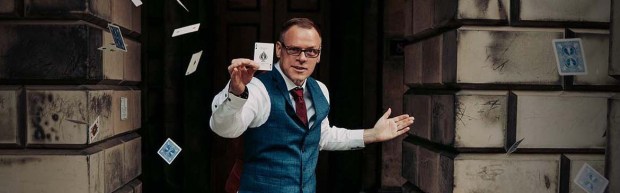
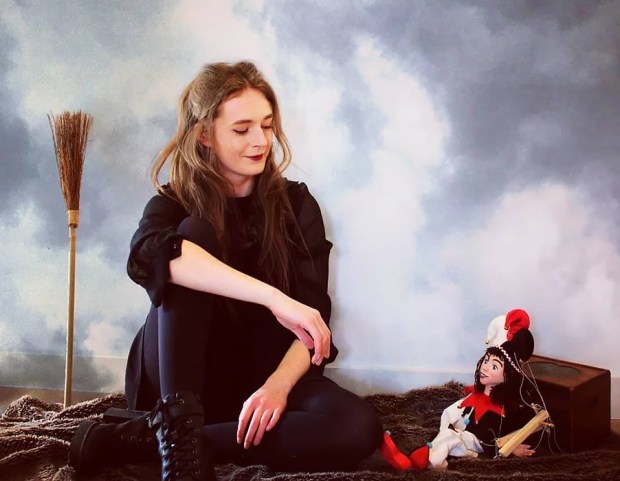
When the audience steps in to the Voodoo Rooms for Ava and Beaux’s Tales of Magic, they may look at the magician on stage and think they’re only there to see one performer. However, Ava and Beaux are two magicians for the price of one—with several other characters in the Tales, essentially an entire theatre ensemble and an adorable pet for the price of one magician, or “magish” as she prefers to be called. Tales of Magic is a beautiful, cohesive story composed of disparate elements that come together, by the end, for a satisfying conclusion.

If the audience might come in expecting a magic show, they will be so enthralled that they may not even notice how relatively little of the stage time is spent on magic tricks until they reflect back afterward. The magic that is performed is all in theme and in character and performed with skill and artistry. One of the highlights simply for the oddity of its presentation is a series of rope tricks framed as an informational lecture on intestinal worms. Watching it, it’s difficult to remember exactly how the narrative reached that point, but it also, somehow, feels very Ava Beaux.

The split between Ava and Beaux is present once again in this year’s show, although with the many characters these two don’t always feel center stage. At the start their roles feel fairly well defined, with Ava introducing the show and reading her audience’s minds, and Beaux taking on the more physical tasks such as a beautifully choreographed hoops routine. Over the course of the show, and in keeping with the theme, they gradually collapse together. Their roles become less well defined as the two halves of the one performer resolve into a perfect ending.

As a theatrical show with some magic, this show is relatively light on audience participation. And despite the occasional spookiness of her performance Ava Beaux is one of the kinder magishes. She doesn’t ask the audience to do anything embarrassing or confusing. At the reviewed show her final participant had to step back to her seat for reading glasses, and Ava Beaux seamlessly switched around the order of her finale so that her participant would not feel rushed.

Ava Beaux consistently has one of the conceptually oddest approaches to performing magic at the Fringe, making her a favorite amongst regular visitors. Her act is distinct and her name tends to stick in people’s minds. As well as a unique magic experience, Tales of Magic presents an opportunity for the pet owners of Edinburgh to remember to appreciate their furry friends. Ava Beaux and the ensemble cast that she brings to life are the perfect diversion in the Fringe lineup.

More information on Tales of Magic and its performance dates can be found here.
PETE HEAT: BOGUS

☆☆☆☆☆

Anyone who has been on social media in at least the past year will have witnessed irrefutable proof that society is ill equipped to handle conflict in a post truth world. There might be a moment of hope when a mutual shares content debunking obvious propaganda, only for that hope to immediately be dashed when they then immediately share equally egregious propaganda slanted in the opposite direction and claim it to be the unbiased truth. This is the foundation of Pete Heat’s Fringe show Bogus. Heat gets all that across in a manner that is very silly, very magical, and very effective.

As per usual in Heat’s Fringe offerings, magic does not make up a huge proportion of the show. Heat is a comedy magician who gives equal weight to both the comedy and the magic. The magic is remarkably slick, even if there are members of the audience who have seen Heat perform the same tricks before it’s by and large impossible to spot the moment that the deception is achieved. Those who take part in especially novel effects may find themselves quizzed by other members of the audience after the show, as they simply can’t believe that the participants are not stooges.

One of the more interestingly involved reveals is to a trick involving made up language, which leaves audiences flummoxed. Heat uses technology in Bogus in an inventive way, creating magical moments unique to this era. Random number tricks are often used as predictive effects, for the magician to show off their mentalist skills, and Heat’s version of this is both extra impressive and extra hilarious.

As methods to dispel the notion of objective reality go, magic may feel like a fairly obvious one. It’s the perfect option for discussing the effect of both deliberate propaganda and social media AI algorithms, as it uses similar principles. However, magic is explicitly for entertainment rather than for the lethal combination of infotainment and deliberate fracturing of the laboring classes often seen in non-magical misdirection. Heat’s other primary prong is, perhaps a little more unexpectedly, animal facts. This is equally effective in its own way, and far more cuddly.

Like any other magic show, Bogus is designed to leave the audience with more questions than answers, but explicitly draws the connection to the outside world. Outside of Bogus, we’re faced with nonconsensual, malicious, and dispassionate misdirection, and we don’t even know how tall the perpetrators are. Inside Bogus, we’re faced with benevolent misdirection from a very tall man—clearly the better option.  The irony of his infotainment approach to addressing contemporary media illiteracy suits Heat’s style.  And even audience members who aren’t in it for the big themes can enjoy the incredible magic and hilarious jokes. 

More information on Bogus and its performance dates can be found here.

KEVIN QUANTUM: ANTI-GRAVITY

☆☆☆☆

One of Kevin Quantum’s most frequently used pull quotes is that he’s “like a sexy Doctor Who”, which takes a lot of pressure off anyone else who writes a review of his shows. No one could possibly top that (although one must ask, is Doctor Who not a sexy Doctor Who?) Opinions of his looks aside, the Doctor Who comparison is fitting, especially with this year‘s show Anti-Gravity. The lightly educational and plentifully magical show is reminiscent of classic Who-niverse creations, which balanced child friendly history and science with science fiction to make learning fun for its target audience of young viewers. Although in Quantum’s case, the mixing is science with magic.

It will come as no surprise that Anti-Gravity has a focus on levitations in all their forms, it is after all an accurately titled show. Quantum comes out for a pre-show segment that perfectly encapsulates the scientific and magical themes of the show, with demonstrations of Bernoulli’s principle using both science and magic. The levitations build in scale until a final trick that is both completely expected given the theme of the show and also something of a surprise simply as it’s not a type of magic that is often performed.

With Anti-Gravity, Quantum is not just looking to inspire future magicians in his audience, but future creators of all types. Over the course of the show Quantum demonstrates how close an unexplained science experiment feels to magic, blurring the lines between what is currently possible and not yet discovered or invented. It’s the kind of inspirational message best delivered by a hybrid scientist-magician.

There’s a mix of audience types and ages at Quantum’s show that reflects the universality of his appeal. There are plenty of families with young children, but also lots of childless adult couples and adult group attendants. While the inspiring message may land best with the youngsters, the unusual magic performed will be appreciated by all, even the most seasoned magic fans.

More information about Anti-Gravity and its performances can be found here.

ADAM B MAGIC: WELCOME TO MY REALITY

☆☆☆

Getting an audience can be challenging during the Fringe. At the reviewed show of Welcome to My Reality, Adam B received the Weegie hug of death—he was lucky enough to be chosen as the first stop for a Glaswegian language exchange group’s day trip to the Fringe. The large international crowd made for an extra energetic show. Adam presented a series of mostly comedy magic, loosely themed on his mental health struggles. If at times it comes across as a bit of a therapy session, the magic keeps it engaging, and Adam does not dwell excessively on the negative.

At the reviewed show Adam had a plentiful crop of potential audience participants to pick from. The sheer size of the audience dictated convenient choices of individuals at the front and open edges of the rows of seats, and all selected were enthusiastic on stage. While this did not come up at the reviewed show, the audience gets the impression that as a self-described “neurospicy” individual Adam would be more respectful than most if he happened to select an audience member who did not want to join him. The one slightly awkward moment was when Adam tried to bond with a specific member of the audience over their mental health conditions; perhaps because she ended up being the only one to volunteer her fellow neurodivergence she seemed to feel a bit picked on in front of the large group.

The specifics of the tricks that Adam performs are not quite so unusual that a regular attendant of magic shows will see anything new, but they’re different enough that more causal magic fans certainly will, and Adam performs them well. A story narrated with the use of a string is a particular highlight with the members of the audience sitting near the reviewer. This was especially impressive as this was pretty far toward the back of the room, and he managed to make such a delicate piece of magic both visible and impressive from the stage.

Adam employs a variety of stories to compliment his magic, and if at times they feel disjointed this is in line with what he explains of his ADHD theme. The stories range from a fantasy involving skydiving bubbles, to the struggle of making connections with others while dealing with mental health issues, to more standard magician fare when performing with his colorful handkerchiefs—a wide range. The demonstrable creativity is a welcome addition that keeps even the most experienced magic show attendants interested in his performance.

Lunchtime show slots can feel like early morning meetings by Fringe standards, and Adam is a great way to start the day. He will undoubtedly continue to pack out the room even when the Glaswegians aren’t in town.