MAX DAVIDSON: STRANGERS

☆☆☆

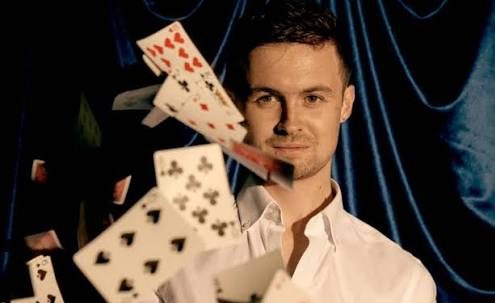
Max Davidson doesn’t even need to be onstage to get his audience to do what he wants. His new Fringe show Strangers opens with instructions for his first participant, who is whoever is first to self-select from the audience, before Davidson even introduces himself. At the reviewed show the potential awkward silence had no time to develop before someone leapt to the stage. Davidson is clearly attracting an enthusiastic audience, and his trust in them is both heartwarming and justified.

Davidson’s theme for his magic is memory. A popular genre of tricks, most magic fans will have seen a magician perform one of two of the effects that he uses, but rarely all of them at once. Notably, during one routine Davidson openly and lightheartedly admits that his goal is to gaslight his participant. Many, perhaps most, magicians will attempt to gaslight some or all of their audience during their shows, the best so successfully that, aside from the tacit consent of purchasing a ticket for a magic show, it passes unnoticed by the audience. Few have the honesty and talent to admit to it ahead of time and still pull it off.

The vast majority of the tricks used may be familiar to magic fans, but Davidson puts them together in routines that, by virtue of their creative combinations, feel fresh and interesting. A highlight sees him read a piece of information from a random participant’s mind that hasn’t been written down or mentioned in any way ahead of time, for a particularly impressive reveal. While at the reviewed show not everything goes perfectly to plan, Davidson pivots excellently to keep the energy up and the magic flowing.

Despite admitting to attempted gaslighting, Davidson comes across as warm and welcoming to those who participate in his magic—the honesty is perhaps beneficial here. Davidson pulls from volunteers for his more involved participation moments, and at the reviewed show there is no shortage. The appreciation he expresses to each participant who joins him leaves the rest of the audience increasingly happy to take a turn onstage as the show goes on.

Davidson’s premise is that the audience might arrive Strangers to him, but by the time they leave he will know everything he needs to to read their minds. By the time they see his impressive finale, the audience may very well agree. His audiences will be pleased to no longer consider Davidson a stranger.

JACK KENYON: TABLE FOR TWO

☆☆☆☆

The Fringe is a busy time of year. It’s been described as the Olympics for culture critics, and it’s even busier for artists advertising, developing, and performing their work for the entire month. It can be difficult to find time for personal life. Jack Kenyon has found a solution. In Table for Two, Kenyon takes one audience member per show on a practice date, to help him recover from a rough breakup and prepare to re-enter the dating world. It’s a cute premise, and at the reviewed show Kenyon manages to have a good date.

Slightly hilariously for a show with this premise, the magic is explicitly themed on Kenyon attempting to fix the aspects of his character that his ex cited as reasons for ending their relationship. Of course in real life regularly referencing your ex’s complaints about you on a date is poor behavior, but in this magic show it provides a useful framework—and, as this is just a practice date, Kenyon has the excuse that he’s getting this unproductive date behavior out of his system. An early highlight is Kenyon demonstrating his newfound romanticism with a card trick, which is sweet, meaningful, and magical, perfectly setting the scene for the rest of the show.

The perspective that this show takes towards its own premise and conclusion feels very innocent, like the fluffiest of romcoms. Unlike many magicians who are eager to point out, often in the closing moments of the show, that they were in perfect control of everything that happened at all times, Kenyon often presents his magic almost as if it were real. A matching trick is, in Table for Two, an indication that Kenyon and his mock date have perfect chemistry, not framed as a demonstration of Kenyon’s abilities. It’s a different attitude towards magic than is usually seen at the Fringe, setting Kenyon apart, and it works perfectly for the style of show that he is performing.

As indicated in the advertising for Table for Two, there is one audience participation role that is especially involved, that of the audience member selected for the date. This participant is selected at random, but in a way that is easy to opt out of for those who would prefer not to be onstage for the majority of the show. Other participation roles are fairly minimal, easily executed by the individuals chosen.

Table for Two might be more of a magical experience than a magic show for the participant Kenyon takes on his nightly date, but it’s entertaining for those enjoying it as a show from the audience seats as well. Kenyon’s livestream set up ensures that the effects that happen on the restaurant table are visible to everyone watching. Whether audience members bought their tickets because they liked the look of Kenyon’s face on his poster and wanted to try their luck at a date, or just to see an unusual magic show, they will be happy that they attended.

KEANU HO: EASTERN ILLUSIONS REIMAGINED

☆☆☆☆

The impact of Chinese culture on the international conception and performance of magic is undeniable, perhaps most obviously in the ubiquity of the classic linking rings effect. However, while Edinburgh increasingly sees magic from a variety of international performers, China’s magical heritage is most often illustrated to Fringegoers by magicians with no personal connection to it. Luckily, this gap in the Fringe magic program has been filled this year by Keanu Ho, who has brought his Eastern Illusions Reimagined from Hong Kong. Ho updates tradition to perform a set that feels both modern and imbued with his own personality, while also acting as a means of cultural expression and exchange.

Eastern Illusions Reimagined is part of the Fringe’s Chinese Culture Week, and perhaps the emphasis on explaining Chinese magical heritage is in part due to this brief, but Ho expresses what feels like a real and deserved pride in that heritage. The linking rings, commonly described as Chinese linking rings, are of course given a prominent role in his opening act. At other points, Ho’s own personality shines through especially clearly. His card routine is a highlight of creative presentation. Describing it as a “card routine” doesn’t do justice to the experience of watching it; Ho turns a trick that many magic fans might have seen before into a moment that is exceptionally fun and exciting to see.

In between the magic, Ho is approachable and informal, chatting with his tech support and the Chinese Culture Week staff. It does, at times, feel less like a magic show and more like Ho is hosting a gathering of friends, introducing his new friends in the audience to his older friends who are involved in the production. There is of course plenty of magic presented, but these interludes highlight Ho’s hospitality as he invites the audience to witness and take part in his routines.

By magic show standards Eastern Illusions Reimagined is relatively light on audience participation. Most of the audience are able to join in from their seats, examining the props that Ho brings for them to examine. For the one more involved role, Ho was able to select the most enthusiastic audience member to participate, and she was clearly overjoyed to be able to experience the magic from a closer perspective. It’s worth noting that the Chinese Culture Week staff who sat in on the reviewed performance helped Ho curate his hospitable atmosphere, most notably in helping this participant get photos and videos of her time onstage.

Eastern Illusions Reimagined is a well crafted, well performed show, both as a piece of cultural exchange and as a magic show in its own right. Ho is an excellent performer who seems born for the stage. At the reviewed show Ho surprisingly revealed that he was mostly retired from performing magic prior to preparing for this Fringe run, and instead works as an educator and mentor to children in Hong Kong. His audience will undoubtedly hope that he continues to create and perform magic, they will be keen to see more from this engaging, exciting performer.

ELLIOT BIBBY: ABRACADADA

☆☆☆☆

In the opening moments of Abracadada, a family friendly show that attracts all ages, Elliot Bibby explicitly welcomes adults with kids to enter and exit the show as often as needed to cater to the little ones. He’s family friendly on both an artistic level and on a human level. The show itself is themed on childhood, from Bibby’s own childhood experiences through to his current experience as a father of two.

As the show progresses, it becomes clear that his opening remarks weren’t just empty words. Beyond the magic, the real factor that sets Bibby apart is in how he interacts with his audience. At the reviewed show Bibby had two very enthusiastic young siblings in his front row, heckling him in that adorable but still potentially disruptive way that kids do. Bibby made sure to get them both involved at appropriate points in the show. His navigation of their interruptions revealed not just the unflappably professional demeanor that has made him such an in demand magician, but also a keen sense of the potential rivalries of sibling politics, which he navigated flawlessly in his responses to them.

Most of the tricks that Bibby performs might be familiar to magic fans, but they are well themed and perfectly performed. Those who have seen any particular trick and think they might know how it works won’t get confirmation from Bibby. A highlight draws inspiration from Bibby’s other Fringe venture, with a child-friendly makeover that results in one of the many particularly adorable audience participation moments of the show. His final reveal is also impressive, he may employ a classic magician closer but manages to use it in an unusually visual, thematic, and engaging way.

The Abracadada theme feels fairly light touch in that as much a description of Bibby’s life as a magician and father as it is a theme for the show, and is used to encompass incidents from his own childhood as well—not a critique so much as a comment on the type of show that Bibby is choosing to perform. That being said, the care and attention to detail in the props and presentation results in an especially cohesive show. Bibby is also in a position to uniquely embody his theme, showing off his dad skills as much as his magic skills in how he speaks to his audience.

As at the writing of this review, Bibby has been regularly selling out his Abracadada run and appears poised to continue to do so. It’s not just families with young kids in the audiences. Bibby is a Fringe regular, and particularly as this is his first solo show in a little while, it’s attracted his long time fans as well, who are committed to him regardless of the theme. Abracadada might be a different theme than they’re used to, but it is a beautiful little triumph of a show. Bibby’s old and new fans left his venue slightly more joyful for having experienced it.

KEVIN QUANTUM: INVISIBLE FORCE

☆☆☆

Fringe regular and favorite Kevin Quantum has clearly built a strong reputation, if the sold out Invisible Force on a Monday evening is anything to go by. He may be family friendly with the kind of arguably educational billing of being both a scientist and a magician that attracts young families, but it’s worth noting that the reviewed show had a decent mix of ages, with plenty of groups of adults of varied ages enjoying the show. Invisible Force is conceptually very interesting, and Quantum is an able and engaging performer.

As with many magic shows, Quantum invites many audience members to the stage. He is by and large a welcoming presence, rewarding most of his participants with biscuits. This is in keeping with the science theme; in the best, kindest way he is here reminiscent of a scientist training their beloved mice through a maze. Quantum’s long term fans may know that he loves a boogie, but it may be worthwhile for him to have a bit more respect for his participants who don’t. At the reviewed show watching him pressure his first participant of the evening into dancing was uncomfortable viewing. The moment could have at least been tied in thematically with a discussion of the invisible forces at play in a dynamic of unequal power, but the opportunity was missed.

There are a few other missed thematic moments in the show, which feels like a shame for such an interesting concept. The thematic elements of some routines feel fairly straightforward, so it feels reasonable that they are performed without explicit elaboration, like a participant’s emotional connection to a lost object leading it back to her, or a participant’s demonstrable connection with Quantum allowing them to subconsciously coordinate certain factors. On the other hand, Quantum’s magical illustration of quantum physics could do with a touch more tie-in, to allow those in the audience coming in with less physics knowledge to fully appreciate the parallel. Quantum is known for bringing an entirely new concept-driven show to every Fringe, which is certainly admirable in its own right, but the reviewed Invisible Forces may leave some audience members hoping that someday he returns to the concept introduced here with further insight and elaboration. 

As a magician-science hybrid, Quantum makes great use of the props of both his passions in the effects that he performs, often leading to visually spectacular results. A highlight is his use of a glittering chain that behaves in a beautiful, fascinatingly unexpected way. Quantum’s own driving force is, as he describes it, enabling his audience to experience wonder, and he is adept at using both science and magic to achieve this.

Quantum is a regular and strong performer, and his many fans certainly won’t leave Invisible Forces disappointed. Some may find it the most interesting work he’s brought to the Fringe in recent years. However, it does feel like the concept work of the show could be slightly augmented to give it a more cohesive feel, plus the reviewed show had a participant issue that, to be fair to Quantum, may have been a one-off. Quantum is always one to watch, and if anything, the ambition evident in the structuring of Invisible Forces is a fascinating glimpse into what makes Quantum himself tick— a sub-theme of the show. It will almost definitely leave audiences curious and excited to see what he comes up with next year.

THE DUO: A THREE PERSON MAGIC SHOW

☆☆☆☆☆

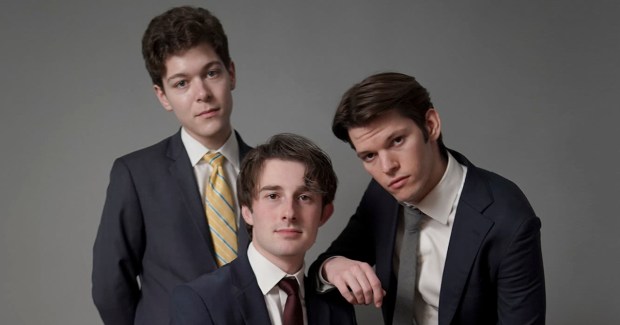
Fringe newcomers Jacob Greenwald, Dan Winter, and Charlie Phillips, are together The Duo: A Three Person Magic Show. If the show title indicates that it will be a wacky experience, the three person duo over-delivers. With the scripted conversations between the three performers that reveal plot, background, and character, it feels a little more like a piece of theater than the average Fringe magic show, but the focus on and quantity of magic reminds the audience of the genre they’re at. The Duo delivers on all fronts, with excellence in magic and a genuinely engaging character-driven story with a conclusion that feels as much like a play as it does like a magic show.

All three members of the duo perform their magic perfectly, as and when required. An early highlight is a card adding trick that most magic fans will think they have seen before, with a twist that may seem simple in its description but that sets Greenwald apart and keeps audiences guessing. If some of the other tricks might seem more familiar, the creative and stylish performance nevertheless ensures that the audience has a new appreciation for them.

Greenwald, Winter, and Phillips use most of the audience as participants over the course of the show, an unusually high proportion of participation even by magic standards. Luckily they are welcoming to their participants, and instruct them clearly as to how to complete their roles in the show with minimal error. The magicians have that professional eye for selecting audience members who can handle the attention for more involved roles, and stick to simpler, seat-based participation for the rest.

As much as The Duo is a magic show and kind of a play, it’s also at least as much about comedy. All three performers have flawless comic timing, whether in their performance with each other on stage or in their interactions with the audience, both as individuals and a collective. And while all three undoubtedly have incredible stage chemistry, they use their performative chemistry hilariously to develop their characters and keep the audience laughing.

The Duo: A Three Person Magic Show is the type of outstanding show that isn’t just incredibly worthwhile for its own sake, but also unavoidably will raise their audiences’ expectations for every magic show they see after it. It’s a difficult one to discuss with anyone who hasn’t seen it, as it seems a shame to reveal much detail when every moment is so well thought through for the impact that it will have on the audience as they watch it, and the careful build toward the final moments. This is a true gem of a show, and will undoubtedly sell out the run as its Edinburgh reputation grows. It’s well worth getting in while you can.

1 HOUR OF INSANE MAGIC

☆☆☆☆☆

The Fringe’s favorite magic supergroup Insane Magic is back, with their tactically titled show 1 Hour of Insane Magic. The title might stay the same, but the content gets reworked each year, and this year really is bigger than ever. Cameron Gibson, Luke Osey, and Elliot Bibby might each get their turn in the spotlight, but the best parts of the show are the ones where they appear onstage together, and they know it, spending more time than ever together this year.

With each performer representing their specialty—mentalism, stunt magic, and sleight of hand—plus the big illusion work that the performers demonstrate together, Insane Magic has something for everyone. While it is first and foremost an entertaining experience for the average Fringe audience, it is also rapidly becoming an exemplar-level primer on excellently performed magic for enthusiasts. A particular highlight is their levitation act, which brings personality, originality, and levity to a classic effect.

With their huge venue that regularly sells out, Insane Magic’s challenges when it comes to audience management are a little bit different. Participants are chosen from volunteers, which is particularly helpful when they might find themselves in front of hundreds of people, a task that not all people would be up for. And just when the audience might think that Insane Magic has become the victim of its own success, with audiences so large that not everyone can see some of the physically smaller effects, they reveal a new livestream camera system that ensures that the action is visible to all. The camera work is skillfully done by Insane Magic’s assistant, Laura Susana Tapia, who isn’t just the assistant for one of the biggest illusions but also assists in general throughout the show. That being said, as discussed below, the Insane Magicians also take a turn at some of the classically assistant roles, and can also be seen assisting each other throughout the show.

As Insane Magic progresses, one of the first things the audience may come to realize is that Osey, Bibby, and Gibson are all unapologetically nerds. If the magic itself wasn’t enough of an indication, their commitment to demonstrating certain effects with painstaking historical accuracy drives the point home. The audience also quickly realizes that they are equally unapologetically feminist, as they take the time to reframe the acts and labels of magical history to bring awareness to the historically under-recognized role of women in magic and ensure that they don’t make the same mistakes in their own work. These two factors combine wonderfully in what must be the best and nerdiest dance interlude in magic show history. Bibby, Gibson, and Osey may have mentioned lasers in their promotional materials, but the audience will still be unprepared for just how much fun this segment of the show is in reality. It exemplifies the factors that have made them so successful: visual, magical, and fun in equal measures, with their trademark dash of silliness. 

Insane Magic is truly a worldwide phenomenon. Their recent venture to the Adelaide Fringe saw them not only selling out shows half a world away from their home country, but also managing to become the third favorite Adelaide Fringe show in the audience review rankings. Their many fans know why. The magic is creative and perfectly performed, and their stage chemistry and kindness radiate through every point of the act. Popular Fringe acts do occasionally feel overhyped, but despite its reputation, Insane Magic feels, if anything, under-hyped. Magic tricks can be described and even replicated, but the wholesome energy that the performers manage to imbue in every moment of every show has to be experienced. Insane Magic regularly sells out their entire run and is on track to do so again, so anyone hoping to see it would do well to book their tickets quickly.

CALLUM MCCLURE: WON’T GET FOOLED AGAIN

☆☆☆

It’s rare and welcome that a magician comes to the Fringe with a show concept that feels so completely different that it almost calls for a new genre category to be added to the Edfringe website. For this accomplishment alone, Callum McClure’s Won’t Get Fooled Again’s combination of magic and computer programming is worth a watch. While magic is a common category at the Fringe, computer programming demonstrated as a performance art is rare, perhaps even unique. This was under appreciated on the rainy weekend that it was reviewed, the weather may have deterred Fringe audiences from venturing out for an unticketed show. McClure’s warm presence made the excursion worthwhile for those who made it in to his audience.

McClure blends magic and technology for all of his effects, even when he looks to the past for a brief interlude to give his computer a break. The bones of the effects he performs will be familiar to those who have seen a magic show before, but the inclusion of technology makes many of them feel new. McClure’s opening routine using a virtual assistant is the perfect way to set the scene, encouraging the audience to interact with his program the same way they would interact with a human performer.

Like all the best magicians, McClure makes participation in his show easy. Those required for an easy task might be chosen at random, but participation that requires a bit more involvement is on a voluntary basis. McClure has no problem getting volunteers at the reviewed show, those dedicated enough to brave the rain to see him were evidently enthusiastic.

In between the magic and computers, McClure makes the beginnings of a point about the use of technology, both the benefits it brings and what it takes away from society overall. This point feels like it could be developed further, McClure’s show and evident professional background give him an unusually strong foundation from which to comment on this.

The blend is not yet flawless, while the magic went to plan at the reviewed show, the computer programming had the occasional glitch. It is maybe even more impressive that a show that felt at times like a work in progress also felt like an incredibly worthwhile performance to see. McClure’s Won’t Get Fooled Again is only at the Edinburgh Fringe for a brief run this year, but hopefully he will have the chance to develop it and continue to perform it. It’s certainly an unusual entry into this Fringe’s roster.

CASPAR THOMAS: THE ART OF CLOSE-UP MAGIC (VOLUME 2)

☆☆☆

Fringe regular Caspar Thomas is back, this year in a beautiful venue overlooking one of Edinburgh’s most famous streets. It’s the perfect setting for his The Art of Close-Up Magic (Volume 2). Thomas is known for providing a solid routine of physical magic, and, true to form, does exactly that. The effects may be familiar to magic fans, but Thomas’s engaging demeanor and solid performance make it a fun way to spend an hour.

Thomas primarily works with cards, but also includes a fun, visual coin effect to start his show. The effects may be known enough that some of the sleights feel a little more obvious than would be ideal, but the audience is already enchanted with Thomas’s stage presence. His series of card effects are well performed and received, getting several audience members involved in the show. A highlight includes Thomas demonstrating a card trick with the help of a “pet”, whose brief appearance is appreciated by the audience. Thomas also includes an effect involving a book, which he reports to have received strong feedback on in previous years. While it doesn’t go perfectly to plan at the reviewed show, it’s a strong enough effect that even a reveal that isn’t quite perfect is still impressive.

Like many magicians, Thomas uses audience participants for most of his effects. Participants are treated with kindness and only asked to complete simple tasks to aid in the magic. Most are able to participate from their seats, and when an audience member is called upon to join Thomas onstage, he’s appreciative and happy to share the spotlight.

In keeping with the aura of his venue, Thomas’s magic and presentation style feel like a well preserved piece of history. At a festival which tends to attract performers actively evolving the next era of magic, it’s helpful and welcome to have a well performed example of why this art form became popular in the first place. Audience members might easily imagine Thomas entertaining audiences hundreds of years ago in the same way that he entertains them today.

ANDREW FROST: JUST LET ME HAVE THIS

☆☆☆☆

Popular card magician Andrew Frost seldom uses other props, but in his new Fringe show Just Let Me Have This he breaks with tradition to briefly consult a dictionary. So, it’s fitting that as his audience filtered out, one woman could be heard saying to her friend, “I’m the definition of flabbergasted!”

Frost is a friendly stage presence from the moment that the audience enters, greeting folks as they come in and getting early arrivals to help with the set up for a trick while the rest make their way in. Like most magic shows Frost uses a significant portion of the audience in the act, and at the reviewed show his friendly demeanor is, at times, tested by the unexpected nature of these interactions. Luckily Frost is a true professional, remaining kind to his participants even when they mistakenly undercut the occasional reveal.

The magic that Frost performs is, as his fans will have come to expect, primarily card magic. It can be a challenge to make an hour of card magic feel varied enough to hold an audience’s attention, and even more so for an annual regular like Frost, but you wouldn’t know it to watch him perform. This year he does include a few other props, including a couple of books and even a mathematical prediction, which he performs with his usual skill. However, Frost evidently knows what his fans come back for, and the card tricks he performs are the clear highlights.

Frost also leans in to his storytelling talent this year, spending slightly more time telling the audience the stories from his life that augment the tricks. He is an entertaining speaker, frequently getting laughs as big as the applause for his magic. In a festival known for having possibly too many comedians, this may not be the factor that sets him apart, but it certainly increases his appeal.

If the sold out reviewed show is anything to go by, Frost’s previous ventures have cemented his status as the Fringe’s favorite card magician. In a way Just Let Me Have This is more of the same, with its perfect card magic to satisfy his fans and gain him more. It’s also different enough to make Frost a reliable performer to keep coming back to. Frost has become the must-see for card magic fans, and Just Let Me Have This will only help that reputation grow.