5 Stars

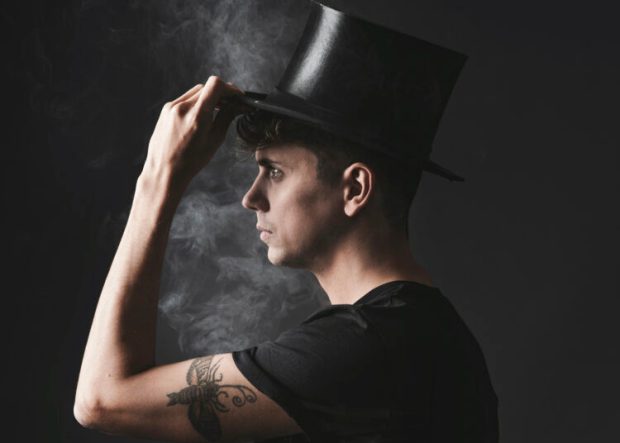
DAVID ALNWICK: THE MYSTERY OF DRACULA

☆☆☆☆☆

Reviewing The Mystery of Dracula means bending the rules, for it is only very loosely a magic show. From the minds of the Alnwick team, the Fringe’s favorite genre-bending siblings, it’s a slight deviation from their theatrical magic offerings of recent Fringes into more of a proper play, albeit told using magic. Magician David Alnwick is here a researcher investigating the origins of the Dracula story, and along the way illustrates his occult findings with stage magic. It’s a style of performance that he has honed over the past few Fringes and it shows. Like seemingly everything that Alnwick produces, the magic itself is flawless, and the storytelling aspect is equally perfectly performed.

As the public have come to expect, the Mystery of Dracula is nothing short of a triumph from concept to performance. Alnwick uses magic sparingly. The mentalism cards he uses in an early effect may look familiar to magic fans, but what is unfamiliar is just how perfectly placed they are in the narrative—plucked from Alnwick’s extensive repertoire for their important role in the story. Alnwick tells the history of magic alongside that of Dracula, and indulges the audience in a display of Victorian-style escapology along the way. It seems a bit random at first, but by the end of the hour is revealed to be a crucial element of the final effect.

There would have been no room for Alnwick to hide if his magic were anything less than flawless due to how little of it is used, but luckily that is never a concern. Dracula is as much a story about the origins of magic and their interconnection to occult beliefs as it is a magic show. Alnwick has never really needed magic to hold an audience’s attention, at least not for as long as this publication has been reviewing him, and this is the proof of it. If it’s more a story than magic, it’s difficult to imagine anyone other than a magician thinking to tell it; and if they did they wouldn’t tell it with nearly as much passion or insight as Alnwick.

It’s easy to dismiss a magician’s stories as more fiction than fact, the necessity of their tricks outranking any need for truthfulness. However, watching Dracula with a Yorkshire local reveals that the settings that Alnwick describes are at least real, the photographs are indeed recognizable as actual locations in the town of Whitby. Hopefully Alnwick has arranged to receive referral fees for customers of one particular restaurant that will undoubtedly receive an influx of new customers after this show.

For Alnwick fans, Dracula fans, and indeed every discerning Fringe fan, The Mystery of Dracula is a must-see show this Fringe. It’s perfectly balanced, not quite so scary as his proper horror or so comedic as his lighter-hearted shows. Alnwick doesn’t look to be giving up his place of prominence in the Fringe magic scene anytime soon.
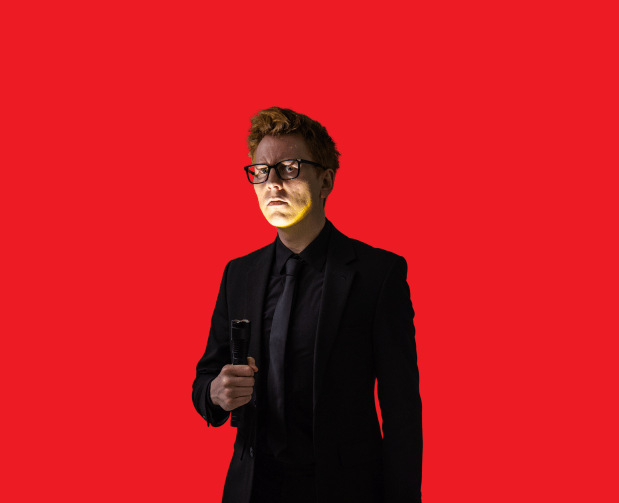
DAVID ALNWICK: NECROMANCER – DAVID ALNWICK IS A MAGICIAN – SECRET MAGIC SHOW

☆☆☆☆☆

The Fringe’s very own energizer bunny David Alnwick and his backstage partner and sister Charlotte Alnwick have brought an incredible four shows to this year’s Fringe—albeit “only” three that are performed every day. The rest of us can only aspire to the Alnwick’s energy levels. His magical play The Mystery of Dracula will be reviewed separately, but the other three deserve more than the brief mention that could be squeezed into the Dracula review. Alnwick is deservedly showing off a bit with this line up, not many could pull off the full range of jazz magic to structured magical play in one Fringe, but he does it with apparent ease.

Their first two daily shows, David Alnwick is a Magician and Necromancer, are, when taken together, a playbook for how to craft a well themed magic show. Is a Magician is the comedy version, for Alnwick’s long term fans who remember him from his ‘cult’ days. It features all that classic Alnwick high energy humor. The highlight and climactic moment of the show is a card trick story featuring a beloved fixture of the Scottish magic scene who many in the audience might recognize by name.

On the other side of the coin is Necromancer, appealing to the horror-loving fan base that Alnwick has cultivated over the past couple of years. Framed as a series of scary games that the audience plays with Alnwick in the role of the Necromancer, it’s a divisive one—perhaps a bit too much for those who are easily frightened, but an excellent Fringe choice for those who enjoy being scared. A highlight for wordplay lovers is a game of “passed the parcel” to pick a participant for a frightening mind reading effect. Magicians and magic aficionados might enjoy seeing one of the tricks from Is a Magician repeated but made scary, an interesting insight into how to adapt the props and performing style to have an entirely different effect on the audience using the same fundamental trick.

Alnwick also performs a jazz magic style secret show every so often at varying times and venues. In these he intersperses a selection of fun tricks and cardistry with poetry recitation. It’s a combination that seems odd at first, but Alnwick makes both a logical argument and a compelling show of sheer charisma to convince the audience that it makes sense. These shows are a fun little diversion for Alnwick and his fans. He’s not telling a story but celebrating his versatility as a magician and performer.

Each of Alnwick’s shows stands on its own, and each is perhaps designed to appeal to a different segment of their fans. Those who have the opportunity to see all of them get a glimpse into the breadth of the possibility of magic as performed by one very talented magician, and where this magician draws the line between magic and theatre.  The shows in this review are advertised as magic, but The Mystery of Dracula is advertised as theatre (with magic components). Alnwick has demonstrated the range of performance that can be classified as magic for the past few years, so while the boundary that he has delineated is just one perspective, perhaps no one is more qualified to judge where that boundary should lay.  Entertainment value of each show aside, it’s exciting to see Alnwick push magic to its breaking point only to keep going. 

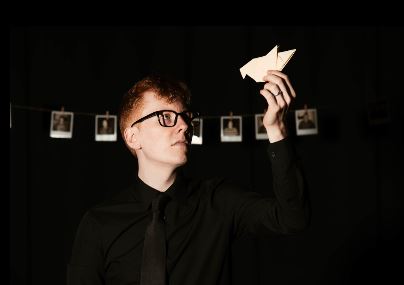
PETE HEAT: HUGE

☆☆☆☆☆

Pete Heat is as Huge as advertised. He absolutely towers over the audience, even in a Fringe venue without a raised platform, and is at least a head taller than every participant who joins him on stage. The title Huge is more descriptive of Heat than of anything that actually happens in the show, which is fitting for a performance that is fantastically weird and surreal (and even at times magical).

There is not a whole lot of magic actually performed in Huge. Heat is a comedy magician, but has reversed the usual proportion of comedy magic. Instead of telling a few jokes in between performing magic, he performs a few magic tricks in between telling jokes and the odd story. If it does occasionally come across as more of a stand up comedy show than a magic show, it definitely feels like the kind of stand up that could only have been written by a career magician. That being said, Heat is careful to cushion his comedy in enough magic that it doesn’t really feel like he’s completely lying about the genre of his act—it’s as if he carefully calculated exactly how many magic tricks he needs per hour to maintain the facade of magic.  The audience is too busy laughing to notice the lack of magic, although it might not be the right show for those looking for a trick a minute. 

The magic that Heat does perform is all perfect; with the little there is in the show, there’s no room for him to hide if anything doesn’t go to plan. Heat gets the whole audience involved in a way that genuinely feels unique. He states that the numbers and symbols on playing cards don’t really mean anything anymore, they’re far removed from the deeply meaningful symbolism of their ancestors, the tarot deck (this theory is not historically accurate, but an intriguing connection to attempt). Heat makes them interesting again by handing out blank cards and having the audience collectively create their own deck, which he then performs magic with. The delayed reveal is worth the wait. Heat also notably performs a mentalist routine that is simultaneously the best and worst mentalist routine at this Fringe. It’s far from a traditional mentalist bit, but is the most flawless mentalism sequence imaginable for the superbly weird show that Heat has put together.

Heat’s post-show merchandise deserves a mention as well. Audience members have the opportunity to purchase a book that Heat put together in anticipation of a mid-show career change. If you follow the instructions this book is the only example of its genre that you really need.

Huge might be several steps removed from what might be reasonably expected of a magic show, but Heat has carved a weird little niche for himself in the Fringe magic ecosystem. Should the repetitiveness of traditional magic become wearying, Huge is the show to see for a reminder of the ingenuity and creativity that magicians are capable of. And with an easily accessible evening time slot at a central venue, there’s no reason not to go.

SUHANI SHAH: SPELLBOUND

☆☆☆☆☆

A newcomer to the Edinburgh Fringe, Suhani Shah presents a semi-autobiographical show with Spellbound. While she does deservedly brag a bit—about winning over her parents’ approval to devote her life to magic at a young age, and managing to find daily audiences as a talented youngster—she’s relatively humble about her current renown in her home country. To imagine her place in India’s cultural consciousness, UK audiences might find it helpful to picture Derren Brown as a woman with about ten times the Instagram following.

Shah’s easy rapport with the audience emerges from the start. She has a personable stage presence, and audience volunteers respond to her like she’s an old friend. At the reviewed performance some may have been a little too friendly. One of her first participants in particular was eager to shoot his shot with her, apparently in front of his wife, and Shah integrated their banter as a running joke for the rest of the show. Shah asks for volunteers before picking on random individuals, and she has no lack; in the reviewed show she did not need to resort to pulling up the unwilling.

The actual mentalism that she performs is nothing short of flawless. The basis of many of her effects will be familiar to magic fans, but she adds her own twist. Shah tells the audience about her childhood pitching up in a venue for months at a time to perform, and rightly points out that the Edinburgh Fringe is her natural habitat. One of her well personalized effects is her retelling of how she convinced her parents to allow her to lead this life, a blindfolded trick using her father’s handkerchief and a piece of her mother’s chapati dough—or here, a bit of dough she brought along and an audience member’s handkerchief. She responds blind to prompts in varied ways, allowing for new reveals to the same trick.

While acknowledging that everything that she does is a learned trick, Shah does not shy away from doing her level best to convince her audience that she’s genuinely magical. In a clever bit of show planning, the most fun element of this comes after she winds up a more traditional mentalism routine, when the audience is expecting another set-up but instead gets the immediate gratification of more magic. She doesn’t reveal anything that could potentially cause embarrassment, and in fact tells a funny story about when she learned to avoid that, but the details she discusses are specific and personal enough to make it a highly memorable moment in the show.

By Shah’s account there are at least a couple of similarities between the Indian and the Edinburgh Fringe magic scenes. In both cases there are very few female magicians and even fewer mentalists. As far as this publication is aware, Shah herself is the only female mentalist at the Fringe this year—although we welcome correction if any other female mentalists at this year’s fringe would like to get in touch. Spellbound may be Shah’s way of introducing herself to Edinburgh but it feels like the launch of a new Fringe superstar. In that endeavor Shah can only be a success, everyone in her Spellbound audience will be eager to see more from her.

More information on Suhani Shah can be found here.

BEN HART: WONDER

☆☆☆☆☆

Edinburghers fear not: an obligatory goth magician remains stationed at the Pleasance Grand to guard the night.  Ben Hart’s Fringe show Wonder was all but sold out on a rainy Monday evening, a testament to the work he has been putting in to building his local fanbase over the past few Fringes. And as always, Hart does not disappoint.  With his warehouse-chic costuming and staging, Hart is in turn funny, unnerving, and magical, but never dull to watch—the whole hour is entirely captivating. 

To quote an insightful fellow reviewer, Hannah Risser, “magicians fucking love putting money in oranges”.  It’s about as cliché as finding a card from a shuffled deck.  This Fringe is lucky enough to see two re-imaginings of this classic effect that genuinely make it feel fresh, and one of them is here in Hart’s show.  Similarly, a classic restorative effect is here woven in to a story with a fantastic fully immersive conclusion.  This creativity keeps even those who go to multiple magic shows excited to see more. 

Some of Hart’s magic happens on a smaller scale, and Hart has employed a live stream camera to beam his hands up to two large screens above his stage.  He makes great use of this, he is excellent at playing to both the audience and the camera, and for bigger effects he uses the live stream to give the audience new perspectives from which to appreciate his magic.  While his participants get the super close view—and despite Hart’s well constructed eerie, disconcerting air no one is harmed—this ensures that the full audience feels included.  When the camera is not in use he’ll casually flick the buttons and lean on it, making it feel like a natural part of the show. 

Hart manages to end Wonder on a note that is both uplifting and darkly comic, the perfect combination for his show.  He warns the audience early on that he loves a plot twist, and the semi-meta nature of the one employed is wonderfully creative. The incredible Hart is well worth a ticket, and a return visit next Fringe as everyone who sees him will definitely want to see him again. 

More information on Hart and his performance dates can be found here.

DAVID ALNWICK: NIGHTMARE MAGIC

☆☆☆☆☆

As a reviewer it can be a little bit annoying when a performer reworks a show that previously merited five stars and makes it even better—of course we’re happy for them, and pleased to be able to watch such a great show, but it’s hard to contend with how to rate an already perfectly rated performance. David Alnwick’s Nightmare Magic is similar enough that returning fans will have an idea of what they are getting themselves in for, but different enough to come across as a distinct play/magic show.  Alnwick is exceptional, as ever, and is possibly even scarier than before, but that’s why the audience chooses to attend this show. 

An immediately new feature this year is the playbill that each person is handed on entering.  It features Alnwick’s usual list of recommendations and social media details—the food recommendation section may be new—as well as, more excitingly, a short story written by Alnwick that he asks the audience to read before the show.  Nightmare Magic previously bridged the genres of theatre and magic, but now includes literature as well.  Alnwick’s vision is matched only by his skill, every aspect of this ambitious project is executed to the highest level. 

The acclaim is of course due to Alnwick, but the realized ambition of Nightmare Magic is also a testament to what can be achieved within the PBH Free Fringe.  The PBH is better known for its accessibility for less-well-known artists to put on their first Fringe show or two, but here we see it equally well suited to a seasoned performer at the height of popularity creating bold new work. 

The magic of Nightmare Magic is perfectly executed and perfectly woven in to the narrative.  The most satisfying is watching the final moment of the show slowly revealed over the course of several effects.  Alnwick hasn’t just used magic here, it’s fully integrated and necessary to the narration of his plotline—a truly magical ghost story.  Audience members and participants in particular may feel lightly terrified of Alnwick’s scary character, but no more than is called for. 

When promoting Nightmare Magic in his other shows Alnwick is keen to emphasize that it may not be the right choice for the full range of his fans.  It’s certainly a departure from his classic magic style. Nightmare Magic, however, is perfect if you don’t mind the fright, for when you want to see a wider range of what the incredible Alnwick is capable of. 

More information on Alnwick and his performance dates can be found here.

CHRIS COOK: REFLECTIONS

☆☆☆☆☆

Chris Cook is a Free Fringe institution, now returned to his perennial late afternoon slot in the ballroom of the Voodoo Rooms, a PBH magic hub.  Like many of us, Cook has done some reflecting over the course of the pandemic.  Unlike most of us, he has transformed his ruminations in to a thoughtful and inspiring magic show, Reflections. 

For the repeat attendees in his audience the tricks and themes of Reflections may feel reminiscent of Cook’s past shows.  A few strong magical and emotional beats from 2017’s Control come through in particular.  Fans of Cook’s more meta work will also not be disappointed, as the show develops to touch on the unacknowledged energy that we share in in-person interaction through the lens of the relationship between a magician and their audience. 

The magic in Cook’s shows is always flawless.  A highlight of this year is a mentalist effect featuring a multicolored cube.  The first half of this is often performed in popular late-night mentalist acts, but here Cook adds a magic twist that keeps the audience on their toes.  The segment leading in to this, that began with a full audience participation, is a highlight as well.  This got several individuals fiercely competitive for the chance to join Cook onstage.  At the reviewed show Cook dealt with an unusually lively audience, but had little trouble maintaining control of the room. 

Cook’s brand of emotive magic is invariably an absolute delight.  His late afternoon shows are an invitation to consider your life, regardless of the title (“Reflections” of course openly encourages this), while watching some magic and listening to some stories.  If you’re open to it this will be a comfort—a sort of guided meditation with plenty of jokes and a sprinkling of magic.  Cook is gradually making the world a better place one audience at a time.  While he talks about how his audience can show their appreciation for his magic tricks, this is his biggest effect and it’s a shame that there’s no defined moment for him to appreciate it. 

It’s difficult to review Cook without sounding like a member of his cult, and perhaps it only makes it worse to say that if you attend his shows you’ll understand.  That being said?  This is definitely one to see.  His always are. 

More information on Cook and his performance dates can be found here.

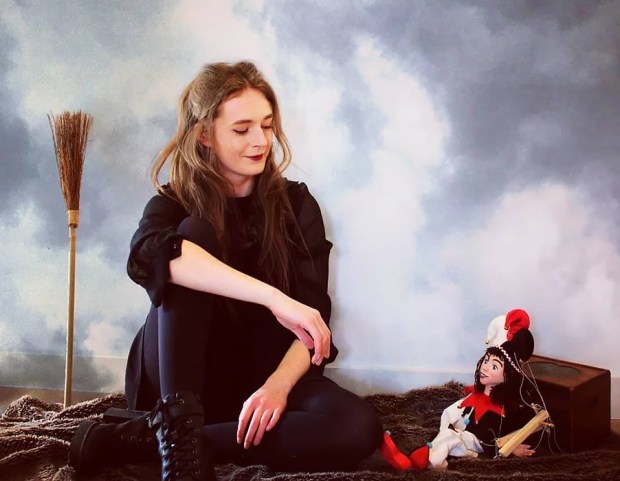
AVA BEAUX: WHICH WITCH

☆☆☆☆☆

Ava Beaux makes a name for herself as a rare female magician, or “magish”, as she prefers to be called.  For reference for those who may be unfamiliar with the gender balance of magishes, out of a total of over fifty magic show listings in this year’s Fringe just two feature a female magish.  Percentage-wise this year is sadly probably one of the better ones, post-pandemic overall numbers are down and regardless of the total number of shows usually only two or three feature women as magishes.  If memory serves Ava Beaux herself was the only female magish at last year’s Fringe, participating virtually over youtube.  That being said, while she mentions this in Which Witch, this is not the point of the show nor why it is worth watching. 

Which Witch creates two characters out of the one performer, Ava and Beaux, and features their struggle for control.  Ava is the one who is recognizable as a conventional magish, while Beaux likes to wear extravagant hats and has trouble communicating with the default world.  In both personas Ava/Beaux performs excellent magic.  Appropriately, Beaux has a weirder take on tricks, which was wonderful to see—although it is perhaps worth noting that ethical vegans may prefer not to be Beaux’s audience participant.  Ava/Beaux relies primarily on sleight of hand, but it was Ava’s mind reading trick that got the biggest reaction on the evening of this review. 

Ava and Beaux each charm the audience in their own way.  Ava has her hilarious stream of stories that keep the audience laughing while marveling at her tricks, while Beaux’s unfettered delight at finding herself in the audience’s presence immediately wins us over, in spite of the warnings.  Neither one makes her audience participants feel unsafe in her presence; while Beaux is less predictable any potential for destruction is focused on her own props. 

The finale of the show is visually gorgeous, it is worth sitting through the show even if you hate magic for the chance to see the last few minutes.  The theme of finding the power to take control of your own healing from trauma caused by others is unexpectedly heartfelt, and appropriately timed for a world where both global events and political elites cause suffering that is often impossible for any ordinary individual to stop—but we can take control of our narrative. 

Ava Beaux’s longer term fans may have a different appreciation for Which Witch.  She has always been a storyteller, but here we see her put down literary inspiration and step in to her own story.  It has been a privilege to watch her grow in to her talents and hone her skills.  Those finding Ava Beaux for the first time this year may have to settle for a perfect, stunning magic show, but surely everyone who sees her will be excited to see what she does next. 

More information on Ava Beaux and her performance dates can be found here.

CHARLIE CAPER: MAGICAL

☆☆☆☆☆

The simplicity of the show title “Magical” perfectly reflects Charlie Caper’s 2022 Edinburgh Fringe show.  He doesn’t bother with an overarching plotline for the show, the closest we get is his recurring bowtie magic motif.  However, he is a master of the street magic style that he performs.  Everything bumbles along perfectly in keeping with his slightly scatterbrained character, without him ever losing control of the stage. 

The highlight of Caper’s shows is never the magic, as perfectly performed as it always is.  Caper always brings a selection of the robots that he creates to join in his show, to play the assistant role in a few of his tricks.  It’s the marvel of these robots and the delight of his adorable interactions with them that really sets his shows apart.  This year we only get two of them (Caper’s fans may remember that he devoted his show to introducing us to hundreds of them a few years ago) but they are as delightful as ever.  The most memorable one is given a little bowtie to match Caper’s own. 

The magic that Caper performs may be recognizable to those who attend a lot of magic shows, but here we see it performed flawlessly.  His brief coin trick uses an extra large coin, which is helpful for those seated toward the back of his venue, and his card tricks similarly involve a signed card to make it easier for the whole audience to follow along with the action.  A veteran street magician, it’s evident that Caper has honed his act in front of large crowds and easily avoids any of the usual pitfalls of performing sleight of hand to such a big group.  He is especially charming when he invites a young child on stage to participate in a trick, indulging her curiosity about his props without letting it break his flow. 

In Magical, Caper’s effects are always perfect and often beautiful.  Though he is not especially well advertised, his reputation alone gets him a decent crowd early in the Fringe, which can only grow as word of his current show’s quality spreads.  Fringe goers interested in excellent magic would do well to spend an hour with Caper. 

More information on Charlie Caper and his performance dates can be found here.

DAVID ALNWICK: NIGHTMARE MAGIC

☆☆☆☆☆

The first nightmare of David Alnwick’s Nightmare Magic is trying to get a ticket – he is still part of the PBH Free Fringe, but is so popular that placeholder tickets are given out an hour before the start time in an attempt to reduce his usual hours-long queues.  This has effectively shifted the massive queuing to an hour earlier, and turned it in to more of a scrum in the bar area of his venue.  This publication has said it before and it bears repeating, Alnwick is wildly, ridiculously popular.  Nightmare Magic is framed as a demonstration of his mysterious objects’ powers, but what it really demonstrates beyond doubt is that Alnwick more than earns his reputation with every show that he performs at the Fringe. 

Alnwick goes light on the actual magic here.  Nightmare Magic is as much a one man play as it is a magic show, and he easily holds his audience’s attention without it.  As much as Alnwick establishes that he doesn’t need magic to be an effective performer, being a magician he did of course create a show that uses magic to bring his stories to life.  His variety of mentalist and sleight of hand tricks are performed perfectly.  Between the perfection of his execution and the well thought out props, the magic blends seamlessly into the plot of the show. 

The show is scary, especially for the easily frightened like this reviewer.  Alnwick’s participants are not spared from the frights, but it is nothing out of the ordinary for show billed as a horror story.  For those who might be worried, it’s more of a creeping sensation of impending doom than anything like jump scares.  You might want a comforting cup of tea and an episode of your favorite sitcom before bed. 

Alnwick has reached a point in his career where he could coast on the formidable skill set that earned him his reputation and probably still cause daily stampedes for a spot in his shows.  But Nightmare Magic shows that he has instead chosen to innovate, pushing his own boundaries and the boundaries of magic as a genre.  In watching a range of magic shows it is often evident that Alnwick in particular is a source of inspiration for many young Fringe magicians, so it’s especially nice to see him modeling a wide range of approaches to magic across his portfolio of shows.  This year the cult leader has gone a little bit mad, and is more interested in discovering his audience member’s names than hearing them chant his own.  Next year could be anything, but knowing Alnwick it will at the very least be well worth a watch.

More information on Alnwick and his performance dates can be found here.