
3 Stars

ANGUS BASKERVILLE: NAUGHTY OR NEURODIVERSE: MAGIC FROM ANOTHER PLANET

☆☆☆

In Naughty or Neurodiverse: Magic from Another Planet, Angus Baskerville uses magic to give insight into his life growing up as a neurodiverse individual. This comes in the form of tributes to influential mentors and media in his life, as well as moments that illustrate his personal outlook on how to live life to its fullest potential. The name of the show could read either “adult entertainment” or “child friendly”, but as the afternoon time slot suggests Naughty or Neurodiverse is decidedly child friendly. It’s an entertaining hour of well performed and largely personalized magic.

One of the primarily perils of performing a child friendly show is that there will often be children in the audience. Even the most adorable can have moments of distractingly chaotic energy. Baskerville was unlucky enough to have a group of three such children in his audience on the day that this show was reviewed. He did everything he could, inviting them to participate at the first opportunity, inviting their responsible adult to participate in an effect that resulted in her being given sweets that she could give them, and, in the end, studiously ignoring and talking over them. Baskerville’s audiences can feel confident that he will deliver his show regardless of audience distractions.

The magic in the show is often personalized to be both child friendly and specific to Baskerville. Magic fans may be aware of an often used effect involving paper bags, which Baskerville has on display onstage as the audience enters his theatre. However, he does not perform the traditional trick, which may have proved frightening for some of his younger audiences, instead combining the trope with an additional mind reading moment for a unique, and less scary, take. Baskerville’s Rubik’s cube narrative is especially sweet, taking another classic of magic and performing it in a way that gives the audience a new perspective.

Baskerville gets a lot of members of the audience involved in the show, some from their seats and some to join his onstage. In a relatively intimate space it is not an intimidating audience, and, while he remains very much the figure in charge, Baskerville creates a friendly atmosphere amongst members of the audience. One individual is tasked with helping the final reveal by writing down specific elements of the show as Baskerville instructs, and makes friends with the others in his immediate vicinity to make sure he tracks all the right information.

Naughty or Neurodiverse may feel, at times, a bit disjointed as a show. The sole unifying feature is Baskerville himself, and while the neurodiversity theme is also present it seems to take second place to Baskerville doing the routines that he likes. They’re good routines, it’s a fair choice, but does result in a show with a slightly less cohesive feel. Nevertheless Baskerville is a talented performer with a natural creativity that will be obvious to all who see this show. Attendants will be left wanting to see more of what he is capable of.

More information on Naughty or Neurodiverse and its performance dates can be found here.
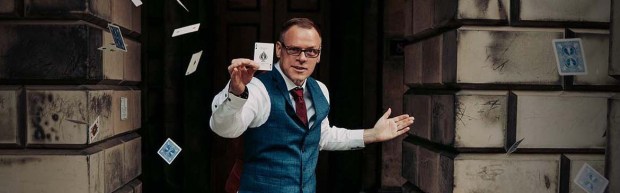
DAVE REUBENS: FREAKY MAGIC

☆☆☆

Dave Reubens weaves a freaky tale this Fringe. His Freaky Magic is themed on an heirloom book of cult tales that he received from his ancestors, and the show is structured as a reconstruction of the magical experiments that it contains. Reubens has many skills and the show makes room for him to show off a range of them.

The exact tricks involved may not be especially novel to those who see a lot of magic shows, and if the performance by and large goes to plan there is the odd moment that the sleight involved feels a little more obvious than would be ideal. Specifically, an early moment involving an audience participant’s paper money sees Reubens fondling his contract for a bit longer than he could get away with. He doesn’t quite give away the magic at any point in the show, but it consistently feels like it could be slicker.

The inventive plot line that runs through the show makes it compelling. As has historically been the case with Reubens, he’s family friendly and best suited for slightly older children. The plot of Freaky Magic is gently frightening in a way that will hold kids’ attention and make the show extra memorable for them. Reubens makes an effort to involve the younger audience members in the act, at moments that are age appropriate and suited to the child’s temperament. A shy child on the younger side might be asked to keep an eye on a book from her seat, while a slightly older child might be asked to get involved onstage to commune with the dead.

As with all magic shows, the most unpredictable element is the audience, and the variety of reactions to the tricks can be memorable. It can be refreshing to see the responses of those with less experience—so much of magic is about surprise. A popular category of effect involves a step where an onstage audience participant reveals that a piece of paper has been magically torn. At the moment of this revelation at the reviewed show of Freaky Magic, a seated member of the audience could distinctly be heard to gasp, “someone ate it!” Reubens has many planned jokes and his humor lands with the audience, but sometimes an unfiltered exclamation of amazement just can’t be beat.

Freaky Magic may not yet be perfect, but it’s certainly a fun show, especially for fans of low stakes horror. Younger audience members in particular may be enthusiastic, and will be treated well by Reubens. With the majority of seats filled on a sunny Edinburgh afternoon, he is clearly deservedly successful this Fringe.

More information on Freaky Magic and its performance dates can be found here.

DANIEL SINCLAIR: COMEDY HYPNOSIS SHOW

☆☆☆

Hypnotism tends to be a favorite at the Edinburgh Fringe. Whether people genuinely want to experience hypnosis, want an excuse to be silly, or doubt the reality of hypnosis and come looking for proof, it always gets a large crowd. Daniel Sinclair’s lunchtime Comedy Hypnosis Show at the very central Voodoo Rooms is no exception. The focus is on those looking for direct experience, but Sinclair caters to all classes of audience in his show.

For the ones looking for fun, Sinclair starts his show with the audience being asked to repeat a pledge to have fun and be silly. This is followed up with the audience reshuffling and then being asked to physically interact with each other, splitting up existing groups and making friends of strangers. Hypnotism is not an exact science and no one hypnotist’s stage methods will work on the entire audience, but Sinclair ensures that everyone has a chance to be a bit silly at his show, regardless of their susceptibility to his methods.

The hypnotism portion is of course the primary part of the show. Sinclair places emphasis on allowing everyone who expresses interest to have the opportunity to try to be hypnotized, filling the stage and front row with the keenest for the most focused experience, and encouraging those who don’t manage to get one of these seats to get involved too from wherever they are. A fair proportion of those who take part experience at least some level of hypnosis—clearly his methods are suitable for purpose.

Sinclair acknowledges that there will be skeptics in his audience. Once he has his best hypnotized participants, he shows off the features of their state to prove the veracity of his claims. This is not a big portion of the show, and the focus is always on giving the hypnotized folks the best experience. However it is nice to see Sinclair acknowledging and interacting with all the segments of his audience.

In a popular genre with relatively few performers, hypnotism shows in Edinburgh will undoubtedly all be busy, and even in that environment Sinclair does his best to get as many people as possible involved. Everyone who finds themselves in Sinclair’s audience will find themselves entertained, regardless of their view of hypnotism prior to seeing his show.

ADAM B MAGIC: WELCOME TO MY REALITY

☆☆☆

Getting an audience can be challenging during the Fringe. At the reviewed show of Welcome to My Reality, Adam B received the Weegie hug of death—he was lucky enough to be chosen as the first stop for a Glaswegian language exchange group’s day trip to the Fringe. The large international crowd made for an extra energetic show. Adam presented a series of mostly comedy magic, loosely themed on his mental health struggles. If at times it comes across as a bit of a therapy session, the magic keeps it engaging, and Adam does not dwell excessively on the negative.

At the reviewed show Adam had a plentiful crop of potential audience participants to pick from. The sheer size of the audience dictated convenient choices of individuals at the front and open edges of the rows of seats, and all selected were enthusiastic on stage. While this did not come up at the reviewed show, the audience gets the impression that as a self-described “neurospicy” individual Adam would be more respectful than most if he happened to select an audience member who did not want to join him. The one slightly awkward moment was when Adam tried to bond with a specific member of the audience over their mental health conditions; perhaps because she ended up being the only one to volunteer her fellow neurodivergence she seemed to feel a bit picked on in front of the large group.

The specifics of the tricks that Adam performs are not quite so unusual that a regular attendant of magic shows will see anything new, but they’re different enough that more causal magic fans certainly will, and Adam performs them well. A story narrated with the use of a string is a particular highlight with the members of the audience sitting near the reviewer. This was especially impressive as this was pretty far toward the back of the room, and he managed to make such a delicate piece of magic both visible and impressive from the stage.

Adam employs a variety of stories to compliment his magic, and if at times they feel disjointed this is in line with what he explains of his ADHD theme. The stories range from a fantasy involving skydiving bubbles, to the struggle of making connections with others while dealing with mental health issues, to more standard magician fare when performing with his colorful handkerchiefs—a wide range. The demonstrable creativity is a welcome addition that keeps even the most experienced magic show attendants interested in his performance.

Lunchtime show slots can feel like early morning meetings by Fringe standards, and Adam is a great way to start the day. He will undoubtedly continue to pack out the room even when the Glaswegians aren’t in town.

CAMERON YOUNG: THE SCOTTISH MAGICIAN

☆☆☆

It must be acknowledged that there is absolutely an innate appeal to spending an hour looking at a man in a kilt. Cameron Young, a Scottish magician who titled and themed his show The Scottish Magician seems to understand the allure. His show contains plenty of magic and plenty of celebration of Scottish culture—exactly as promised.

The celebration of Scotland starts immediately, with an audience participant invited to take part in a trick in exchange for the chance to win a classic Scottish snack. Young is kind to his participants, frequently offering rewards in the form of magical mementos as thanks for taking part in the show. He gets increasing numbers of volunteers as the audience catches on to this and everyone decides that they want a physical reminder of the magic.

While much of the magic included is familiar favorites, Young also includes some fun reinterpretations that make the classics feel fresh. Of particular note is his take on a ring effect, which involves an exciting series of revelations. It is, however, a mixed result, as this effect specifically is one of the ones that is unfortunately easy to catch out from the first few rows, even when the audience is not trying to break the spell of the magic. Young is much more successful at concealing the sleights of the classic tricks, perhaps indicating that this one simply requires a bit more practice. The audience is lucky to see his fresh new magic in progress.

The narrative around the tricks does feel at times a bit disjointed, with Young chatting at various points about his childhood adventures as a secret budding magician and then, at times, breaking into rhapsodic praise of Scotland—its food, drink, and celebrities. Aside from the kilt and the lovely accent, his enthusiasm in speaking on these varied topics does keep the audience’s attention. If it’s a slightly disjointed show thematically, it is nevertheless unfailingly entertaining.

It is hopefully not surprising to magic fans at the Edinburgh Fringe to hear that Young is not the only Scottish magician at the festival. He is, however, the only one who has themed his show on his love for his country. For mostly skillful magic, an enjoyable series of stories, a safe space to shout a bit about your love for Scotland, and of course a man in a kilt, The Scottish Magician is the show to see.

More information on The Scottish Magician and its performance dates can be found here.

ZOOLLUSIONIST

☆☆☆

Tucked away in the basement of a pub, the Zoollusionist is an absolute delight of a show. The titular Zoollusionist is a real life zookeeper, Lizzie Durkin, a Fringe newcomer who is doing a great job with her debut show. Durkin lists several ways that the audience can tell her day job, but the most obvious is the way she speaks, with the classic cadences of a wildlife lecturer. It’s the perfect immersion into her zoo-themed performance.

The Zoollusionist is, naturally, themed on zoo animals. As suggested by the advertising, it’s an especially excellent show for penguin fans. A highlight is a trick that involves the audience members holding up photos of different penguins from Durkin’s zoo. Magic aside, the penguins are just too cute. The audience participants at the reviewed show, this reviewer included, had a great time comparing penguins and admiring each others’ photos. They are an adorable species that should be universally beloved, and a great choice to take center stage for so much of Durkin’s show.

Perhaps because of the day job, Durkin’s performance feels very child friendly. Youngsters who are old enough to enjoy a zoo will probably be old enough to enjoy this show. It’s perfect for adults who love zoos and/or animals as well. Durkin does not try to hide the problematic aspects of zoos, and provides information on how contemporary zoos rectify the problems of their pasts.

While Zoollusionist is a great debut, Durkin does exhibit a couple of the classic first-show issues. Performing an hour long show isn’t the easiest thing to step in to, even for someone with a public-facing day job. Some of the transitions feel either abrupt or drawn out with chat that feels only loosely scripted. She also on occasion stumbles over how to instruct her participants to engage with her tricks effectively. On the other hand, the magic all goes to plan and is perfectly themed on her chosen subject. Durkin mentions that at prior Fringes she attended a lot of other magic shows, and the research shows. The missteps are those that can only be rectified with the actual performance experience that she is now getting in.

For a fun, free to enter Fringe show with both magic and a light educational experience, The Zoollusionist is a great option. Hopefully Durkin has enough fun to come back as a performer, she’s a natural on stage and already skilled with both her magic and show construction. The young and young at heart cannot fail to have a good time at The Zoollusionist.

STEVE WILBURY: THE UNLUCKIEST MAGICIAN

☆☆☆

The title of Steve Wilbury’s show The Unluckiest Magician is a thesis statement that he amply proves over the course of the show. Part magic show, part medical horror story, this show had a broad appeal. That being said, it is not for the faint of heart. Those who would rather not consider the huge variety of ways that the squishy bits underneath their skin can sneakily try to kill them would probably be better off giving this one a miss. It’s a fascinating, magical 45 minutes of a show, with real life plot twists that are even more surprising than a magic trick.

Wilbury sets the medical scene early on with one of his magical effects, swallowing needles, which he explains is the first trick he learned that caught the attention of the many nurses who cared for him throughout his medical issues. Straight off the bat the audience is confronted with fear for the internal organs. The trick is well performed, and the intimate theatre means that the glittery needles are easily visible to all in the audience. On the flip side, one of the prettiest effects is Wilbury’s demonstration of how it feels to be on heavy duty painkillers—without handing out said painkillers to the audience. It’s a really beautiful stunt with special juggling balls that has to be seen to be believed.

The Unluckiest Magician does contain a fair amount of magic in addition to the medical stories, although unfortunately on occasion this is not the strongest element of the performance. With the note trick in particular Wilbury would do well to mind the ends of his fingers. With a magic show predicated on the unluckiness of its star the odd slip up is almost in character, and after hearing Wilbury’s story the odd sleight misstep seems like the absolute least of the problems that he has had in his life.

In addition to sharing his story, Wilbury offers helpful advice on dealing with both physical and emotional difficulty in life. On the face of it it’s straightforward enough to hear, but means a little more coming from someone with such significant lived experience. Many Fringe performers seem eager to be rid of the audience by the end of their show, but Wilbury is the exact opposite, inviting his audience to have a further chat after his final trick if they are dealing with similar issues.

The Unluckiest Magician is narrowly focused, which inherently sets limits on its target audience, but it’s surprisingly enjoyable even for those who aren’t natural fans of medical horror stories. Wilbury is a funny guy and charming performer, and his attitude towards both his past and his future is inspiring. One of the benefits of the Fringe is finding performers who tell such niche stories, and Wilbury is a lucky find for all who make it in to his audience.

More information on The Unluckiest Magician and its performance dates can be found here.

PADDY THE IRISHMAN: HOW LUCKY CAN ONE MAN GET

☆☆☆

Paddy the Irishman is a frequent flyer at the Edinburgh Fringe, and in his new show How Lucky Can One Man Get, he tells the story of his eventful life interspersed with jokes, magic, and music. He caters to the family friendly crowd with his early morning time slot, at the reviewed show there were several families with preteen and teenage children. Paddy has had an interesting life so far, and in his company the time flies by.

There are relatively few magic tricks in the show, but those that are there are performed well. Paddy tells the audience about his childhood in Northern Ireland, and includes a magic trick that saved him from the army early in the show. For the younger folks he also demonstrates a common street scam, which at the reviewed show sparked a particular interest in the young volunteers he chose to help him demonstrate it. The participants could be heard discussing theories and phrases to further research the effect as they were leaving the show. Even if they do not end up inspired to become magicians themselves, learning how their attention can be so easily manipulated is a great lesson for young people today.

Not every story is accompanied by a trick, but that’s not detrimental to the show. Paddy has had many adventures in his life that are a pleasure to hear about. For audience members who have been lucky enough to have grown up in peaceful times, hearing about his youthful encounters with military forces is fascinating to hear about. Paddy’s casual attitude in recounting these episodes is interesting to note. He has also travelled widely and lived in several countries, each of which is described in turn. The songs that Paddy sings are related to his stories as well, but really just an excuse for him to show off that he recently learned to play guitar. This is inspiring in its own way. As Paddy points out, he’s lived a longer life so far than many of the people he gets in his audiences, and demonstrates his continued love of learning and adventuring in part to show us that we can age as gracefully.

How Lucky Can One Man Get is essentially a one man, one show full Fringe. He’s got the magic, comedy, and music all in one hour long performance—going to this show is like a speed run of the Fringe experience.

CHRIS CROSS: NOT PLAYING WITH A FULL DECK

☆☆☆

Sometimes performers come to the Fringe with their sharply honed, beautifully produced masterpiece show that fully encapsulates the extent of their creative abilities. Other times, they’re just here for the party and a laugh, and invite the occasional audience to join in. With his performance of Not Playing with a Full Deck, Chris Cross feels squarely in that second category. And for what it is, it’s a good performance. Cross is in his element onstage, with jokes and magic with a blend of varying quality that feels perfectly balanced by years of experience in keeping people entertained.

Flyers for the show warn that it’s “not for the easily offended”, which may sound worrying at first, but Cross’s bark proves worse than his bite. His crowd work may feel more like a comedian’s than a magician’s, but his prodding remains gentle enough for the audience to still like him. If he does make the occasional marginally offensive joke, it feels almost like a tick box exercise; like the weird uncle at Christmas dinner who sticks his finger in the pudding not because he wants to taste it but just because he likes the idea of fulfilling the archetype of the family’s weird uncle. Perhaps this is a sign that the audience of the reviewed show was indeed the “not easily offended” that the flyer requested.

Cross has demonstrably significant experience as a magician and in Not Playing with a Full Deck it definitely shows. Card trick fans may even just appreciate the fancy shuffles and card choreography that he employs during the requisite card trick sequence of the show. The card tricks themselves are a highlight as well. Every magician who has ever performed a card trick has, at some point, claimed that the trick they perform is the Best Card Trick Ever. Cross is no different, and he puts forward a strong contender for that title. At the reviewed show Cross performed several tricks with a card deck he borrowed from a member of the audience, which provided a lovely little moment of unplanned audience participation. Cross’s stunt work is equally perfectly performed, timed down to the second for maximum effect.

As evidenced by the highlight reel that Cross plays before the show, and indeed by the archives of this publication, Cross is a highly skilled magician perfectly capable of performing an excellent five star show. He may not have chosen that route this year, but his fun mess-around show is still well worth the ticket price and hour of the audience’s time. If at times it feels like he is conducting a group interview for post-performance drinking buddies, who can blame him? The world is burning and we could all use a laugh, a trick, and a drink.

More information on Not Playing With A Full Deck and its performance dates can be found here.

DIMIS MICHAELIDES: IT’S MAGIC, BUT IS IT ART?

☆☆☆

One of the joys of the Fringe is getting to peek inside the cool buildings that dot Edinburgh’s landscape. It’s Magic, but is it Art? is in one such building, in what feels like a small, old church hall with a lovely arched ceiling framing the stage. As performed by magician Dimis Michaelides, the name is not 100% representative of the content of the show. While there is some conclusion drawn about the nature of magic, the majority of the stage time is devoted to illustrating art through magic—ostensibly to draw the parallel, but in practice it feels more like a magical art history lecture. This isn’t a bad thing, it’s a different kind of lens through which to view magic, and it does ultimately succeed in its aim.

It’s Magic takes the audience through the history of art, painting by painting, illuminating each piece through magic. The tricks themselves aren’t anything that magic fans won’t have seen before, but the way each trick is presented is well themed. Some tricks are easy to connect to their respective painting, like the opening effect featuring the classic cups and balls alongside the painting The Conjurer by Hieronymus Bosch, which features this exact trick. Michaelides creates a lovely connection between past and present audiences—when it comes to being tricked by magicians maybe society hasn’t changed that much. Other connections are more tenuous, but also perhaps more fun. A card finding trick is set up using a Freida Kahlo-esque dream story, which may be a bit of a stretch but is sold by Michaelides’s commitment to the bit.

Michaelides draws his thesis from scholarship about the visual arts, that modern art is typified by its requirement for interpretation by the viewer. For magic to be art it must therefore require the same level of interpretation, by provoking the viewer to think beyond how the trick was achieved. Michaelides actually does not illustrate this with a magic trick but rather with a magic adjacent stunt-like sequence featuring eggs carefully balanced on playing cards. The delicate nature of the stunt, and the props used, are symbolic of the delicacy of the UN commitments to improving the world, a topical theme touching on climate change and general global wellbeing.

It’s always fun to see magicians differentiate their shows with their other interests. Michaelides does this here both through his knowledge of art and in highlighting art from his native Cyprus. It feels like the kind of show that couldn’t have been performed by anyone other than him.

Is it just magic or is it art? The show itself is certainly art, even if the magic performed often feels more illustrative of the art than elevated to art on its own merit. It’s certainly worth a watch, it educates as it entertains and feels like an hour well spent. Fringe-goers often hear about that illusive phenomenon of the “hidden gem” show, and here in a little theatre watching a lovely little magical art show, the audience may very well congratulate themselves for having found one.